

Introduction
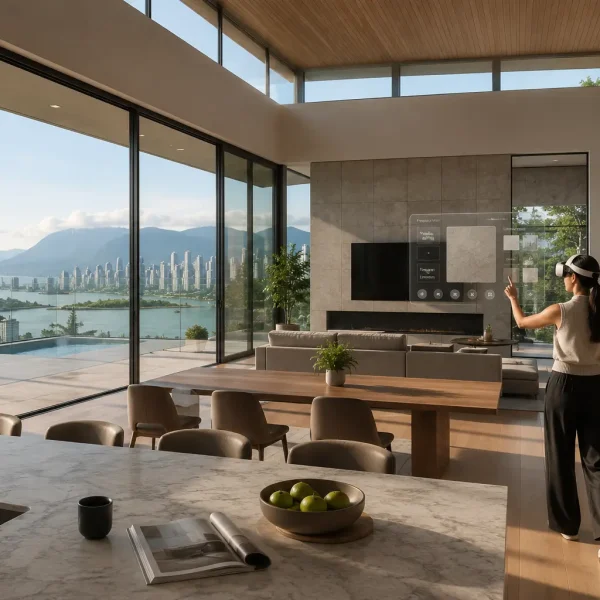
Immersive virtual environments are redefining how architects, developers, and clients experience buildings before a single foundation is poured. In an industry where miscommunication between design intent and client expectation has historically cost projects time, money, and trust, the ability to place a stakeholder inside a space — to let them feel ceiling heights, read natural light, and navigate room adjacencies in real time — represents a fundamental shift in how architecture is communicated and sold.
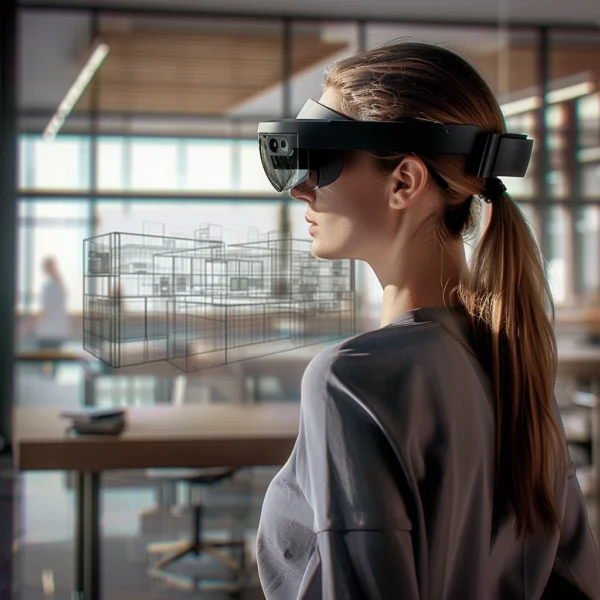
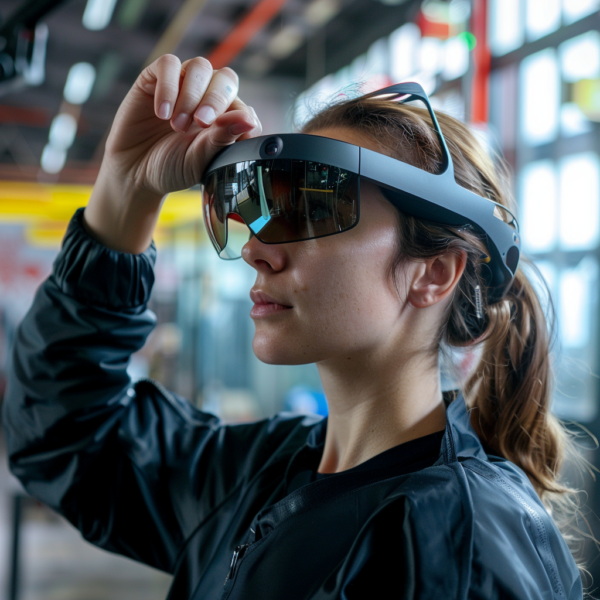
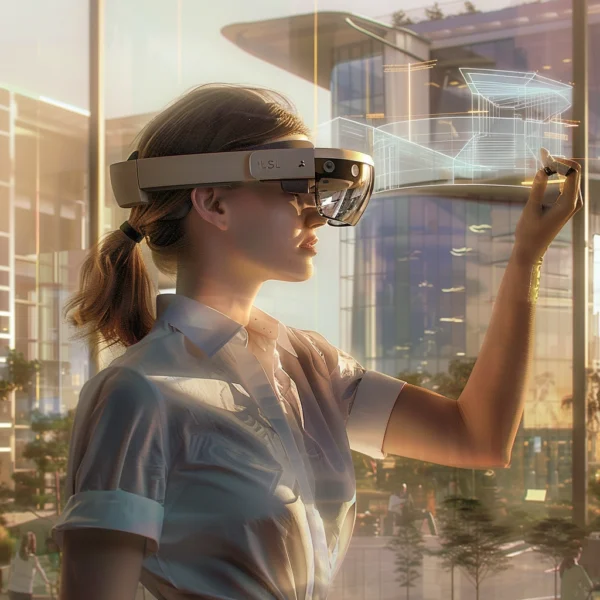
Immersive virtual environments (IVET) arecomputer-generated simulations that create a high sense of “presence,” surrounding users to make them feel physically present in a digital world. By utilizing headsets (HMDs) or projection systems, these systems replace physical sensory input with virtual, allowing interaction through motion controllers and haptic devices. [1, 2, 3, 4]
The demand for this technology is accelerating globally, and nowhere more so than in high-growth real estate markets like Vancouver, British Columbia, where pre-construction sales cycles depend heavily on a buyer’s confidence in a product they cannot yet physically visit. Traditional floor plans and static renders simply no longer carry that weight. Today’s buyers, investors, and planning committees expect to experience a proposed development, not merely view it.
This shift has been enabled by the convergence of 3 powerful forces: game-engine rendering technology capable of producing photorealistic imagery at interactive framerates, accessible VR and AR hardware that has dropped dramatically in price and increased sharply in quality, and a generation of visualization studios in immersive virtual environments— including firms like HUUR — that have built workflows specifically designed to bring experiential architectural design into mainstream project delivery.
The result is a new standard for architectural communication, one where static images feel insufficient and passive video tours feel limiting. Whether you are a developer seeking to accelerate pre-sales, an architect navigating a complex design review, or a real estate marketer differentiating a project in a crowded Vancouver or Toronto market, understanding what immersive virtual environments are — and what they can do — is no longer optional. It is a competitive necessity. This article defines the technology, maps its applications, and explains exactly how immersive virtual environments are transforming architectural visualization today.
What Are Immersive Virtual Environments?
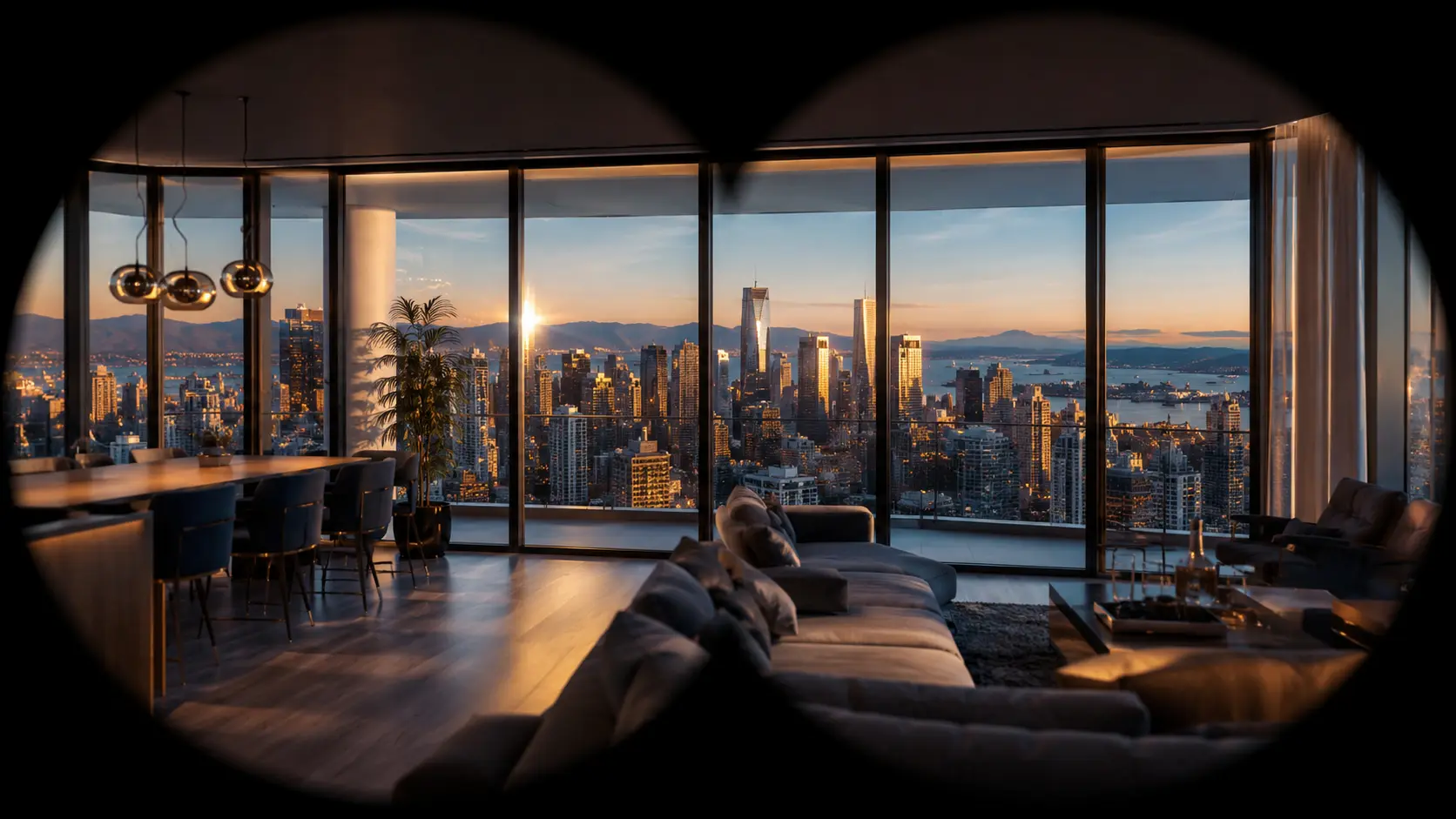
At their simplest, immersive virtual environments are digitally constructed spaces designed to make a person feel genuinely present within them. Unlike a photograph or a rendered image — which places the viewer outside the space looking in — an immersive environment surrounds the user, responds to their movement, and creates a convincing sense of spatial depth and scale. The term draws from both cognitive psychology and spatial computing: “immersion” refers specifically to the degree to which a digital environment displaces a person’s awareness of the physical world around them.
In architectural practice, this definition has real consequences. Immersive virtual environments client viewing a static render is evaluating an image. A client standing inside an immersive virtual environment is evaluating a space — and those are fundamentally different cognitive experiences.
Core Defining Characteristics
Researchers and practitioners generally agree on 3 qualities that define a truly immersive virtual environment:
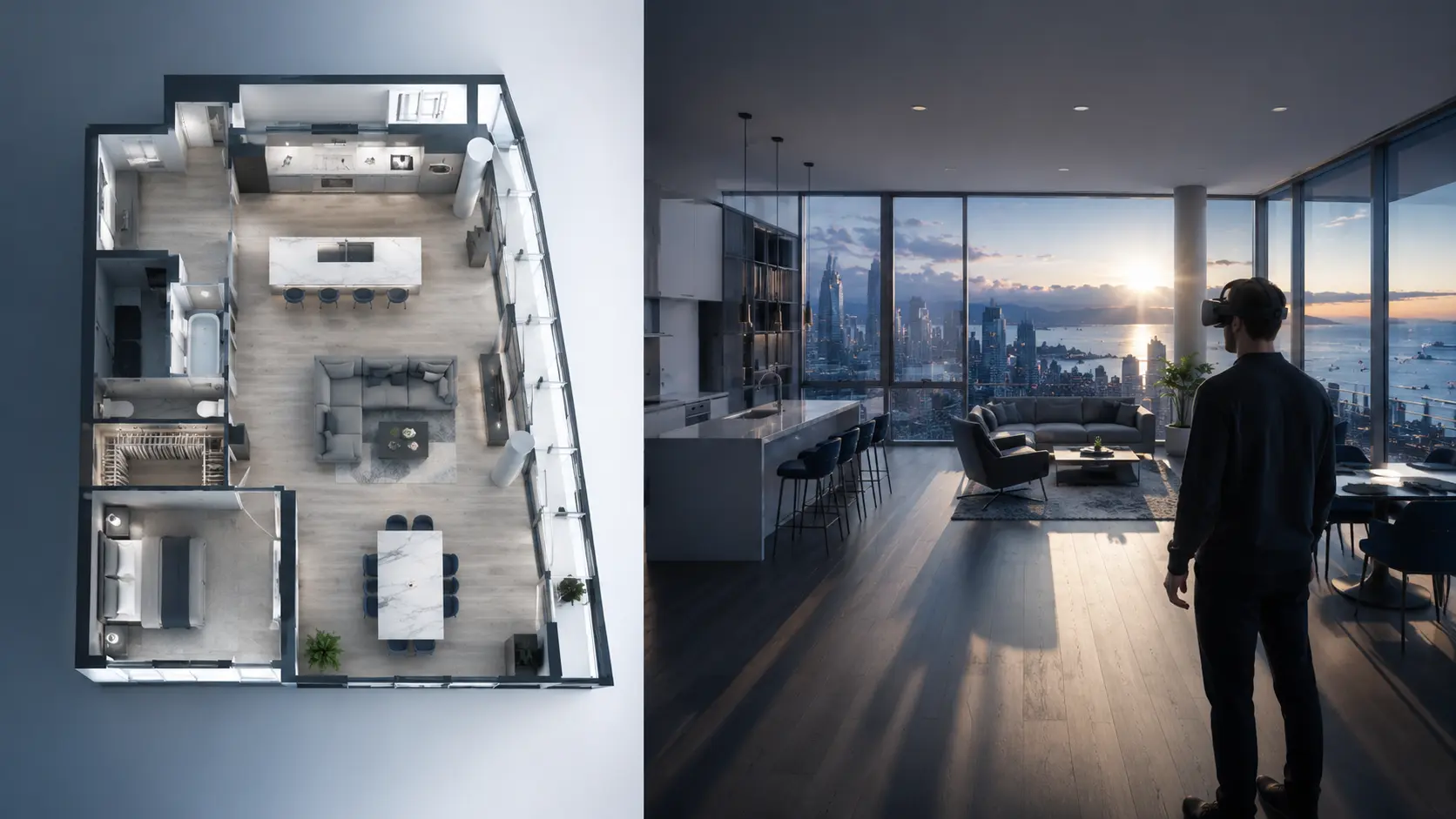
Presence — the subjective sense of “being there.” This is not simply high-resolution visuals; it emerges from the combination of accurate spatial scale, consistent perspective, responsive movement, and believable lighting. When all of these align, the brain accepts the environment as real enough to trigger genuine spatial intuition.
Interactivity — the environment must respond to the user. A space you can only observe is a cinematic virtual space; a space you can navigate, modify, and interrogate is an interactive virtual environment. This distinction matters enormously in architectural applications, in Immersive Virtual Environments, where a client’s ability to open a door, change a material finish, or shift a partition wall transforms a presentation into a conversation.
Real-time rendering — the visual output must update fast enough to feel continuous, typically at 60 to 90 frames per second. This is what separates immersive visualization from pre-rendered video walkthroughs, and it is the technical threshold that game engines like Unreal Engine 5 have made achievable for architectural content in Immersive Virtual Environments.
The Spectrum from Passive to Fully Immersive
Immersive architectural visualization does not exist as a single format — it occupies a spectrum. At one end sit 360-degree panoramic images: spatially convincing but static and non-interactive. Moving along the spectrum are real-time desktop walkthroughs, where a user navigates freely but remains on a flat screen. Further still are room-scale VR experiences delivered through headsets like the Meta Quest 3 or Apple Vision Pro, where the user’s physical movement maps directly to movement through the virtual building at true 1:1 scale.
Understanding where a project sits on this spectrum is the first design decision in any immersive virtual environments brief — and it shapes every technical and creative choice that follows.
The Role of Interaction and Real-Time Technology in Immersion
If presence is the goal of immersive virtual environments, real-time technology is the engine that makes it achievable. The leap from visually impressive to genuinely immersive is not primarily about resolution or polygon count — it is about responsiveness. A space that reacts to you, that updates its lighting as you move through it, that reflects your choices back at you instantly, triggers a fundamentally different cognitive response than one that simply looks good on screen.
This is the domain where the past 5 years have produced the most dramatic progress, and where the gap between architectural visualization and the broader real-time technology industry has effectively closed.
Game Engines as the Backbone
The most significant structural shift in architectural visualization over the past decade has been the adoption of game engines — primarily Unreal Engine 5 and Unity — as the primary production environment for high-end interactive architectural content.
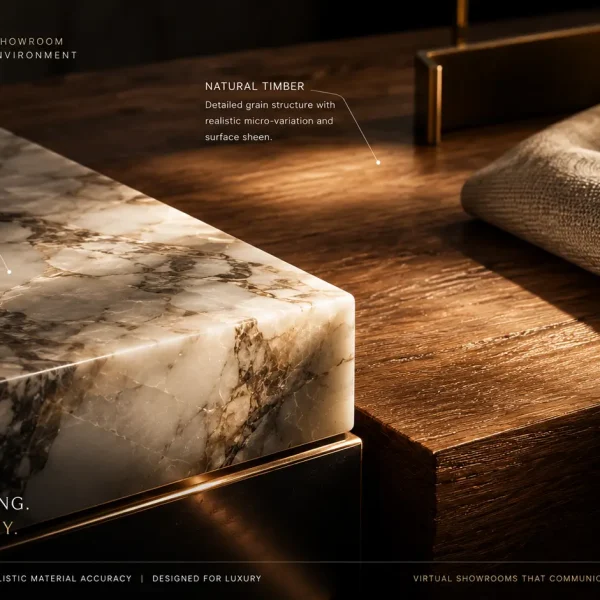
This was not an obvious transition. Game engines were built to render fictional worlds populated by characters and action. Architectural visualization demands something different: physically accurate materials, precise spatial scale, believable daylight simulation, and the kind of photorealistic surface quality that a client comparing renders to a physical sample board will scrutinize closely.
What made the transition viable in immersive virtual environments— and ultimately inevitable — was Epic Games’ sustained investment in features that serve exactly these needs. Unreal Engine 5’s Nanite system handles the geometric density of imported BIM and CAD models without requiring artists to manually reduce polygon counts. Lumen provides fully dynamic global illumination, meaning light bounces, fills, and shadows update in real time as conditions change. Together, these systems allow a visualization studio to import a Revit model, dress it with manufacturer-accurate material libraries, and deliver a navigable, photorealistic environment without the pre-rendering bottleneck that previously defined the industry.
For Canadian visualization studios working with developers across British Columbia and Ontario, this shift has practical consequences. Projects that previously required 2 to 3 weeks of render farm time to produce a polished video walkthrough can now be delivered as Immersive Virtual Environments ,interactive real-time experiences within comparable timelines — with the added capability of live client customization during presentations.
Real-Time Lighting, Materials, and Spatial Feedback
3 specific technical capabilities define what real-time immersive visualization can do that pre-rendered content structurally cannot:
Dynamic lighting simulation allows a scene to represent any time of day or sky condition interactively. A client evaluating a west-facing living room can scrub through a full day — watching morning shadow give way to afternoon direct sun and evening ambient warmth — in seconds. This is not an aesthetic flourish; for residential buyers in sun-sensitive markets, it directly informs purchasing decisions.
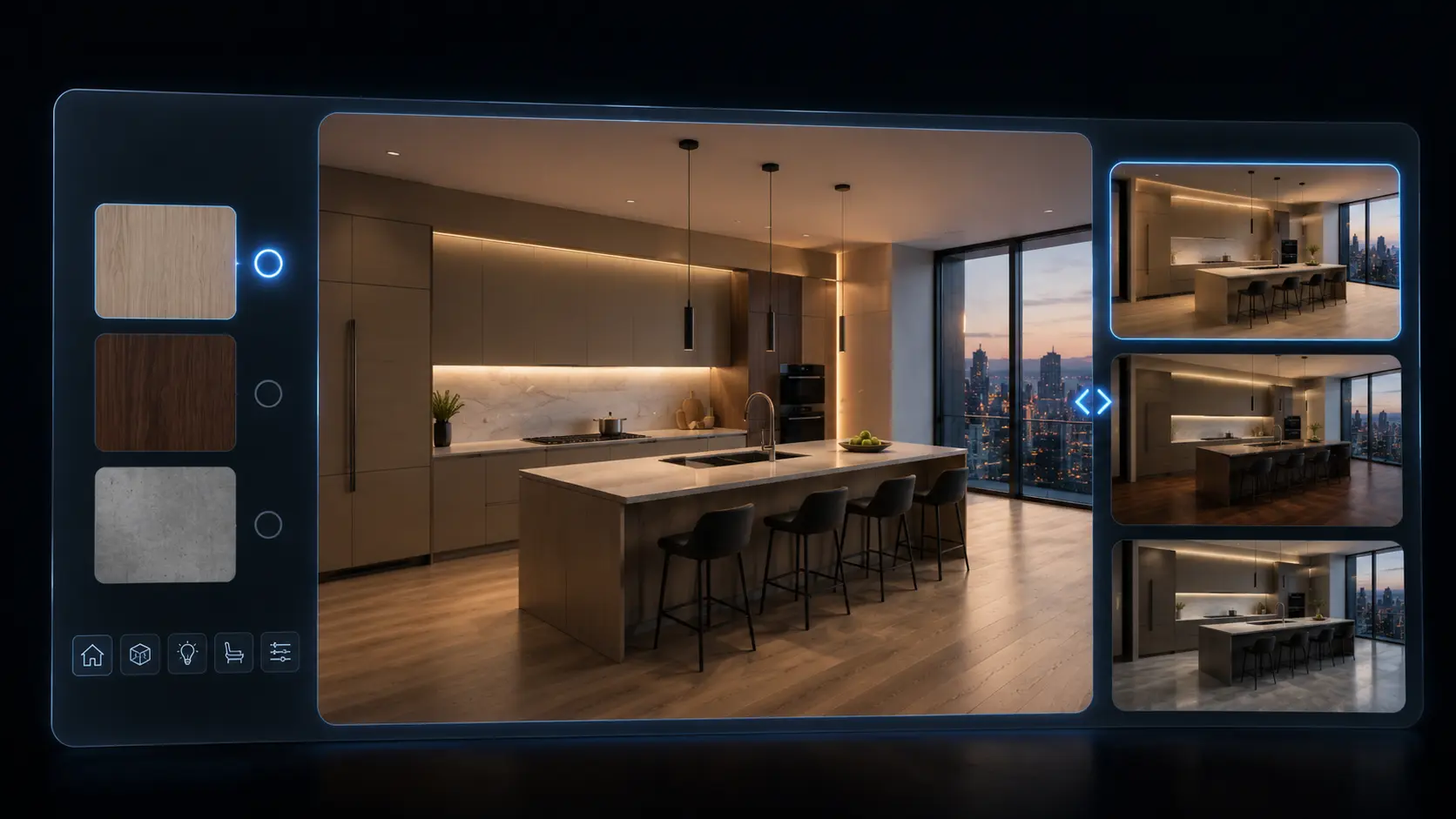
Material and finish switching enables live design option exploration. High-quality material libraries from suppliers like Caesarstone, Kohler, or Benjamin Moore can be integrated directly into an Unreal Engine scene, allowing a client to cycle through flooring, cabinetry, tile, and fixture options during a presentation. In experiential architectural design, the ability to see a finish change propagate across an entire space instantly — rather than waiting for a revised render — fundamentally changes the pace and quality of design conversations.
Spatial audio and haptic feedback represent the next frontier of real-time immersive visualization. Leading studios are beginning to integrate binaural audio environments into their experiences — footstep acoustics that shift between hardwood and carpet, ambient urban sound entering through glazed facades, HVAC hum calibrated to ceiling height. These additions deepen the sense of presence in ways that purely visual rendering cannot, moving the experience closer to what cognitive researchers define as full environmental immersion.
The cumulative effect of these capabilities is an environment where a client is not watching a building being presented to them — they are inhabiting it, testing it, and making real decisions inside it. That shift, from audience to participant, is what separates genuine interactive virtual environments from every visualization format that preceded them.
Use Cases of Immersive Virtual Environments in Architecture and Real Estate
The practical applications of immersive virtual environments in architecture and real estate extend far beyond impressive client presentations. Across the full project lifecycle — from early concept validation through to post-construction marketing — interactive virtual environments for architecture are reshaping how buildings are designed, approved, sold, and experienced. Understanding where these tools deliver the most measurable value helps developers, architects, and marketing teams invest in the right format at the right project stage.
Design Review and Stakeholder Approval
One of the earliest and highest-value applications of real-time immersive visualization is internal design review. Architectural teams working inside a live Unreal Engine model can identify spatial problems — awkward circulation paths, undersized corridors, poorly proportioned rooms — that simply do not reveal themselves in plan drawings or even traditional 3D renders.
The shift from flat-screen review to immersive architectural visualization at true 1:1 scale changes what the design team sees. A 2.4-metre ceiling that reads as generous on a section drawing can feel oppressive when experienced from standing height in a VR headset. A kitchen island that appears well-sized in plan can block sightlines to the living area in ways that only become apparent when a designer walks the space virtually.
For complex mixed-use developments — the kind increasingly common in Vancouver’s Broadway Plan corridor or Toronto’s Ontario Line transit zones — cinematic virtual spaces allow multiple consultants (structural, mechanical, interior design, landscape) to inhabit the same model simultaneously in a multi-user session, identifying clashes and opportunities collaboratively rather than through sequential drawing reviews.
Planning and municipal approval processes are also being transformed by immersive virtual environments. Several Metro Vancouver municipalities now accept — and in some cases actively prefer — real-time immersive presentations at Development Permit hearings. The ability to place a planning committee member inside a proposed tower and show them the view from a neighboring property, or demonstrate shadowing impacts at the winter solstice, produces a quality of spatial understanding that no drawing package can replicate.
Sales and Pre-Construction Marketing
The commercial case for interactive virtual environments in real estate marketing is straightforward and increasingly well-documented. Pre-construction sales — a cornerstone of the Canadian condominium development model — ask buyers to commit hundreds of thousands of dollars to a product that does not yet exist. The quality of visualization directly affects buyer confidence, and buyer confidence directly affects sales velocity and achievable price points.
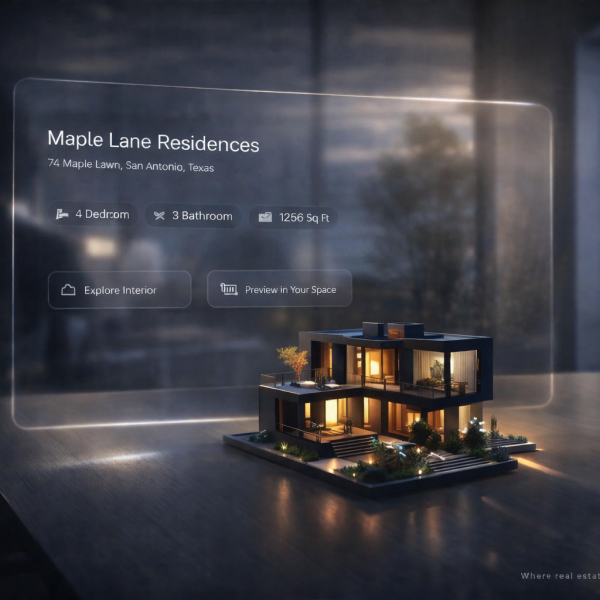
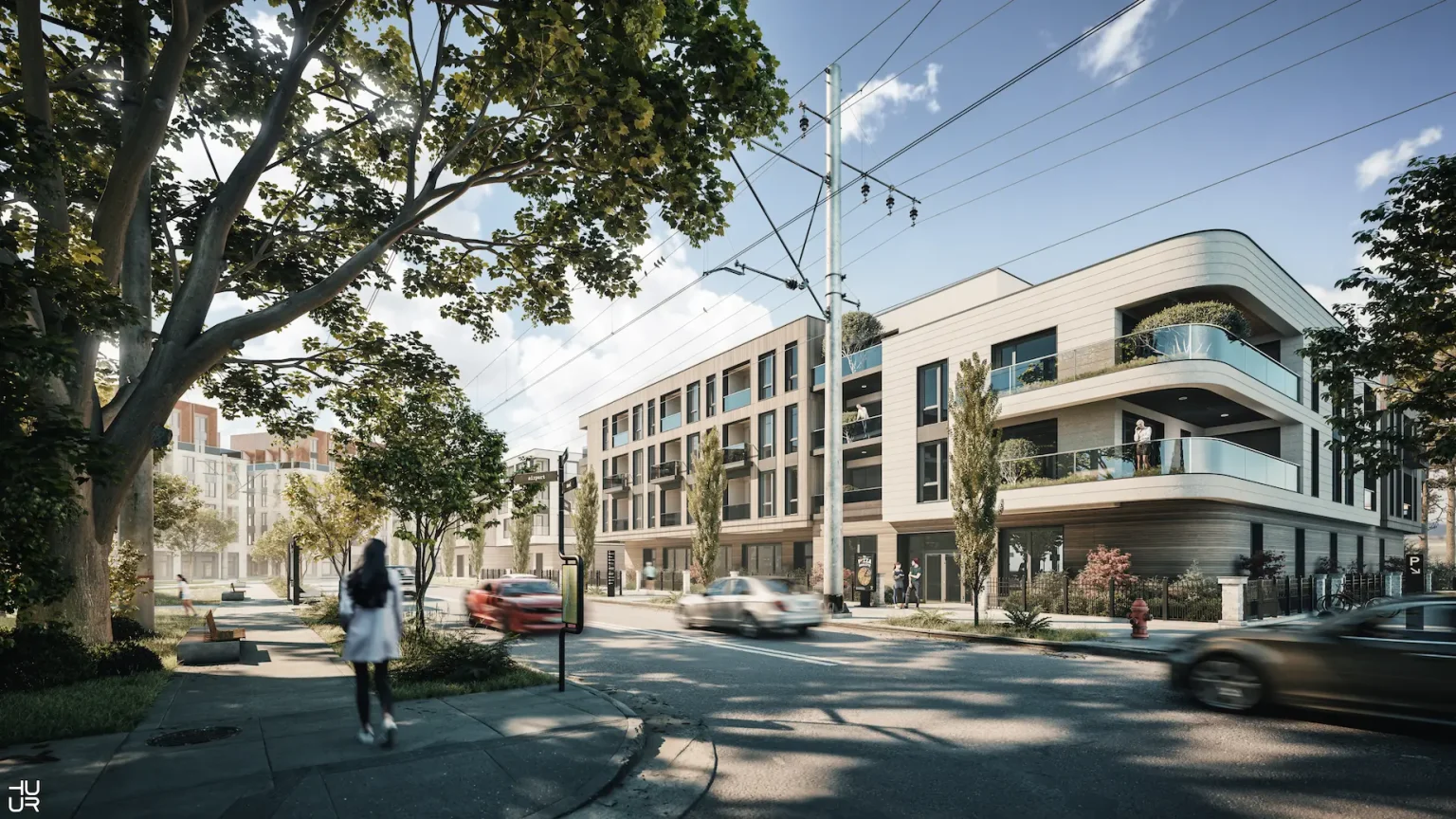
Experiential architectural design delivered through interactive virtual environments allows a prospective buyer to self-navigate their specific suite, assess their actual view corridor, test finish packages, and understand the relationship between their unit and shared amenity spaces — all before groundbreaking. Sales centres in Vancouver developments like those along the Cambie Corridor or in Surrey’s City Centre have begun replacing or supplementing physical display suites with fully interactive immersive virtual environment presentations, reducing the capital cost of sales centre construction while significantly expanding the range of suites and options a single presentation space can communicate.
International buyers — a meaningful segment of Metro Vancouver and Greater Toronto pre-construction markets — benefit disproportionately from high-quality real-time immersive visualization. A buyer in Hong Kong, Singapore, or Shanghai evaluating a Vancouver pre-construction condominium cannot visit a physical display suite. A compelling, navigable immersive architectural visualization delivered via Pixel Streaming directly to their browser removes a significant friction point from the international sales process.
Local Market Applications — British Columbia and Beyond ,immersive virtual environments
The British Columbia real estate market presents specific conditions that make immersive virtual environments particularly valuable. Several dynamics unique to this market amplify the return on investment in interactive visualization:
Site constraint complexity — Vancouver and its surrounding municipalities are among the most topographically and regulatory complex development environments in North America. Developments on sloped sites in North Vancouver, view-cone-sensitive parcels in Point Grey, or heritage-adjacent projects in Gastown face approval processes where the ability to demonstrate neighborhood fit and view impact in an immersive virtual environment is a genuine strategic advantage.
Pre-sales financing requirements — BC’s development financing model typically requires a defined percentage of pre-sales before construction financing is released. Anything that accelerates pre-sales — including superior visualization that builds buyer confidence faster — has a direct effect on a project’s financing timeline and carrying costs.
Indigenous consultation and community engagement — many development projects across British Columbia now include formal engagement processes with First Nations communities and broader public stakeholders. Cinematic virtual spaces that allow community members to experience a proposed development from street level, from within neighboring properties, or from culturally significant viewpoints provide a quality of spatial communication that drawings and renderings cannot match.
Suppliers supporting this ecosystem in BC include visualization studios like HUUR, hardware providers supplying Meta Quest headsets and high-performance GPU workstations, and real estate marketing agencies increasingly building immersive architectural visualization capabilities into their core service offerings.
HUUR’s Design Philosophy for Immersive Virtual Spaces
Not every visualization studio approaches immersive virtual environments with the same priorities. The technical capability to build a real-time interactive scene in Unreal Engine 5 is increasingly accessible — what differentiates studios operating at the highest level is the design philosophy that governs how that technology is applied. HUUR’s approach to immersive architectural visualization is built on a foundational conviction: that the most powerful visualization is not the most technically complex, but the most spatially honest.
This distinction matters more than it might initially appear. In immersive virtual environments market where processing power and asset libraries are commoditized, the temptation is to default to visual spectacle — scenes so aggressively lit, so saturated with hero furniture and perfect weather, that they flatter the architecture rather than represent it. HUUR’s philosophy moves in the opposite direction.
What Sets HUUR’s Approach Apart
HUUR designs interactive virtual environments around the client’s decision-making process, not around the render portfolio. Every creative and technical choice — lighting calibration, material accuracy, spatial scale, interaction design — is evaluated against a single question: does this help the end user make a better, more confident decision about this space?
This means real-time immersive visualization at HUUR is built to geographic and physical accuracy. Daylight simulations are calibrated to the project’s actual latitude and orientation — a southwest-facing suite in a False Creek development receives the specific afternoon light characteristic of that location in Vancouver, not a generic golden-hour approximation. Material libraries are sourced from actual specified suppliers wherever possible, so a client toggling between engineered oak and polished concrete flooring is seeing the manufacturer’s actual product, not an artist’s interpretation of it.
Experiential architectural design at HUUR also extends to the interaction layer — the moments of the experience that are invisible when done well and jarring when done poorly. Navigation feel, transition speed between spaces, the responsiveness of material switching controls, the framing of the first view a client encounters when they enter a space — these are all designed decisions, treated with the same intentionality as the visual content itself.
For multi-unit residential projects, HUUR builds cinematic virtual spaces that allow sales teams to present any suite in the building from a single hardware setup, rather than constructing a fixed display suite that represents only one or 2 unit types. This flexibility is particularly valuable for developments with complex unit mixes — micro-suites, one-bedrooms, two-bedrooms, penthouses, and townhomes — where communicating the full range of offerings through physical displays would be prohibitively expensive.
Tools, Workflow, and Client Experience
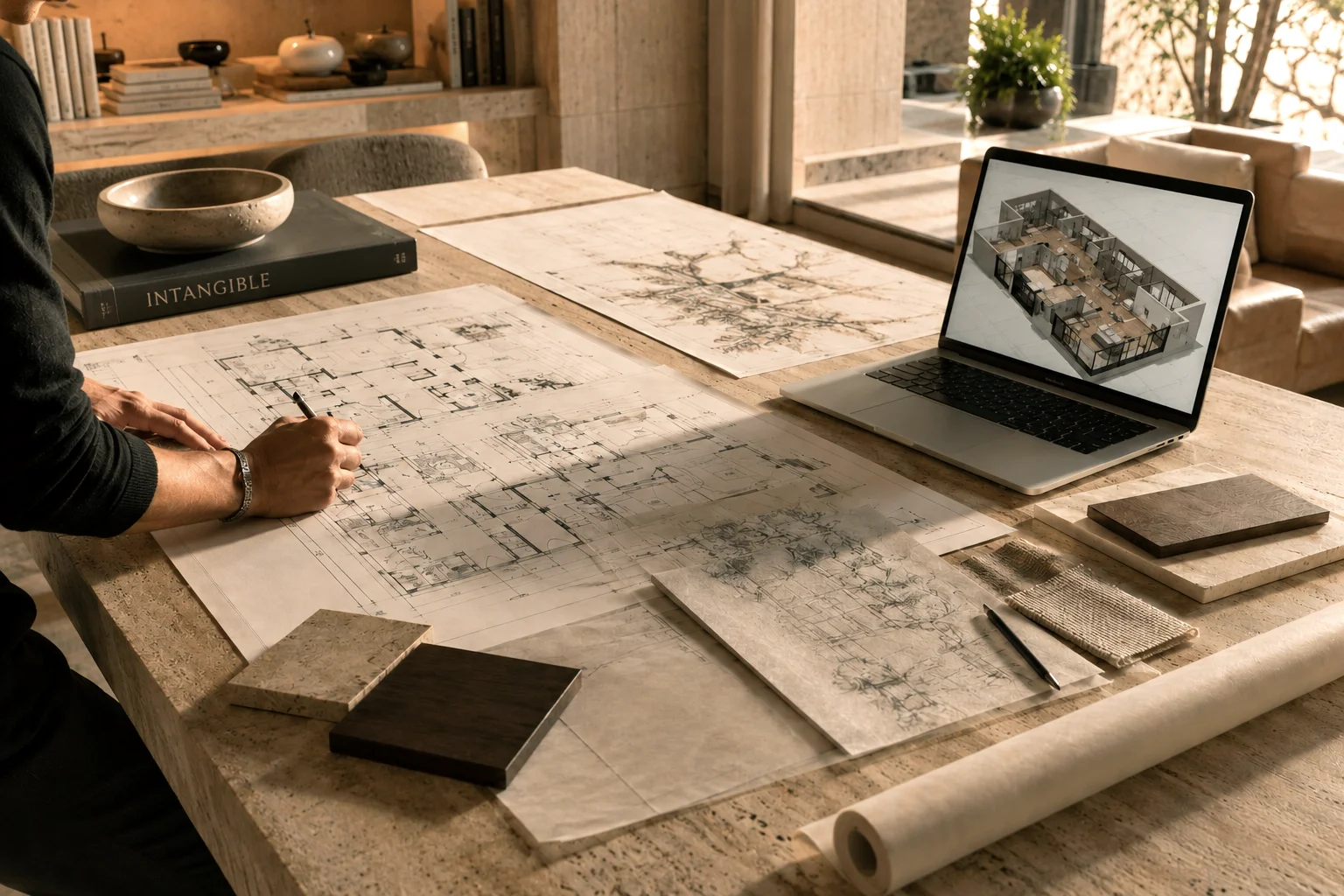
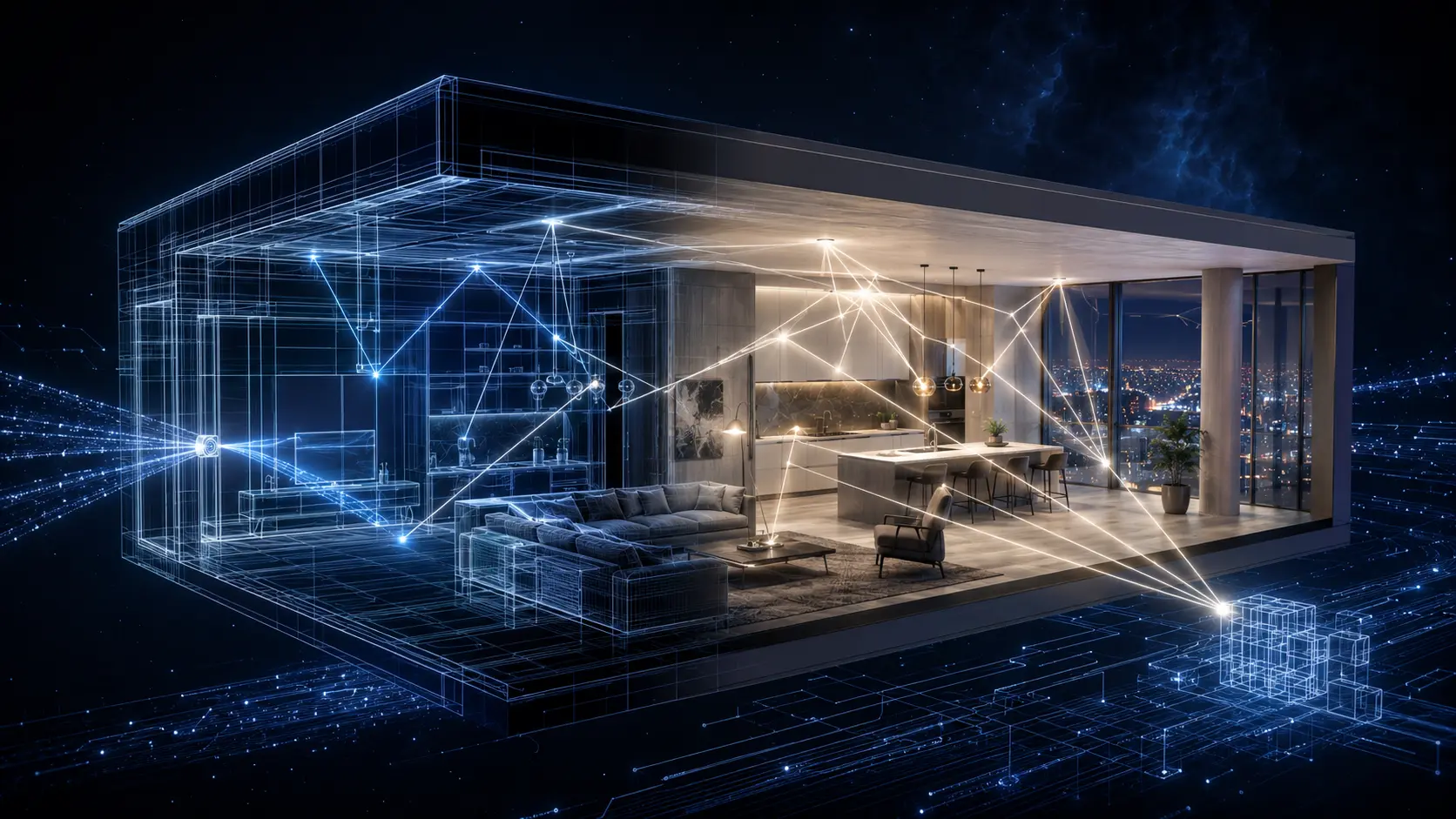
HUUR’s production pipeline is built around Unreal Engine 5 as the core real-time environment, with Datasmith handling the import and translation of architectural BIM data from Revit and CAD geometry from 3ds Max and SketchUp. This preserves the spatial and material information embedded in the architect’s model, rather than requiring the visualization team to reconstruct the building from scratch to Immersive Virtual Environments.
The studio’s immersive virtual environments are delivered across 3 primary formats, selected based on the project’s goals and audience:
Room-scale VR via Meta Quest 3 headsets for on-site sales centre and design review presentations, delivering true 1:1 scale spatial experience without tethered hardware constraints.
Desktop interactive for remote client sessions, internal team reviews, and international buyer presentations — accessible via standard hardware with no specialist equipment required on the client side.
Pixel Streaming for browser-based delivery, allowing a fully interactive real-time immersive visualization to be embedded in a project marketing website or shared via a direct link with no software installation. A buyer in Singapore or Hong Kong accesses the same navigable interactive virtual environment as a buyer standing in the Vancouver sales centre.
HUUR also integrates multi-user collaborative sessions for design team reviews, allowing architects, interior designers, and developers to inhabit the same immersive virtual environment simultaneously from different locations — discussing spatial decisions in real time inside the model rather than around a table covered in drawings.
The client experience at HUUR is structured in 3 phases. The first is a discovery and brief phase, where the studio maps the project’s communication goals, identifies the audience for the visualization, and defines which decisions the experience needs to support. The second is production, where the real-time environment is built, calibrated, and refined through iterative client review sessions inside the model itself. The third is deployment and support — ensuring the delivered interactive virtual environment performs reliably across the hardware and distribution formats the project requires.
What this workflow produces is not a render package or a marketing video. It is a spatial communication tool — one designed from the ground up to place the right person inside the right space at the right moment in the project lifecycle, and to give them the information and experience they need to move forward with confidence.
Frequently Asked Questions
What are immersive virtual environments?
Immersive virtual environments are digitally constructed spaces that create a convincing sense of presence and spatial reality for the user. Unlike static images or pre-rendered videos, they respond to user movement and input in real time. In architectural applications, they allow clients, developers, and design teams to experience a building before it is built, at accurate scale and with genuine interactivity.
Are immersive virtual environments the same as virtual reality?
Not exactly. Virtual reality is one delivery format for immersive architectural visualization — specifically the headset-based format that provides the highest degree of presence. But interactive virtual environments can also be experienced on a standard desktop screen or through a browser via Pixel Streaming. Immersive Virtual Environments comes from real-time rendering and interactivity, not exclusively from the hardware used to view it.
How are immersive environments used in architectural projects?
Real-time immersive visualization serves multiple stages of an architectural project. During design development, teams use interactive virtual environments for architecture to identify spatial problems and resolve design conflicts before construction documentation begins. During pre-construction sales — particularly in high-density markets like Vancouver and Toronto — experiential architectural design delivered through immersive environments gives buyers the spatial confidence to commit to off-plan purchases. During planning approval, cinematic virtual spaces help municipal committees and community stakeholders evaluate proposed developments in immersive virtual environments, with a quality of spatial understanding that drawings cannot provide.
Do immersive virtual environments require special hardware?
Entry-level immersive architectural visualization requires nothing more than a capable desktop or laptop computer. Room-scale VR experiences — which deliver the highest degree of presence and are particularly effective for residential pre-construction sales in markets like Metro Vancouver — use consumer headsets like the Meta Quest 3, which have dropped significantly in price while improving substantially in display quality. For remote clients, real-time immersive visualization delivered via Pixel Streaming requires only a web browser and a stable internet connection, making immersive virtual environments accessible to international buyers without any specialist hardware on their end.
Architecture is no longer something people simply look at — it’s something they experience before it exists.
Whether you’re developing a residential tower, presenting a large-scale mixed-use project, or rethinking how buyers engage with space, immersive virtual environments can completely transform the way your project is understood, approved, and sold.
At HUUR, we create real-time immersive experiences that combine cinematic visualization, interactive technology, and spatial storytelling to help developers, architects, and real estate teams communicate with clarity and confidence.
Connect with our team to explore how immersive virtual environments can elevate your next architectural project.
Conclusion
Immersive virtual environments have moved from an emerging technology curiosity to a mainstream architectural communication tool in less than a decade — and the pace of adoption is still accelerating. The convergence of real-time rendering engines like Unreal Engine 5, accessible VR hardware, and purpose-built visualization workflows of Immersive Virtual Environments has produced a new standard for how buildings are designed, reviewed, approved, and sold.
For developers, architects, and real estate marketers operating in competitive markets — Metro Vancouver’s pre-construction condominium sector, British Columbia’s complex planning approval environment, or the international buyer segment that represents a significant share of Canadian urban real estate demand — the question is no longer whether immersive architectural visualization is worth investing in. It is whether the studio and workflow you choose can deliver it at the level of spatial honesty, technical accuracy, and experiential quality that today’s clients and buyers expect.
Interactive virtual environments for architecture are not a visualization upgrade. They are a fundamental rethinking of how spatial information is communicated between the people who design buildings and the people who inhabit, buy, and approve them. Studios like HUUR, built specifically around real-time immersive visualization as a core capability rather than an add-on service, represent the direction the industry is moving — toward experiential architectural design as standard practice, and away from the static, passive formats that defined architectural communication for the previous century.
The buildings of the next decade will be experienced virtually before they are built physically. The firms and developers who master cinematic virtual spaces and interactive virtual environments now will hold a lasting advantage in design quality, stakeholder alignment, sales performance, and project delivery. Immersive virtual environments are not the future of architectural visualization — they are its present, and the competitive gap between those who have adopted them and those who have not is widening every quarter.