

Introduction
AI and PropTech in architectural visualization are transforming how design concepts are created, communicated, and experienced across the real estate industry. What once required weeks of manual rendering and coordination can now be accelerated through intelligent systems, real-time engines, and data-driven workflows. This shift is not just technical—it’s redefining how architects, developers, and marketers think about space, storytelling, and buyer engagement.
Today, AI in architecture visualization enables faster concept generation, automated scene building, and enhanced realism, while PropTech visualization integrates these outputs into broader digital ecosystems. From Vancouver to major North American markets, developers are increasingly relying on AI-driven 3D visualization and immersive tools to present projects before they are built. This evolution supports a larger movement toward digital transformation in real estate, where decision-making is influenced by interactive and visually rich experiences rather than static plans.
At the same time, virtual real estate marketing has become a critical advantage. Buyers expect more than images—they want to explore, interact, and feel confident before investing. Technologies such as generative AI for architecture, real-time rendering engines, and XR environments are bridging that gap.
As the industry evolves, firms that adopt these technologies strategically are not just improving efficiency—they are redefining how value is presented in real estate. This is why AI and PropTech in architectural visualization are now central to both design innovation and competitive marketing strategies.
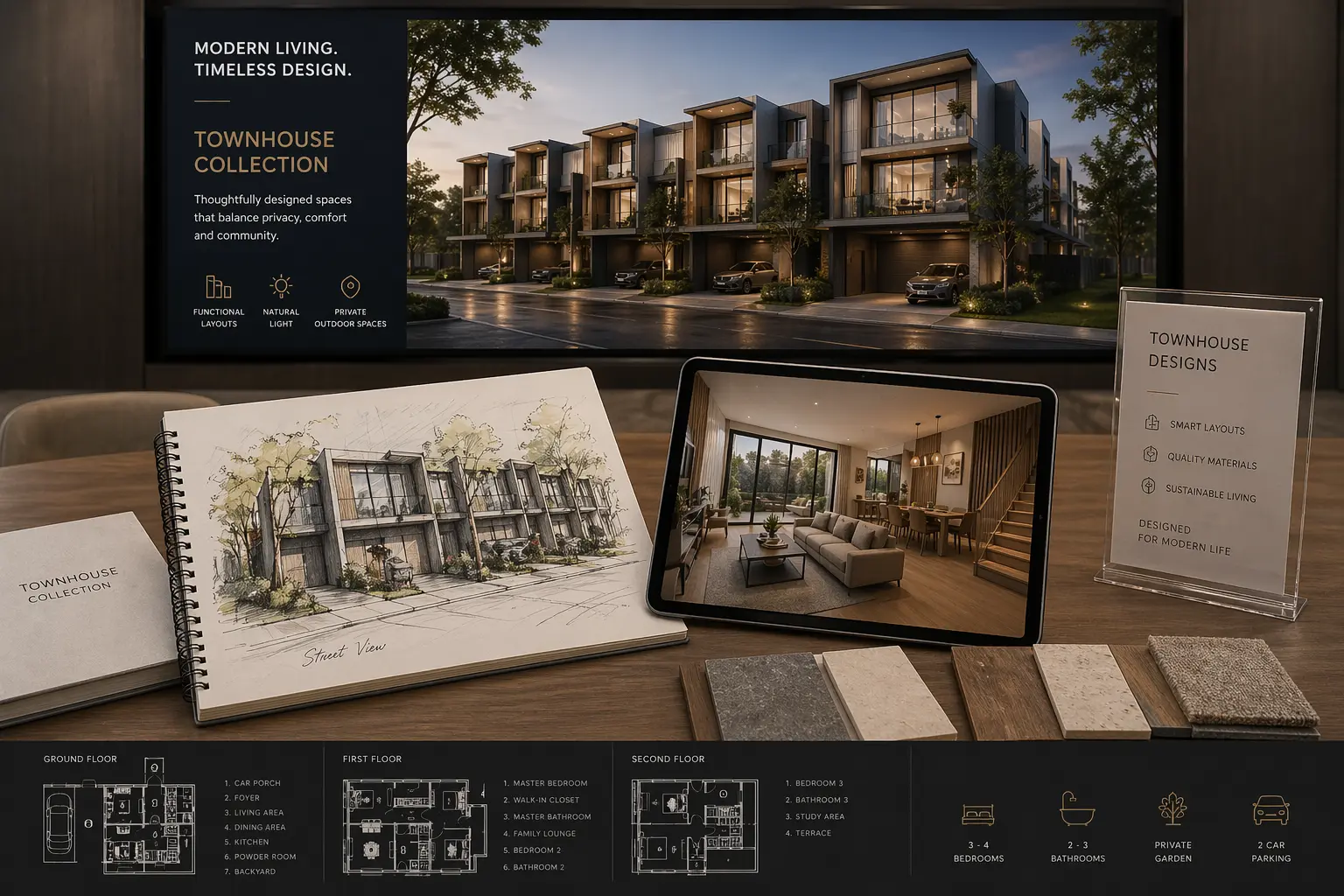
What PropTech Means in the Context of Architecture and Real Estate
The evolution of PropTech in modern real estate
PropTech, short for property technology, refers to the integration of digital tools and platforms into the real estate lifecycle—from design and development to marketing and sales. In architectural visualization, PropTech has moved beyond simple rendering software into a connected ecosystem where data, design, and user experience are fully integrated.
Historically, visualization was a standalone service focused on producing still images. Today, PropTech visualization connects these outputs to CRM systems, sales platforms, and interactive environments. This allows developers to present projects dynamically, update designs in real time, and align marketing with evolving project data.
In markets like Vancouver and across Canada, this evolution is especially visible. Developers are competing in high-value environments where differentiation matters. As a result, AI-driven 3D visualization and integrated PropTech solutions are becoming essential tools rather than optional upgrades.
How PropTech visualization is changing property development workflows
One of the biggest impacts of PropTech is on workflow efficiency. Traditional processes often involved fragmented communication between architects, visualization teams, and marketing departments. Now, these functions are increasingly unified through digital platforms.
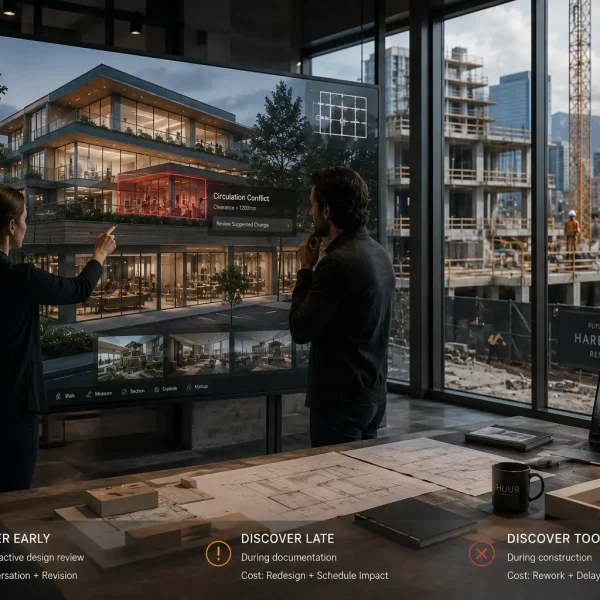
With digital transformation in real estate, visualization is no longer the final step—it becomes part of an ongoing process. Design updates can instantly reflect in visual outputs, and marketing teams can use those visuals across multiple channels without delays.
This integration also improves decision-making. Developers can test design options, analyze buyer preferences, and adjust strategies based on data. In this context, visualization becomes a strategic asset, not just a presentation tool.
PropTech trends in Canada and North America
Across Canada and North America, PropTech adoption is accelerating, particularly in cities like Vancouver, Toronto, and Seattle. Local developers are leveraging virtual real estate marketing to attract both domestic and international buyers.
Challenges such as high property costs and competitive markets have pushed companies to invest in more advanced visualization solutions. Local suppliers and studios are now offering immersive tours, AR-enabled experiences, and real-time configurators to meet these demands.
At the same time, regulatory environments and buyer expectations are encouraging transparency and clarity. This makes AI in architecture visualization and PropTech tools even more valuable, as they help communicate complex projects in a clear and engaging way.
How AI Is Used in Architectural Visualization Today
AI in architecture visualization: tools and technologies
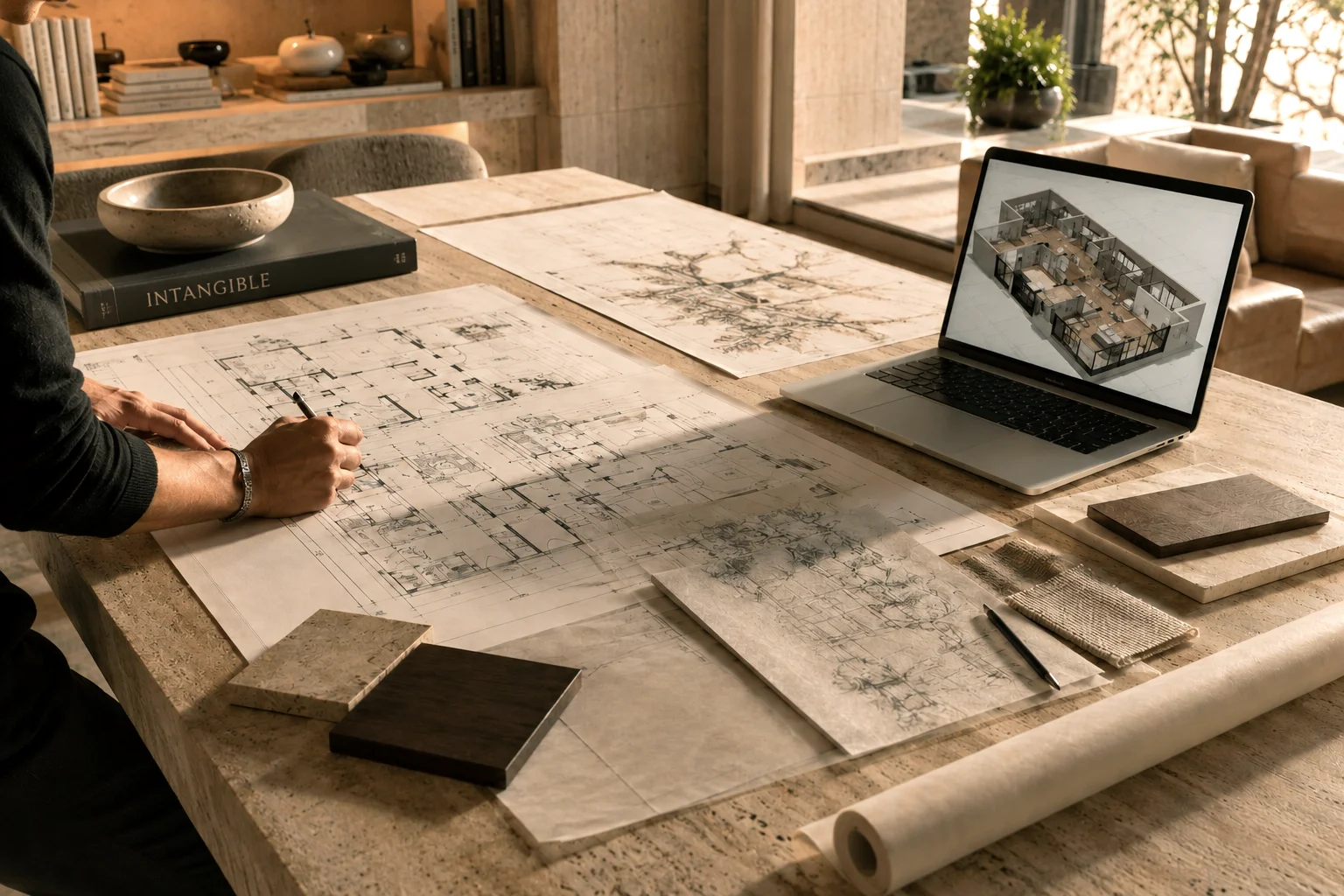
AI in architecture visualization is no longer experimental—it’s actively embedded in daily workflows across design studios and real estate marketing teams. Today’s tools combine machine learning, computer vision, and procedural generation to assist with everything from early-stage concepts to final visual outputs.
Platforms powered by AI can generate design variations, suggest materials, optimize lighting, and even predict how a space might feel based on composition rules. In cities like Vancouver, where timelines are tight and expectations are high, these tools help teams move faster without sacrificing quality.
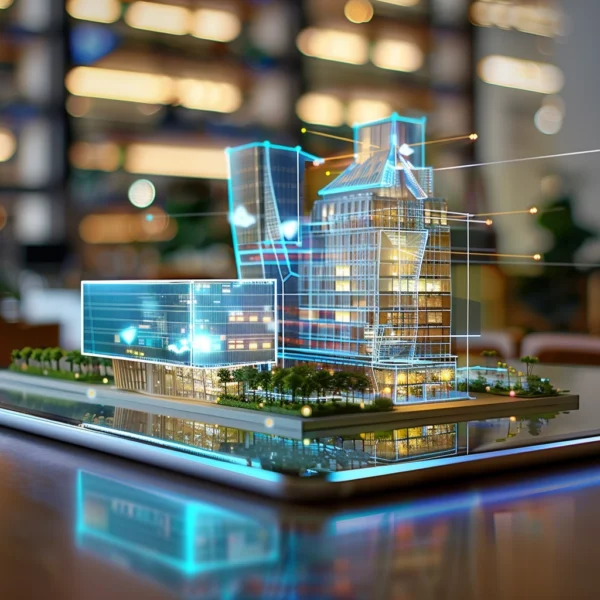
Many studios are now combining AI and PropTech in architectural visualization tools with engines like Unreal Engine or web-based frameworks such as Three.js and WebXR. This creates a hybrid workflow where AI-driven 3D visualization accelerates production, while real-time engines ensure precision, interactivity, and realism.
AI-driven 3D visualization and automation processes
One of the most powerful aspects of AI is automation. Tasks that once required hours—such as asset placement, texture mapping, or scene setup—can now be partially automated through intelligent systems.
With AI-driven 3D visualization, designers can quickly generate multiple layout options, test lighting conditions, and refine environments with minimal manual input. This doesn’t replace expertise, but it significantly reduces repetitive work, allowing designers to focus on higher-level decisions.
Automation also supports scalability. For large real estate developments with multiple units, AI and PropTech in architectural visualization can help standardize visual outputs while adapting small variations. This is particularly valuable in PropTech visualization, where consistency and speed are critical for marketing campaigns.
Generative AI for architecture: concept to visualization
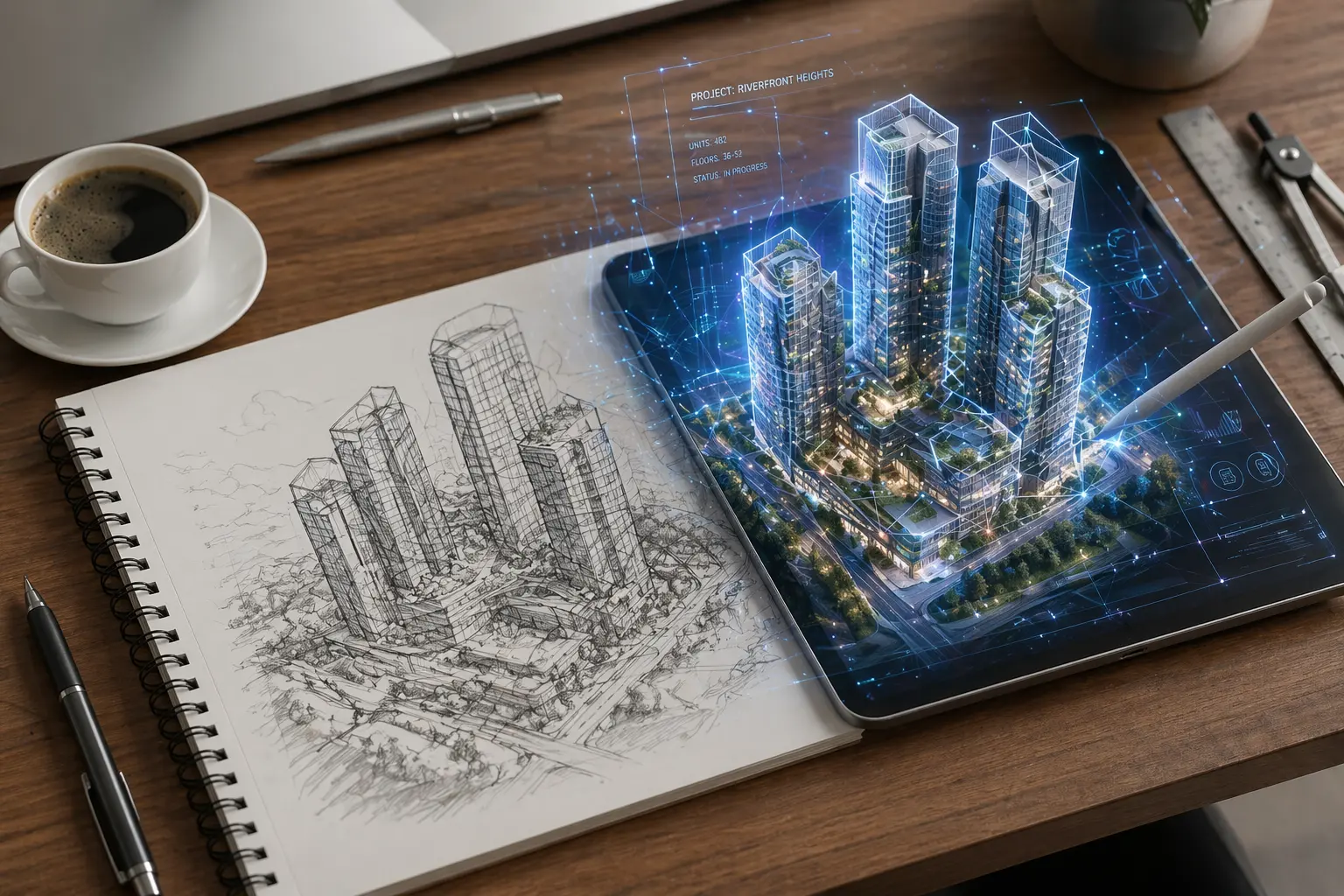
Generative AI for architecture is reshaping how ideas are explored in the early stages of design. Instead of starting from scratch, designers can input prompts, references, or constraints and receive multiple conceptual directions within seconds.
These outputs can then be refined, modeled, and integrated into full visualization pipelines. While generative AI and PropTech in architectural visualization is powerful for inspiration and iteration, it still requires professional oversight to ensure accuracy, feasibility, and alignment with real-world conditions.
In the broader context of digital transformation in real estate, generative AI is helping bridge the gap between imagination and presentation. Developers can visualize ideas earlier, communicate them more effectively, and adapt faster to market feedback.
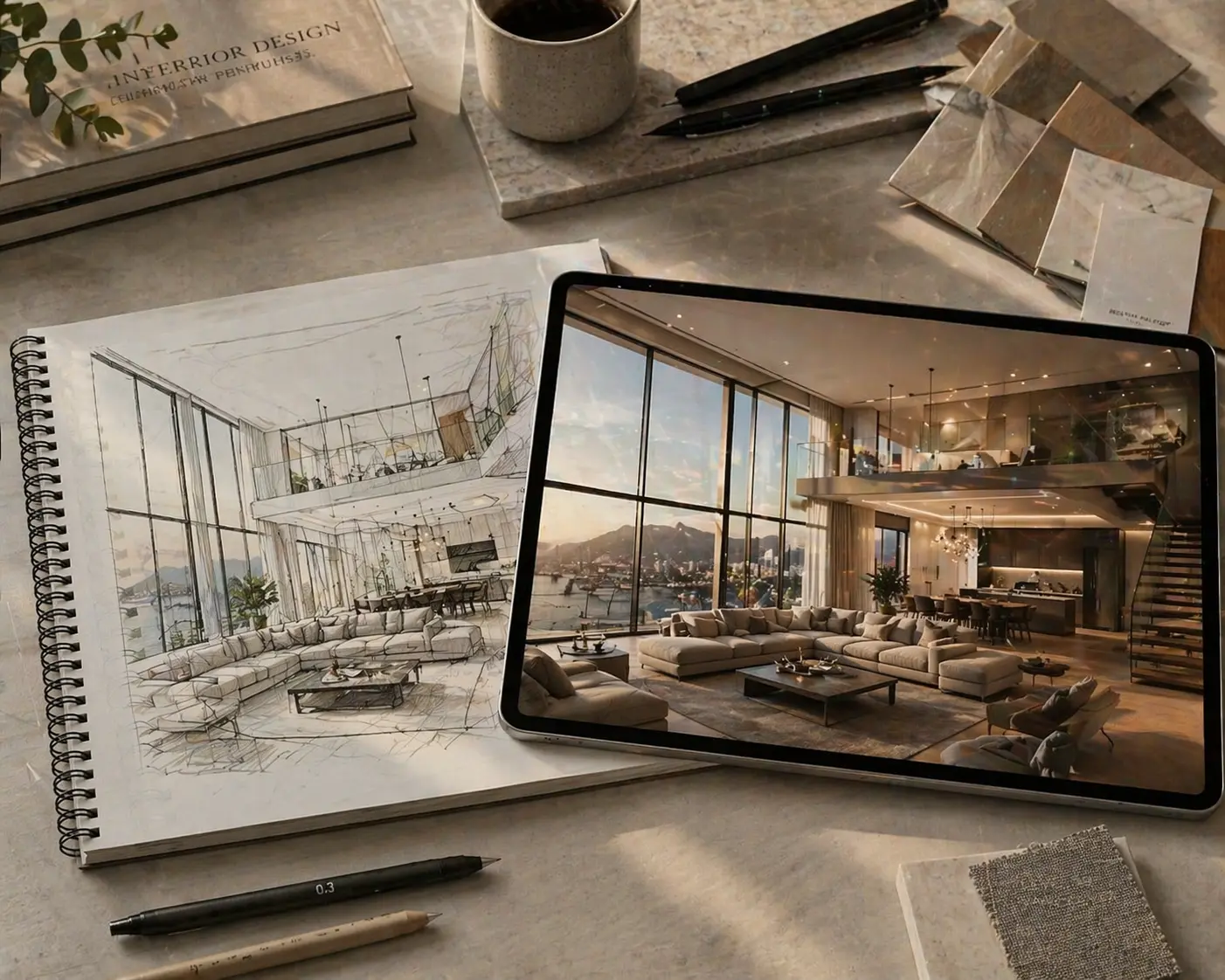
The Role of Visualization in Digital Real Estate Transformation
Virtual real estate marketing and buyer decision-making
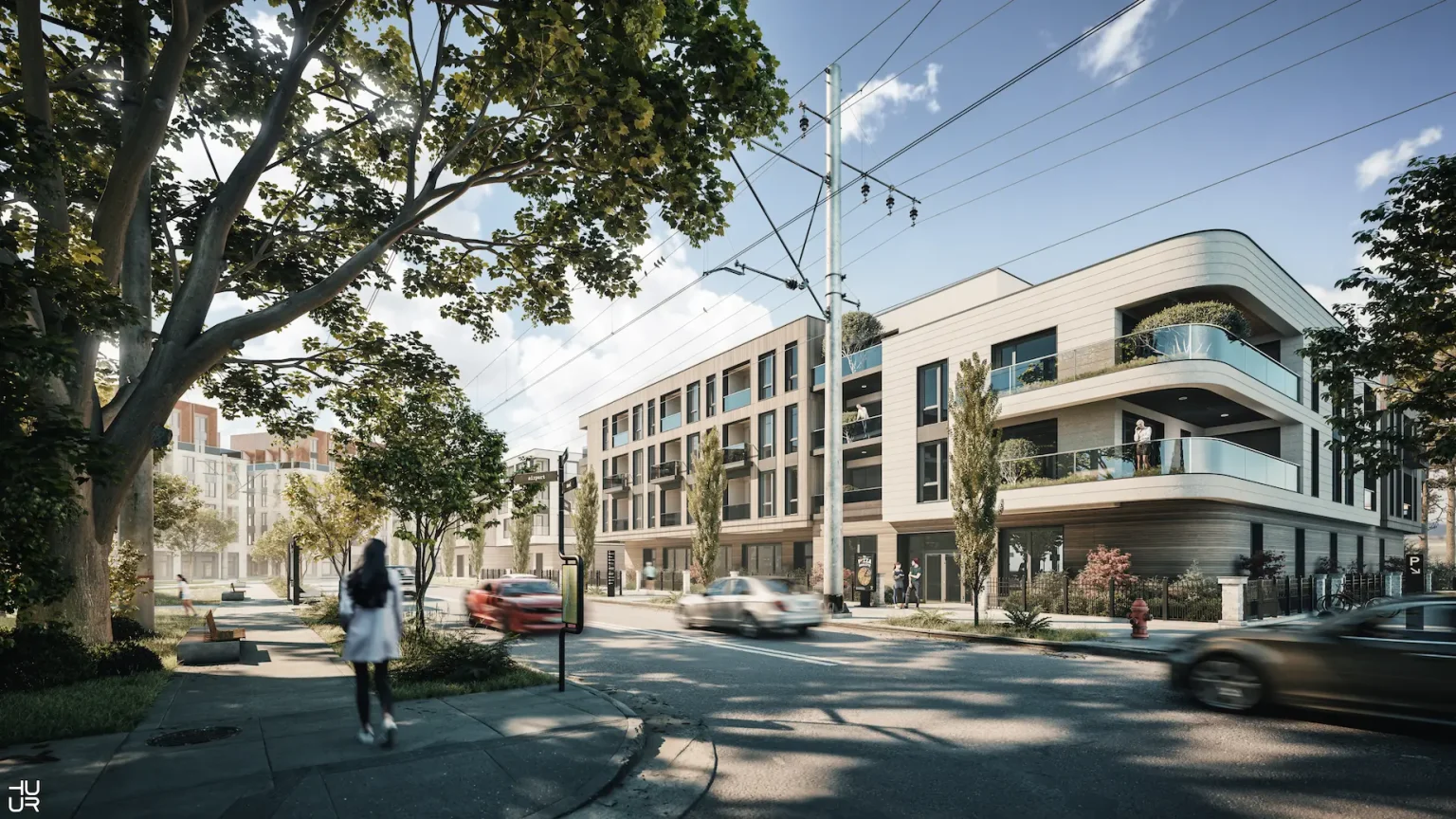
Virtual real estate marketing has become a defining factor in how properties are presented and sold, especially in competitive markets like Vancouver and across Canada. Buyers are no longer relying solely on floor plans or static renders—they expect immersive, interactive experiences that help them understand space, scale, and atmosphere before making decisions.
Through AI and PropTech in architectural visualization, developers can now offer detailed previews of projects long before construction is complete. This reduces uncertainty for buyers and builds confidence, particularly for pre-sale investments. When buyers can explore a property virtually, they are more likely to engage emotionally and move forward faster in the decision-making process.
In North American markets, this shift is also influenced by international buyers who cannot physically visit properties. As a result, AI-driven 3D visualization and virtual experiences are no longer optional—they are essential tools for reaching a broader audience.
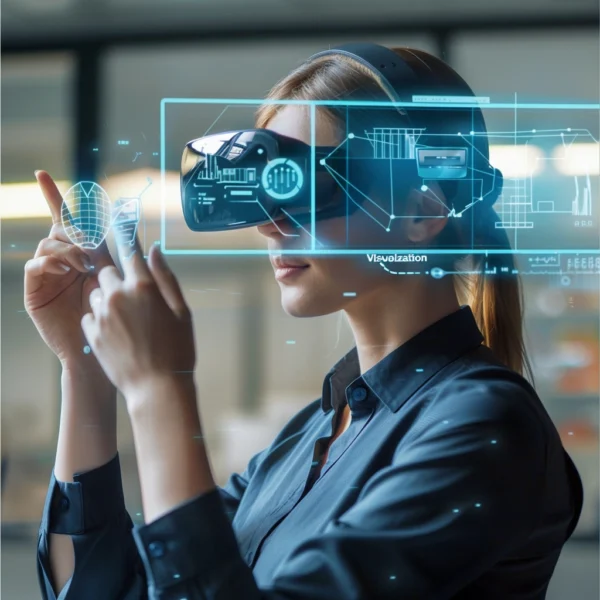
Interactive experiences: VR, AR, and real-time engines
The rise of VR, AR, and real-time technologies has pushed visualization beyond passive viewing into full interaction. Instead of simply seeing a design, users can now walk through it, customize finishes, and explore different configurations in real time.
Tools like Unreal Engine and WebXR are widely used to create these environments, enabling seamless interaction across devices—from desktops to headsets. This aligns with the broader digital transformation in real estate, where user experience is becoming as important as the property itself.
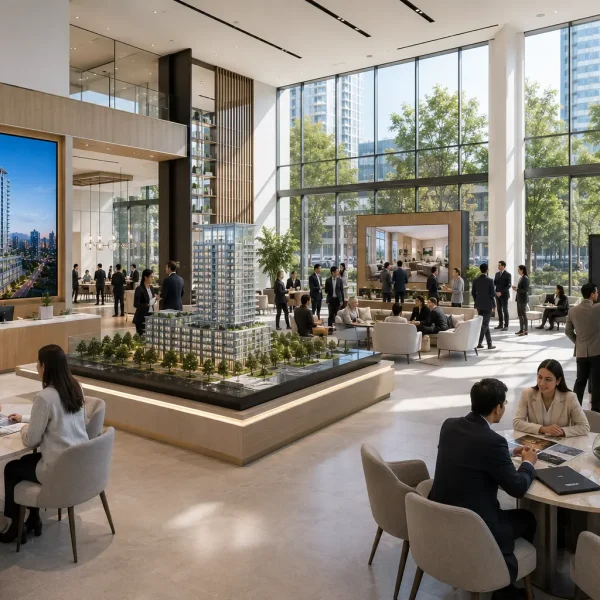
For developers and marketing teams, these tools provide measurable advantages. They allow for better storytelling, clearer communication, and more effective presentations during investor meetings or sales events. In PropTech visualization, this level of interaction helps bridge the gap between concept and reality.
The shift from static renders to immersive environments
Traditional visualization focused on high-quality still images and pre-rendered animations. While these are still valuable, the industry is clearly moving toward immersive environments that offer flexibility and engagement.
With AI in architecture visualization, scenes can be updated dynamically, and environments can respond to user input. This means a single project can support multiple use cases—marketing, design review, and client presentations—without the need for separate outputs.
In cities like Vancouver, where real estate competition is intense, this shift provides a strategic advantage. Developers who adopt immersive visualization can differentiate their projects, communicate value more effectively, and accelerate sales cycles.
Ultimately, visualization is no longer just a representation tool—it is a core component of the real estate experience, powered by AI and PropTech in architectural visualization.
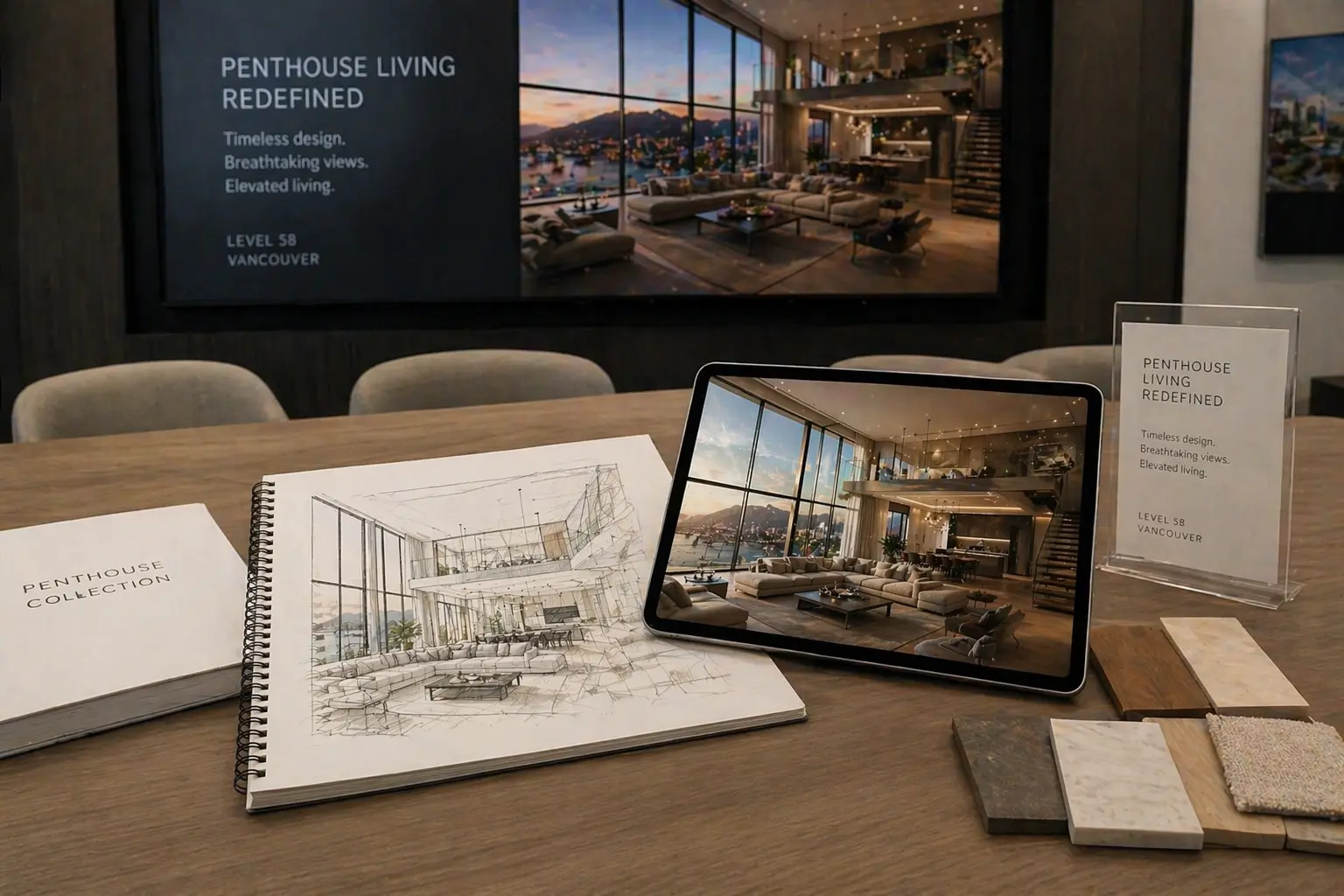
Opportunities and Limitations of AI in Visualization Workflows
When we analyze the real impact of AI and PropTech in architectural visualization, it becomes clear that we are not just dealing with a simple technological upgrade—but a complete transformation of how visualization workflows are structured, optimized, and delivered.
Efficiency, scalability, and cost advantages
One of the most defining strengths of AI and PropTech in architectural visualization is the dramatic increase in efficiency across all stages of production. From early-stage concept generation to final presentation visuals, AI and PropTech in architectural visualization allow teams to operate at a level of speed and scalability that was previously impossible.
With AI and PropTech in architectural visualization, design teams can:
- Generate multiple visual directions in minutes instead of days
- Automate repetitive production tasks such as lighting, asset distribution, and scene setup
- Maintain visual consistency across large-scale developments
In markets like Vancouver, where time-to-market is critical, AI and PropTech in architectural visualization directly influence project timelines. Faster visualization cycles mean faster approvals, faster marketing launches, and ultimately faster sales.
Another key advantage of AI and PropTech in architectural visualization is cost optimization. By reducing manual workload, studios can significantly lower production costs while reallocating resources toward creative storytelling and high-impact design decisions. This shift allows AI and PropTech in architectural visualization to not only improve efficiency but also elevate the quality of final outputs.
For large real estate developments, AI and PropTech in architectural visualization enable batch production workflows. This means entire sets of units, perspectives, and variations can be generated rapidly while maintaining brand alignment—an essential factor in PropTech-driven marketing strategies.
Creative limitations and accuracy concerns
Despite the clear benefits, AI and PropTech in architectural visualization are not without challenges. One of the most critical concerns is the potential gap between visually appealing outputs and real-world accuracy.
AI-generated visuals within AI and PropTech in architectural visualization can sometimes:
- Misinterpret spatial relationships
- Produce unrealistic material behaviors
- Ignore local building regulations or environmental constraints
This is especially important in regions like Canada, where construction standards and compliance requirements are strict. Relying solely on AI and PropTech in architectural visualization without expert validation can introduce serious risks—both technically and commercially.
In the context of virtual real estate marketing, where buyers rely heavily on visuals to make decisions, inaccuracies in AI and PropTech in architectural visualization can damage trust and credibility. Therefore, while AI accelerates production, it cannot replace the need for professional oversight.
The human-AI collaboration model
The true power of AI and PropTech in architectural visualization emerges when technology and human expertise work together in a hybrid model.
Instead of replacing designers, AI and PropTech in architectural visualization act as an intelligent assistant—handling speed, iteration, and automation—while designers focus on:
- Creative direction
- Narrative building
- Design validation
- Emotional impact
In this collaborative approach, AI and PropTech in architectural visualization are used for rapid ideation and variation generation, while human experts refine those outputs into meaningful and buildable visual stories.
This balance ensures that projects benefit from both:
- The speed and scalability of AI
- The judgment and creativity of human designers
As highlighted in the original workflow analysis , the most successful studios are those that treat AI and PropTech in architectural visualization as an enhancement layer rather than a replacement tool.
HUUR’s Perspective on AI-Assisted Architectural Visualization
Combining cinematic design with intelligent technology
At HUUR, the implementation of AI and PropTech in architectural visualization follows a very strategic philosophy: technology should support creativity—not dominate it.
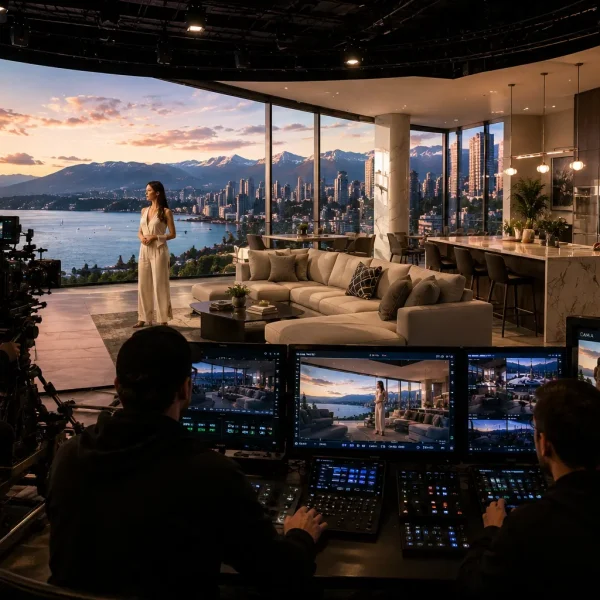
Rather than relying entirely on automation, HUUR integrates AI and PropTech in architectural visualization into a cinematic, story-driven workflow. The goal is not just to produce visuals, but to create immersive experiences that communicate emotion, atmosphere, and architectural intent.
Within this framework, AI and PropTech in architectural visualization are used to:
- Accelerate iteration cycles
- Explore multiple creative directions
- Optimize production workflows
However, the final narrative, composition, and design identity remain human-driven. This ensures that every project maintains a unique visual language—something that purely AI-generated outputs often fail to achieve.
Real-time environments and storytelling in visualization
Another critical layer of AI and PropTech in architectural visualization is the integration of real-time technologies such as Unreal Engine.
By combining real-time engines with AI and PropTech in architectural visualization, HUUR creates environments that are not static—but interactive and adaptive. These environments allow:
- Real-time design modifications
- Instant material and lighting updates
- Interactive walkthrough experiences
This approach transforms traditional visualization into a dynamic communication tool. Instead of just showing a space, AI and PropTech in architectural visualization enable users to experience it.
In virtual real estate marketing, this becomes a major competitive advantage. Developers can present projects through:
- Interactive tours
- XR-based experiences
- Investor-ready digital environments
All powered by the synergy between real-time systems and AI and PropTech in architectural visualization.
The future of AI and PropTech in Vancouver’s real estate market
Looking forward, AI and PropTech in architectural visualization will play an increasingly central role in shaping real estate development and marketing—especially in high-demand cities like Vancouver.
As competition intensifies, developers are no longer just competing on location or price. They are competing on presentation, experience, and perception. This is where AI and PropTech in architectural visualization become a strategic differentiator.
The future of AI and PropTech in architectural visualization lies in:
- Deeper integration with real-time platforms
- More accurate generative models
- Enhanced personalization of buyer experiences
However, one thing remains constant: AI and PropTech in architectural visualization will not replace human expertise. Instead, they will redefine how that expertise is applied.
Studios that successfully combine:
- Technology
- Storytelling
- Precision
- Strategic thinking
will lead the next generation of architectural visualization.
Frequently Asked Questions (FAQs)
What is PropTech in architectural visualization?
What is PropTech in architectural visualization? It refers to the use of digital technologies—such as real-time engines, AI, and interactive platforms—within AI and PropTech in architectural visualization to create, manage, and present property visuals across the entire real estate lifecycle.
This includes tools used in PropTech visualization, AI in architecture visualization, and virtual real estate marketing, all contributing to a more efficient and engaging digital transformation in real estate.
How is AI currently used in architectural visualization?
How is AI currently used in architectural visualization? AI is used to automate design tasks, generate concepts, enhance realism, and speed up workflows within AI and PropTech in architectural visualization.
Through AI in architecture visualization, these tools reduce repetitive work, support faster production, and improve decision-making—making visualization processes more efficient, scalable, and aligned with modern PropTech visualization demands.
Does AI replace visualization artists and designers?
No—AI in architecture visualization does not replace designers; it enhances their work. While AI-driven 3D visualization automates repetitive tasks like scene setup and variations, it cannot replace human creativity, design judgment, and storytelling.
In PropTech visualization and virtual real estate marketing, designers ensure accuracy, atmosphere, and brand alignment—areas where AI still falls short. Tools like generative AI for architecture speed up ideation, but human expertise is essential to refine and validate results.
The future of AI and PropTech in architectural visualization is collaboration: AI increases efficiency, while designers deliver meaning and quality.
How does AI improve real estate marketing visualization?
AI improves real estate marketing visualization by making content faster, smarter, and more engaging within AI and PropTech in architectural visualization workflows.
With AI-driven 3D visualization, teams can quickly create high-quality visuals, multiple design variations, and interactive experiences. This strengthens virtual real estate marketing, allowing buyers to explore properties more clearly and confidently.
AI also enhances real estate marketing visualization through personalization—adapting content to user preferences and behavior. This leads to higher engagement and faster decision-making, especially as part of the broader digital transformation in real estate.
Ready to turn your architectural vision into a powerful, immersive experience?
Whether you’re developing a project in Vancouver or targeting global investors, the way you present your property can define its success.
Let’s build something that doesn’t just look good — but sells, engages, and stands out.
Start your project with us or get expert consultation tailored to your needs.
Conclusion: The Future of AI and PropTech in Architectural Visualization
“In today’s fast-paced market, first impressions matter more than ever. Real estate developers in India are turning to AI-powered 3D real estate walkthroughs and immersive virtual tours to offer potential buyers a realistic and engaging property experience.”(archivi)
AI and PropTech in architectural visualization are no longer emerging trends—they are actively reshaping how architecture and real estate are designed, presented, and sold. From AI-driven 3D visualization to immersive environments and virtual real estate marketing, the industry is moving toward faster, smarter, and more engaging ways of communicating design.
In markets like Vancouver and across North America, this transformation is closely tied to the broader digital transformation in real estate, where technology enhances both efficiency and user experience. While generative AI for architecture continues to expand creative possibilities, its real strength lies in supporting professionals—not replacing them.
As the industry evolves, one thing is clear: success will depend on how effectively firms integrate AI and PropTech in architectural visualization into their workflows, positioning themselves at the intersection of design, technology, and market demand.