Introduction
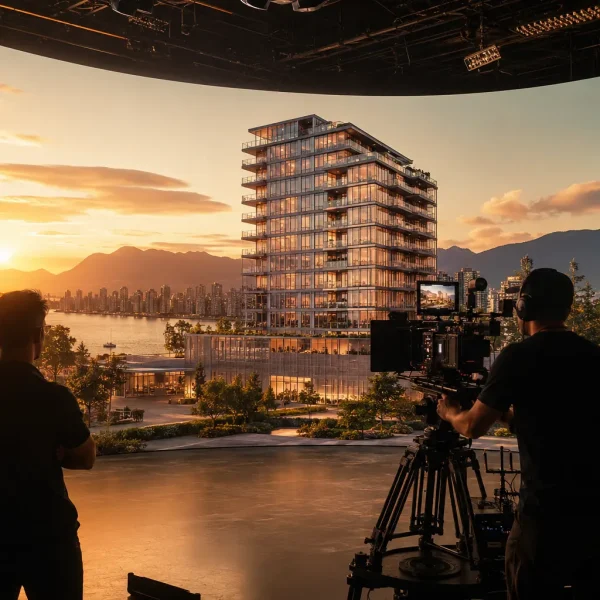
Digital Twins in Architecture and Real Estate are transforming how buildings are designed, marketed, and managed by creating intelligent, data-driven virtual environments that mirror real-world assets. Instead of relying on static visuals, developers and architects now use digital twin architecture to simulate performance, predict outcomes, and enhance decision-making across the entire lifecycle of a project.
At its core, this technology combines virtual replicas for real estate with real-time digital twins, enabling stakeholders to interact with a living model of a building before, during, and after construction. From immersive building simulations to data-driven architectural visualization, Digital Twins in Architecture and Real Estate are no longer experimental—they are becoming essential tools in modern property development.
In markets like Vancouver and across Canada, where real estate competition is intense and project costs are high, digital twins in property development offer a strategic advantage. They help reduce risk, improve communication with investors, and accelerate approvals by presenting projects in a clear, interactive format.
As demand for smarter, more sustainable buildings grows, real-time digital twins are shaping a new standard—one where every decision is informed, every system is connected, and every space is understood before it even exists. This shift clearly highlights the growing importance of Digital Twins in Architecture and Real Estate.
What Is a Digital Twin in Architecture and Real Estate?
Definition of Digital Twin Architecture
Digital Twins in Architecture and Real Estate refer to intelligent, data-connected virtual models that replicate a physical building or environment in real time. A digital twin architecture system is not just a visual model—it is a living digital ecosystem that continuously updates using real-world data from sensors, software platforms, and operational systems.
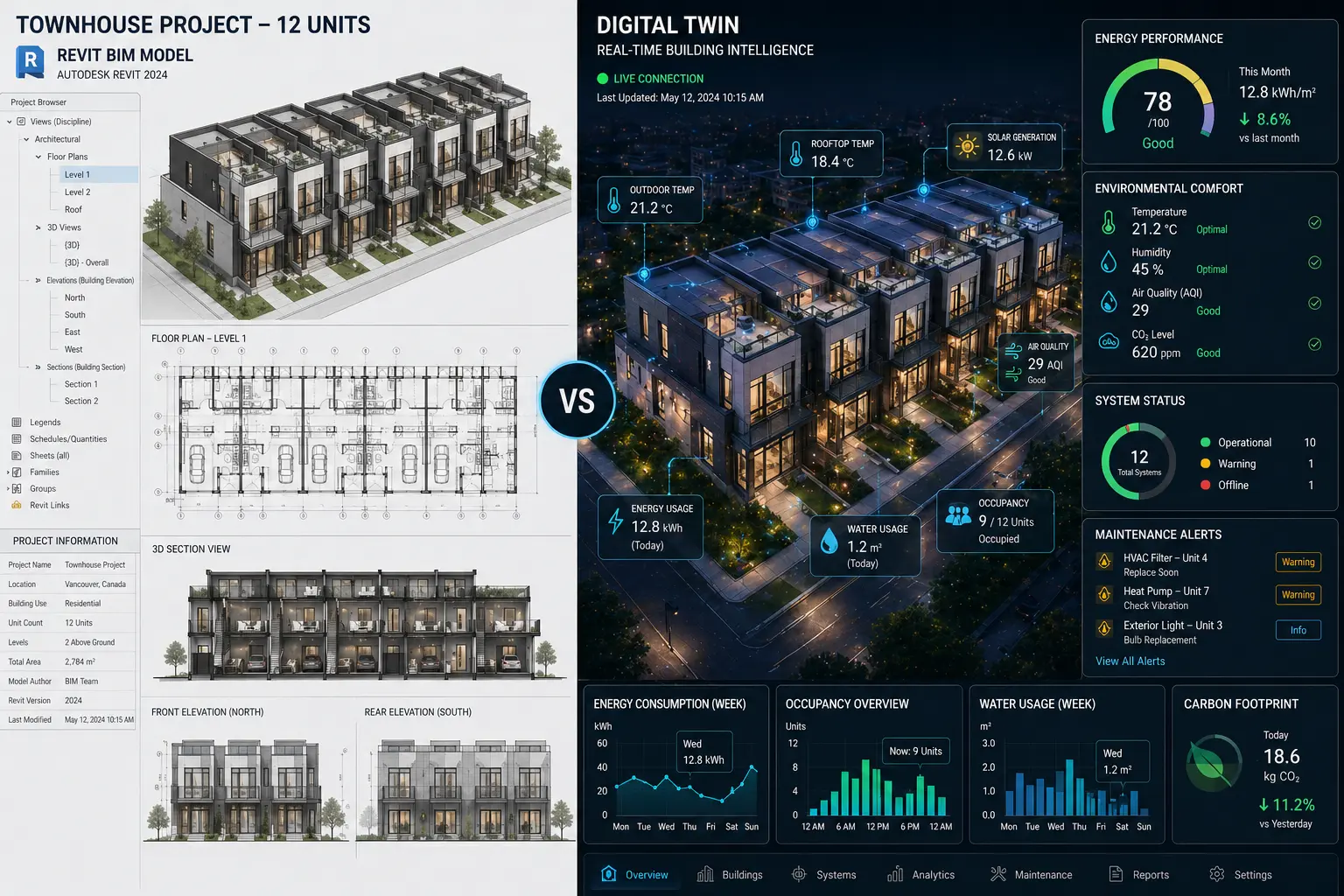
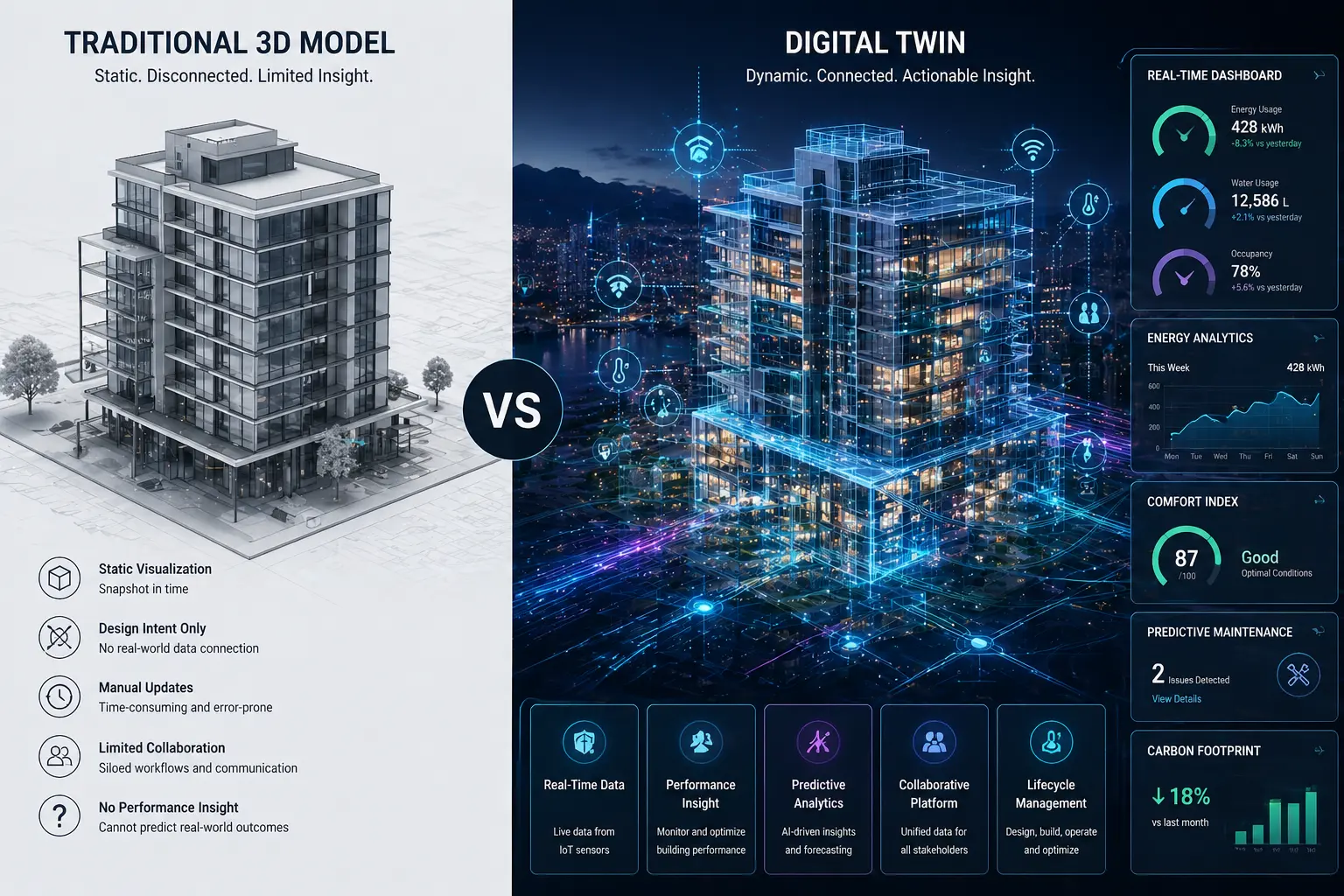
Unlike traditional 3D models or even BIM, which are largely static and design-focused, real-time digital twins integrate multiple layers of information, including geometry, materials, environmental conditions, user behavior, and performance metrics. This transforms virtual replicas for real estate into highly responsive tools that reflect how a building actually functions—not just how it looks.
At a deeper level, Digital Twins in Architecture and Real Estate connect three critical phases into one unified system:
- Design phase (planning, modeling, visualization)
- Construction phase (tracking progress, detecting issues)
- Operation phase (monitoring performance, maintenance, optimization)
This integration is what makes digital twin architecture so powerful. Instead of working with disconnected data and assumptions, architects and developers gain access to a continuous flow of insights across the entire lifecycle of a building.
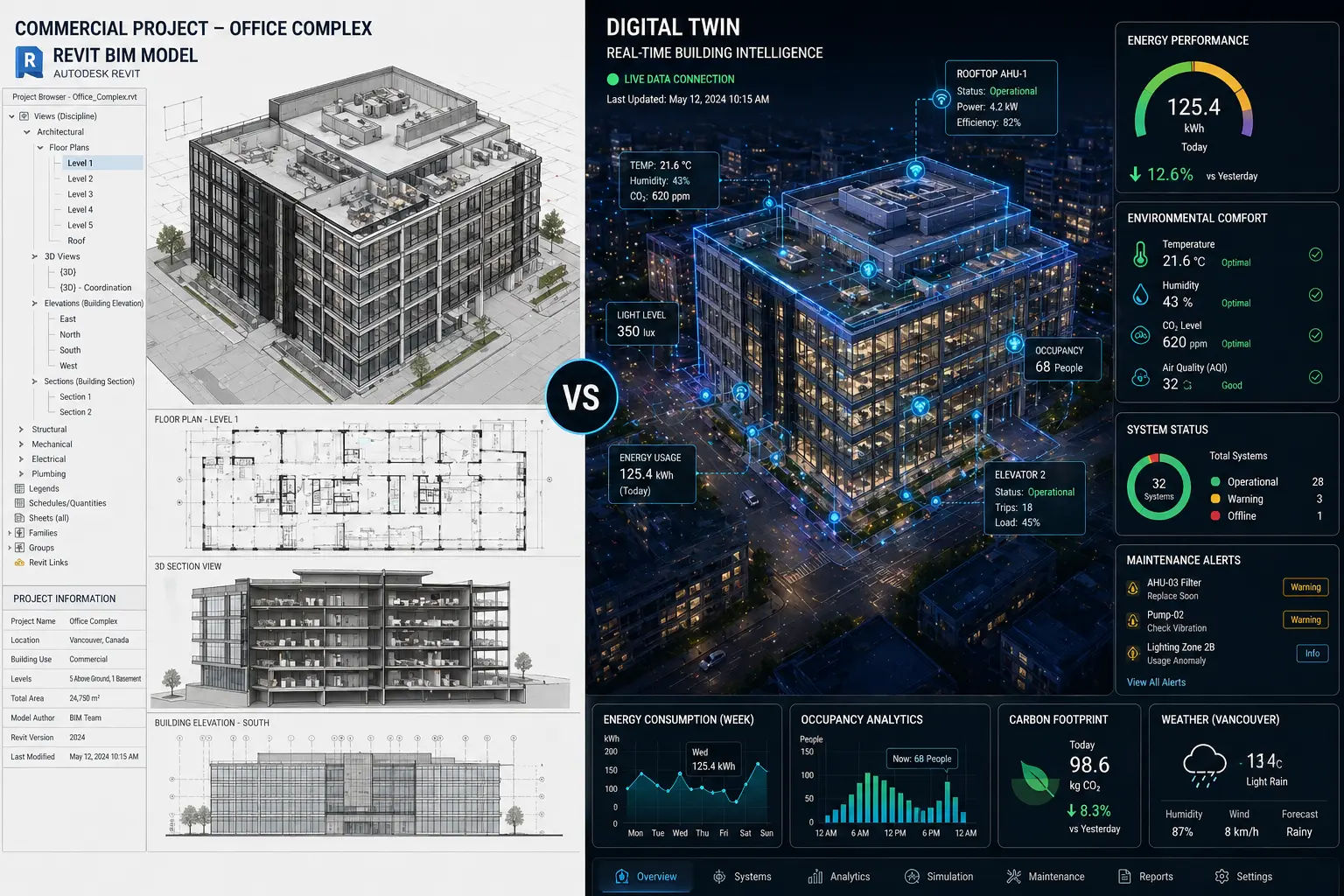
Another key aspect is the role of data-driven architectural visualization. With real-time digital twins, data is not hidden in reports—it is visualized directly within the model. For example, users can see energy consumption as heat maps, analyze airflow patterns, or monitor occupancy trends inside the digital environment. This makes decision-making faster, clearer, and far more accurate.
In practical terms, digital twins in property development allow teams to test ideas before construction begins, simulate real-world conditions, and optimize building performance over time. Whether it’s evaluating sustainability targets or improving tenant experience, immersive building simulations provide a level of control and understanding that traditional tools cannot match.
Ultimately, Digital Twins in Architecture and Real Estate shift the industry from static planning to continuous intelligence—where buildings are not only designed digitally but also managed, analyzed, and improved through their digital counterparts in real time.
How Virtual Replicas for Real Estate Work
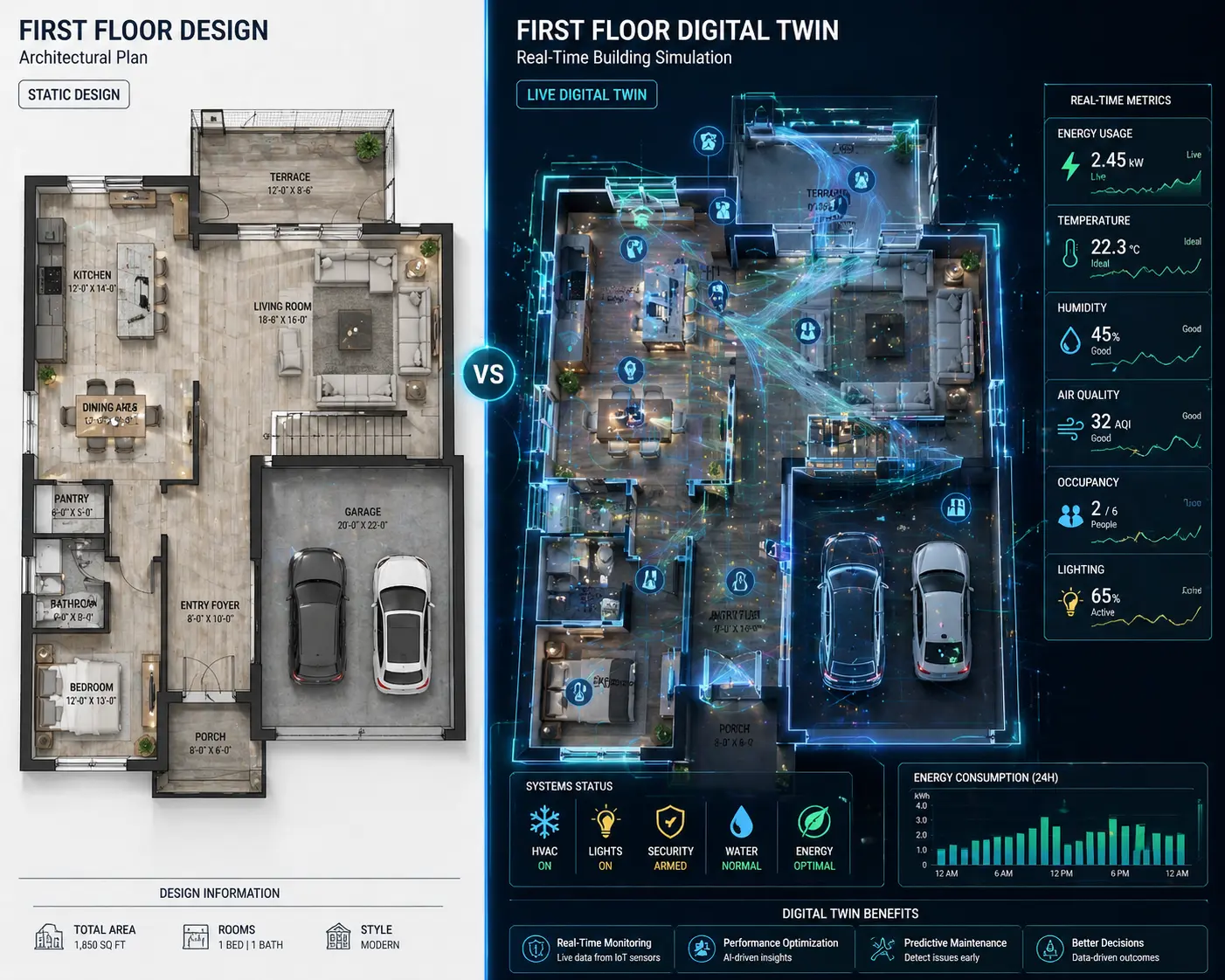
Digital Twins in Architecture and Real Estate rely heavily on virtual replicas for real estate to bridge the gap between design intent and real-world performance. These replicas are not just 3D visuals—they are intelligent, interactive environments built on digital twin architecture principles, where geometry, data, and behavior are fully integrated.
At a technical level, virtual replicas for real estate are created by combining 3 core layers:
- Geometric Layer → the 3D model of the building (from BIM, CAD, or Unreal Engine environments)
- Data Layer → real-time and historical data (energy use, temperature, occupancy, system performance)
- Behavior Layer → simulation logic that predicts how the building reacts under different conditions
This layered structure allows real-time digital twins to function as living systems rather than static models.
From Static Model to Intelligent Environment
In traditional workflows, a model is finalized and rarely updated. But in Digital Twins in Architecture and Real Estate, the model evolves continuously.
Through cloud platforms and IoT integration, virtual replicas for real estate receive live inputs such as:
- Environmental data (sunlight, wind, temperature)
- Building system data (HVAC, lighting, energy consumption)
- Human interaction data (movement, usage patterns)
This transforms the model into a real-time simulation environment, where data-driven architectural visualization makes invisible performance factors visible and understandable.
Real-Time Simulation and Scenario Testing
One of the most powerful aspects of real-time digital twins is scenario testing. Within immersive building simulations, developers and architects can simulate:
- Seasonal sunlight and shadow impact
- Energy efficiency under different usage patterns
- Space utilization and tenant behavior
- Material performance over time
For example, in Vancouver, where climate and daylight conditions vary significantly, digital twins in property development allow teams to test façade performance, optimize window placement, and improve energy efficiency before construction even begins.
This makes Digital Twins in Architecture and Real Estate highly practical—not just conceptual.
Integration with Cloud, AI, and Analytics
Modern digital twin architecture goes beyond simulation by integrating AI and analytics tools. These systems analyze patterns and generate insights automatically.
For instance:
- AI can predict maintenance needs based on system behavior
- Analytics platforms can optimize operational costs
- CRM systems can connect user behavior with sales and marketing strategies
This is where companies like Zerotens create real value—by combining virtual replicas for real estate with automation, AI, and customer data to deliver smarter real estate platforms.
Why This Matters in Real Estate
Ultimately, Digital Twins in Architecture and Real Estate turn buildings into measurable, testable, and improvable systems. Instead of guessing outcomes, stakeholders can rely on real-time digital twins to make informed decisions.
From early design to long-term operations, virtual replicas for real estate provide:
- Higher accuracy in planning
- Reduced development risks
- Better user experience and engagement
- Stronger investment confidence
This is why immersive building simulations are rapidly becoming a standard in modern development—because they allow you to experience, analyze, and optimize a building long before it physically exists.
Evolution from BIM to Real-Time Digital Twins
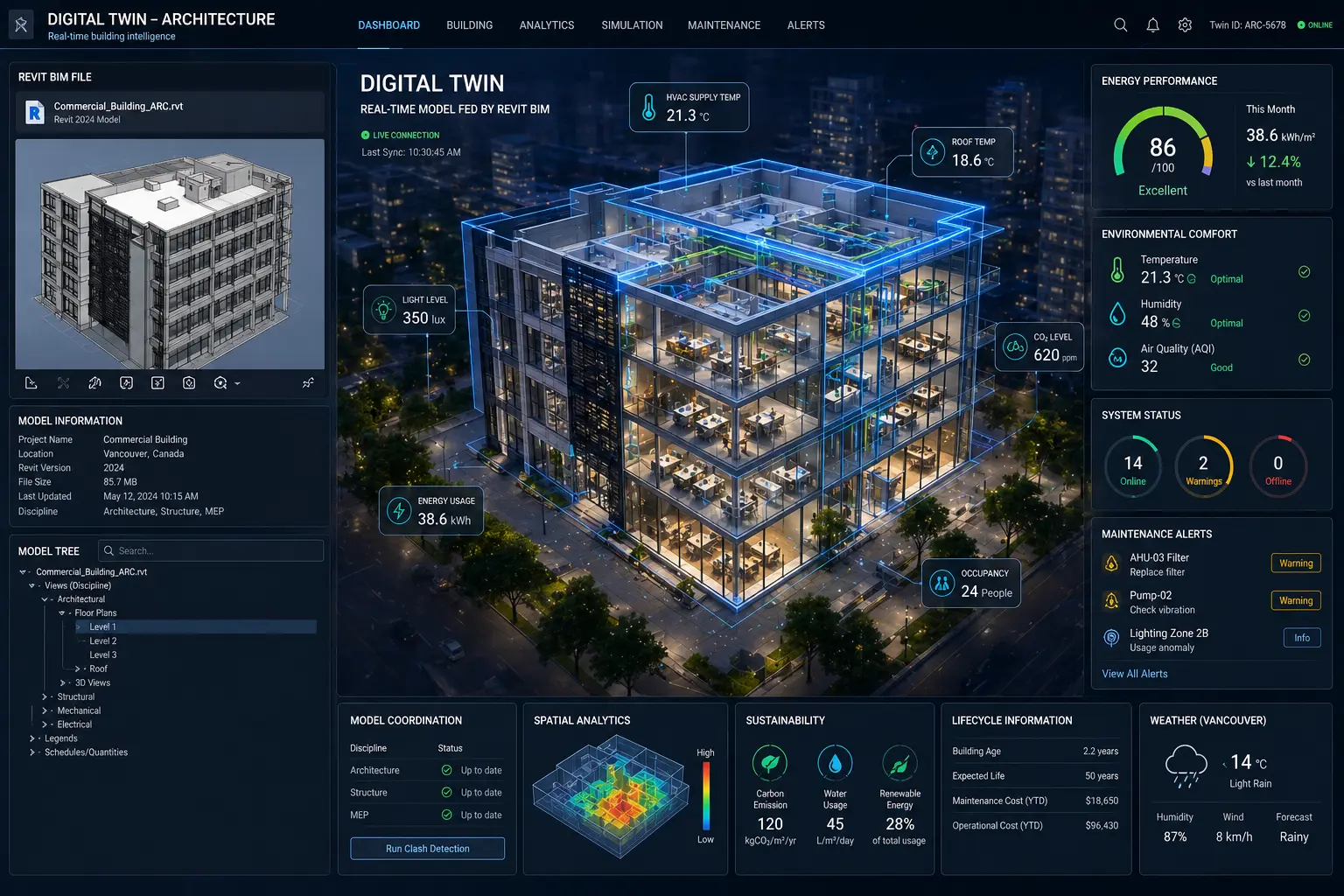
While BIM laid the foundation, real-time digital twins extend far beyond documentation. BIM focuses on design, but digital twins in property development enable continuous monitoring and optimization.
This evolution transforms static workflows into responsive ecosystems—one of the key reasons why Digital Twins in Architecture and Real Estate are rapidly replacing traditional tools.
How Digital Twins Differ from Traditional 3D Models
Static Models vs Real-Time Digital Twins
Traditional 3D models are static and limited. In contrast, Digital Twins in Architecture and Real Estate provide dynamic environments powered by real-time digital twins.
A 3D model shows appearance, but digital twin architecture shows performance—making immersive building simulations essential for modern decision-making.
Data Integration and Live Updates
Unlike static models, real-time digital twins integrate live data from IoT, analytics, and cloud systems. This enables data-driven architectural visualization, where design decisions are backed by real performance data.
In digital twins in property development, this allows teams to monitor progress, detect inefficiencies, and optimize outcomes continuously—reinforcing the value of Digital Twins in Architecture and Real Estate.
Why Immersive Building Simulations Matter
Immersive building simulations turn passive viewing into interactive exploration. With virtual replicas for real estate, users can test scenarios, validate designs, and predict outcomes.
This is especially valuable in Canada, where Digital Twins in Architecture and Real Estate help reduce risk and accelerate approvals.
Applications of Digital Twins in Design, Development, and Operations
Digital Twins in Property Development Planning
Digital Twins in Architecture and Real Estate allow early-stage simulation of zoning, sunlight, airflow, and spatial planning. Using digital twins in property development, teams reduce uncertainty and improve feasibility.
Use in Construction Monitoring and Lifecycle Management
During construction, real-time digital twins enable live tracking and performance comparison. This improves coordination and reduces delays—making digital twin architecture essential for efficient execution.
Facility Management and Predictive Maintenance
After construction, Digital Twins in Architecture and Real Estate support predictive maintenance through data-driven architectural visualization and live system monitoring.
Smart Cities and Urban-Scale Simulations
At scale, immersive building simulations extend to entire cities. In Vancouver, real-time digital twins help optimize infrastructure, sustainability, and urban planning—expanding the impact of Digital Twins in Architecture and Real Estate.
The Role of Real-Time Data in Digital Twin Environments
IoT Integration and Sensor-Driven Insights
Real-time digital twins rely on IoT data to reflect actual building performance. This makes Digital Twins in Architecture and Real Estate highly responsive and operational.
Data-Driven Architectural Visualization
With data-driven architectural visualization, users can see performance metrics visually. This strengthens decision-making within digital twin architecture environments.
Performance Optimization and Sustainability Tracking
In Canada, digital twins in property development support ESG goals and sustainability tracking. Using immersive building simulations, teams test improvements before implementation.
How Digital Twins Enhance Visualization and Decision-Making
Immersive Client Presentations and Sales Tools
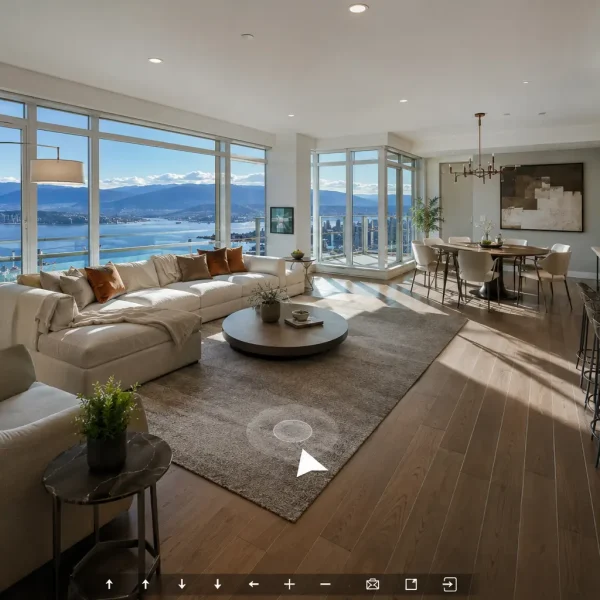
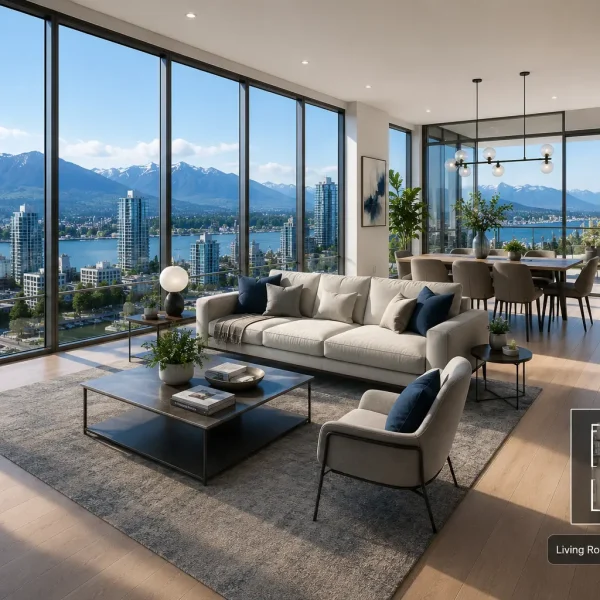
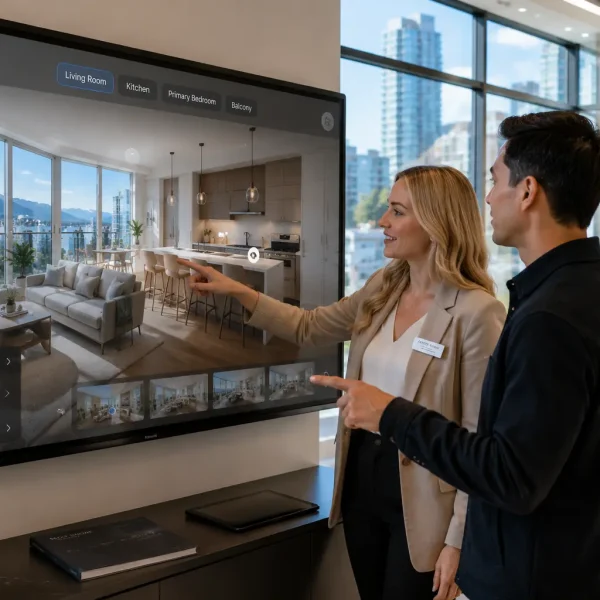
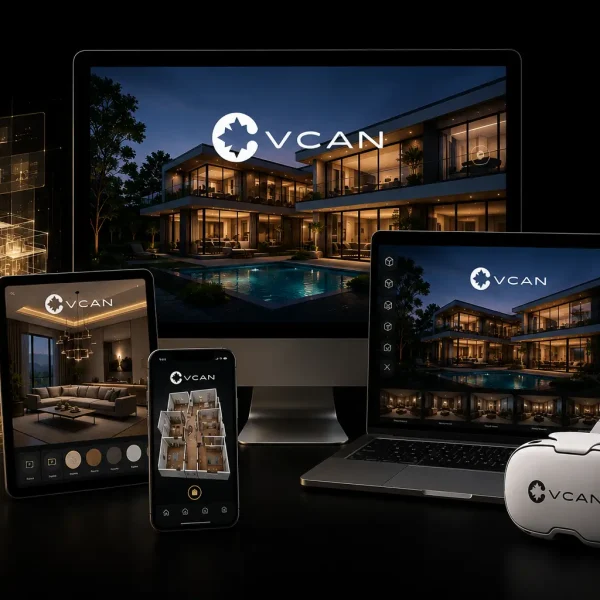
Digital Twins in Architecture and Real Estate are transforming how projects are presented, experienced, and sold. Instead of relying on static renders, developers now use virtual replicas for real estate powered by real-time digital twins to create fully interactive environments.
With immersive building simulations, clients can walk through properties, explore layouts, and even customize finishes in real time. This level of interaction builds trust and shortens decision cycles—especially in competitive markets like Vancouver. As a result, digital twin architecture is becoming a key sales driver, turning visualization into a strategic conversion tool.
Risk Reduction in Real Estate Investments
One of the most valuable advantages of Digital Twins in Architecture and Real Estate is the ability to simulate outcomes before making costly decisions. By leveraging real-time digital twins, developers and investors can analyze multiple financial, environmental, and operational scenarios.
For example, digital twins in property development allow teams to:
- Forecast construction costs and timelines
- Evaluate energy performance and operational expenses
- Test market demand and unit configurations
This predictive capability reduces uncertainty and supports smarter investments. Combined with data-driven architectural visualization, decision-makers gain clarity that traditional methods simply cannot provide.
Faster Approvals and Stakeholder Alignment
In complex real estate projects, alignment between stakeholders is often a major challenge. Digital Twins in Architecture and Real Estate solve this by creating a shared, interactive environment where all parties can visualize and understand the project clearly.
Through data-driven architectural visualization and immersive building simulations, architects, developers, city planners, and investors can collaborate more efficiently. This reduces misunderstandings, accelerates feedback cycles, and speeds up approvals—particularly in regulated markets like Canada.
By using virtual replicas for real estate, teams move from abstract discussions to clear, data-backed decisions, making digital twin architecture essential for modern project delivery.
Case Perspective: Vancouver and Canadian Market Trends
In Canada, especially in Vancouver, the adoption of Digital Twins in Architecture and Real Estate is accelerating due to rising construction costs, sustainability requirements, and the need for precision in development.
Local trends show that:
- Developers are increasingly adopting real-time digital twins for high-value projects
- Digital twins in property development are used to improve efficiency and reduce delays
- Demand for immersive building simulations is growing in pre-sales and investor presentations
Companies like Zerotens are leading this shift by integrating virtual replicas for real estate, CRM systems, and AI-driven platforms. This approach connects marketing, sales, and operations into a unified ecosystem—maximizing the impact of Digital Twins in Architecture and Real Estate.
As the Canadian market evolves, digital twin architecture will continue to play a critical role in enabling smarter decisions, stronger visual communication, and more efficient real estate development processes.
FAQs (AEO + GEO Optimized)
What is a digital twin in architecture and real estate?
A digital twin is a real-time digital model that mirrors a physical building using live data. In Digital Twins in Architecture and Real Estate, this means creating intelligent environments where structure, systems, and performance are continuously monitored and visualized through digital twin architecture.
How are digital twins different from standard 3D models?
Traditional 3D models are static and only show appearance. In contrast, real-time digital twins are dynamic, data-driven systems that simulate how a building performs. This makes Digital Twins in Architecture and Real Estate far more powerful for decision-making and operational insights.
Do digital twins require real-time data to function?
Not necessarily, but real-time digital twins significantly enhance value. Without live data, a model can still simulate scenarios, but with data integration, digital twin architecture becomes a responsive system that reflects real-world conditions instantly.
How are digital twins used in property development?
In digital twins in property development, these systems are used for planning, simulation, construction monitoring, and long-term management. Through immersive building simulations and data-driven architectural visualization, developers can reduce risks and optimize performance across the lifecycle.
Are digital twins widely used in Canada, especially Vancouver?
Yes, adoption of Digital Twins in Architecture and Real Estate is growing in Canada, particularly in Vancouver. High development costs and sustainability demands are pushing developers to use virtual replicas for real estate and real-time digital twins for smarter planning and execution.
How does Zerotens integrate CRM automation?
Zerotens connects Digital Twins in Architecture and Real Estate with CRM systems to track user behavior, manage leads, and personalize experiences. By linking virtual replicas for real estate with data and automation, they help optimize marketing and sales performance.
The future of real estate is no longer built on assumptions — it’s simulated, tested, and optimized before it even exists.
If you’re exploring how Digital Twins in Architecture and Real Estate can transform your next project, the real difference lies in how these systems are designed, integrated, and executed.
From immersive building simulations to data-driven decision environments, we help you turn complex ideas into clear, high-impact experiences.
Connect with our team to explore how your project can evolve beyond visualization into a fully intelligent digital asset.
Conclusion: The Future of Digital Twins in Architecture and Real Estate
“As the real estate industry continues to evolve and new technologies emerge, it is important to embrace digital twins to stay competitive and relevant in a rapidly evolving landscape.” (JLL) Digital Twins in Architecture and Real Estate are not just improving workflows—they are redefining the entire lifecycle of the built environment. By integrating real-time digital twins, immersive building simulations, and data-driven architectural visualization, this technology is shifting the industry from reactive decision-making to predictive, intelligent systems.
Looking ahead, digital twin architecture will become deeply embedded in every stage of development—from early concept design to long-term asset management. Developers will rely on digital twins in property development to test ideas before construction, optimize performance during operations, and continuously improve buildings based on real-world data. This level of control and insight was simply not possible with traditional tools or static models.
In fast-growing regions like Vancouver and across Canada, where cost efficiency, sustainability, and speed are critical, Digital Twins in Architecture and Real Estate provide a clear competitive advantage. They enable smarter investments, reduce uncertainty, and support compliance with evolving environmental standards. At the same time, virtual replicas for real estate are transforming how projects are marketed—creating more engaging, transparent, and data-backed experiences for buyers and stakeholders.
Another key shift is the rise of connected ecosystems. As cities move toward smart infrastructure, real-time digital twins will expand beyond individual buildings into entire urban networks. This will allow planners, governments, and developers to simulate traffic, energy systems, and environmental impact at scale—making immersive building simulations essential tools for future city planning.
For forward-thinking companies like Zerotens, the opportunity lies in combining Digital Twins in Architecture and Real Estate with AI, CRM automation, and digital platforms. This integration creates a seamless bridge between design, marketing, and operations—unlocking new levels of efficiency and user experience.
Ultimately, the future belongs to those who can understand and optimize spaces before they are built and continuously refine them after they exist. This is the true power of Digital Twins in Architecture and Real Estate—a transformation that is not just technological, but strategic, shaping the next generation of intelligent, sustainable, and highly responsive built environments.