Introduction
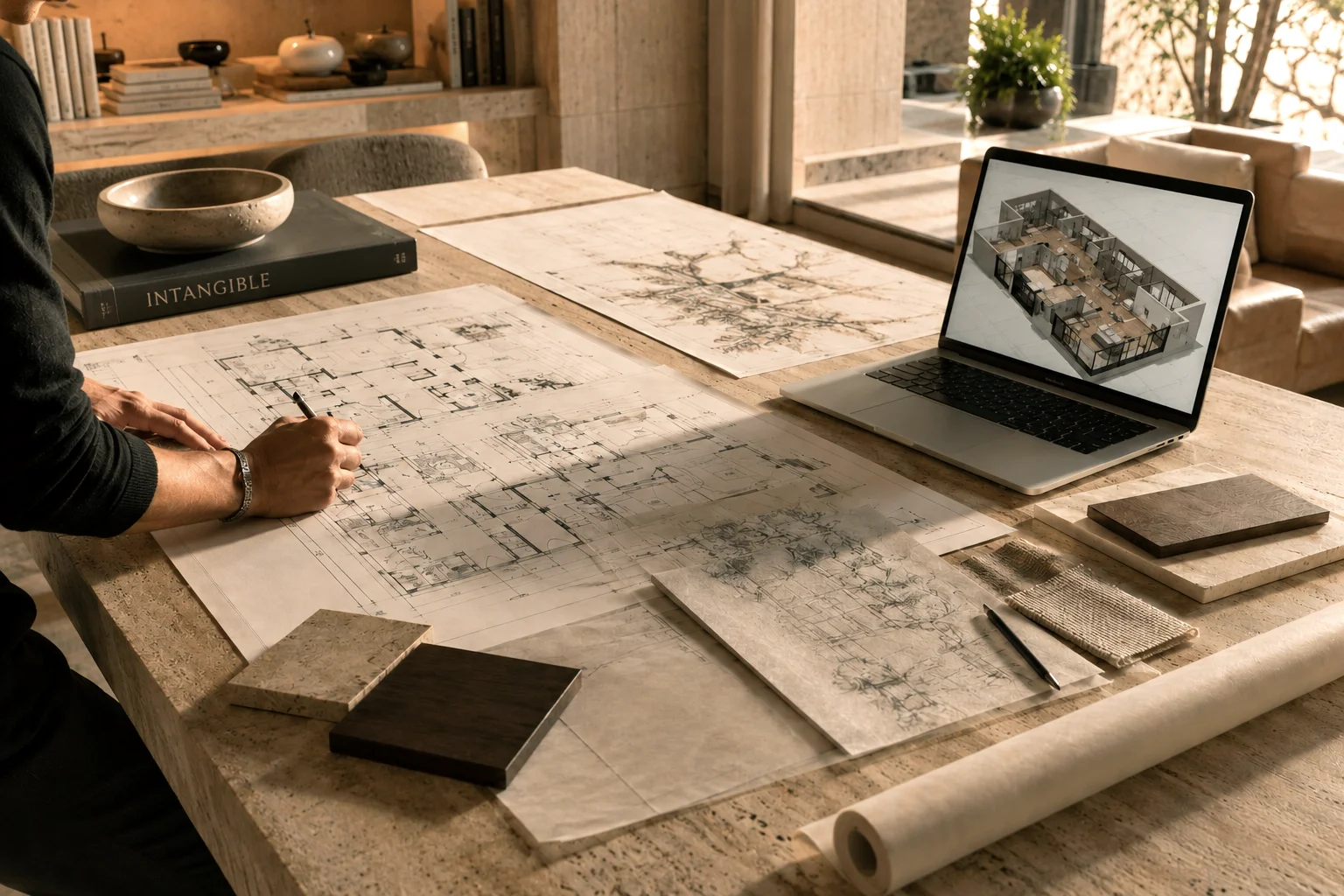
Digital architecture storytelling is the discipline that separates architectural presentations that move clients and stakeholders to genuine conviction from those that simply document a design — and the architects, developers, and visualization studios that have mastered this discipline are consistently winning the commissions, closing the presales, and receiving the investor confidence that peers still relying on static render sequences cannot generate. Architecture has always been, at its core, a digital architecture storytelling profession. Buildings are not simply objects — they are settings for human experience, and the ability to communicate that experience convincingly before a building is built is what determines whether a design earns the resources and support required to realize it.
The digital tools available for telling these stories have advanced dramatically over the past decade — from static render packages and physical scale models to real-time interactive environments, cinematic architectural visualization films produced on LED volume stages, and immersive storytelling experiences that place clients inside unbuilt spaces as fully realized, emotionally resonant digital worlds. The architects and developers who understand how to deploy these tools as digital architecture storytelling instruments — rather than simply as more sophisticated documentation formats — are achieving a qualitatively different level of stakeholder and buyer engagement than those who apply advanced technology to the same predetermined sequence of hero renders the industry has produced for decades.
HUUR Studios has built its visualization and production practice around exactly this storytelling discipline — developing digital architecture storytelling capability that serves Vancouver architects, developers, and design firms with cinematic quality, narrative sophistication, and technical precision that transforms design communication from documentation into genuine persuasion. This article examines 7 specific digital architecture storytelling techniques that elevate design presentations from impressive to genuinely compelling — the techniques that determine whether a client leaves a presentation thinking about the design, or thinking about how quickly they can move forward.
Why Storytelling Is Becoming Essential in Modern Architecture
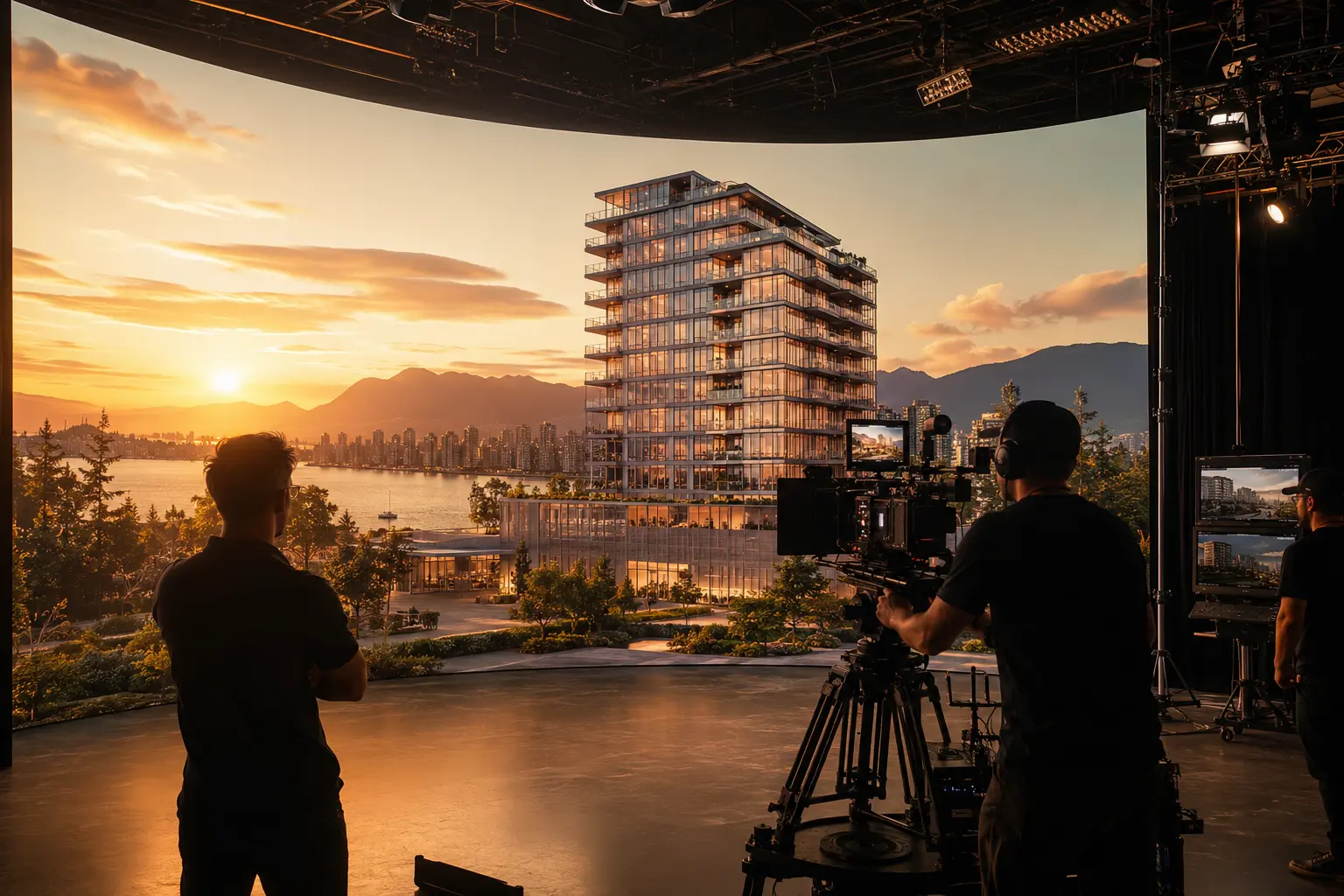
Digital architecture storytelling has moved from creative enhancement to commercial necessity across the most competitive segments of architectural practice and real estate development — driven by rising client and stakeholder expectations that have been permanently calibrated by the immersive storytelling experiences they encounter across film, gaming, and premium brand communication. A client who experiences their daily digital life through Netflix productions, interactive brand worlds, and spatially rich game environments brings a qualitatively higher expectation of narrative sophistication to their architectural presentation than the industry has historically needed to meet.
The consequence of this expectation shift is visible in how clients and stakeholders respond differently to presentations that deploy genuine storytelling versus those that deploy superior documentation. A beautifully rendered sequence of architectural images, however technically accomplished, communicates spatial quality — but it does not communicate experience, aspiration, or the emotional relationship between people and the space being proposed. Architectural narrative is what bridges this gap, giving a design the human context that transforms competent documentation into genuine conviction.
The Shift From Documentation to Experience
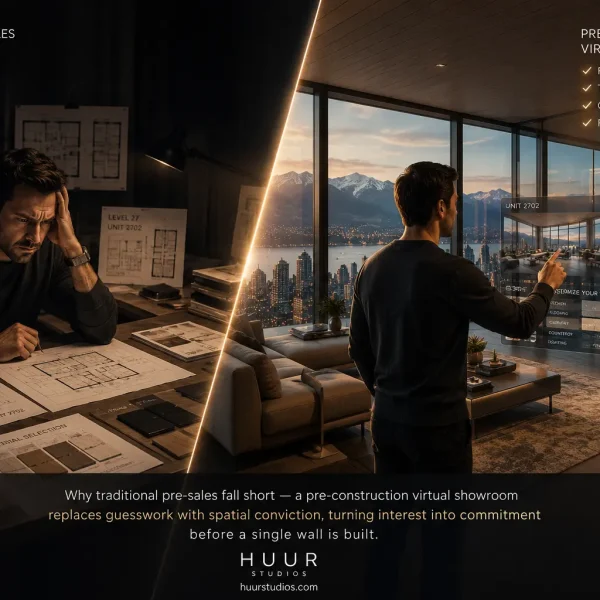
The most significant shift in digital architecture storytelling over the past 5 years has been from documentation — the representation of what a space will look like — to experience design, the communication of what a space will feel like to inhabit. This shift has been enabled by the combination of real-time rendering technology, LED volume production capability, and interactive visualization platforms that together allow architects and studios to represent not just the physical qualities of a space but the sensory and emotional qualities that define how human beings actually experience architecture in practice.
For Vancouver architects competing for landmark commissions and developers competing for presale buyer attention across British Columbia’s most demanding markets, this experiential design capability has become a genuine competitive differentiator. Practices and studios that can place clients and buyers inside a fully realized experiential version of an unbuilt design — rather than simply showing them images of it — consistently achieve stronger stakeholder commitment, faster decision-making, and higher client satisfaction through the delivered project.
What Digital Architecture Storytelling Requires
Effective digital architecture storytelling requires 3 capabilities working in combination — and digital architecture storytelling that lacks any one of them falls short: narrative intelligence — the ability to identify the emotional arc and human story that gives a design its meaning and communicates it to a specific audience; technical production capability — the visualization tools and production infrastructure to render that narrative with the photorealistic quality and spatial accuracy that architectural communication demands; and creative direction — the filmmaking and design sensibility to translate narrative intention into specific decisions about camera movement, lighting character, pacing, and human presence that determine how powerfully the story lands with the audience experiencing it.
HUUR Studios brings all 3 digital architecture storytelling capabilities to every project — combining the architectural knowledge to identify what makes each design’s human story worth telling, the technical infrastructure to render that story at the highest visual quality available, and the creative direction discipline to shape every production decision around the specific emotional response the presentation needs to generate in the specific audience it is designed to reach across Vancouver, British Columbia, and beyond.
Technique #1: Designing a Narrative Instead of a Sequence of Images
The first and most foundational technique in digital architecture storytelling — and the one with the greatest influence on every subsequent decision — is replacing the conventional image sequence — exterior approach, lobby, living spaces, amenities, exterior at sunset — with a deliberate narrative arc that gives the presentation a beginning, middle, and end structured around a specific human story. A narrative arc asks: who is the person experiencing this space, what are they arriving from, what does this space offer them that changes their experience of their daily life, and what is the defining moment in their relationship with this architecture that the presentation should build toward and linger on?
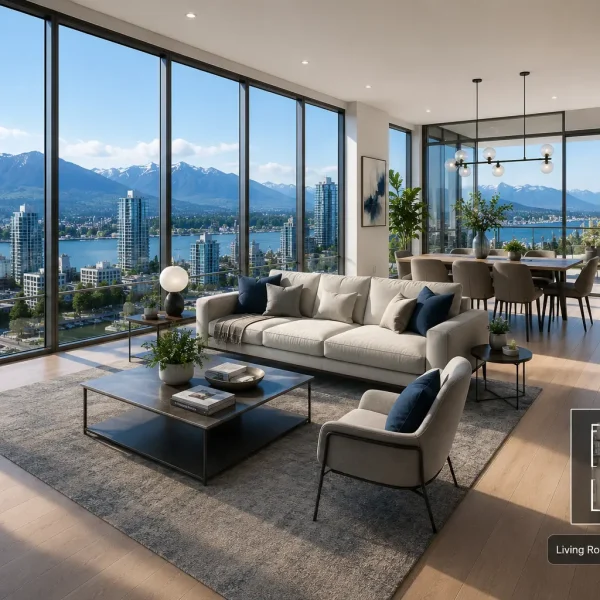
Answering these questions before any camera position is established or any rendering is produced is what separates strong digital architecture storytelling presentations that generate genuine emotional responses from those that generate admiration for the architecture without building personal investment in it. An architectural narrative that follows a specific person through a specific morning in a Vancouver waterfront residence — waking to mountain views, moving through spaces designed around the rhythm of their life, arriving at the workspace that overlooks the ocean — communicates something fundamentally different about the design than a sequence of competent render images of the same spaces.
Explore More From HUUR
Virtual Production with Unreal Engine: Why Real-Time Rendering Is Crushing Old-School Production Methods
Building the Story Before Building the Scene
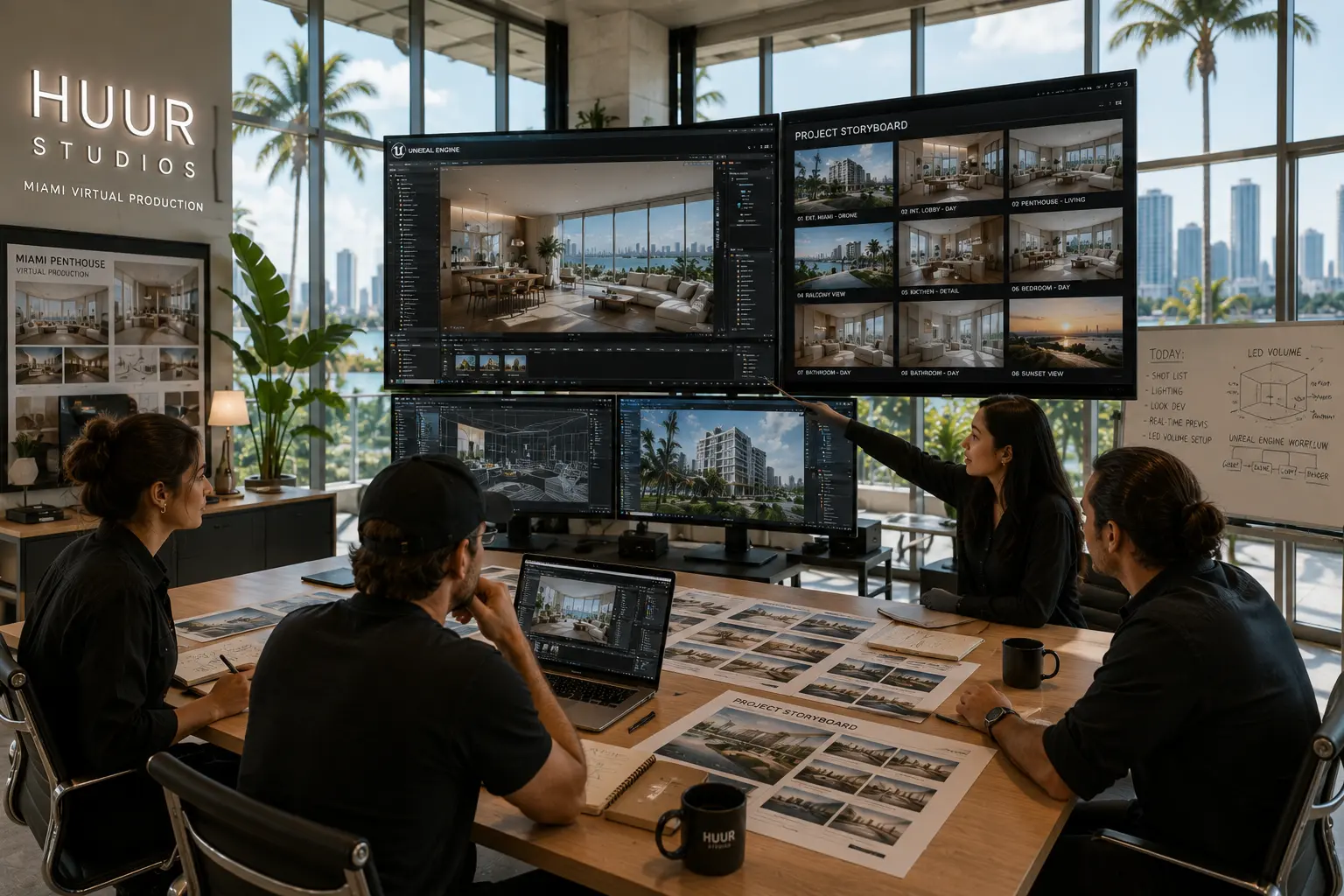
HUUR Studios approaches every digital architecture storytelling project with a narrative design phase — the step that makes digital architecture storytelling that precedes all technical production work. This phase asks the architectural team to identify the design’s specific human proposition — not its spatial qualities or technical achievements, but the specific change it makes to the experience of the people who will inhabit it. That proposition becomes the spine of the presentation narrative: every camera position, every lighting condition, every moment of human presence within the presentation serves to communicate and reinforce it.
For a Vancouver presale development, this narrative proposition might be the transformation of a buyer’s relationship with Vancouver’s natural landscape — the mountain and ocean views that the building’s positioning makes part of daily life rather than occasional experience. For a commercial project, it might be the way a workspace design changes the creative energy and collaborative capacity of the people who work within it. Whatever the proposition, articulating it clearly before production begins is the step that most consistently determines whether the eventual presentation generates conviction or simply appreciation.
Technique #2: Using Cinematic Composition to Guide Attention
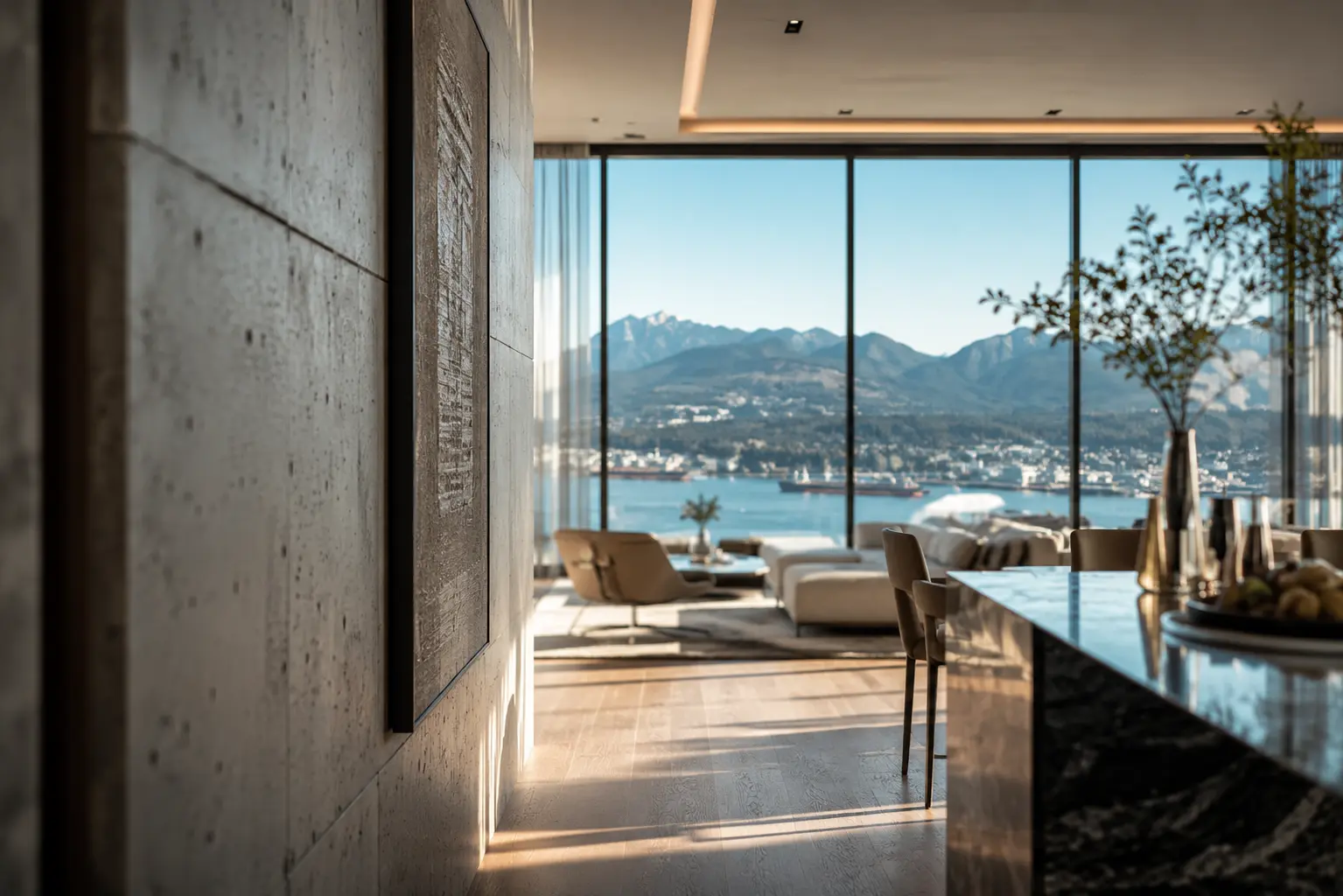
Cinematic architectural visualization deploys the compositional principles of professional cinematography — depth of field, leading lines, deliberate foreground elements, and carefully controlled sightlines — to guide a viewer’s attention through an architectural space in a specific sequence that builds understanding and emotional response progressively rather than presenting everything simultaneously. In a conventional architectural render, every element of the space is typically visible and in focus simultaneously, allowing the viewer’s eye to wander without direction. Cinematic composition disciplines the viewer’s attention toward what the architect considers most important about each spatial moment.
This compositional discipline is particularly powerful in digital architecture storytelling because it gives because it allows architects to control the sequence in which a viewer forms their understanding of a space — revealing key spatial relationships, material qualities, and experiential moments in an order specifically designed to build toward the design’s defining proposition. A viewer whose attention is guided through a living space from an intimate foreground detail to the expansive ocean view beyond experiences the relationship between intimacy and grandeur that defines the space’s character — rather than simply seeing both simultaneously in a wide-angle render that gives equal visual weight to every element.
Camera Movement as Narrative Instrument
Camera movement — the deliberate choreography of how a presentation moves through a space — is one of the most powerful instruments in digital architecture storytelling and one of the most underutilized in conventional architectural visualization practice. A camera that drifts slowly across a material surface communicates attention and quality. A camera that moves toward a dramatic view communicates revelation and arrival. A camera that follows a human figure through a sequence of spaces communicates the rhythm and flow of inhabitation. Each movement carries meaning that informs the viewer’s emotional response to the space before they have consciously processed the spatial information being presented.
HUUR Studios choreographs camera movement for every visualization and production project with the same deliberateness that a film director applies to a feature sequence — asking what emotional state each movement produces in the viewer, whether that state serves the overall narrative arc of the presentation, and whether the transition from one movement to the next maintains the narrative momentum needed to carry the viewer from opening engagement through to the central conviction the presentation is designed to generate.
Technique #3: Creating Emotional Connections Through Lighting and Atmosphere
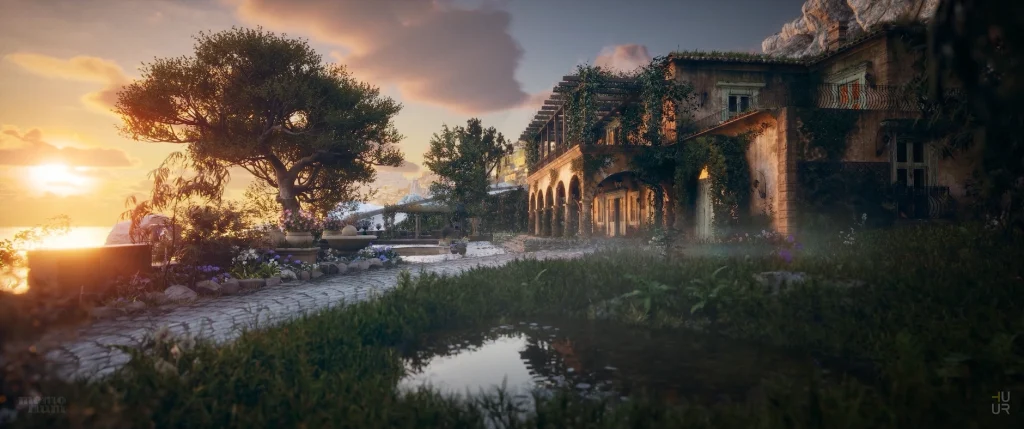
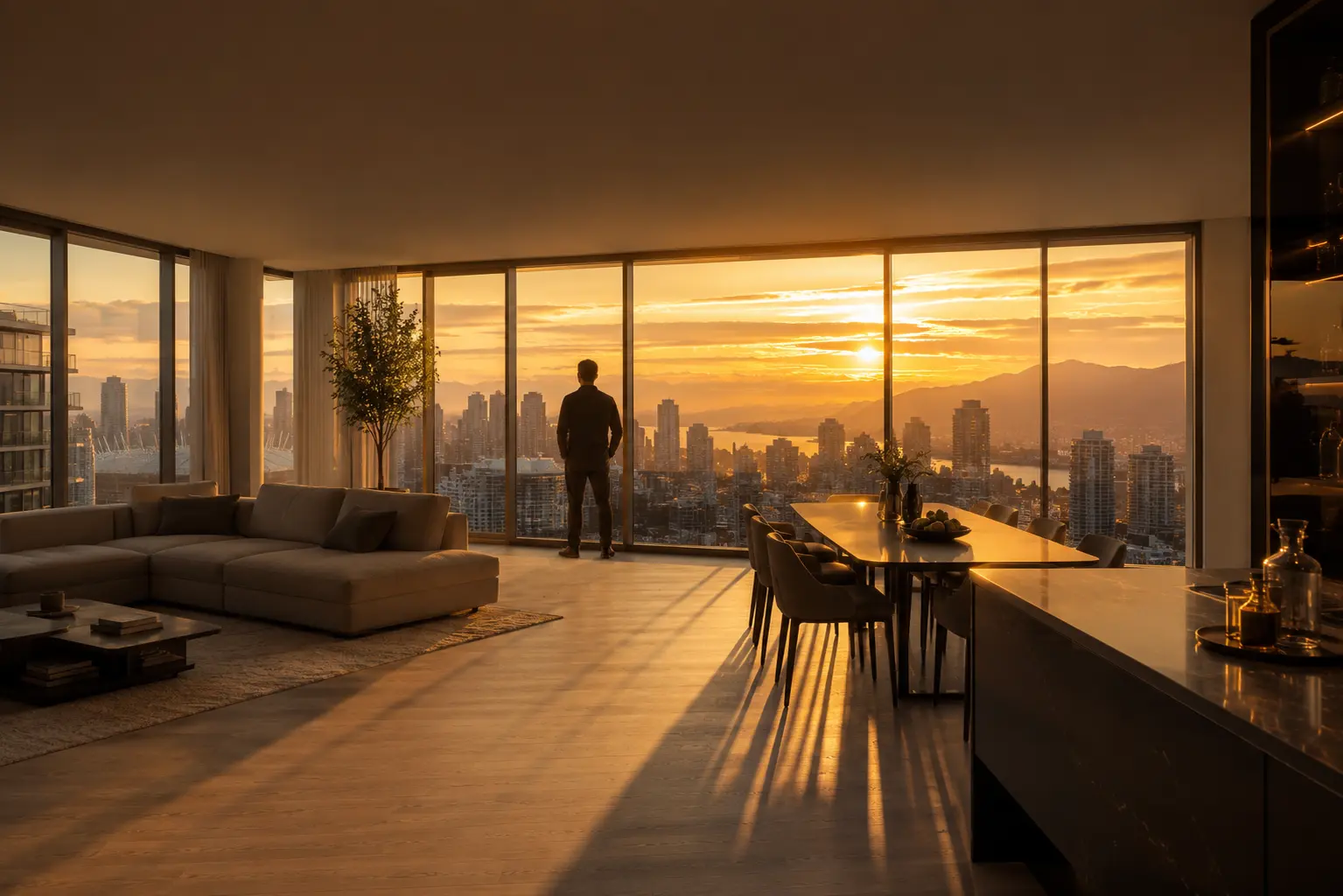
Lighting is the single most powerful emotional instrument in digital architecture storytelling — and in all digital architecture storytelling practice — more powerful than spatial composition, material selection, or human presence — because lighting quality is what the human visual system is most directly wired to interpret as an emotional signal. Warm golden hour light communicates welcome, warmth, and the pleasurable quality of evening at home. Crisp morning light communicates clarity, energy, and the productive quality of a well-designed workspace at the start of a day. Overcast diffuse light communicates calm, concentration, and the reflective quality of a space designed for focused thought. These are not decorative choices — they are narrative decisions that determine the emotional register of the experience the presentation delivers.
The ability to control lighting with precision distinguishes professional digital architecture storytelling from conventional render production. In a conventional render workflow, lighting is typically established to show the space as attractively as possible — often defaulting to golden hour or bright daylight conditions that photograph beautifully but may not communicate the specific emotional character that the design’s narrative proposition requires. In a storytelling-driven workflow, lighting is selected specifically for its emotional contribution to the narrative arc, and may vary deliberately across different sequences of the same presentation to mark narrative transitions.
Real-Time Rendering and Atmospheric Control
Real-time rendering technology has transformed the precision and efficiency of atmospheric control in architectural visualization — allowing lighting conditions, time-of-day settings, and atmospheric qualities to be adjusted in real time and evaluated immediately rather than being committed to in advance and discovered only after a lengthy offline render cycle. This real-time feedback is commercially significant for digital architecture storytelling — making digital architecture storytelling faster and more creatively rich because it allows the creative team to explore multiple atmospheric options during a single creative session, making lighting decisions based on actual visual evidence rather than artistic estimation.
HUUR Studios builds on Unreal Engine’s Lumen global illumination system specifically because it provides the most accurate and most artistically controllable real-time lighting quality available for architectural applications — calculating light bouncing, indirect illumination, and material interaction in real time with the nuanced quality that the emotional precision of strong architectural storytelling demands. The ability to evaluate 6 or 8 different atmospheric conditions in the time it previously took to render a single option has fundamentally changed the quality of lighting decisions possible within a commercially viable production timeline.
Technique #4: Transforming Static Concepts into Interactive Experiences
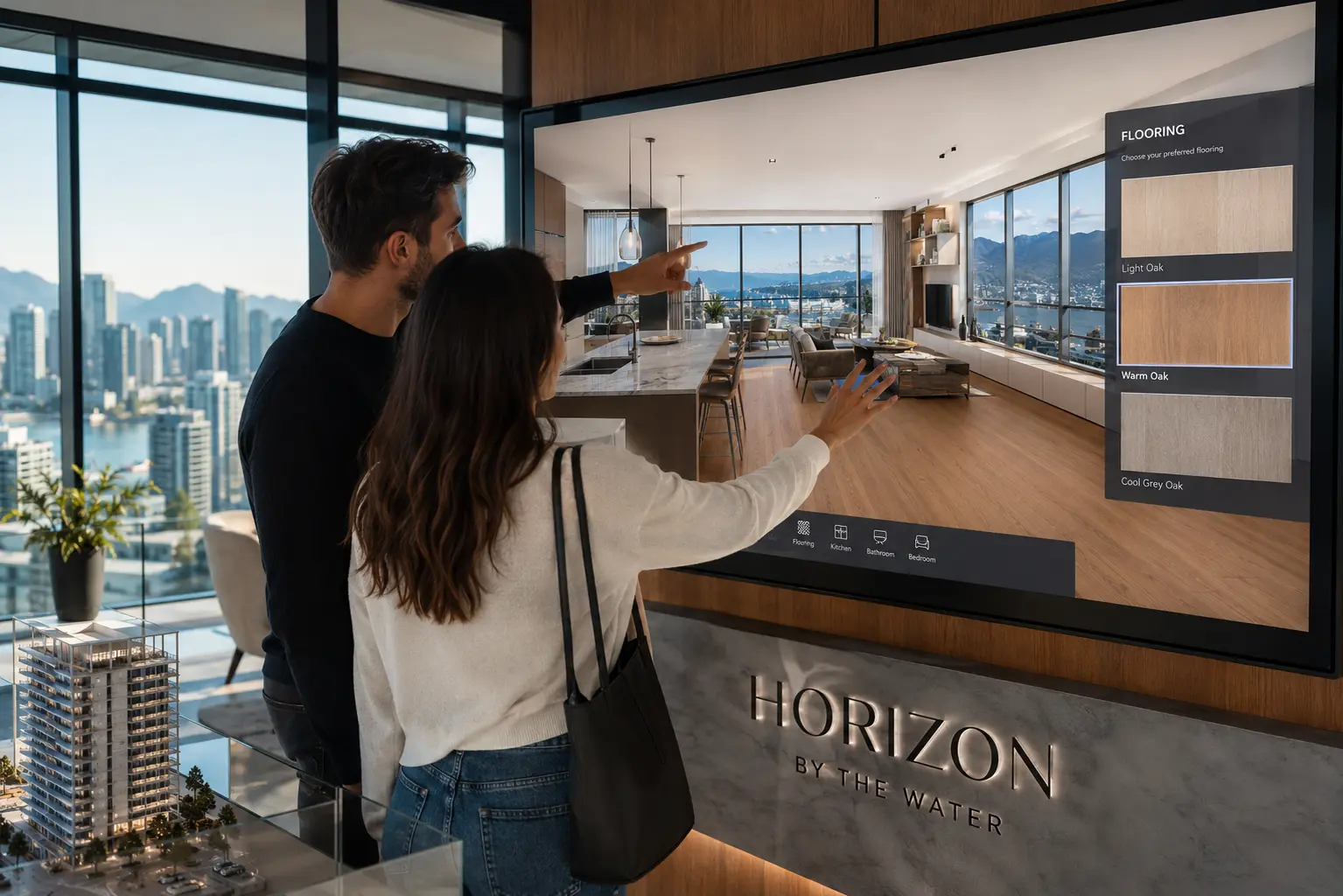
The fourth technique in digital architecture storytelling is the transformation — and for many clients, the most memorable of static design concepts into interactive experiences that give clients and stakeholders genuine spatial agency — the ability to navigate, configure, and investigate a proposed design on their own terms rather than receiving a curated sequence of images selected by the design team. This transformation is commercially significant because the spatial conviction generated by self-directed exploration is qualitatively different from the conviction generated by passive observation — a client who has navigated a space and answered their own questions through direct digital exploration arrives at decision-making with a fundamentally different level of confidence than one who has simply watched a presentation of the same design.
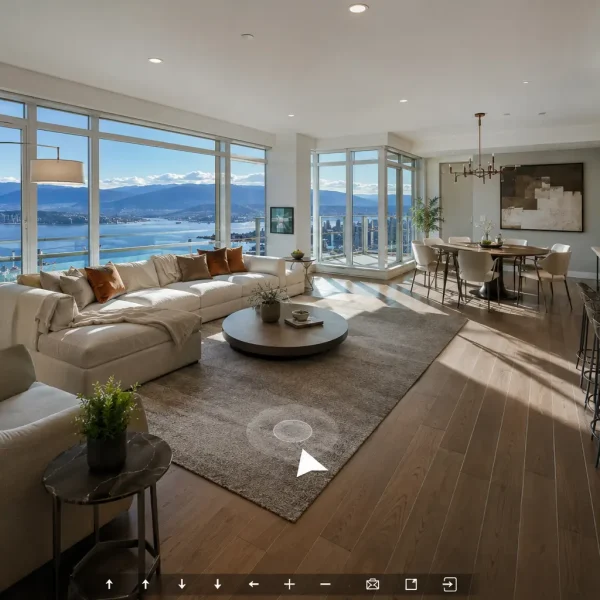
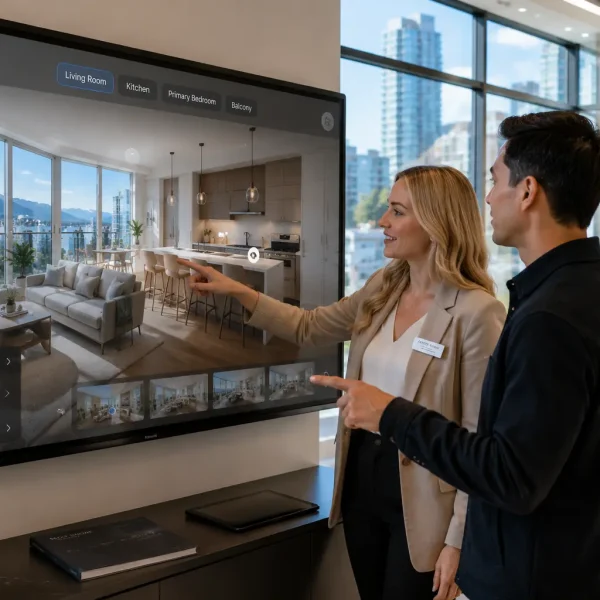
Interactive experiential design environments built on real-time rendering platforms give architects and developers a presentation tool that responds to individual stakeholder priorities rather than delivering a single predetermined experience to every person who encounters it. A client focused on how natural light enters a particular space can adjust the time of day and explore the answer directly. An investor focused on the relationship between a development’s amenity spaces and its residential units can navigate between those spaces in any sequence their evaluation priorities suggest. A planning authority focused on a building’s relationship to its surrounding context can explore that relationship from multiple external vantage points not included in the fixed presentation sequence.
Virtual Environments for Client Presentations
Virtual environments purpose-built for architectural client presentations combine the spatial accuracy of professional visualization with the navigational freedom of interactive environments and the finish configurability that allows clients to explore design alternatives in real time within the actual space rather than referring to separate sample boards and imagination. HUUR Studios builds these environments for Vancouver architects and developers with the specific production standards that distinguish professional architectural presentations from generic real estate visualization — calibrating every material, every lighting condition, and every spatial detail against the design documentation rather than approximating it for visual appeal.
The digital architecture storytelling dimension of a virtual environment client presentation — the element that separates digital architecture storytelling from digital architecture documentation comes from how the environment is designed to guide the exploration experience — the sequence in which spaces reveal themselves as the client navigates, the lighting conditions established as defaults that communicate the design’s strongest narrative moments, and the finish configuration options presented that direct the client’s attention toward the combinations the design team considers most aligned with the design’s vision. The environment is interactive, but the storytelling discipline shapes the interaction from within.
START YOUR PROJECT WITH HUUR
Contact our team or explain and submit your project .
Technique #5: Deploying Real-Time Rendering as a Creative Direction Tool
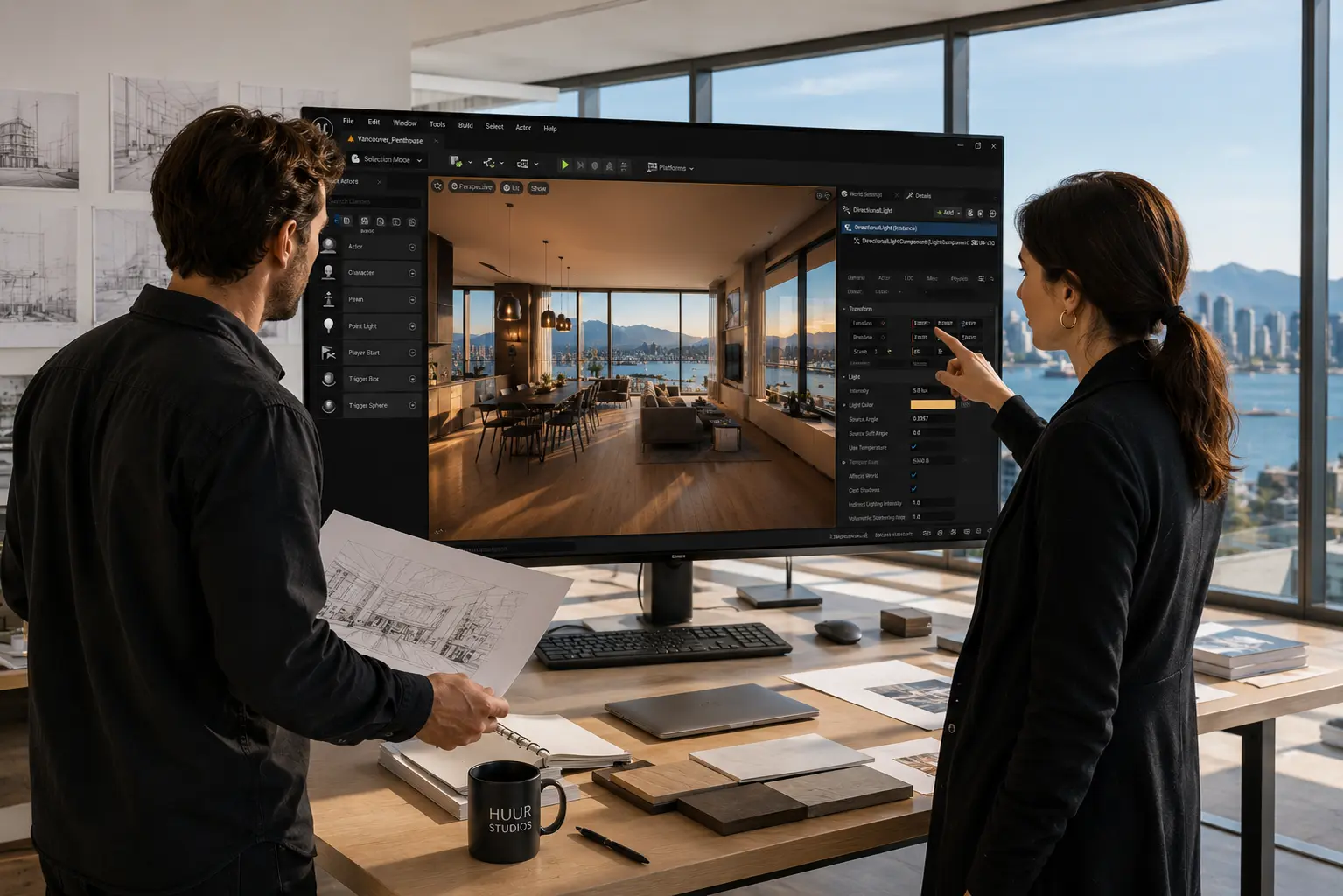
The fifth technique that defines sophisticated digital architecture storytelling from conventional visualization practice is the use of real-time rendering as a creative direction tool during the production process itself — not simply as a delivery format for pre-planned content. When a creative team can evaluate lighting decisions, camera compositions, and atmospheric qualities in real time during a production session, the creative process is fundamentally different from one in which these decisions are committed to in advance and evaluated only after lengthy offline render cycles have produced results that can no longer be adjusted within the project’s timeline and budget.
This real-time creative direction capability transforms the quality of storytelling decisions available within a commercially viable architectural visualization project. Cinematic architectural visualization that deploys real-time rendering as a creative tool produces results that reflect genuine creative exploration — the discovery of the specific lighting moment, camera angle, and atmospheric condition that most powerfully communicates the design’s narrative proposition — rather than the execution of predetermined parameters that were established before the creative team could see what actually worked best for the specific design and the specific story being told.
From Production Tool to Creative Instrument
HUUR Studios’ use of Unreal Engine as a creative direction tool is what most consistently produces the narrative quality in its digital architecture storytelling work — the quality that makes digital architecture storytelling that distinguishes it from conventional visualization production. The ability to explore 10 different lighting conditions in the time it previously took to render 1, to adjust atmospheric qualities in direct response to their emotional effect in real time, and to discover compositional possibilities that were not anticipated in the initial brief — all of this is enabled by the real-time production infrastructure and applied through the storytelling discipline that gives every decision a narrative purpose.
As Epic Games explains in its documentation on virtual production workflows, real-time environments allow creative decisions to be made with immediate visual feedback rather than committed to in advance — fundamentally changing what is creatively possible within any given production timeline and budget (Unreal Engine — What Is Virtual Production?). HUUR Studios applies this capability directly to digital architecture storytelling for Vancouver architects, developers, and design firms across North America — bringing the creative freedom of real-time production to every architectural visualization and presentation project.
Technique #6: Building Immersive Virtual Environments for Stakeholder Immersion
The sixth digital architecture storytelling technique is the deployment of fully immersive virtual environments — VR-capable, spatially accurate digital representations of proposed designs — that allow key stakeholders to experience a proposed space at true human scale before any physical construction begins. Immersive storytelling at this level produces a qualitatively different stakeholder response than any screen-based visualization format because it engages the same embodied spatial perception that physical architecture itself engages — the instinctive understanding of scale, proportion, and spatial character that human beings form through physical presence rather than visual observation.
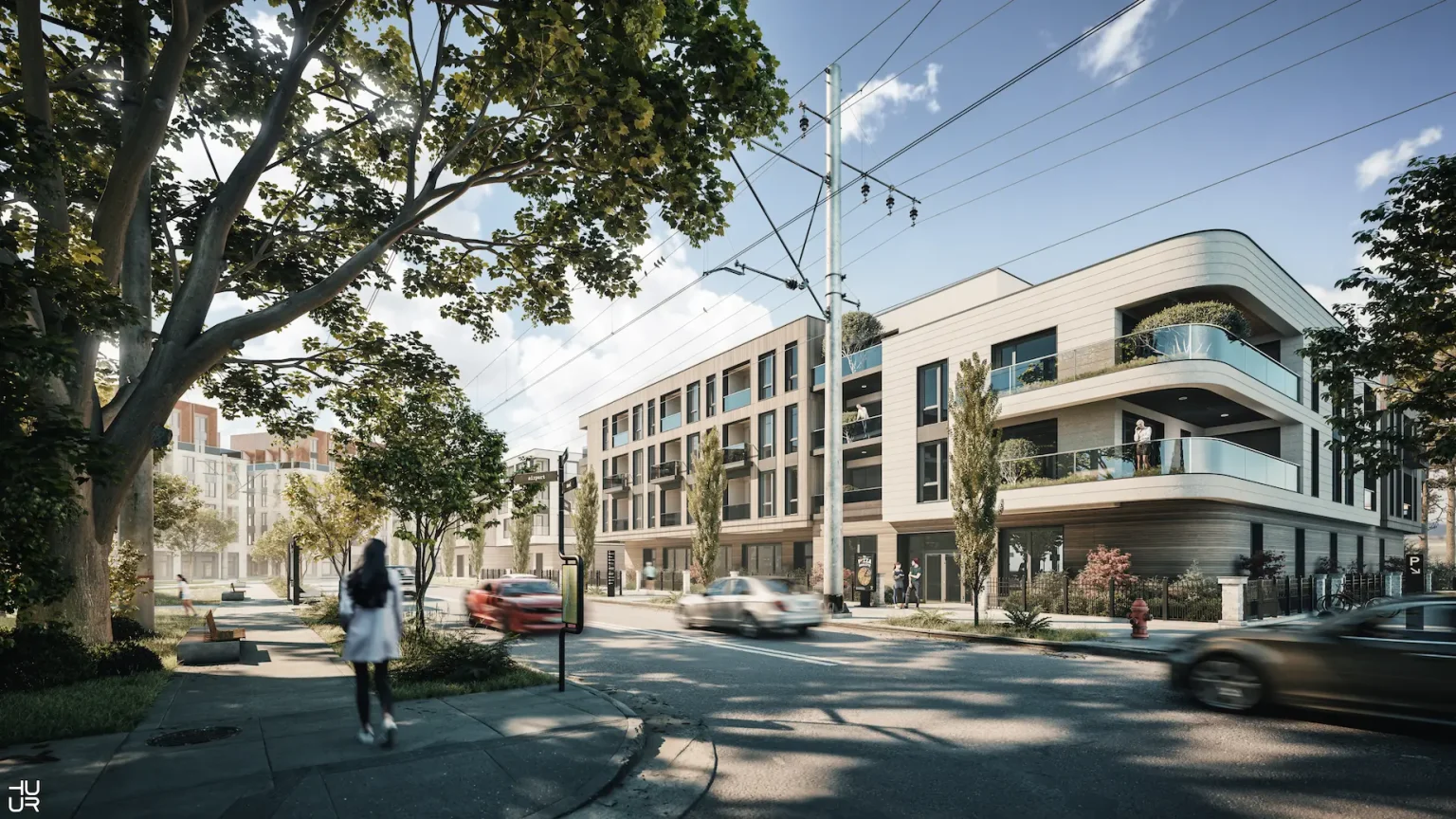
For Vancouver developers presenting to planning authorities, design review committees, and major institutional investors, the ability to place stakeholders inside a proposed development at true scale changes the nature of the conversation that follows. A planning authority that has walked through a proposed mixed-use development in an immersive virtual environment has formed a direct, embodied understanding of its relationship to the surrounding streetscape, its massing impact, and its internal spatial qualities that no number of plans, sections, and render images can generate with equivalent clarity or conviction.
Immersive Storytelling at the Stakeholder Level
The digital architecture storytelling dimension of immersive presentations — what separates digital architecture storytelling from spatial technology demonstration comes from the deliberate design of the experience sequence — how the stakeholder is introduced to the environment, what guided path is suggested through the space, and which moments are highlighted as the defining spatial and experiential statements of the design. A raw virtual environment that lacks digital architecture storytelling allows unguided exploration and communicates spatial information. An immersive storytelling experience that has been narratively designed communicates spatial meaning — the difference between a tour and a story.
HUUR Studios designs the narrative structure of every immersive virtual environment it delivers with the same attention to emotional arc and stakeholder psychology that it brings to cinematic visualization and virtual production work — ensuring that the technical capability of the immersive environment serves a storytelling purpose rather than simply demonstrating its own technological sophistication to an audience that is genuinely trying to understand whether a design deserves their commitment, investment, and approval.
Technique #7: Distributing Architectural Narrative Across Every Marketing Channel
The seventh digital architecture storytelling technique is the discipline of maintaining consistent architectural narrative across every marketing and communication channel through which a development or design practice communicates — ensuring that the story told in a client presentation, the content published on social media, the assets displayed in a sales suite, and the materials provided to planning authorities all express the same narrative proposition with equal clarity and consistency. Digital architecture storytelling loses much of its commercial value when it is deployed only in formal client presentations while the same project is represented through generic photography and disconnected render images across every other touchpoint a prospective buyer, investor, or approval authority encounters.
The most commercially effective architectural narrative strategies treat every channel as an opportunity to reinforce the central story — adapting the storytelling format to the specific affordances of each channel while maintaining the narrative proposition, the emotional register, and the visual identity that define the project’s story across every expression. A 90-second social media film tells a compressed version of the same story told more completely in a 4-minute client presentation film. A sales suite interactive environment allows buyers to explore the same narrative independently that a guided presentation delivers through a curated sequence.
Consistency as Narrative Reinforcement
The power of consistent architectural narrative across multiple channels comes from the cumulative effect of repeated, consistent story reinforcement — each touchpoint deepens a stakeholder’s familiarity with and emotional investment in the design’s proposition, building toward the conviction that motivates commitment rather than simply maintaining awareness. A buyer who has encountered the same coherent story about a Vancouver development across social media, a website experience, a sales suite interactive environment, and a guided visualization presentation arrives at the decision conversation with substantially more narrative investment than one encountering the development for the first time in that conversation.
HUUR Studios structures every digital architecture storytelling multi-channel content program for Vancouver and North American clients around narrative consistency — ensuring all digital architecture storytelling work produced for client presentations, presale marketing, social media campaigns, and planning authority submissions all express a coherent architectural narrative rather than representing the same design through disconnected, independently conceived visual assets that leave the audience to construct their own impression of what the project means and why it matters.
FAQ — Digital Architecture Storytelling
What is digital architecture storytelling?
Digital architecture storytelling is the discipline of using visualization technology, cinematic production, and narrative design to communicate the human experience of a proposed architectural space — moving beyond documentation of what a building will look like to create conviction about what it will feel like to inhabit.
Why is storytelling important in architectural visualization?
Storytelling transforms architectural visualization from documentation into persuasion — giving a design the human context and emotional resonance that moves stakeholders from appreciation to commitment. Without narrative structure, even technically superior visualization produces admiration rather than the investment conviction that architectural presentations are ultimately designed to generate.
How does storytelling improve client engagement?
Digital architecture storytelling improves client engagement by placing clients inside a human experience of the proposed design rather than presenting them with images of it. Clients who encounter their own priorities and aspirations reflected in an architectural narrative form stronger emotional investment and make faster, more confident decisions.
Which technologies are used for digital architecture storytelling?
Real-time rendering platforms including Unreal Engine, LED volume virtual production infrastructure, interactive visualization environments, and VR-capable immersive storytelling platforms are the primary technologies. HUUR Studios combines all of these within a unified storytelling practice for Vancouver and North American architectural and real estate clients.
Every remarkable building has a story long before it’s ever built. The difference is whether people get to experience that story—or simply look at drawings of it.
Architecture becomes truly memorable when people can connect with it emotionally, not just visually. The strongest presentations don’t simply explain a project—they create anticipation, confidence, and a genuine sense of place before construction even begins.
At HUUR Studios, we combine cinematic storytelling, real-time visualization, immersive technology, and creative direction to transform architectural ideas into experiences that resonate with clients, investors, and future buyers alike.
Whether you’re preparing for a design competition, launching a presale campaign, or presenting your next landmark development, we’ll help you tell a story people won’t forget.
Share your vision through HUUR Portal and let’s create an architectural story worth experiencing.
Conclusion
Digital architecture storytelling is the discipline that determines whether a digital architecture storytelling presentation generates genuine conviction or simply impresses — and the 7 techniques examined in this article represent the specific practices through which HUUR Studios approaches every visualization, production, and interactive environment project for Vancouver architects, developers, and design firms across British Columbia and North America. From the foundational discipline of narrative design before image production — the 7 techniques that define digital architecture storytelling — through cinematic composition, atmospheric storytelling, interactive spatial agency, real-time creative direction, immersive stakeholder experiences, and consistent multi-channel narrative deployment — each technique serves the same fundamental purpose: transforming architectural communication from documentation into the genuine human story that defines the best digital architecture storytelling.
The architectural practices and developers who invest in mastering digital architecture storytelling are not simply improving their presentations — they are building a communication capability that compounds in commercial value with every commission won, every presale campaign launched, and every stakeholder relationship deepened through the quality of their design communication. HUUR Studios has built its entire digital architecture storytelling practice around delivering this capability at the highest standard available to the Vancouver and North American market.
If your next design presentation deserves to be experienced as a story rather than observed as a sequence of images, digital architecture storytelling through HUUR Studios is exactly the capability that makes that possible.