Introduction
Virtual production with Unreal Engine has become the dominant methodology for high-quality architectural visualization, brand film production, and real estate marketing across North America — displacing the older green screen compositing and offline rendering approaches that defined film and visualization production for decades. Unreal Engine, developed by Epic Games as a real-time game engine and now the platform of choice for the world’s most demanding virtual production applications, has achieved this position because it solves problems that traditional production pipelines were structurally unable to address efficiently: the separation between creative decision-making and final output, the compositing inconsistencies that green screen always introduces, and the weeks of post-production that delayed final delivery long after the creative session had concluded.
The shift is not theoretical or confined to flagship entertainment productions. From major streaming series to commercial architectural visualization studios serving developers across Vancouver and North America, the real-time rendering capability of virtual production with Unreal Engine has become the practical standard against which other production approaches are increasingly measured — and found wanting on both quality and efficiency grounds. For HUUR Studios, this technology represents the technical foundation of every sophisticated visualization and production capability delivered to architectural, real estate, and brand clients across the Vancouver and broader North American markets.
This article examines what makes Unreal Engine the industry standard for virtual production, how its real-time architecture transforms both production economics and creative workflows, the specific applications where this approach delivers the strongest commercial value for architectural and real estate clients, and why HUUR Studios has built its entire visualization and production practice around virtual production with Unreal Engine to serve clients who need the highest achievable standard of visual quality within commercially realistic timelines and budgets.
What Makes Unreal Engine the Industry Standard for Virtual Production?
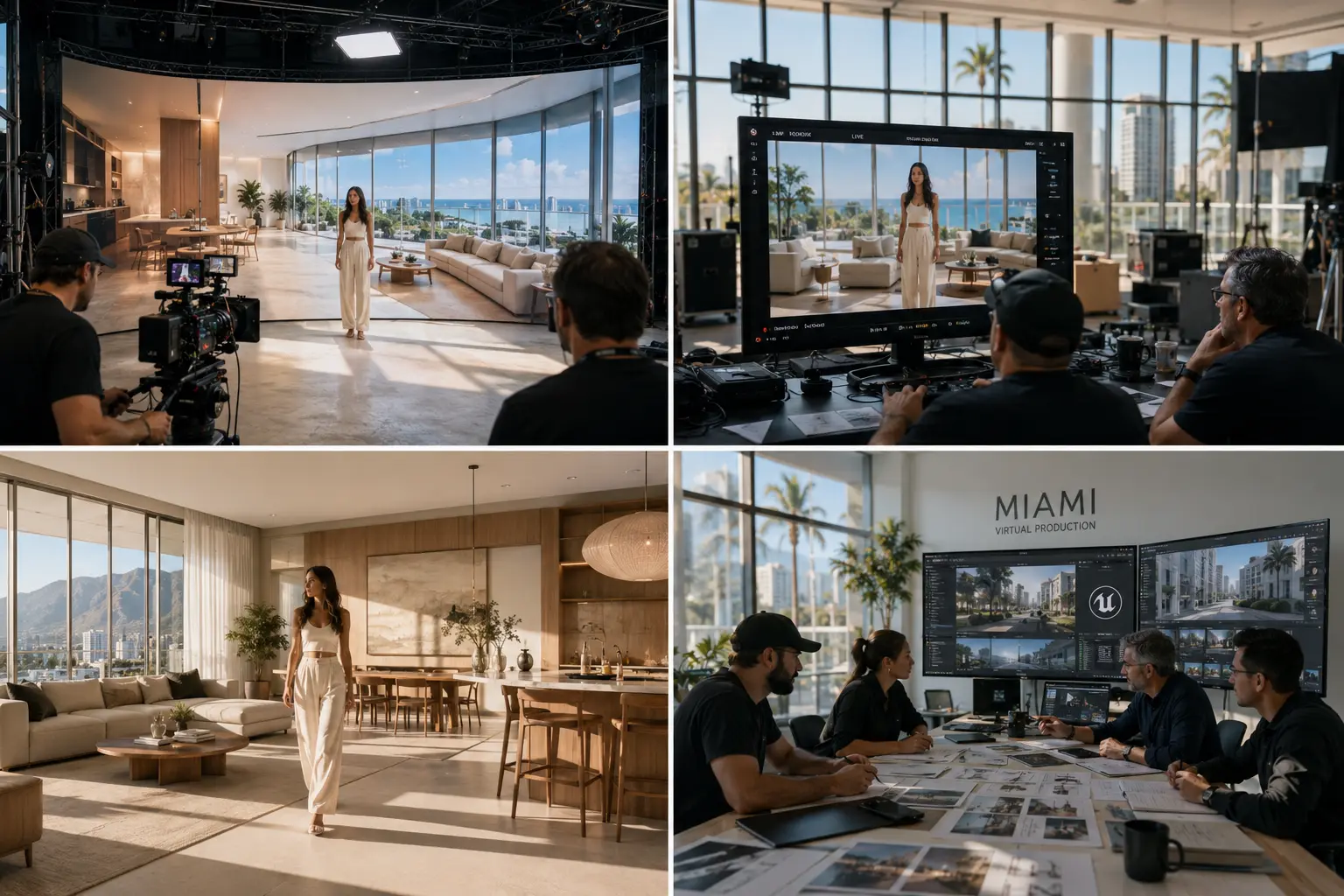
Virtual production with Unreal Engine dominates modern production because the engine’s foundational real-time rendering architecture calculates photorealistic imagery — accurate lighting, material behaviour, and shadows — at interactive frame rates of 60 or more frames per second, rather than the minutes or hours per frame that traditional offline rendering engines require. This real-time performance is the capability that makes everything else in a sophisticated virtual production workflow possible — from LED volume production where digital environments are displayed live on set during filming to interactive architectural walkthroughs where buyers explore spaces in real time.
Several specific technical systems within Unreal Engine distinguish it from other real-time rendering platforms for demanding production applications. Lumen, Epic Games’ proprietary dynamic global illumination system, calculates realistic light bouncing and indirect illumination in real time — producing the nuanced, naturalistic lighting quality that previously required extensive and time-consuming offline rendering passes to achieve. Nanite, the engine’s virtualized micropolygon geometry system, allows extraordinarily detailed 3D models to render at interactive frame rates without the manual polygon optimization and level-of-detail management that traditional real-time engines demanded from every asset.
Industry Adoption and Production Track Record
Virtual production studios across the film and television industry have adopted virtual production with Unreal Engine as their primary rendering platform, from flagship streaming productions using full-scale LED volume stages to documentary and commercial production leveraging the engine’s real-time capabilities at more modest production budgets. This widespread, proven industry adoption matters significantly for architectural and commercial clients evaluating virtual production partners — it reflects technology tested extensively across demanding professional environments across thousands of productions worldwide, not adapted experimentally from the entertainment sector to architectural applications.
HUUR Studios builds on virtual production with Unreal Engine specifically because this industry validation translates directly into client confidence and production reliability. Vancouver developers and architectural firms commissioning virtual production work from HUUR Studios can trust that the underlying technology has been stress-tested at the highest levels of professional film and television production across hundreds of major productions, bringing that standard of proven reliability and creative capability to every architectural marketing project HUUR Studios delivers.
Epic Games’ Investment in the Platform’s Future
A key factor in the continued dominance of virtual production with Unreal Engine is Epic Games’ sustained, substantial investment in the platform’s development — consistently releasing major technical capability upgrades including Lumen, Nanite, and integrated machine learning features that maintain the engine’s technical lead over competing alternatives. For studios building their entire visualization and production practice around virtual production with Unreal Engine, this investment trajectory ensures access to expanding creative and technical capability without requiring fundamental platform migrations or architectural rebuilds.
The accessibility improvements that have accompanied the technical advances are equally important. Unreal Engine is available at no licensing cost for most commercial visualization and production applications, removing the barrier that once limited adoption to the largest and best-funded production companies. The accompanying documentation, professional training programs, and global community ecosystem have matured to the point where skilled Unreal Engine artists can be found across Vancouver’s creative technology sector, giving HUUR Studios access to the specialist talent capable of delivering at the platform’s highest technical and creative standards.
Explore More From HUUR
Virtual Production for Architecture: How It Delivers Stunning Designs Before Construction Begins
How Real-Time Production Transforms Visualization Pipelines
Virtual production with Unreal Engine fundamentally restructures the traditional visualization pipeline, eliminating the sequential, multi-stage process that has historically defined both film VFX work and architectural CGI production — a process in which the creative team designs or photographs an initial pass, then hands off to a separate rendering or compositing team that produces final imagery weeks or months after the original creative decisions were made, preventing any meaningful creative iteration once the production session has concluded.
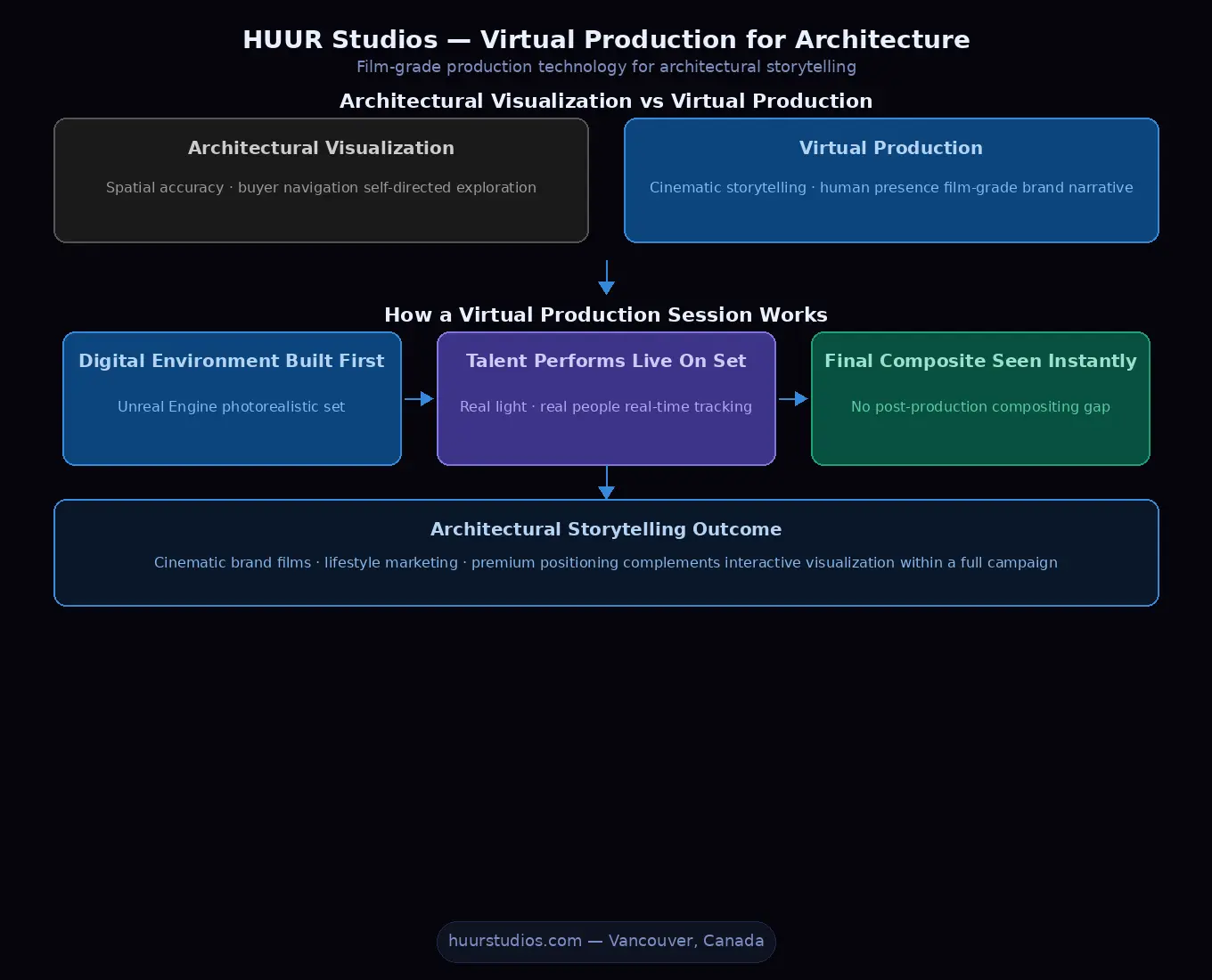
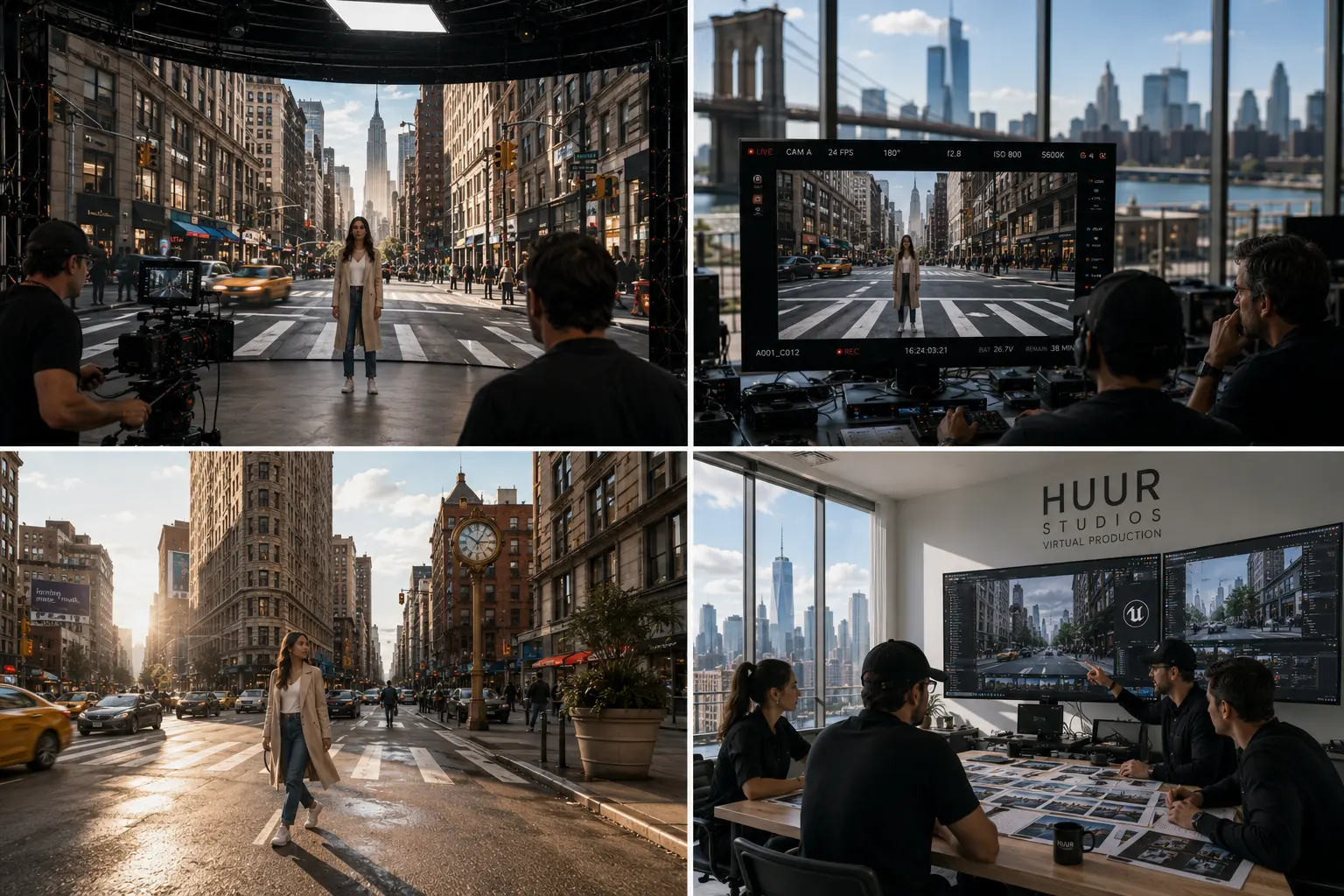
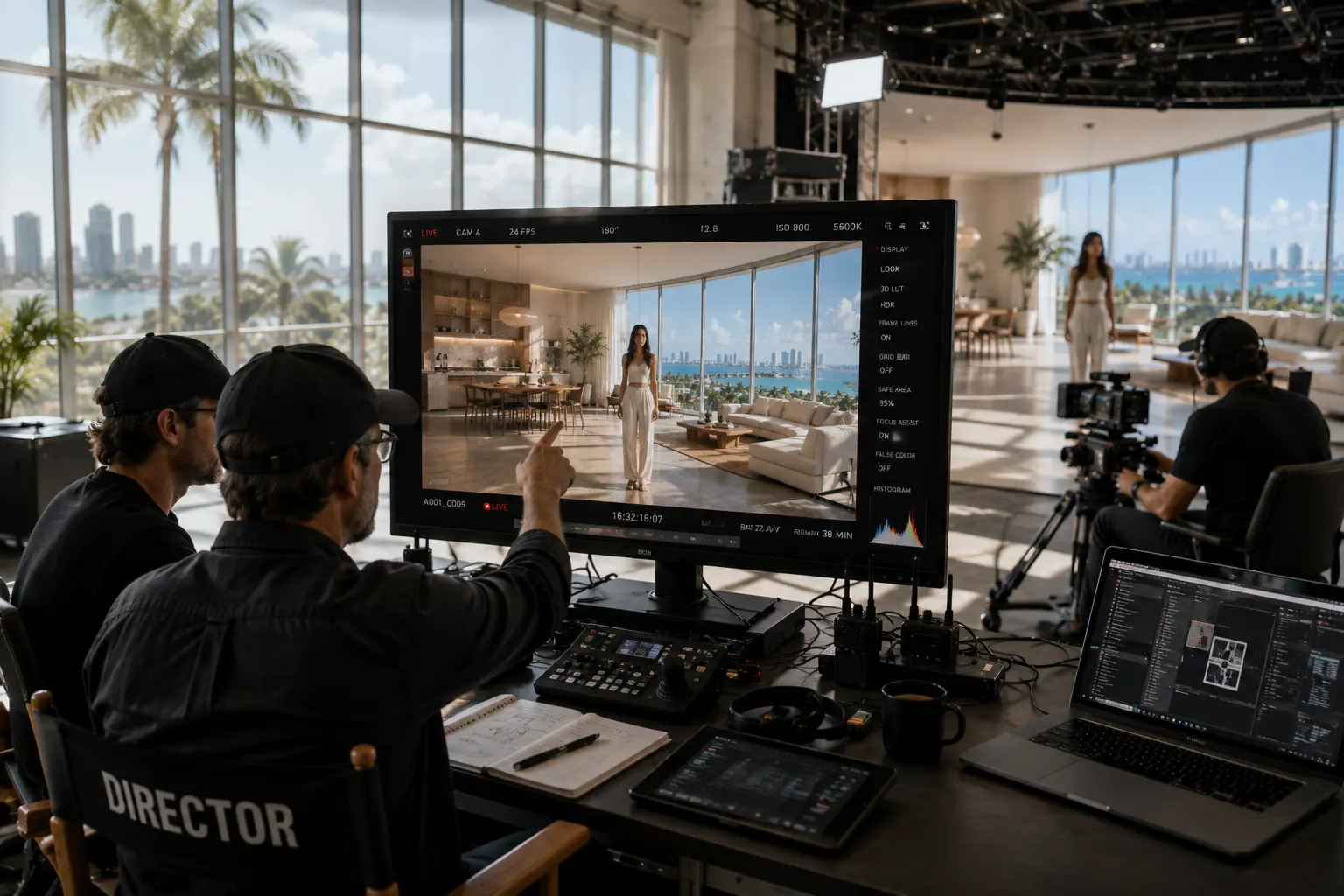
Real-time virtual production collapses this separation between creative input and final output entirely. Every creative decision about lighting quality, camera composition, and environmental atmosphere is made with immediate visual feedback — the director, art director, and client see the actual final-quality result in real time rather than approximating what offline rendering will eventually produce. For HUUR Studios’ Vancouver clients, this compressed creative feedback loop translates into production timelines of 3 to 4 weeks rather than the 10 to 12 weeks that traditional CGI and compositing pipelines require for comparable deliverables.
LED Volume Production and the Naturalism Advantage
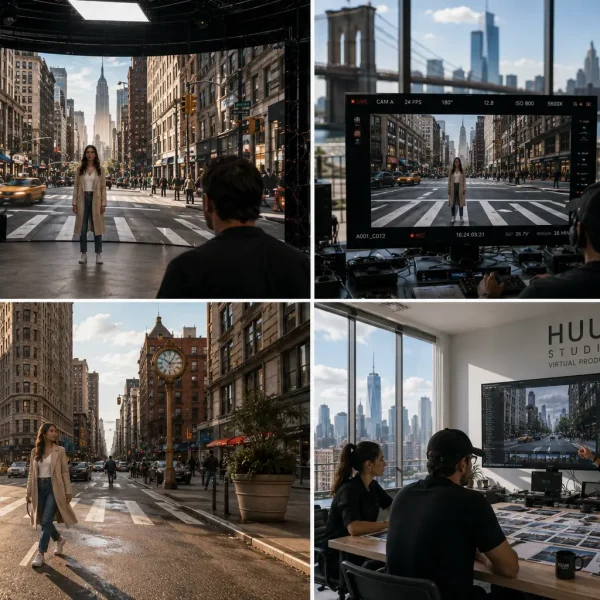
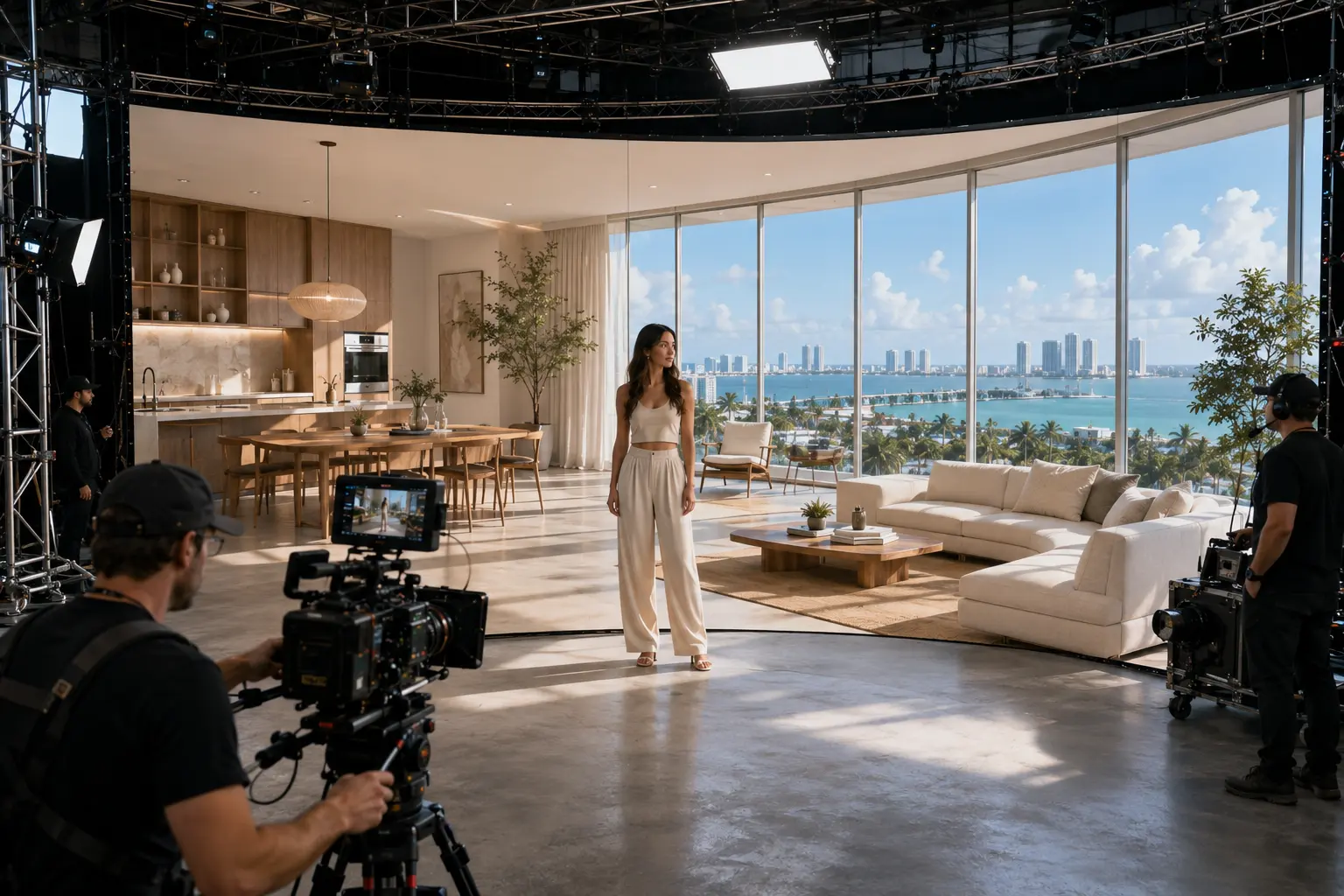
LED volume production represents the most visually sophisticated application of virtual production with Unreal Engine — surrounding a physical production set with large-format, high-resolution LED panels displaying live, camera-synchronized digital environments generated in real time by the engine. The Unreal Engine nDisplay synchronization system coordinates rendering across every individual LED panel simultaneously, maintaining perfect colour accuracy, brightness consistency, and perspective alignment across the entire curved display surface as the physical camera moves freely through the production space.
This LED volume capability gives HUUR Studios clients access to production quality and creative flexibility previously available only to major studio productions, now deployed for architectural marketing, presale campaign films, and premium real estate brand content across the Vancouver market. The critical advantage for architectural applications specifically is that physical talent can genuinely inhabit and react to the digital environment rather than performing against an empty green screen and imagining a space that will only be added weeks later in post-production — creating the naturalistic human presence that makes architectural marketing content emotionally persuasive to buyers evaluating premium developments.
The Creative Freedom of Real-Time Feedback
Virtual production with Unreal Engine delivers a creative freedom during the production session itself that offline rendering pipelines structurally cannot provide: the ability to explore creative options in real time, discovering the specific camera angle, lighting moment, and compositional framing that best serves the project rather than committing to a predetermined storyboard and discovering its limitations only in post-production review. This ability to experiment and iterate within the session is what most consistently distinguishes the creative outcomes of virtual production with Unreal Engine from those of conventional CGI production workflows.
In a conventional architectural CGI workflow, every creative variation requires a new render cycle — meaning directors and clients must choose their direction based on approximations and reference materials rather than actual final results, committing to aesthetic directions with incomplete visual information. Virtual production with Unreal Engine replaces this constraint with genuine real-time creative exploration, consistently producing richer, more considered final deliverables from the same production investment.
Using Unreal Engine for Architectural Storytelling
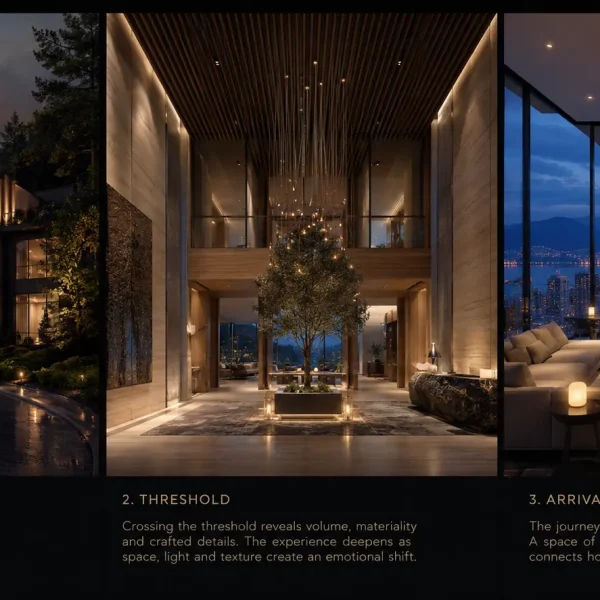
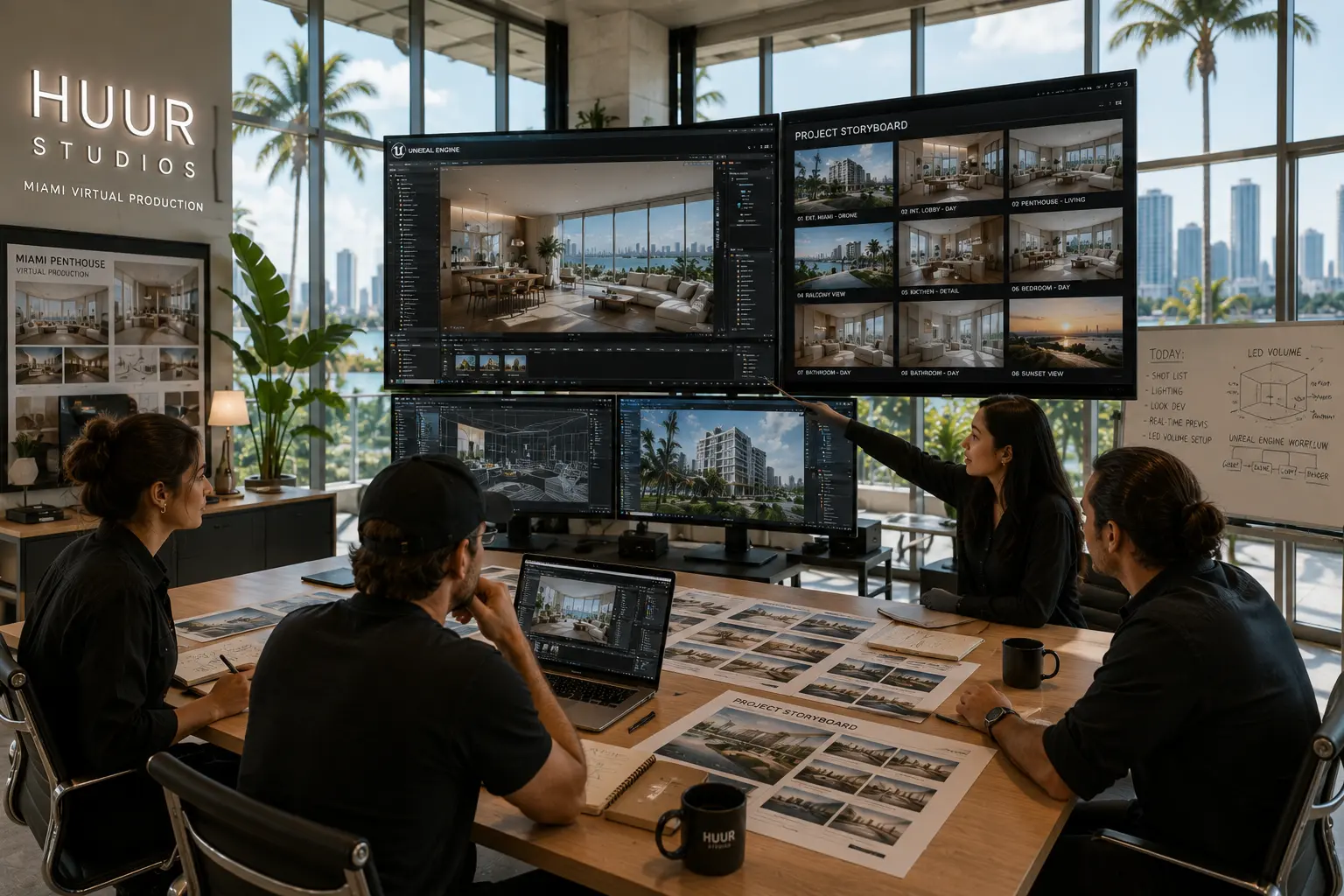
Architectural storytelling through virtual production with Unreal Engine combines the platform’s exceptional real-time rendering technical capability with deliberate narrative and creative direction, producing content that communicates not just what a building looks like from specific predetermined angles but what it genuinely feels like to inhabit — to move through, to live in, to work in, to experience across the full range of lighting conditions and human activities that define how an architectural space is actually used. Unreal Engine’s real-time architecture allows HUUR Studios’ creative teams to iterate extensively on lighting character, atmospheric detail, and compositional choices during the actual production session.
This iterative creative capability matters significantly for architectural clients, where the specific emotional and narrative qualities of a presentation — the precise warmth of golden hour light in a living space, the exact framing that best communicates a lobby’s proportional generosity, the pacing of a walkthrough sequence through an amenity floor — often require substantial creative experimentation to achieve precisely and convincingly. The real-time feedback that virtual production with Unreal Engine provides allows this experimentation to happen efficiently within budget and timeline constraints that offline rendering pipelines would make prohibitively expensive.
Cinematic World CGI for Premium Real Estate Marketing
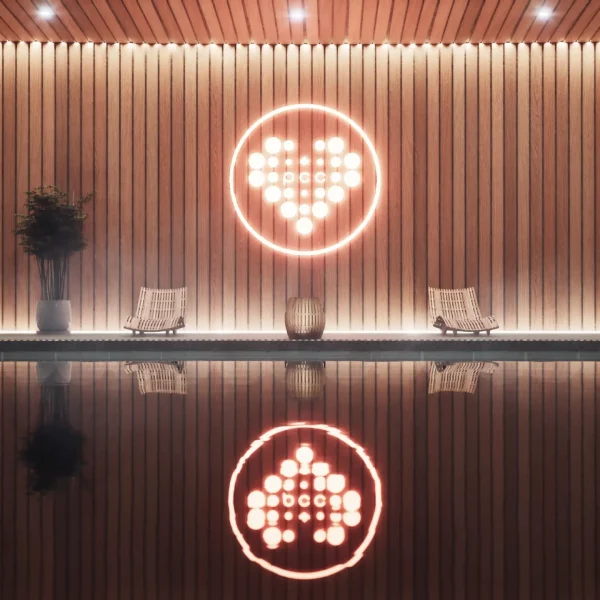
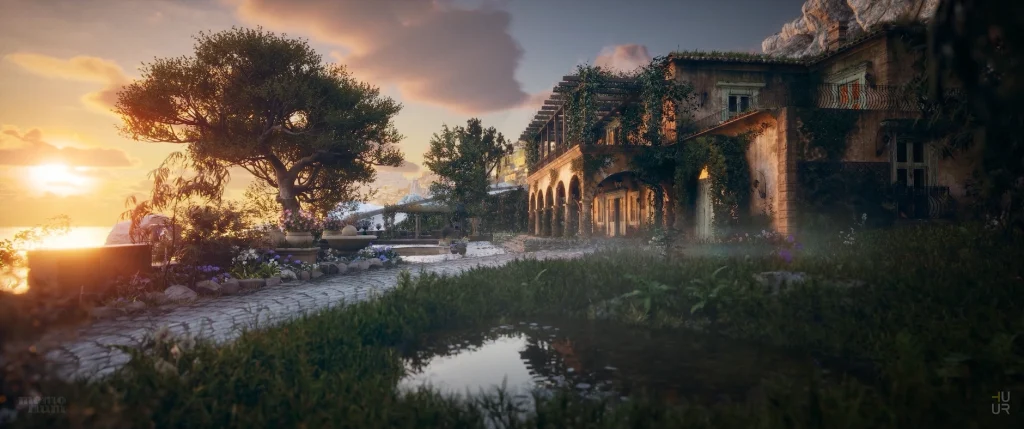
Cinematic world CGI built through virtual production with Unreal Engine extends beyond single-property visualization into fully realized digital worlds — custom environmental contexts, aspirational lifestyle settings, and complete narrative environments built specifically to position a development within a desired brand narrative that extends beyond the physical boundaries of the property itself. HUUR Studios builds these cinematic worlds for Vancouver luxury developments seeking marketing content that differentiates their brand positioning beyond straightforward property representation into genuinely distinctive aspirational brand storytelling.
As Epic Games explains in its published documentation on real-time production methodology, virtual production merges physical filmmaking with digital environments in real time, using LED volumes powered by game engines to display photorealistic backgrounds that update perfectly as the camera moves — eliminating post-production compositing entirely (Unreal Engine — What Is Virtual Production?). HUUR Studios applies virtual production with Unreal Engine to architectural marketing and real estate brand content for Vancouver and North American clients.Unreal Engine — What Is Virtual Production?
Virtual Production Beyond Film: Real Estate and Architectural Applications
START YOUR PROJECT WITH HUUR
Contact our team or explain and submit your project .
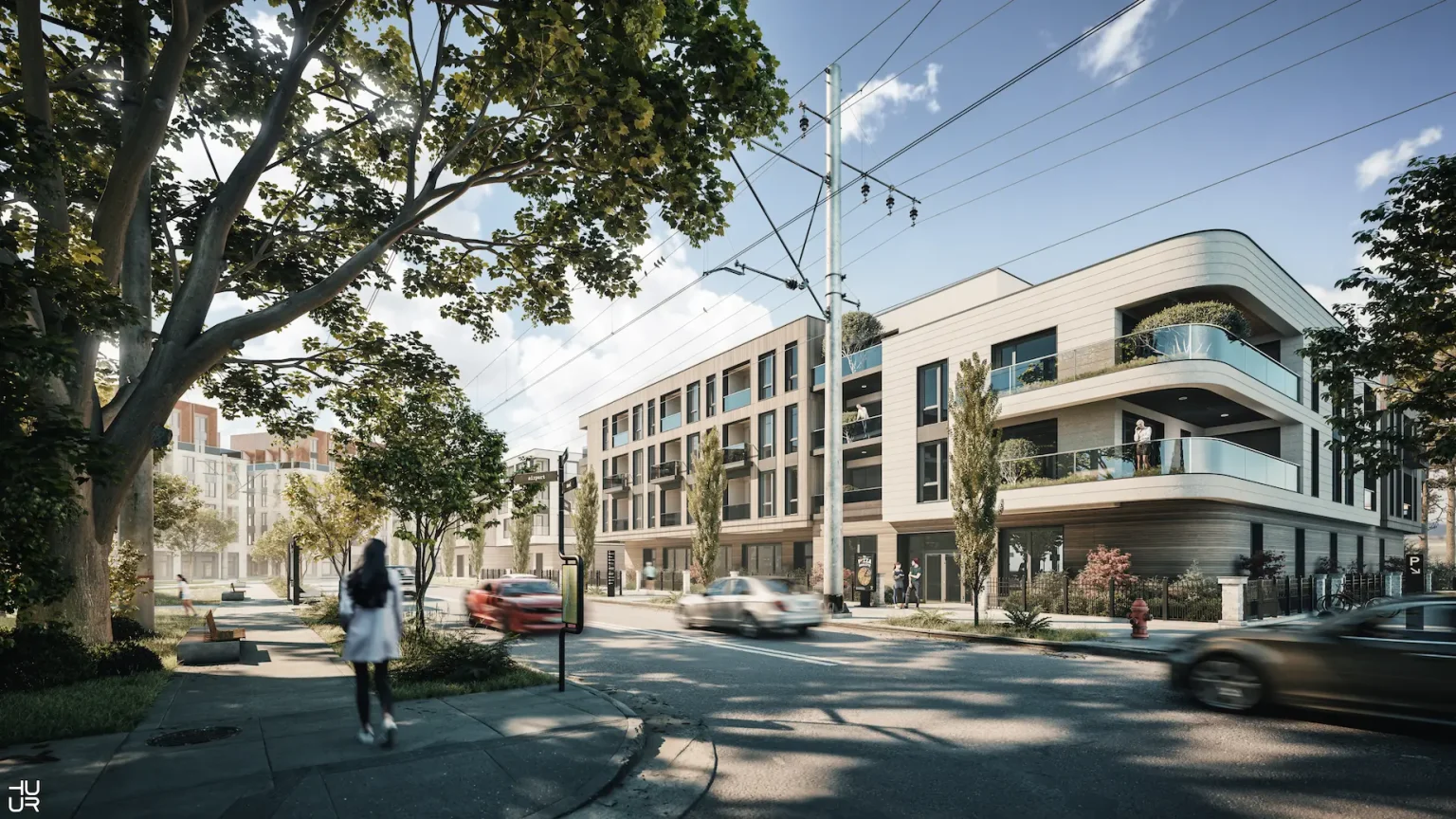
While virtual production with Unreal Engine originated in and remains closely associated with entertainment production, its application within architectural visualization and real estate marketing represents one of the most commercially significant expansions of the technology beyond its entertainment industry origins. Unreal Engine architectural visualization applies the same real-time rendering quality, lighting accuracy, and production flexibility that powers premium film production directly to the communication of buildings and spaces for buyers, investors, and design stakeholders.
For Vancouver developers and architectural firms, this expansion means practical access to production quality that was, until recently, available almost exclusively to major studio entertainment productions with budgets at a completely different scale. HUUR Studios has built its visualization and production practice specifically around making this film-industry-proven technology accessible to architectural and real estate clients across Vancouver and North America, recognizing that the underlying technical capabilities translate powerfully and directly to the specific communication challenges that developers and architects face in competitive markets.
Commercial Brand Applications Beyond Real Estate
Beyond real estate and architectural marketing, virtual production with Unreal Engine serves a broader range of commercial applications for Vancouver brands and businesses — product launch campaigns, corporate brand films, experiential marketing content, and any commercial production context requiring cinematic visual quality without the cost and logistical complexity of extensive location-based shooting across multiple real-world environments. HUUR Studios’ virtual production capability extends naturally into these adjacent brand and commercial applications, virtual production with Unreal Engine gives Vancouver clients a unified and versatile production resource across diverse content requirements.
For Vancouver businesses investing in brand-building content across multiple channels and purposes simultaneously, a production relationship centred on virtual production with Unreal Engine provides a single unified technical platform that can serve diverse and evolving content requirements — from architectural marketing films to corporate brand campaigns to product visualization — without requiring separate vendor relationships, separate briefing processes, and separate production timelines for each content application.
Why Unreal Engine Continues to Define the Future of Digital Production
Virtual production with Virtual production with Unreal Engine’s trajectory strongly suggests continued and accelerating influence over the future of digital production across film, television, architectural visualization, and commercial content creation, as Epic Games continues its substantial, publicly committed investment in the platform’s technical capability, accessibility, and integration with emerging technologies — including machine learning-assisted content creation tools, expanded real-time global illumination simulation capability, and enhanced virtual production hardware integration.
For Vancouver developers and architectural firms evaluating the long-term positioning of their visualization and production partners, this sustained platform development trajectory matters significantly. A studio built around virtual production with Unreal Engine is positioned to deliver increasingly sophisticated capability — and virtual production with Unreal Engine continues becoming more capable with each platform release as the platform matures, rather than facing the obsolescence risk that affects studios built around more narrowly adopted, less actively developed, or more commercially fragile rendering platforms and production methodologies.
HUUR Studios’ Long-Term Commitment
HUUR Studios maintains continuous investment in Unreal Engine expertise, hardware infrastructure, and production capability specifically because this platform commitment ensures Vancouver and North American clients receive production capability that keeps pace with the leading edge of what real-time rendering technology makes possible for architectural and brand communication. This commitment includes systematic ongoing artist training and certification, regular hardware infrastructure upgrades maintaining compatibility with the latest engine versions and production hardware standards, and active participation in the Unreal Engine developer and virtual production professional communities.
FAQ — Virtual Production with Unreal Engine
Why is Unreal Engine used for virtual production?
Virtual production with Unreal Engine enables real-time photorealistic rendering at interactive frame rates, making it possible to display digital environments live on LED volume stages, provide immediate creative feedback during production sessions, and eliminate the post-production compositing delays that traditional green screen workflows require.
Can Unreal Engine be used for architectural visualization?
Yes — Unreal Engine architectural visualization applies the same real-time rendering quality that powers film production directly to buildings and interior spaces, supporting interactive buyer walkthroughs, LED volume presale marketing production, and cinematic architectural brand storytelling at film-grade quality within commercially viable timelines and budgets.
What production advantages does real-time rendering provide?
Virtual production with Unreal Engine eliminates the separation between creative decision-making and final output, compresses production timelines from 10 to 12 weeks to 3 to 4 weeks, provides genuine creative exploration capability during the production session itself, and produces unified imagery without the compositing inconsistencies that green screen production introduces regardless of budget.
Is Unreal Engine suitable for commercial architectural visualization projects?
Yes — Unreal Engine’s proven adoption across thousands of major film, television, and commercial productions globally makes it the most technically reliable and creatively capable platform for commercial architectural visualization, offering Vancouver and North American clients access to film-industry-validated technology rather than experimental or niche rendering platforms.
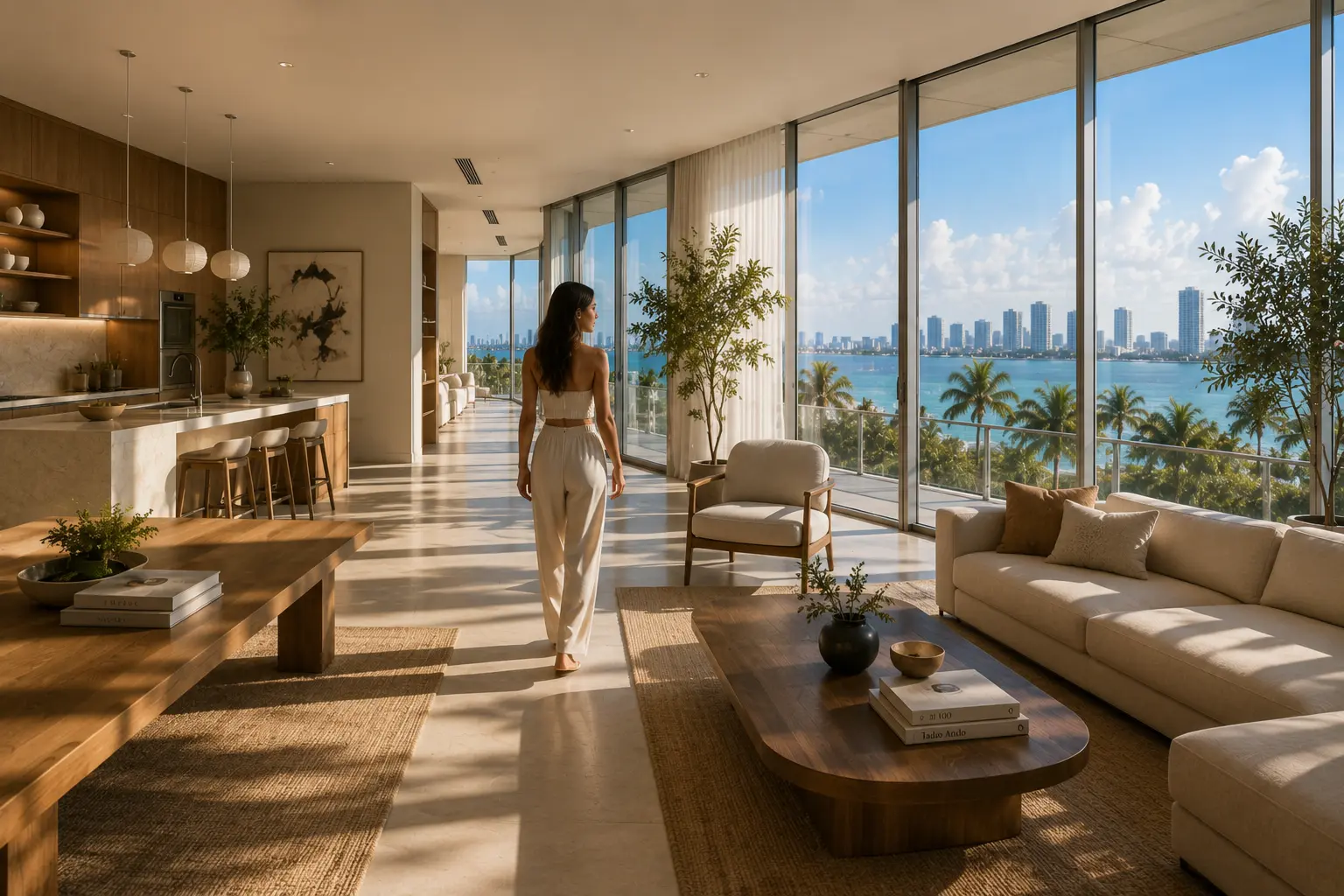
The technology behind the world’s most ambitious productions is no longer limited to film sets. Your architecture can be built, directed, and experienced in the same real-time world.
At HUUR Studios, we use Unreal Engine to bring architectural vision and cinematic production into a single creative environment—where lighting can evolve instantly, cameras can explore without limitation, and ideas can be seen at final quality while creative decisions are still being made.
Whether you’re launching a new development, building a cinematic real estate campaign, or searching for a more ambitious way to communicate your brand, we create real-time production experiences designed around the story your project deserves to tell.
Explain your project to our team and let’s explore what virtual production with Unreal Engine can make possible.
Conclusion
Virtual production with Unreal Engine has fundamentally and permanently changed what is achievable in both film production and architectural visualization — delivering real-time rendering quality, production efficiency, and creative flexibility that older production methodologies and rendering platforms simply cannot match on equivalent budgets and timelines. For Vancouver developers, architectural firms, and brand clients seeking visualization and production partners equipped with proven, industry-leading technology, virtual production with Unreal Engine represents the platform foundation that the most sophisticated studios globally have already adopted as their production standard.
HUUR Studios has built its entire visualization and production practice around virtual production with Unreal Engine because this foundational commitment to virtual production with Unreal Engine delivers continuously expanding technical and creative capability to Vancouver and North American clients — combining the film-industry-proven performance of Unreal Engine’s real-time rendering architecture with the deep architectural visualization expertise that ensures every project meets the precise spatial and material accuracy standards that architectural and real estate clients require alongside cinematic visual quality.
If your next development, commission, or brand initiative deserves production technology validated at the highest levels of the global film industry, virtual production with Unreal Engine is exactly what HUUR Studios delivers.