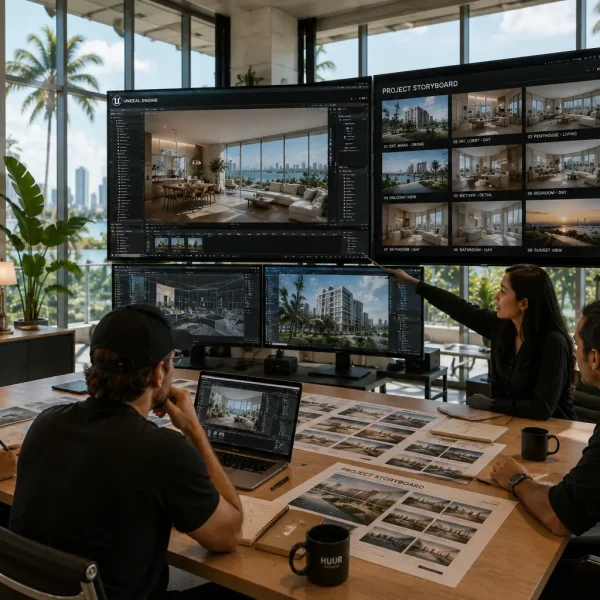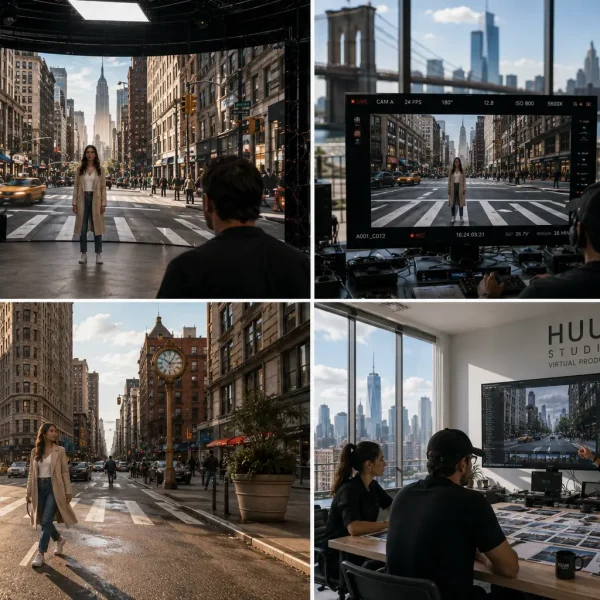




Introduction
Cinematic world CGI is what separates the brands that create genuine emotional connection online from the ones that produce beautiful content nobody remembers. In a digital landscape saturated with polished imagery, technically impressive renders, and high-production marketing material, the brands failing to connect with their audiences are not failing because their visuals are inadequate. They are failing because their visuals have no soul — no narrative, no atmosphere, no emotional logic that gives an audience a reason to feel something and a story to carry with them after the screen goes dark.
The architecture, real estate, and luxury branding sectors in North America have invested heavily in visual quality over the past decade — and the returns on that investment are diminishing. When every developer presents photorealistic renders, every interior design brand publishes immaculate lifestyle photography, and every architectural studio delivers polished digital presentations, visual quality alone ceases to differentiate. The audience has become visually fluent and emotionally unmoved — capable of appreciating technical excellence without being compelled by it.
“CGI (computer generated imagery) is a sub-category of VFX (visual effects). It refers to scenes, effects and images created with computer software. CGI can be static or dynamic, 2D or 3D and used in either subtle or obvious ways.(adobe)”Cinematic world CGI addresses this failure at its root. By building digital environments that function as narrative experiences — with atmospheric identity, emotional arc, spatial storytelling, and the cinematic language of light, movement, and revelation — HUUR Studios creates virtual worlds that audiences do not simply view but genuinely inhabit. In Vancouver’s competitive architectural and luxury development market, and across North America’s most demanding branding sectors, this approach is transforming how brands connect with the people whose decisions determine their commercial success.
This article explores what defines cinematic world CGI, how it creates the emotional connections that conventional visual content cannot, and why storytelling has become the essential differentiator for brands competing in digital environments where beautiful images are everywhere and genuine connection is rare.
What Defines a Cinematic Virtual World?
Cinematic world CGI begins with a definition that distinguishes it from conventional architectural rendering, product visualization, and digital marketing content. A cinematic virtual world is not a photorealistic image of a space or product. It is a complete, atmospheric, emotionally coherent digital environment — one designed with the same intentionality, narrative logic, and sensory richness that a film director brings to every frame of a cinematic production.
The word cinematic carries specific meaning in this context. Cinema communicates through the deliberate orchestration of light, shadow, movement, sound, timing, and spatial revelation — a language that operates below conscious analysis to produce emotional responses that audiences experience as genuine and memorable. Cinematic world CGI brings this language into digital environments — applying the compositional intelligence, atmospheric precision, and narrative architecture of filmmaking to virtual spaces that audiences can explore, inhabit, and remember.
A virtual environment that is merely photorealistic is not automatically cinematic. Photorealism is a technical achievement — the accurate simulation of how light behaves in physical space. Cinematic world CGI goes further by making deliberate choices about which aspects of that physical reality to emphasize, which to subordinate, and how to sequence the audience’s encounter with them in ways that produce specific emotional responses. Every lighting decision, every atmospheric detail, every moment of spatial transition is an authorial choice — made in service of a narrative intent rather than in pursuit of technical accuracy alone.
The Visual Language of Cinematic Digital Environments
Cinematic digital environments communicate through a visual language that HUUR Studios has developed across hundreds of virtual world projects for architectural, real estate, and branding clients across Vancouver and North America. This language draws on the established grammar of cinema — but translates it into interactive, spatial, real-time forms that give audiences agency within the narrative rather than positioning them as passive observers of it.
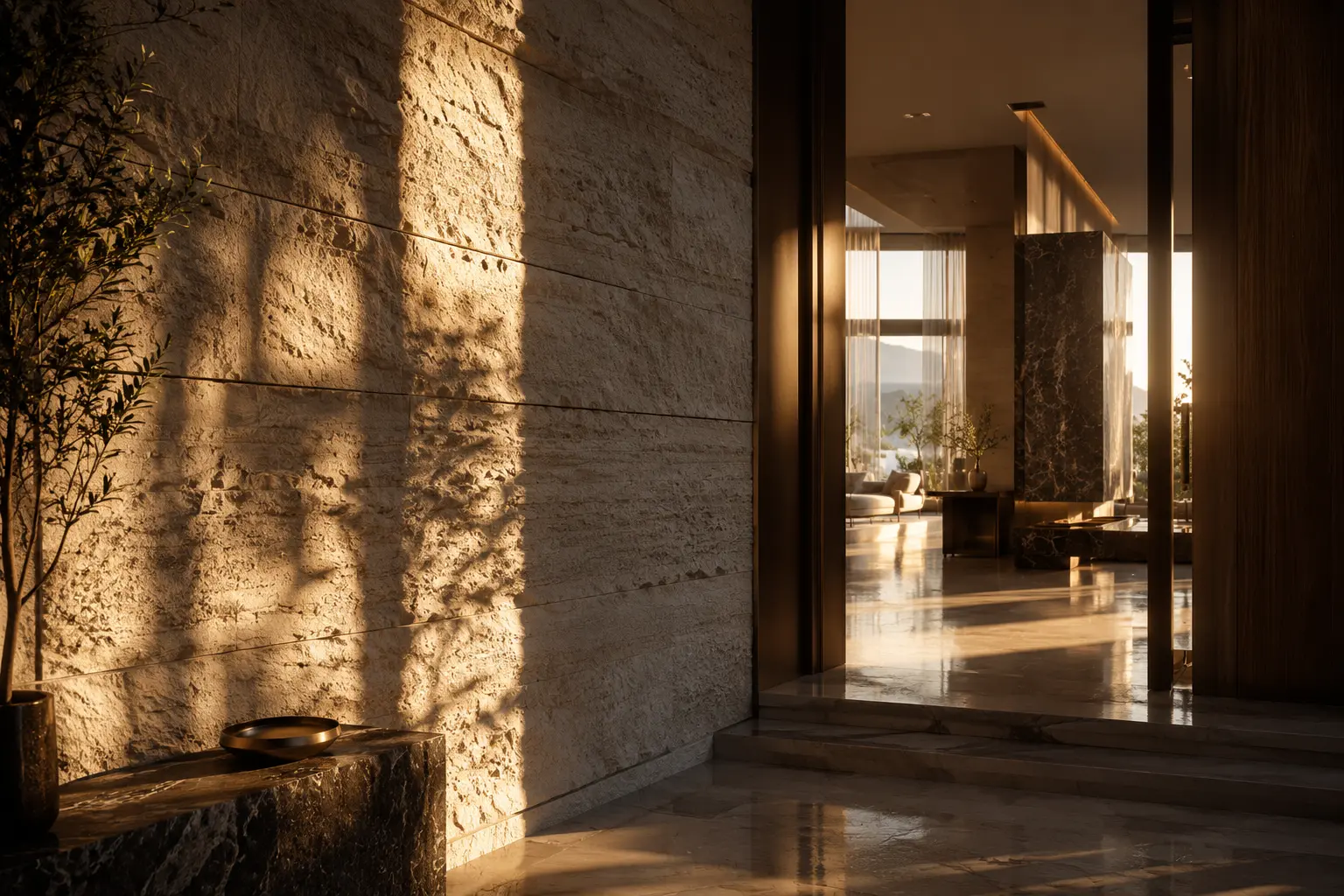
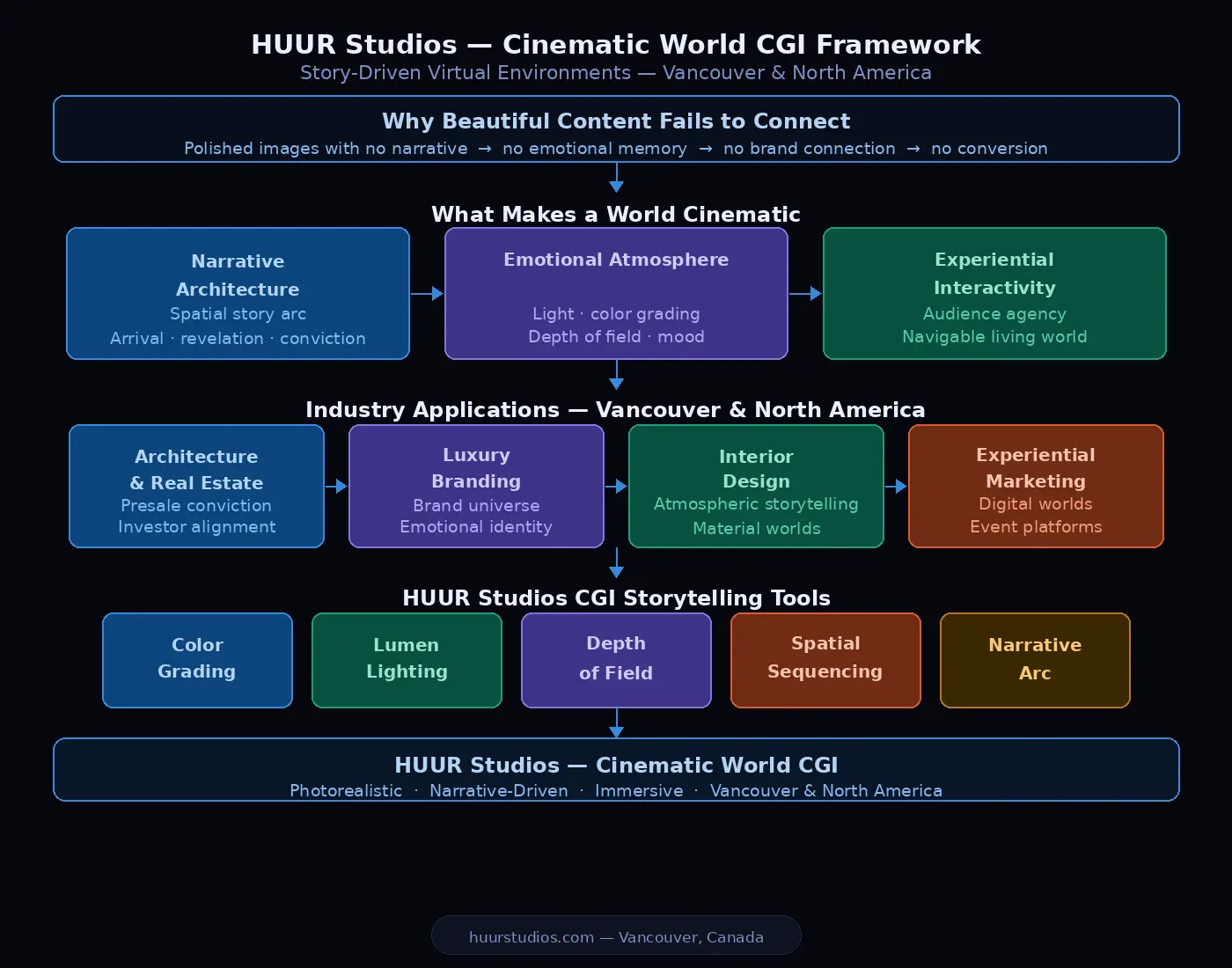
Color grading is one of the primary tools of cinematic world CGI storytelling. The specific palette of a cinematic environment — its warmth or coolness, its saturation or restraint, its contrast between light and shadow — communicates emotional tone before a single spatial element is encountered. HUUR Studios applies deliberate color grading to every cinematic world CGI environment it builds — establishing the emotional register of the experience in the first seconds of the audience’s encounter, creating an atmospheric expectation that the spatial journey then fulfills.
Depth of field — the selective focusing of attention that cinema uses to direct where the audience looks and what they feel about what they see — is another essential tool. Cinematic world CGI uses depth of field not as a photographic effect but as a narrative device — guiding the audience’s attention through a space in the sequence that reveals its story most compellingly, creating moments of focus and peripheral richness that give the environment both clarity and depth simultaneously.
Experiential CGI Worlds and Spatial Narrative
Experiential CGI worlds — a specific category of cinematic world CGI where the audience moves through the environment as an active participant rather than a passive viewer — represent the most commercially powerful application of cinematic digital environment technology for architectural and branding clients. The difference between watching a cinematic environment and inhabiting one is the difference between being moved and being transformed — and it is the latter that drives the commercial outcomes HUUR Studios’ clients seek.
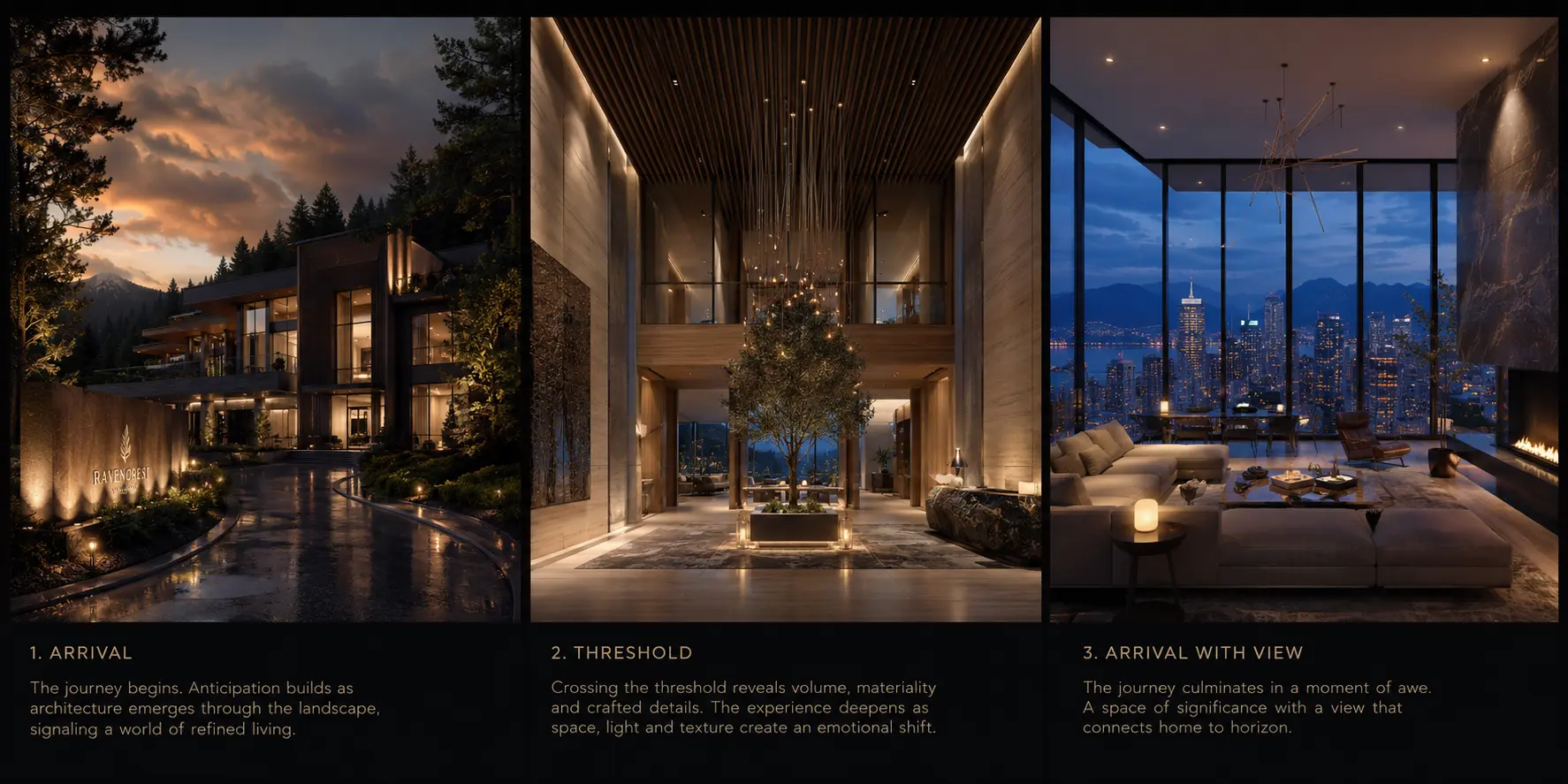
HUUR Studios builds experiential CGI worlds that are navigable, interactive, and narratively structured — guiding audiences through spatial sequences designed to produce specific emotional responses at specific moments. An arrival sequence that builds anticipation. A threshold moment that delivers revelation. A central space that creates a sense of arrival and belonging. A concluding view that produces the emotional conviction that drives commitment. These narrative beats are as deliberate and as carefully crafted in a HUUR Studios cinematic world CGI environment as they would be in a feature film — because the commercial stakes of the emotional experience they create are equally significant.
How CGI and Real-Time Technology Create Immersive Narratives
Cinematic world CGI reaches its full narrative potential when combined with real-time rendering technology — the platform that allows cinematic environments to be experienced interactively, at photorealistic quality, without the production lag that separated cinematic ambition from digital delivery for most of the medium’s history. Real-time cinematic world CGI is not pre-rendered video presented as interactive. It is a live, responsive environment where every frame is calculated in milliseconds — maintaining cinematic visual quality while simultaneously responding to every audience interaction.
The narrative significance of real-time technology for cinematic world CGI is profound. A pre-rendered cinematic environment tells one story — the story its creators chose to tell, in the sequence they chose to tell it, from the perspectives they chose to capture. A real-time cinematic world CGI environment enables the audience to discover the story themselves — moving through the space at their own pace, pausing at the moments that resonate most personally, returning to experiences that merit revisiting. This narrative agency transforms passive emotional response into active emotional investment — the deeper and more durable form of connection that brands building long-term audience relationships require.
Immersive Virtual Storytelling at the HUUR Studios Standard
Immersive virtual storytelling — the practice of constructing narrative experiences within interactive digital environments — is the discipline at the center of every cinematic world CGI project HUUR Studios delivers. Where conventional digital content tells audiences about a brand, a space, or a product, immersive virtual storytelling places the audience inside the brand’s world and allows the experience of inhabiting it to communicate everything that verbal and 2D visual content cannot.
HUUR Studios approaches immersive virtual storytelling as a collaborative creative process — working with architectural, real estate, and branding clients to identify the specific emotional story their project needs to tell and the specific audience it needs to tell it to. This story identification process shapes every subsequent creative and technical decision — from the atmospheric palette of the cinematic world CGI environment to the sequence of spatial revelations to the interactive moments that invite the audience to pause and engage.
For Vancouver’s luxury real estate developers, immersive virtual storytelling through cinematic world CGI communicates the lifestyle identity of a project — not just its physical specifications but the quality of life it offers, the community it creates, and the aspirational world it invites buyers to join. These are the stories that close presale commitments in markets where the product does not yet physically exist and the buyer must make a significant financial decision based entirely on the quality of the narrative they are invited to inhabit.
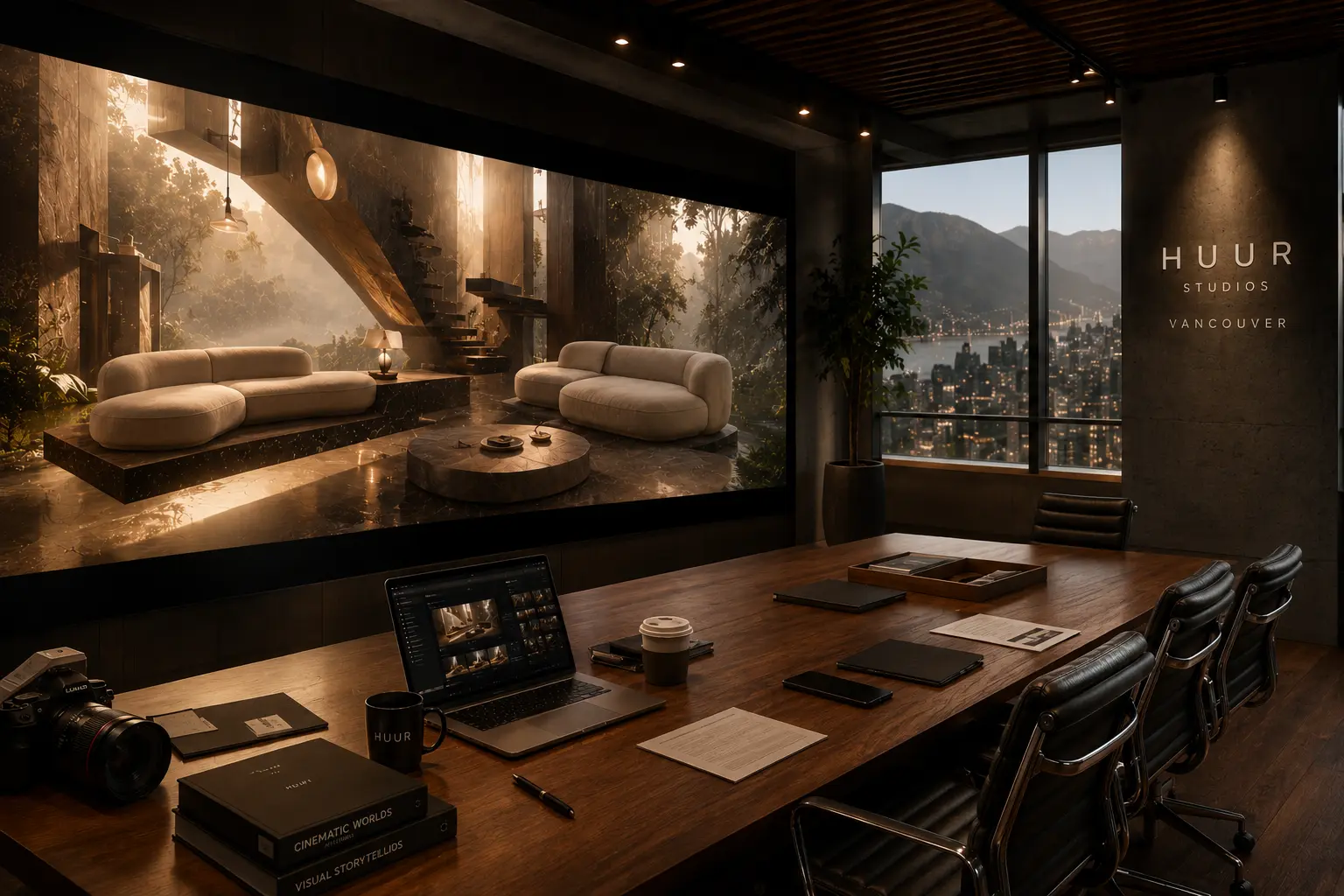
Narrative-Driven Visualization and the Architecture of Feeling
Narrative-driven visualization — the structuring of visual content around an emotional story arc rather than a technical demonstration — is the approach that distinguishes cinematic world CGI from conventional architectural and product visualization. Conventional visualization answers the question “what does this look like?” Narrative-driven visualization answers the more commercially important question: “how does this make me feel, and why does that feeling matter?”
HUUR Studios builds narrative-driven visualization environments for clients across architecture, interior design, luxury real estate, and brand experience — consistently finding that the emotional stories these environments tell are more commercially effective than technically superior alternatives that lack narrative coherence. A cinematic world CGI environment that communicates warmth, aspiration, and belonging produces buyer conviction more reliably than one that demonstrates technical rendering quality without emotional intentionality — because conviction is an emotional state, not an intellectual one.
The Role of Emotion and Atmosphere in Cinematic Visualization
Cinematic architectural visualization — the application of cinematic world CGI principles to architectural presentation — operates on the understanding that architecture is fundamentally an emotional medium. Buildings are not experienced intellectually. They are experienced atmospherically — through the quality of light in a room, the sense of scale in a space, the relationship between interior warmth and exterior environment, the acoustic quality of surfaces, and the narrative logic of moving from one space to the next.
A cinematic world CGI environment that captures these atmospheric qualities communicates architecture with a fidelity and emotional impact that technical rendering alone cannot achieve. The difference between a render that shows a room accurately and a cinematic world CGI environment that makes you feel what it would be like to live in that room is the difference between information and experience — and it is experience, not information, that drives the decisions of the clients, buyers, and partners that architecture and design brands need to reach.
Emotional Spatial Storytelling in Practice
Emotional spatial storytelling — the deliberate orchestration of spatial experiences to produce specific emotional responses — is the most technically sophisticated and commercially valuable capability of cinematic world CGI. It requires not just technical mastery of rendering and real-time platforms but a deep understanding of how humans respond emotionally to spatial experiences — what produces a sense of welcome, what creates a feeling of aspiration, what generates the specific emotion of arriving somewhere that feels like home.
HUUR Studios applies emotional spatial storytelling principles to every cinematic world CGI environment it builds — informed by the neuroscience of spatial experience, the psychology of environmental response, and the accumulated creative intelligence of a practice built entirely around the challenge of making digital spaces feel emotionally real. For a Vancouver luxury residential development, this might mean opening the virtual experience with a view that immediately communicates the project’s relationship to landscape and light — establishing the emotional context of the entire experience before a single interior has been encountered.
The atmospheric precision of HUUR Studios’ cinematic world CGI environments — built on Unreal Engine’s Lumen global illumination with custom color grading, atmospheric particle systems, and spatially accurate acoustic design — produces emotional responses in audiences that are measurably stronger than those produced by conventionally rendered alternatives. Clients who experience a HUUR Studios cinematic world CGI environment consistently report higher levels of emotional engagement, stronger purchase conviction, and greater brand loyalty than those who engage with conventional digital presentations — because the emotional spatial storytelling at the core of every project creates the kind of genuine connection that changes commercial outcomes.
Using Cinematic Worlds in Architecture, Branding, and Entertainment
Cinematic world CGI serves a wide range of industries and communication challenges — unified by a common need to create genuine emotional connection with audiences in digital environments where conventional visual content is failing to differentiate. The architecture, luxury real estate, branding, and entertainment sectors each present distinct applications of cinematic world CGI capability — and HUUR Studios has developed specialized expertise across all of them.
In architecture, cinematic world CGI serves the design communication challenge — giving clients, investors, and planning authorities a genuine emotional experience of proposed buildings rather than a technical demonstration of their specifications. A Vancouver mixed-use development presented through a HUUR Studios cinematic world CGI environment communicates not just what the building will look like but what it will feel like to approach it, enter it, move through it, and look out from it — creating the spatial and emotional conviction that accelerates approvals and investment decisions.
Cinematic CGI for Luxury Brand Experiences
In luxury branding, cinematic world CGI addresses the most persistent challenge in premium marketing — how to communicate quality, craftsmanship, and experiential richness in digital channels that were not designed to convey these qualities. A luxury furniture brand, a premium hospitality group, or a high-end fashion house that presents its identity through a cinematic world CGI environment built by HUUR Studios delivers an audience experience categorically different from conventional brand content — one that communicates the brand’s world with the atmospheric depth and emotional intentionality that luxury positioning demands.
HUUR Studios has delivered cinematic world CGI brand experiences for luxury clients across Vancouver and North America — creating digital worlds where brand identity is communicated through spatial atmosphere, material quality, narrative pacing, and emotional arc rather than through product features and marketing copy. These environments function as brand universe platforms — generating marketing content, social media assets, sales presentations, and event experiences simultaneously from a single immersive digital world that the brand owns and controls.
Explore More From HUUR
Why Virtual Showroom Design Is a Powerful Game-Changer for Interior Design Brands Struggling to Stand Out
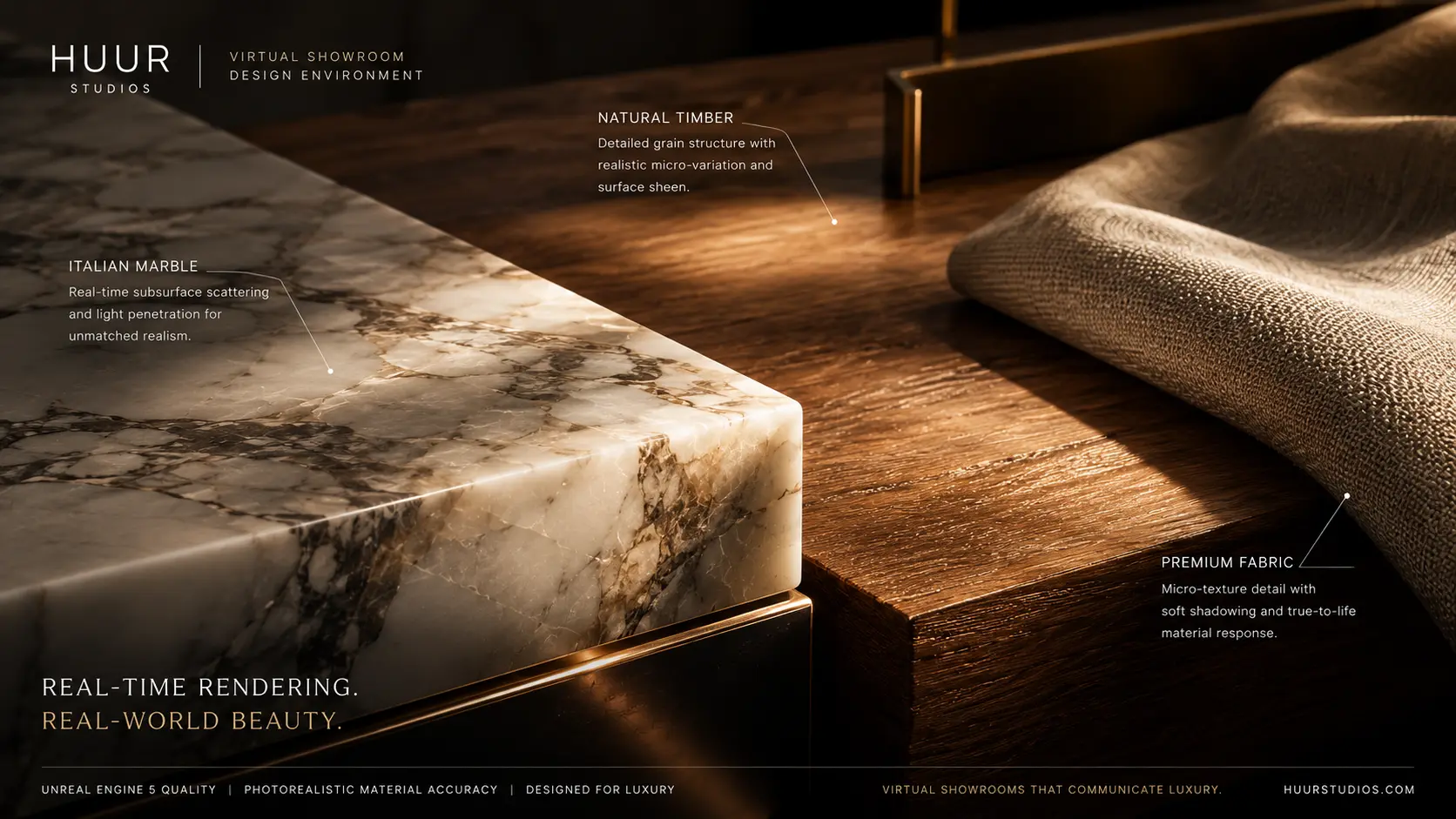
Entertainment and Experiential CGI Worlds
The entertainment sector represents the original domain of cinematic world CGI — and one where the standards established by game and film production continue to set the quality benchmark that architectural and branding applications of the medium aspire to reach. HUUR Studios brings the creative and technical standards of entertainment-grade cinematic world CGI to architectural, real estate, and branding applications — ensuring that every digital environment it builds performs at the visual and emotional quality level that contemporary audiences, shaped by exposure to world-class interactive entertainment experiences, now expect from every digital interaction.
For clients in Vancouver’s growing interactive entertainment and experiential marketing sectors, HUUR Studios delivers experiential CGI worlds that function simultaneously as entertainment experiences and commercial platforms — immersive digital environments where audience engagement, brand communication, and commercial conversion occur within a single, narratively coherent spatial experience.
Why Storytelling Is Becoming Essential in Digital Experiences
The shift toward storytelling as the primary differentiator in digital brand communication is not a creative trend — it is a structural response to audience behavior. Research from the Content Marketing Institute confirms that brand content that incorporates narrative storytelling generates 22 times more recall than non-narrative content. In an attention economy where audiences have developed sophisticated filters for content they find forgettable, story is the mechanism that bypasses those filters — because the human brain is wired to encode narrative experiences with the same emotional depth it applies to lived experience.
For brands in architecture, interior design, luxury real estate, and premium consumer sectors, this research finding has direct commercial implications. The cinematic world CGI environments that HUUR Studios builds for its North American clients are not just better-looking presentations — they are more memorable, more emotionally resonant, and more commercially effective than conventional alternatives because they deliver narrative experiences that audiences encode as genuine spatial memories rather than viewed content.
The Competitive Advantage of Narrative-Driven Digital Worlds
The competitive advantage of cinematic world CGI in North American markets is compounding as audience expectations continue to rise. Brands that invest in narrative-driven visualization and immersive virtual storytelling today are building digital assets that differentiate more effectively over time — because the emotional experiences they create are durable, shareable, and self-reinforcing in ways that conventional content is not.
A HUUR Studios cinematic world CGI environment for a Vancouver luxury development does not just serve one presale campaign. It generates hero content for every digital channel the developer operates, powers social media engagement with atmospheric imagery and video sequences, serves investor presentations with spatial conviction, and remains a living brand asset that communicates the project’s identity throughout its construction and delivery lifecycle — compounding commercial value from a single creative investment.
For brands across architecture, interior design, and luxury sectors struggling to stand out in digital environments where visual quality has become a baseline expectation rather than a differentiator, cinematic world CGI is the answer to the question that beautiful images alone can no longer answer: not just what does your project look like, but what does it feel like — and why should your audience care?
FAQ — Cinematic World CGI Explained
1. What is a cinematic virtual world? A cinematic world CGI environment is a photorealistic, atmospherically designed digital space built with the narrative intentionality and emotional language of cinema. Unlike conventional renders, cinematic world CGI environments tell stories — using light, atmosphere, spatial sequence, and narrative arc to create emotional connections that drive audience engagement and commercial conviction.
2. How does CGI contribute to immersive storytelling? Cinematic world CGI provides the photorealistic visual foundation that makes immersive virtual storytelling credible and emotionally effective. When digital environments achieve the atmospheric quality and spatial fidelity of physical reality, audiences respond to them with genuine emotional depth — forming spatial memories and brand connections that conventional 2D content cannot produce.
3. What makes a virtual environment cinematic? A cinematic virtual environment goes beyond photorealism to incorporate deliberate narrative decisions — color grading, atmospheric lighting, spatial sequence, depth of field, and emotional arc. Cinematic world CGI applies the compositional intelligence of filmmaking to interactive digital spaces — creating experiences that audiences feel rather than simply observe.
4. Why is storytelling important in architectural visualization? Architecture is experienced emotionally — through atmosphere, light, scale, and spatial narrative — not just visually. Cinematic world CGI that incorporates emotional spatial storytelling communicates the experiential quality of proposed buildings with a depth and conviction that technical rendering alone cannot achieve — producing faster approvals, stronger investor conviction, and more successful presale campaigns across Vancouver and North American markets.
Conclusion
Cinematic world CGI is the answer to the question that is defining the future of digital brand communication: how do you create genuine emotional connection in a landscape where beautiful content has become commoditized and audiences have learned to consume visual excellence without being moved by it? The answer is not more images. It is better stories — told through immersive, atmospherically precise, narratively intentional digital worlds that give audiences something to feel rather than simply something to see.
HUUR Studios builds cinematic world CGI environments that combine photorealistic real-time rendering, emotional spatial storytelling, immersive virtual storytelling, and narrative-driven visualization into digital experiences that transform how architectural, real estate, and luxury brands connect with the audiences whose decisions determine their success. From Vancouver’s luxury residential developments to North America’s most ambitious brand experience platforms, every HUUR Studios cinematic world CGI project is built on one conviction: that the brands which win in digital environments are not the ones with the most beautiful content — they are the ones with the most emotionally resonant stories, told in worlds vivid and immersive enough to be genuinely believed.
If your brand deserves to be felt rather than simply seen, cinematic world CGI is what makes that experience possible — and HUUR Studios is where that world begins.