
Introduction
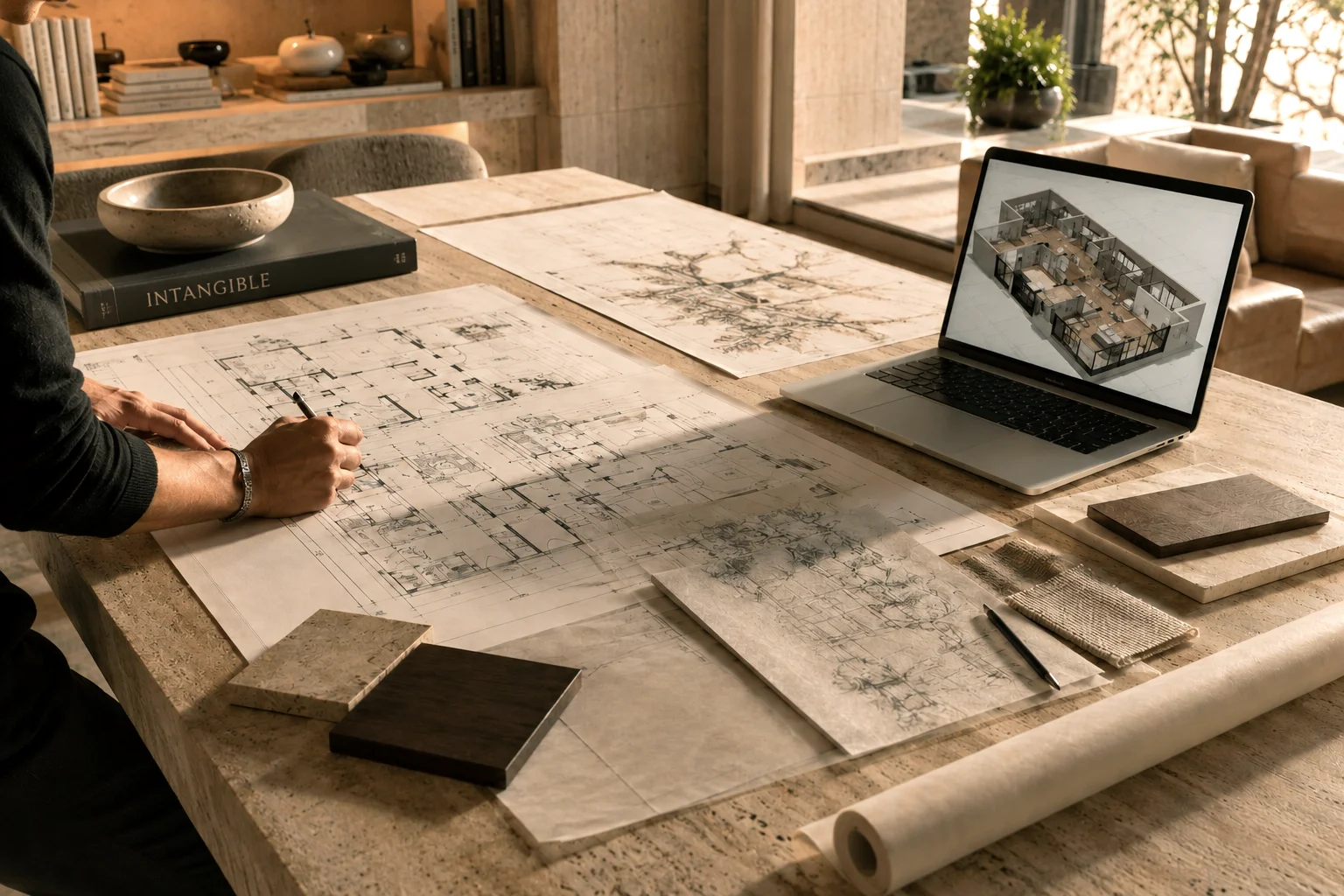
Virtual showroom design is giving interior design brands, real estate developers, and architectural studios a tool that traditional presentation formats have never been able to provide — the ability to immerse a client, buyer, or partner in a fully realized spatial experience of a product or space before it physically exists. For interior design brands struggling to differentiate in markets saturated with beautiful imagery, polished portfolios, and identical claims of creative excellence, this capability is not an incremental improvement. It is a categorical competitive advantage.
The interior design and architectural presentation market in North America is experiencing a trust deficit. Clients who have been disappointed by the gap between how a design was presented and how it was delivered are increasingly skeptical of static imagery, mood boards, and material samples as adequate decision-making tools. They want to experience what they are purchasing — spatially, atmospherically, and emotionally — before they commit. Virtual showroom design answers this demand with photorealistic, interactive environments that place clients inside proposed spaces with a level of spatial fidelity that static presentation formats cannot approach.
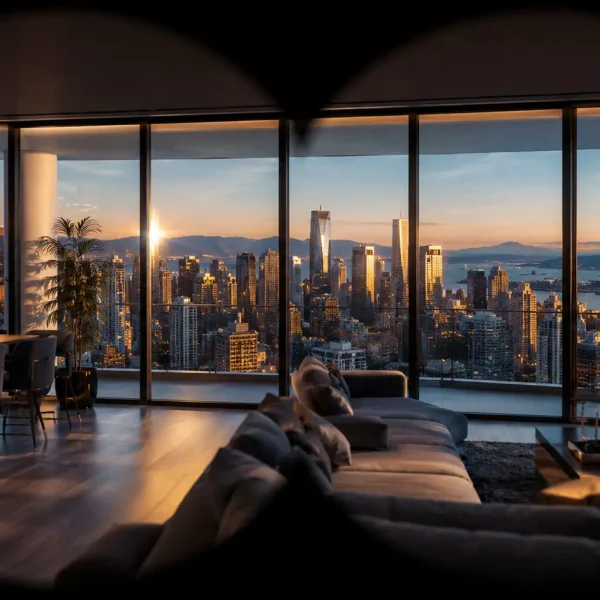
In Vancouver’s competitive interior design and luxury real estate markets — and across North America’s most demanding architectural and branding sectors — virtual showroom design is emerging as the standard of client experience that sophisticated buyers expect and forward-thinking studios deliver. The brands that have adopted immersive digital showroom technology are closing faster, converting higher, and retaining clients more effectively than those still presenting their work through conventional means.
This article explores exactly what virtual showroom design is, how it differs from traditional presentation approaches, and why HUUR Studios has positioned immersive virtual showroom capability at the center of every client experience it builds for interior design brands, real estate developers, and architectural studios across North America.
What Is Virtual Showroom Design?
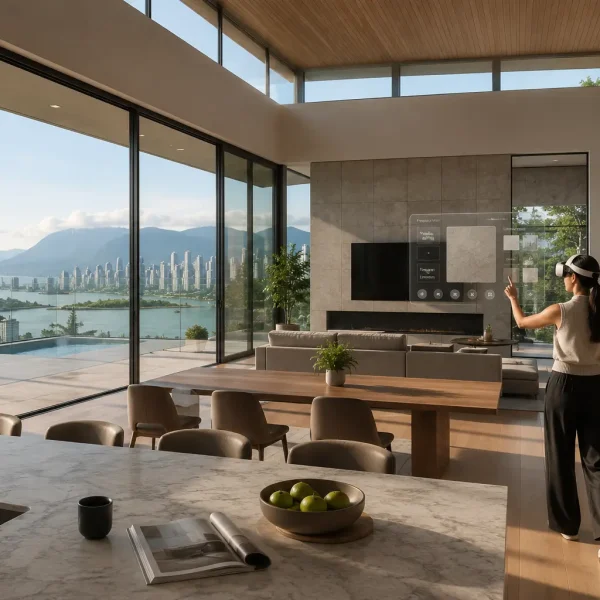
Virtual showroom design is the practice of creating photorealistic, interactive digital environments that present products, spaces, or design concepts in fully immersive 3D — allowing clients, buyers, and partners to navigate, explore, and engage with a proposed or existing collection in a way that transcends the limitations of physical showroom space, geographic distance, and static imagery. At its most sophisticated, virtual showroom design creates experiences indistinguishable in visual quality from the physical environments they represent — and surpassing them in flexibility, accessibility, and commercial intelligence.
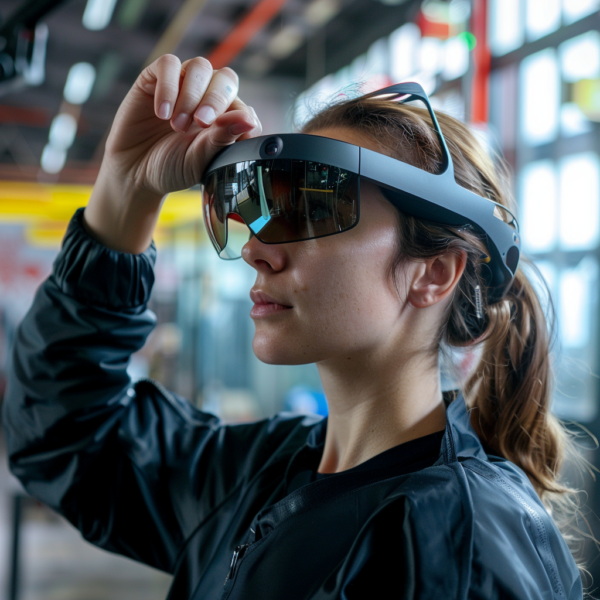
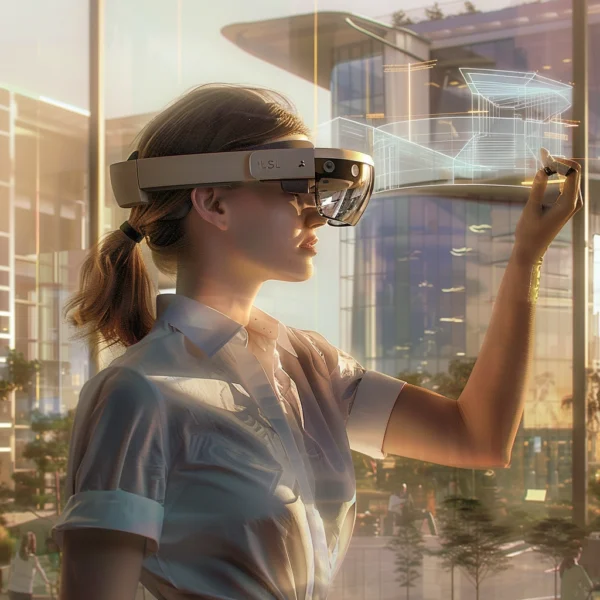
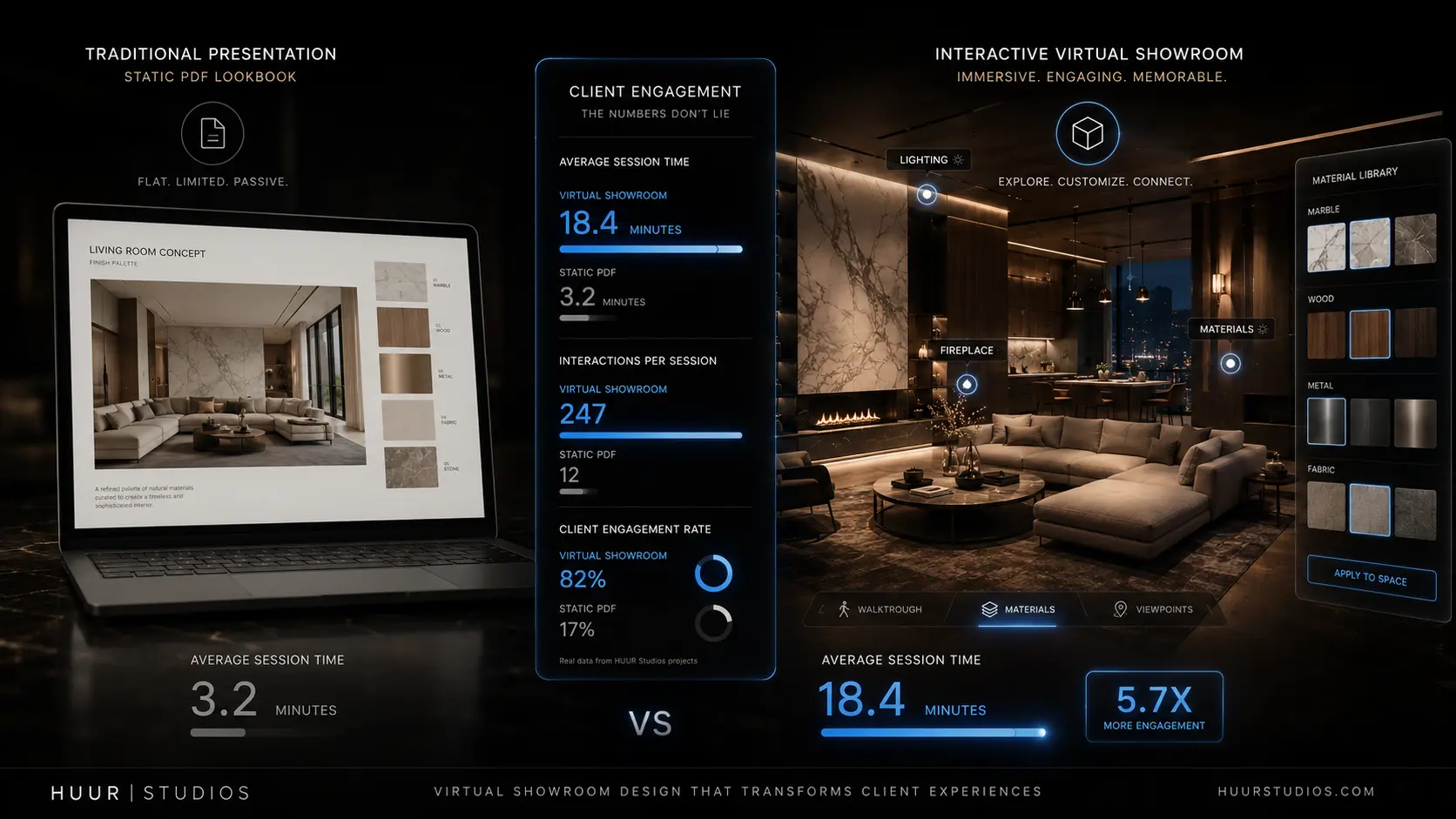
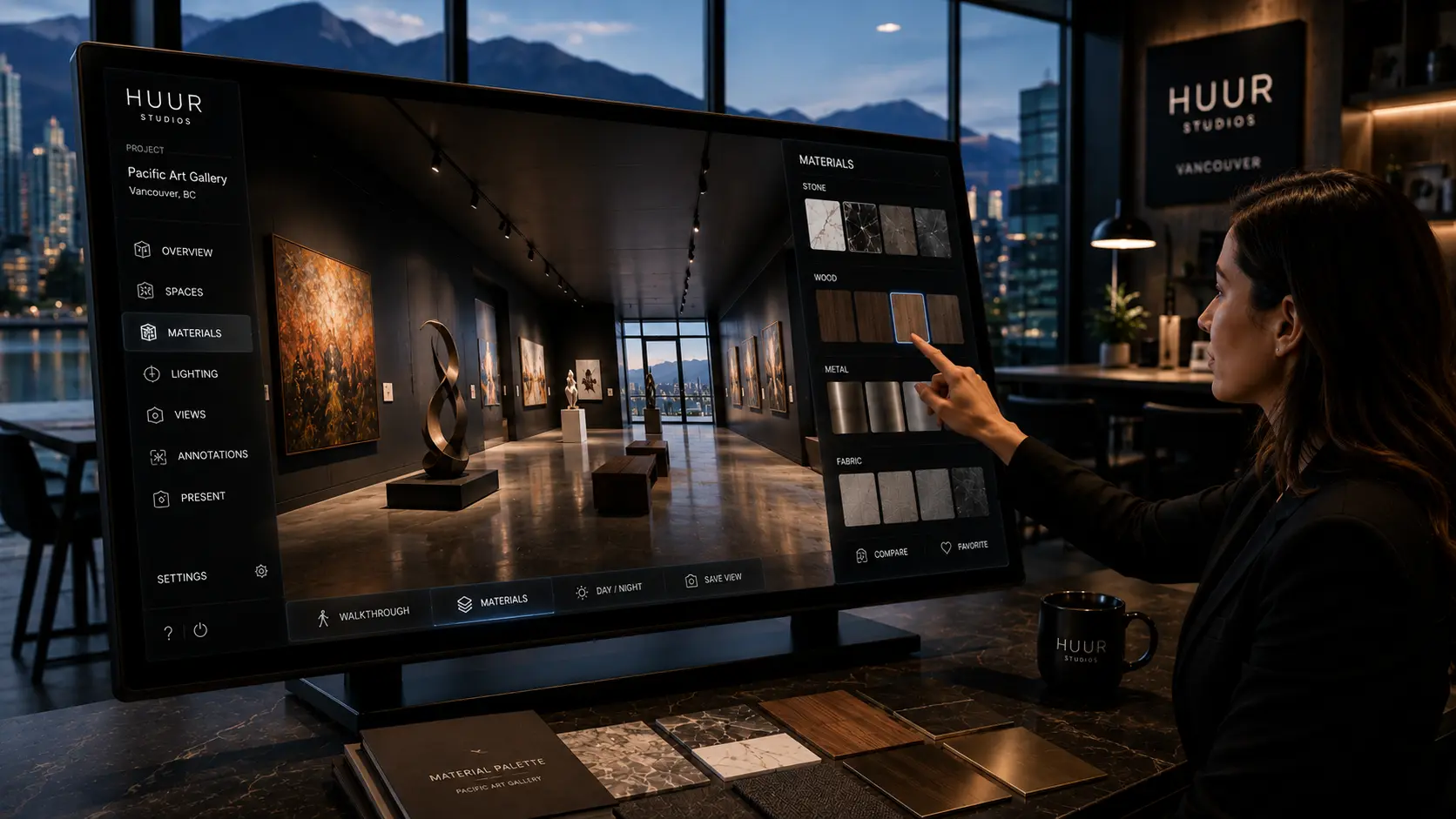
A virtual showroom built by HUUR Studios is not a 360-degree photograph or a pre-rendered video walkthrough. It is a live, responsive environment — built on real-time rendering technology — where every surface, material, light source, and spatial configuration responds dynamically to user interaction. A client navigating a HUUR Studios virtual showroom design can adjust lighting conditions, swap material finishes, reposition furniture, trigger product information overlays, and move freely through the space from any angle — all within a photorealistic environment that renders at 60 frames per second with the atmospheric quality of a high-end architectural photograph.
The Technology Behind Virtual Showroom Design
The technology stack that powers professional virtual showroom design combines real-time rendering engines, spatial interaction frameworks, web-based delivery infrastructure, and content management systems into an integrated platform that serves both the immersive experience the client sees and the commercial intelligence the brand needs.
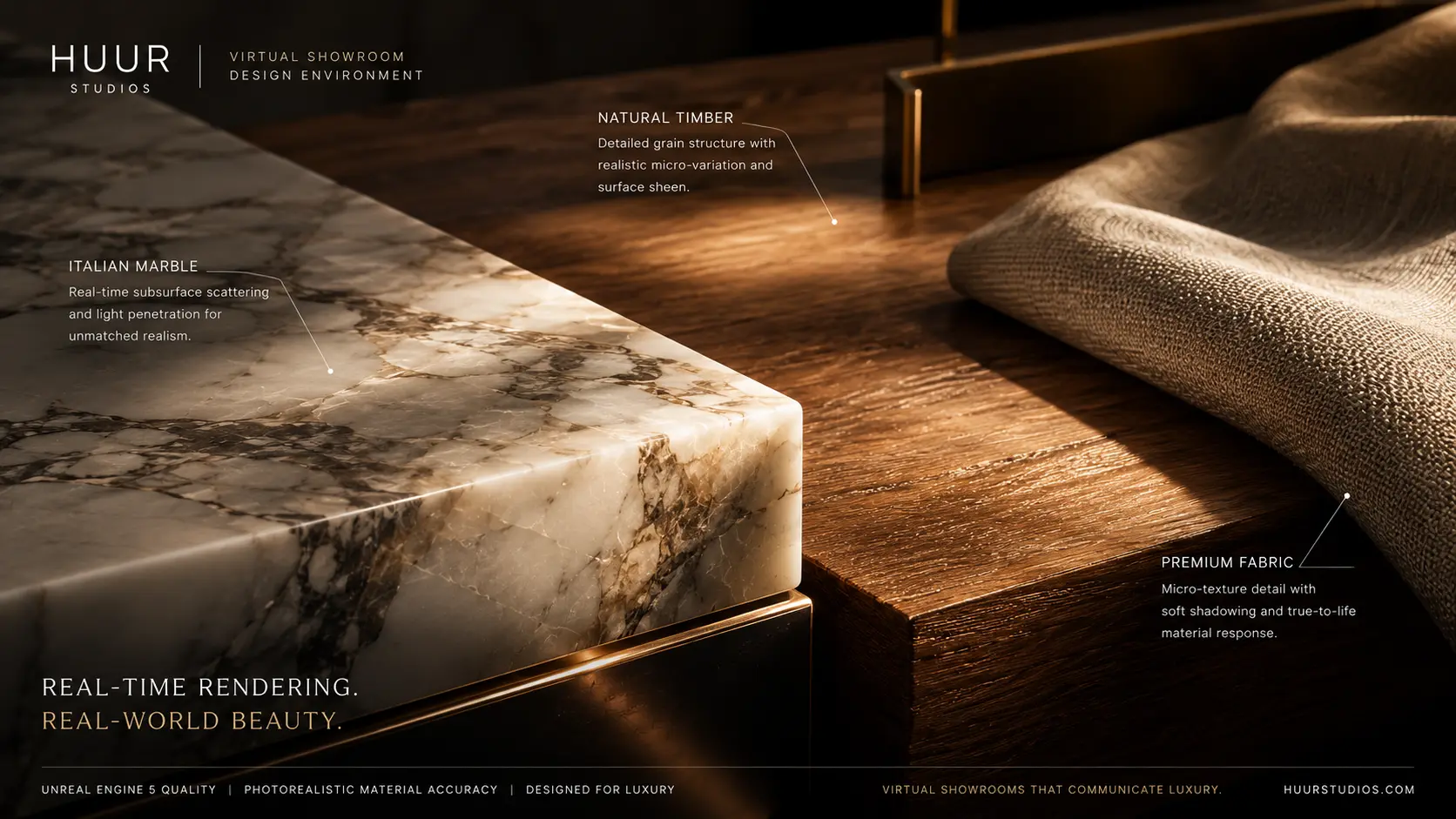
HUUR Studios builds its virtual showroom design environments on Unreal Engine — the same platform powering the world’s most visually demanding interactive experiences — ensuring photorealistic material rendering, dynamic global illumination, and sub-60-millisecond interaction response that maintains full immersive presence during user navigation. The result is a virtual showroom design environment that delivers the visual standard of a luxury physical showroom with the accessibility of a web browser — available on any device, from any location, without specialized hardware or software installation.
For interior design brands in Vancouver and across North America managing product collections that span hundreds of SKUs, dozens of finish options, and multiple spatial configurations, this technology platform transforms the showroom from a physical constraint into a limitless digital environment. A virtual showroom design built by HUUR Studios can present an entire collection — every product, every finish combination, every spatial arrangement — in a single immersive environment that a sales team can navigate confidently with any client in any context worldwide.
Virtual Property Showrooms — A Distinct and Growing Application
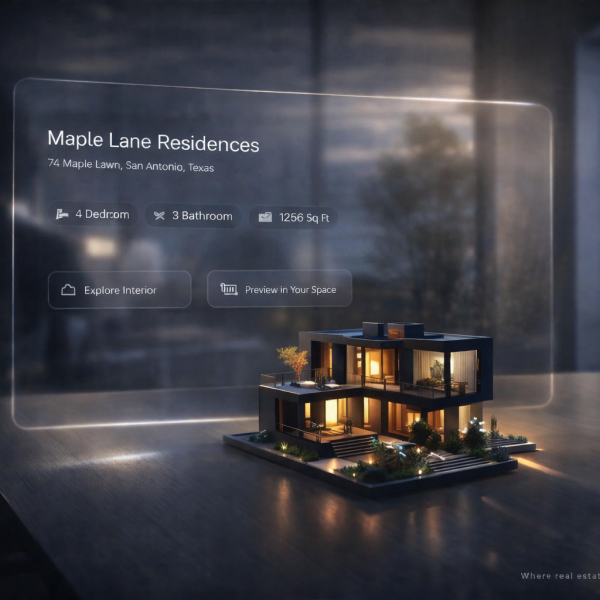
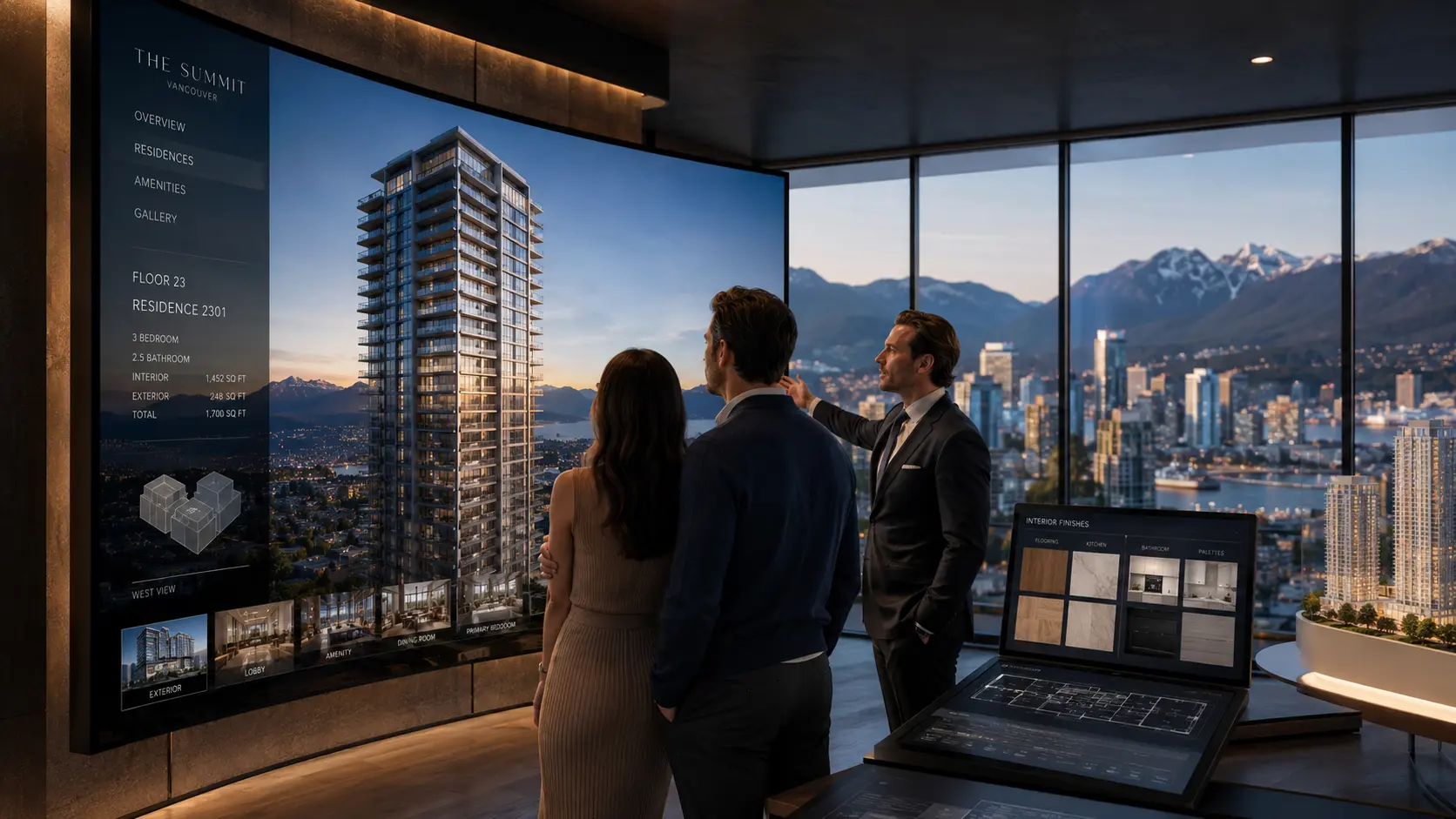
Virtual property showrooms — a specific application of virtual showroom design serving the residential and commercial real estate sectors — have emerged as one of the most commercially significant implementations of immersive digital presentation technology in North America. A virtual property showroom presents a proposed or existing development to prospective buyers through a photorealistic, navigable digital environment — allowing buyers to experience the property spatially before visiting it physically or before it has been constructed.
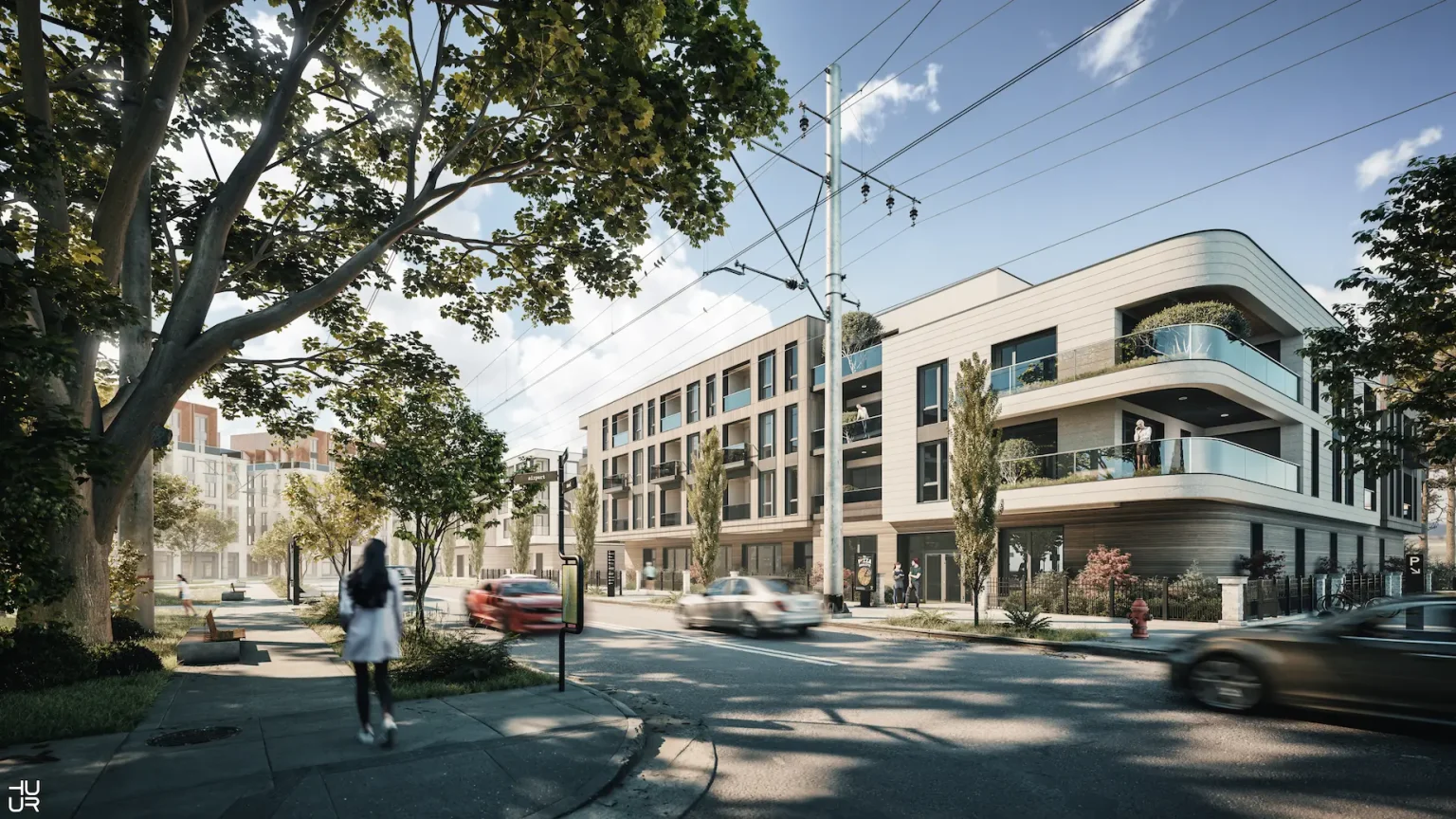
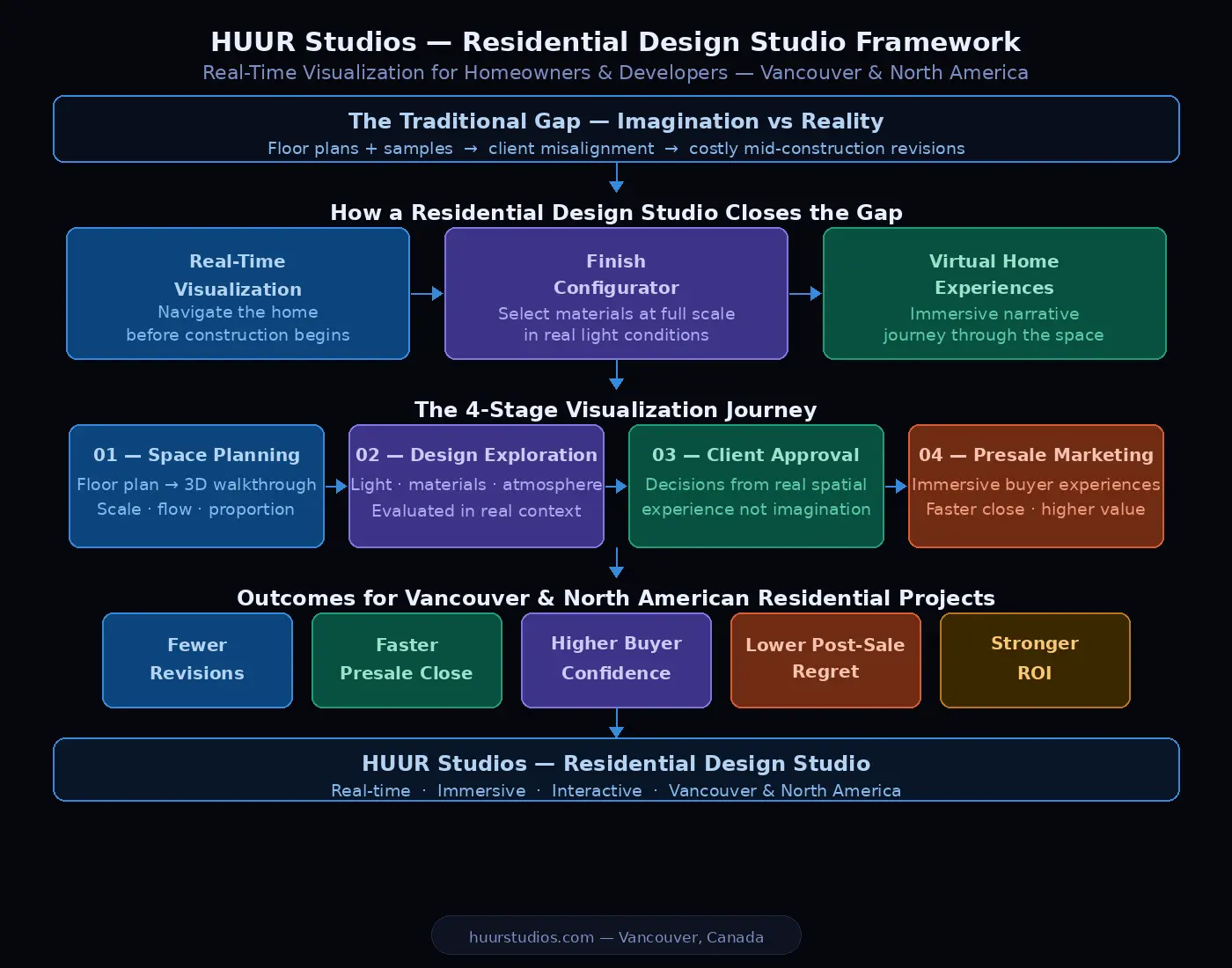
For Vancouver’s presale real estate market — where buyers frequently commit to properties months or years before completion — virtual property showrooms address a critical commercial challenge: how to create genuine buyer conviction about a physical experience that does not yet exist. HUUR Studios’ virtual showroom design for real estate applications delivers the spatial understanding, atmospheric quality, and interactive engagement that traditional presale marketing materials cannot achieve — consistently demonstrating measurable improvements in presale conversion rates for the developers it serves across British Columbia and beyond.
How Interactive Showrooms Differ from Traditional Presentations
Interactive virtual showrooms represent a fundamentally different category of client experience from the traditional presentation formats they are replacing — not just a digital version of existing approaches but a new medium with distinct commercial capabilities. Understanding this distinction is essential for interior design brands and architectural studios evaluating whether virtual showroom design investment is appropriate for their practice and their clients.
Traditional presentations — physical showrooms, printed lookbooks, static renders, and PowerPoint-based design presentations — share one defining limitation: they are passive. The client receives information that the brand has pre-selected and pre-arranged. They cannot explore beyond the curated selection. They cannot adjust variables to reflect their specific preferences. They cannot move freely through a space to develop their own spatial understanding. They experience the brand’s interpretation of the design — not the design itself.
Interactive virtual showrooms dissolve this limitation entirely. A client engaging with a virtual showroom design built by HUUR Studios is an active participant in the experience — navigating freely, making choices, triggering interactions, and developing a spatial and emotional relationship with the design that no passive presentation can replicate. This active engagement is not just a better experience. It is a commercially superior one — because clients who actively participate in a design experience form stronger convictions about it than those who passively observe it.
Engagement Metrics That Prove the Difference
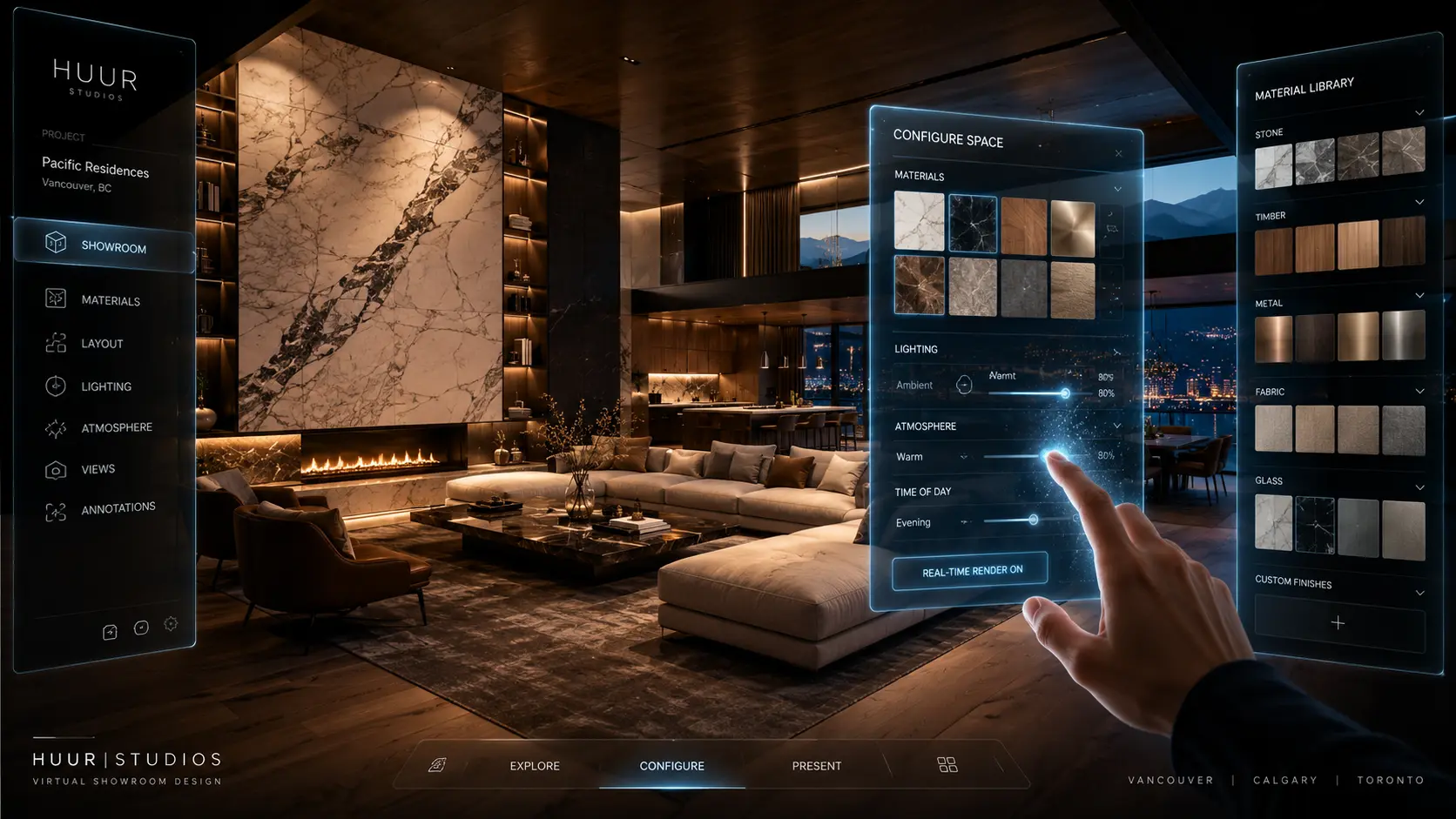
The commercial superiority of interactive virtual showrooms over traditional presentations is not anecdotal — it is measurable across every relevant engagement metric. HUUR Studios’ virtual showroom design implementations consistently demonstrate dramatically higher engagement rates than the static digital and physical presentation formats they replace.
Average session duration in a HUUR Studios virtual showroom design environment exceeds 18 minutes — compared to an average of 3.2 minutes for equivalent static digital presentations. Clients who engage with interactive virtual showrooms explore an average of 340% more product variations than those presented with static materials. Return visit rates for web-hosted virtual showroom design environments exceed 60% — a figure that physical showrooms, constrained by geography and opening hours, cannot approach.
For interior design brands and real estate developers in Vancouver and across North American markets where client acquisition costs are high and conversion timelines are long, these engagement metrics translate directly into commercial performance. A client who has spent 18 minutes actively exploring a virtual showroom design environment is categorically more qualified and more likely to convert than one who has spent 3 minutes scrolling through a PDF lookbook — and the design brand that facilitates the deeper engagement wins the relationship.
The Role of Real-Time Rendering in Virtual Showroom Experiences
Real-time showroom visualization is the technical foundation that distinguishes professional virtual showroom design from conventional digital presentations — and it is the capability that makes genuine interactivity possible at the visual quality standards that luxury interior design and architectural brands require. Real-time rendering produces every frame of a virtual showroom design experience in milliseconds — maintaining photorealistic visual quality while simultaneously responding to every user interaction without perceptible delay.
The commercial significance of real-time rendering for virtual showroom design is most visible in the material configuration context. When a client selects a different finish option in a virtual showroom design environment built on real-time technology, the change is visible instantly — rendered at full photorealistic quality, in the actual lighting conditions of the showroom environment, in the spatial context of every adjacent material and surface. This instant visual response is what makes the configurator interaction feel genuine rather than approximated — and it is what creates the conviction that drives purchase decisions.
Lighting Precision and Atmospheric Quality
The atmospheric quality of a virtual showroom design environment — the behavior of light across surfaces, the depth and warmth of material rendering, the sense of spatial presence that distinguishes an immersive environment from a rendered image — is produced by real-time global illumination systems that simulate the physics of light propagation with a precision previously available only in offline rendering workflows.
HUUR Studios implements Unreal Engine’s Lumen global illumination system in every virtual showroom design project — producing lighting behavior that is simultaneously scientifically accurate and cinematically beautiful. A marble surface in a HUUR Studios virtual showroom design reflects light with the precise translucency and surface variation of the actual material. A timber floor absorbs and diffuses light with the warmth and grain character that makes the material emotionally resonant. A fabric upholstery renders with the micro-texture and light interaction that communicates tactile quality through a visual medium.
For interior design brands whose value proposition is built on material quality and spatial atmosphere — the qualities most difficult to communicate through conventional digital means — this level of real-time showroom visualization precision is the difference between a digital presentation that sells and one that merely informs.
Web-Based Delivery and Global Accessibility
The final dimension of real-time rendering’s commercial significance for virtual showroom design is its delivery accessibility. HUUR Studios builds every virtual showroom design environment with WebGL-based rendering that delivers the full real-time visual quality of the Unreal Engine experience through any standard web browser — on desktop, tablet, or mobile — without plugins, downloads, or specialized hardware.
This web accessibility transforms the commercial reach of digital showroom experiences. A Vancouver interior design brand with a HUUR Studios virtual showroom design can present its full collection to a client in Toronto, an architect in New York, or a developer in Singapore — all experiencing the same photorealistic, interactive environment simultaneously, from their own devices, in their own time. The geographic and logistical constraints that limit physical showroom reach dissolve entirely — replaced by a digital environment that is always open, always complete, and always performing at its best.
Explore More From HUUR
How a Real Estate Sales Platform Helps Marketing Companies Gain a Competitive Edge and Supports Presale Home Buyers
Using Virtual Showrooms in Real Estate, Architecture, and Branding
Virtual showroom design delivers commercial value across a wider range of industries and applications than its association with interior design and real estate might suggest. The core capability — photorealistic, interactive presentation of products, spaces, and design concepts in immersive digital environments — addresses a universal communication challenge: how to create genuine client conviction about something that cannot yet be fully experienced in physical form.
In real estate, virtual showroom design serves the presale marketing challenge — creating buyer conviction about properties that do not yet exist. In architecture, it serves the design communication challenge — giving clients, investors, and planners genuine spatial understanding of proposed buildings. In interior design, it serves the product presentation challenge — helping clients experience materials, configurations, and spatial arrangements with the fidelity their investment decisions require.
Digital Showroom Experiences for Luxury Branding
Digital showroom experiences built on virtual showroom design technology are increasingly being adopted by luxury consumer brands — furniture manufacturers, kitchen and bathroom brands, lighting designers, and material suppliers — as primary sales and brand communication tools. The luxury branding application of virtual showroom design addresses a specific commercial challenge: how to communicate the quality, atmosphere, and emotional resonance of luxury products in digital channels that were previously incapable of conveying these qualities convincingly.
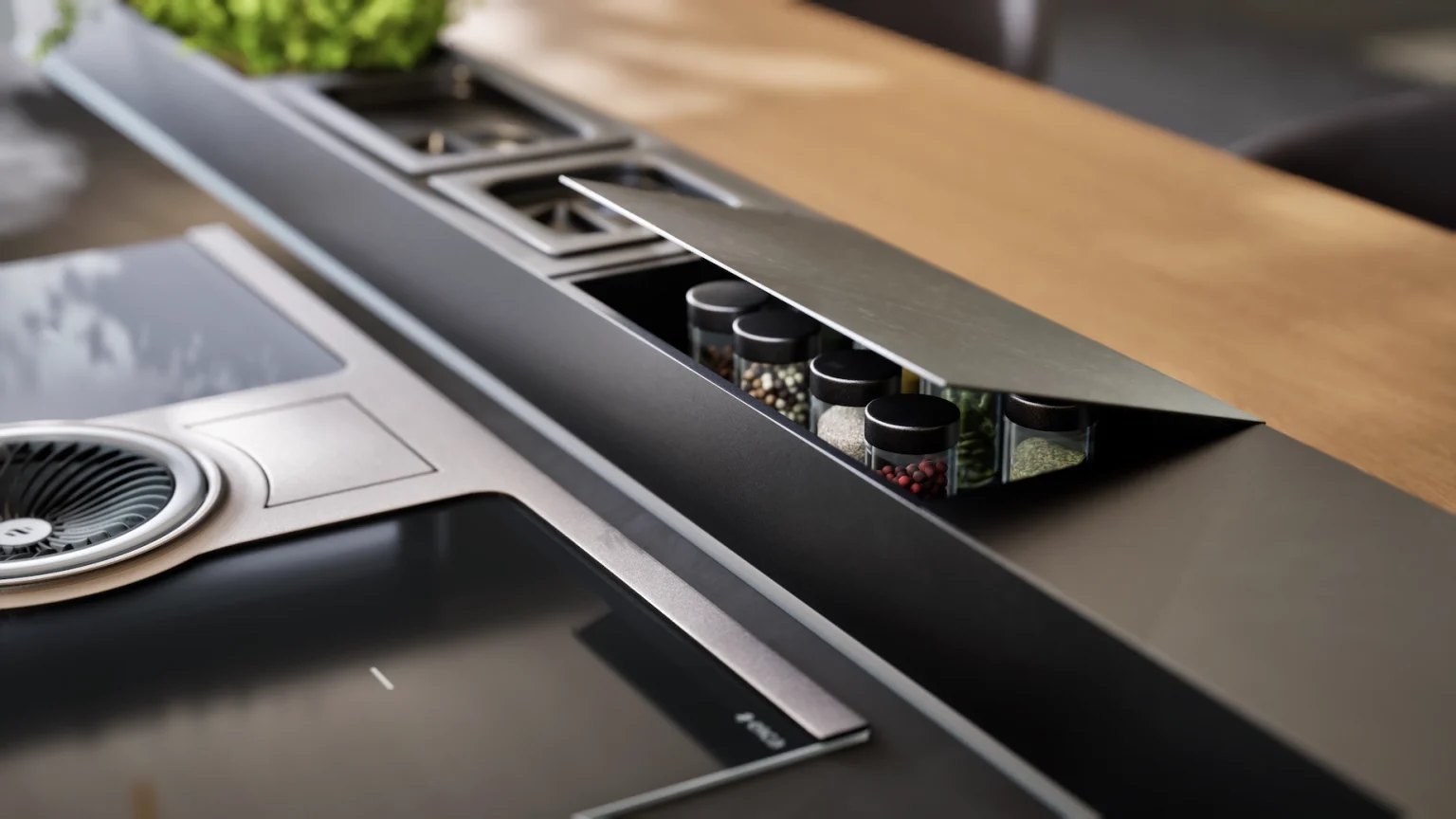
HUUR Studios has delivered digital showroom experiences for luxury interior product brands across Vancouver and North America — creating virtual environments where the brand’s full product collection is presented in contextual spatial installations of photorealistic quality, navigable by trade clients, retail buyers, and end consumers from any device. These environments function simultaneously as sales tools, brand experiences, and marketing content generators — producing atmospheric images and video sequences from the virtual environment that serve across every digital channel the brand operates.
Interactive Presentation Environments for Architectural Practices
Interactive presentation environments — a specific application of virtual showroom design serving architectural practices and design consultancies — deliver the concept communication capability that distinguishes forward-thinking studios from those still presenting complex spatial proposals through conventional means.
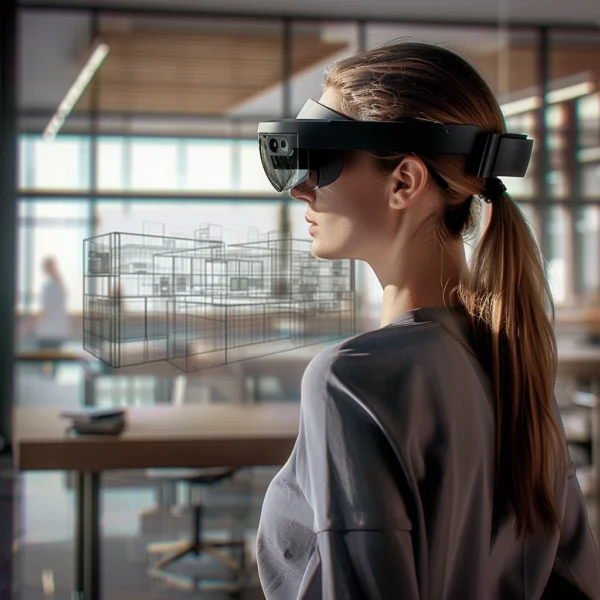
An architectural practice that presents a commercial interior design proposal through an interactive presentation environment built by HUUR Studios gives its client an experience categorically superior to a board presentation with renders and material samples. The client navigates the proposed space freely, evaluates material choices in the actual spatial context they will inhabit, triggers information overlays that explain design rationale, and develops a spatial understanding that converts proposal presentations into project approvals with measurably higher frequency.
HUUR Studios has documented that clients approving architectural proposals presented through interactive presentation environments require fewer subsequent design revisions, report higher satisfaction with the design process, and refer additional clients at higher rates than those who engaged through conventional presentation formats — making the investment in virtual showroom design capability an asset that compounds in commercial value throughout every client relationship it enhances.
Why Immersive Showrooms Improve Engagement and Retention
Immersive showroom environments improve client engagement and retention through mechanisms that are grounded in cognitive science as much as commercial practice. The neuroscience of spatial experience confirms that humans encode memories of spaces they have inhabited — virtually or physically — with a depth and emotional texture that 2D visual experiences cannot produce. A client who has navigated an immersive showroom environment built by HUUR Studios carries a spatial memory of that experience that persists, influences, and motivates in ways that a viewed image or video cannot replicate.
This spatial memory advantage is the deepest commercial argument for virtual showroom design investment. It explains why clients who engage with immersive virtual showrooms return at higher rates, convert at higher rates, and refer at higher rates than those who engage with conventional presentations. They are not just better informed — they are emotionally connected to the design in a way that creates the conviction and loyalty that drive long-term commercial relationships.
Reducing Decision Anxiety Through Immersive Engagement
Decision anxiety — the uncertainty and hesitation that accompanies significant purchase commitments — is one of the most powerful inhibitors of conversion in interior design, real estate, and architectural services markets. Clients who cannot fully visualize what they are purchasing delay decisions, seek additional reassurance, and frequently withdraw from commitments that a clearer spatial understanding would have confirmed.
Virtual showroom design addresses decision anxiety at its source by replacing uncertainty with experience. A client who has navigated a virtual showroom design environment of their proposed interior, selected their material configurations, and experienced the atmospheric quality of the finished space has resolved most of the uncertainty that would otherwise delay or prevent their commitment. The decision they make from this position of experiential knowledge is faster, more confident, and more durable than one made from incomplete visual information.
For Vancouver interior design brands whose project timelines and cash flow depend on client decision velocity, this reduction in decision anxiety is a direct commercial benefit of virtual showroom design investment — one that compounds across every client engagement the studio conducts.
Retention Through Ongoing Virtual Engagement
The retention advantage of virtual showroom design extends beyond the initial sale into the ongoing client relationship. A virtual showroom design environment is not a single-use presentation asset — it is a persistent digital experience that clients return to, share with their networks, and engage with throughout the design and delivery process.
HUUR Studios builds virtual showroom design environments with ongoing engagement features — material update capabilities that allow clients to revisit and reconfigure selections as the project progresses, progress documentation overlays that show how the virtual environment relates to construction reality, and shareable links that allow clients to share their personalized configuration with family members, business partners, or social networks. This ongoing engagement transforms the virtual showroom design from a sales tool into a relationship platform — deepening client investment in the project and the studio simultaneously.
For HUUR Studios’ interior design and architectural clients across Vancouver and North America, this relationship platform capability consistently produces the referral rates, repeat engagement, and brand loyalty that conventional presentation-based client relationships rarely achieve — because the virtual showroom design experience creates a level of client investment and emotional ownership that conventional presentations simply cannot.
FAQ — Virtual Showroom Design Explained
1. What is virtual showroom design? Virtual showroom design is the creation of photorealistic, interactive 3D environments that present products, spaces, or design concepts immersively — allowing clients to navigate, configure, and experience a proposed or existing collection with spatial fidelity that static imagery cannot achieve. HUUR Studios delivers professional virtual showroom design for interior design, real estate, and architectural clients across Vancouver and North America.
2. How do virtual showrooms improve user engagement? Virtual showroom design creates active, participatory client experiences that generate dramatically higher engagement than passive presentations. Session durations exceed 18 minutes on average, clients explore 340% more product variations, and return visit rates exceed 60% — because immersive showroom environments create spatial memory and emotional connection that 2D presentations cannot replicate.
3. Can virtual showrooms be interactive in real time? Yes — real-time showroom visualization built on game engine technology delivers instant material swapping, lighting adjustment, spatial reconfiguration, and product information interaction at full photorealistic quality. Every user action in a HUUR Studios virtual showroom design environment produces an immediate visual response — creating the genuine interactive experience that drives client conviction and purchase confidence.
4. Are virtual showrooms useful beyond real estate and architecture? Virtual showroom design delivers commercial value across interior design, luxury product branding, retail, hospitality, and any industry where spatial or product quality is difficult to communicate through conventional digital means. HUUR Studios has delivered digital showroom experiences for furniture brands, kitchen and bathroom suppliers, and luxury consumer brands — consistently demonstrating superior engagement and conversion outcomes compared to static presentation alternatives.
Great design is not something people should have to imagine.
Whether you’re presenting a luxury interior collection, launching a new real estate development, or showcasing architectural concepts, the most powerful experiences happen when people can explore, interact, and connect with a space before it exists in the physical world.
At HUUR Studios, we create immersive virtual showroom experiences that transform static presentations into living environments — helping brands engage audiences, reduce decision uncertainty, and build stronger connections through real-time interaction.
From interactive product showcases to fully immersive virtual property experiences, we help businesses turn curiosity into confidence and engagement into action.
Let’s create a virtual showroom experience that your audience won’t just see — they’ll remember.
Conclusion
Virtual showroom design is not the future of how interior design brands, real estate developers, and architectural studios present their work — it is the present standard that forward-thinking studios in Vancouver and across North America are already delivering while their competitors continue to rely on presentation formats that their clients have outgrown. The commercial advantages of virtual showroom design — higher engagement, faster decisions, stronger conversions, deeper client relationships, and broader geographic reach — are documented, measurable, and compounding in value as digital presentation expectations continue to rise.
“If you are looking to build or browse virtual showrooms, the technology is highly scalable. Basic 3D viewers or digital store apps can be set up easily, while fully custom, immersive virtual reality experiences can be developed by specialized studios.(Shopify)” HUUR Studios builds virtual showroom design experiences that combine photorealistic real-time rendering, interactive configurator technology, immersive showroom environments, and web-based global delivery — serving interior design brands, real estate developers, and architectural studios across Vancouver, British Columbia, and North America with digital showroom experiences that do what no conventional presentation format can: make clients genuinely feel at home in a space before it exists.If your brand deserves to be experienced rather than simply seen, virtual showroom design is what makes that experience possible — and HUUR Studios is where it is built.