Introduction:
Virtual production for architecture is the product
ion methodology that brings LED volume and real-time rendering technology — the same tools powering The Mandalorian and the most ambitious streaming productions globally — directly into the marketing and communication of unbuilt buildings. For the first time in architectural history, developers and design firms can place real talent inside photorealistic digital environments during a live production session, capturing content of a cinematic quality and emotional resonance that static CGI renders and green screen compositing have never been able to replicate.
The commercial opportunity this creates for Vancouver’s competitive presale and architectural markets is significant and time-limited. Developers and studios that understand what this methodology makes possible — and partner with HUUR Studios to deploy it now — are establishing advantages that will compound as the format becomes the new standard expectation for every premium development in North America.
This article examines what virtual production for architecture delivers, how its immersive production workflows differ from conventional CGI, where this approach creates the strongest commercial value, and why HUUR Studios is the partner of choice for Vancouver and North American clients seeking this level of cinematic and technical quality in their architectural marketing content.
What Is Virtual Production for Architecture?
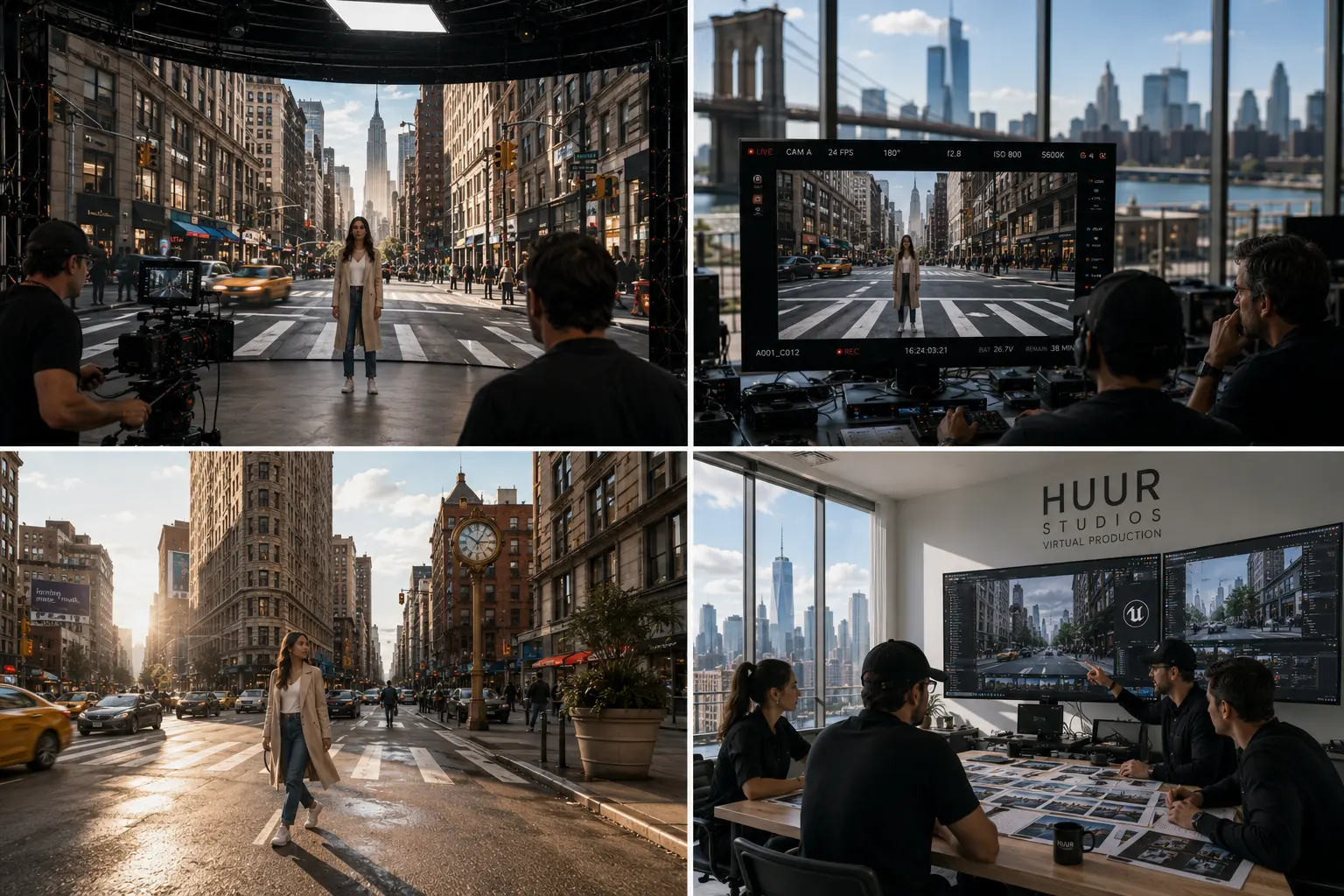
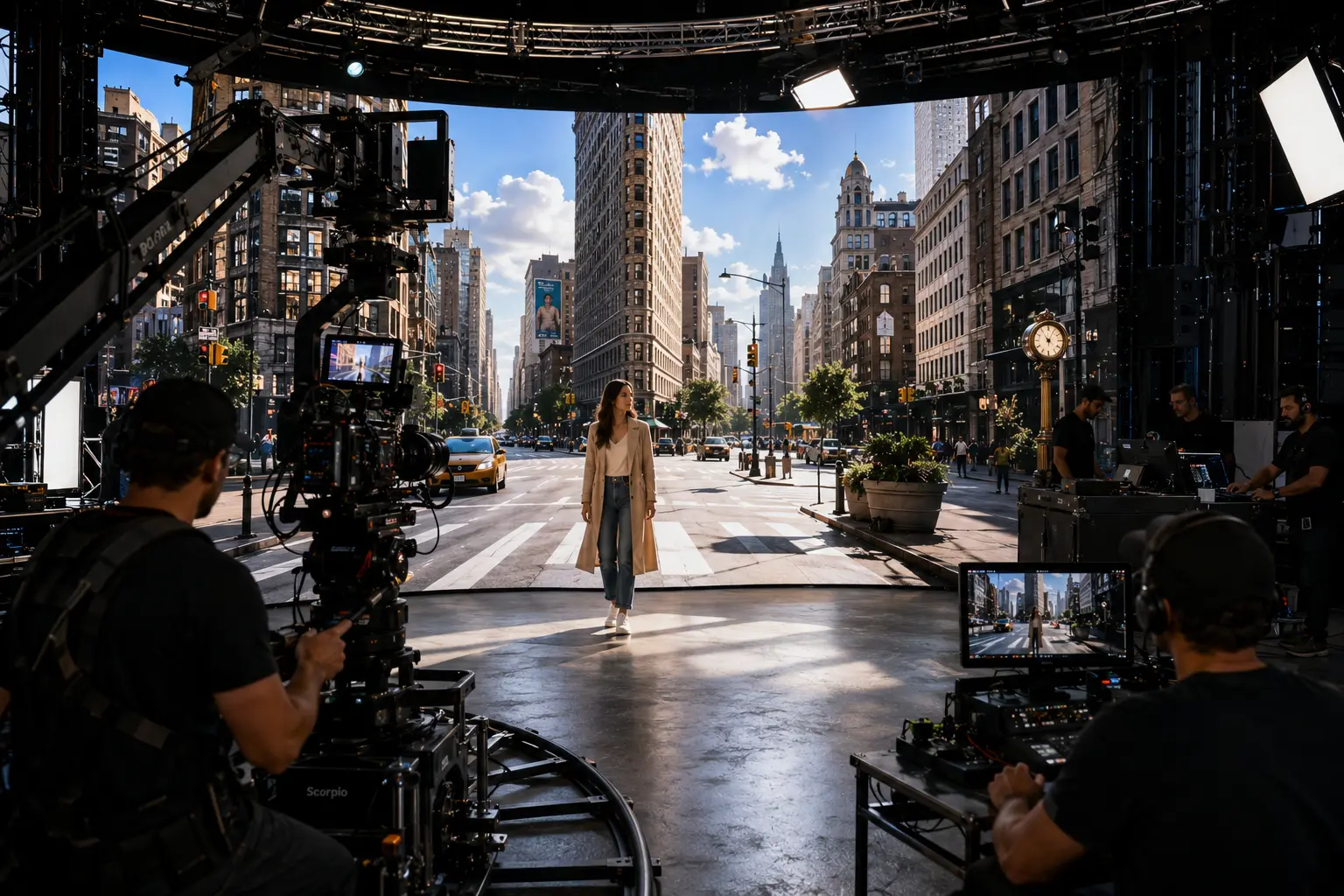
Virtual production for architecture is a production methodology combining physical filmmaking — real cameras, real talent, and live action — with fully digital architectural environments displayed in real time on LED volume screens or processed through camera tracking systems. Digital and physical elements exist in the same frame, the same light, and the same moment of capture. This is fundamentally different from conventional CGI, where digital and physical elements are always created separately and assembled weeks later during post-production compositing.
In a standard architectural marketing workflow, a CGI studio renders building interiors and exteriors while a separate crew photographs lifestyle talent against a green screen. Both sets of footage then pass through a compositing team who spend weeks attempting to match lighting and perspective across materials created in entirely different environments. Subtle inconsistencies almost always remain. The methodology this studio has pioneered eliminates every stage of that fragmented process — talent inhabits the digital environment, lit by real light the LED panels emit, and the camera records the final composite image live.
The Technology Stack Behind the Methodology
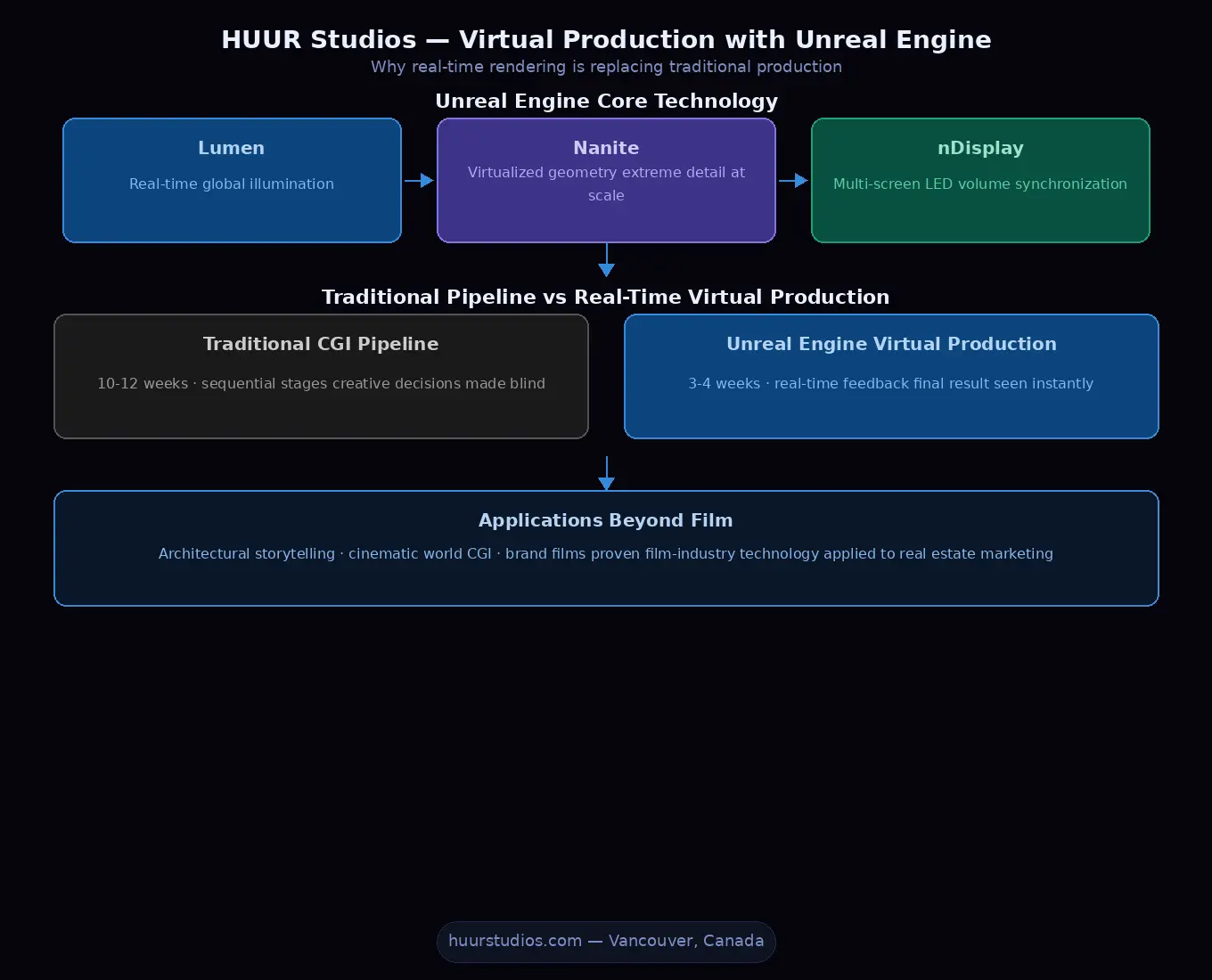
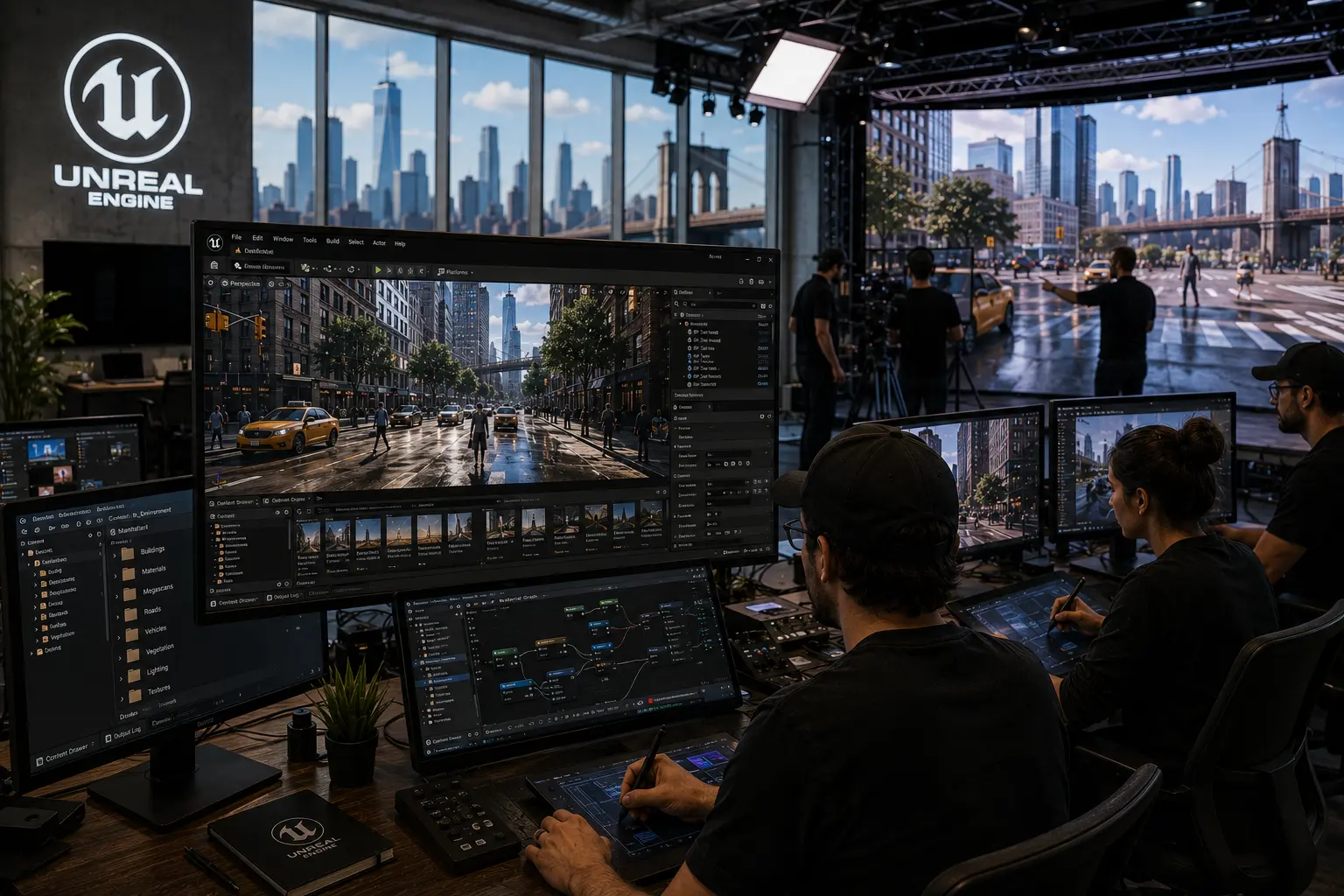
HUUR Studios runs Unreal Engine as the rendering core of every virtual production for architecture session — the same real-time platform powering the world’s most demanding film and television productions. The engine calculates photorealistic lighting, material behaviour, and dynamic shadows at 60 or more frames per second, connected to a precision camera tracking system that reads the physical camera’s position continuously and updates the digital perspective in real time to maintain perfect parallax alignment as the camera moves.
The LED volume surrounding the physical set receives Unreal Engine output through the nDisplay synchronization system, coordinating rendering across every individual panel simultaneously for perfect colour and brightness consistency across the entire curved surface. The result is a production stage where real people move through a fully realized digital architectural world — existing in the same physical space they occupy, not a screen they will be placed in front of later.
Why This Replaces Green Screen
Green screen has defined how architectural marketing content combines talent with digital environments for decades — and virtual production for architecture replaces it because green screen carries structural limitations that no compositing skill can fully overcome. Talent performs with no environmental reference. Lighting must be estimated against a background that does not yet exist. Reflections from the digital environment cannot appear on physical surfaces. The final composite always carries subtle markers that sophisticated buyers increasingly identify as artificial, regardless of production budget.
LED volume production resolves every one of these limitations simultaneously. Real light from the panels interacts naturally with talent and physical surfaces. Reflective objects accurately pick up the digital environment. The camera captures genuine spatial parallax between foreground and digital background. The content produced through this approach carries a physical authenticity that composited work cannot replicate — because it records real interaction between digital and physical elements rather than simulating that interaction in post-production.
START YOUR PROJECT WITH HUUR
Contact our team or explain and submit your project .
Why Vancouver Developers Are Choosing Virtual Production for Architecture
Vancouver’s luxury real estate market operates at a level of visual sophistication that makes the quality differential between virtual production for architecture and conventional CGI commercially significant. Buyers evaluating presale units at premium price points simultaneously evaluate the development team’s credibility and commitment to quality through every marketing asset. The naturalistic, film-grade content this methodology produces signals premium positioning in a way that even the most technically accomplished CGI cannot match — because it incorporates the human presence and narrative staging that distinguish aspirational brand communication from standard property advertising.
Developments that deploy virtual production for architecture in their presale marketing consistently distinguish themselves in competitive listing environments where buyers scroll through dozens of projects in a single evening. The perceptible naturalism of real people inhabiting real-time digital environments communicates a level of production investment that translates directly into brand confidence — and brand confidence in Vancouver’s presale market is a measurable driver of both inquiry volume and average offer values.
Timeline Compression
The most immediately measurable commercial advantage of virtual production for architecture for active presale campaigns is production timeline compression. A conventional architectural marketing campaign requiring a CGI package, a lifestyle photography shoot, and a separate video production — all requiring post-production — typically runs 12 to 16 weeks from concept to final delivery. This methodology compresses that timeline to 4 to 6 weeks by combining every production element into a single session where hero imagery, social content, lifestyle film, and sales suite materials are captured simultaneously in one unified visual environment.
HUUR Studios has delivered comprehensive campaigns for Vancouver presale developments within this compressed timeline consistently — enabling clients to launch marketing substantially earlier relative to construction milestones and respond to competitive developments without the lead times that multi-stage conventional production requires.
Reaching International Buyers Through Cinematic Content
For Vancouver developments targeting international buyers across Asian, European, and North American markets, virtual production for architecture creates content that travels across digital channels and cultural contexts with film-industry production values that require no translation. The cinematic quality is universally recognized by premium buyers regardless of origin market — a significant competitive advantage when competing for international presale attention against developments in every other major global city that still relies on conventional CGI for its primary marketing assets.
The naturalism advantage compounds significantly in the international buyer context. A presale buyer evaluating a Vancouver development from abroad has no opportunity for an in-person site visit during the decision window. The quality of the digital marketing content is the entire experience of the project until occupancy. Content produced through this production approach creates spatial conviction and aspiration that static renders cannot generate in that high-stakes remote evaluation context.
Immersive Production Workflows Across Every Marketing Channel
The immersive production workflows that virtual production for architecture enables are uniquely efficient at serving multiple deliverable formats from a single production session. A single well-planned session simultaneously captures hero film content for broadcast and digital advertising, social media assets formatted for every major platform, still photography for print marketing and hoarding, and VR-ready footage for headset-based buyer presentations at sales suite events. HUUR Studios designs every production session with this multi-deliverable capture as a core objective.
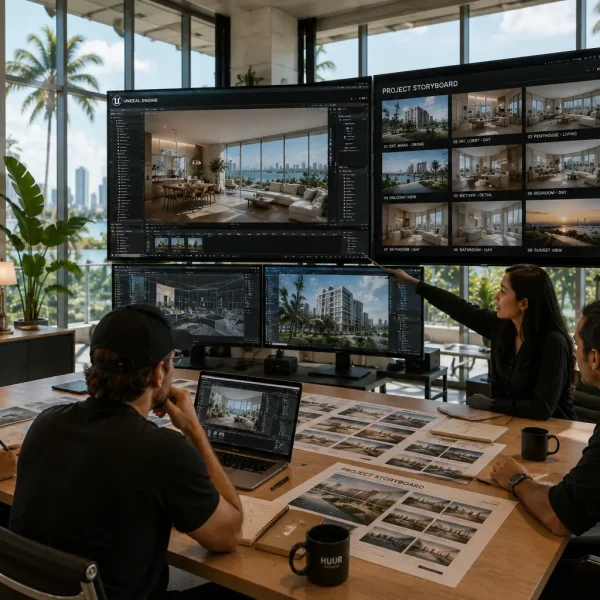
Because the Unreal Engine digital architectural environment is a freely navigable real-time asset throughout the session, the camera can capture any viewing angle, any lighting condition, and any staging configuration the creative brief requires — without the logistical constraints that govern location-based production. This flexibility allows creative direction to evolve during the session in response to what the footage reveals rather than being locked to a storyboard that cannot be adjusted once physical production has begun.
Explore More From HUUR
Pre-Construction Visualization Platform vs. Static Renders: The Expensive Mistake Developers Keep Making
Architectural Storytelling as Production Design
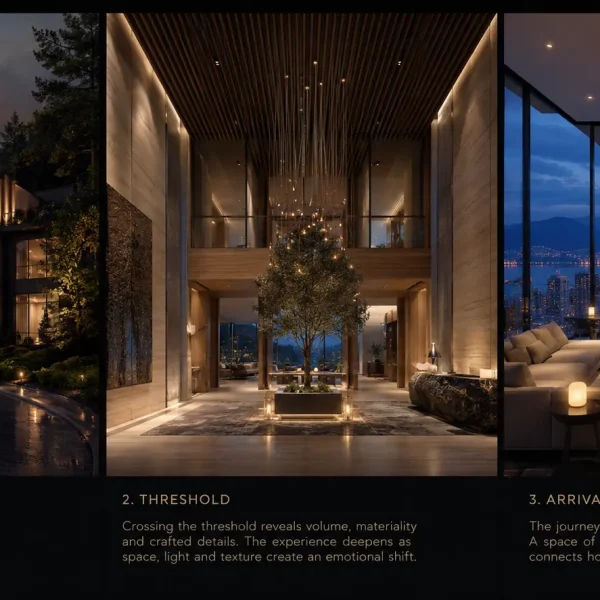
Architectural storytelling — the deliberate narrative design shaping how a building is experienced through film — is where the most distinctive value of this production methodology emerges. HUUR Studios approaches every virtual production for architecture project as a storytelling challenge before a technical one. The emotional arc is defined before a single camera position is established: which spatial moments carry the most conviction, how transitions between spaces pace the viewer’s emotional journey, which lighting conditions and atmospheric details will anchor the viewer’s feeling about the project.
For a Vancouver luxury residential development, this architectural storytelling discipline might mean a sequence opening on a staged arrival at golden hour, moving through social spaces populated with talent communicating the project’s lifestyle positioning, and arriving at a suite framing the mountain and ocean views that define the development’s value proposition — all captured live in real time, with the production quality and narrative sophistication that conventional architectural marketing content rarely achieves even at significantly higher budgets.
How This Approach Complements Interactive Visualization
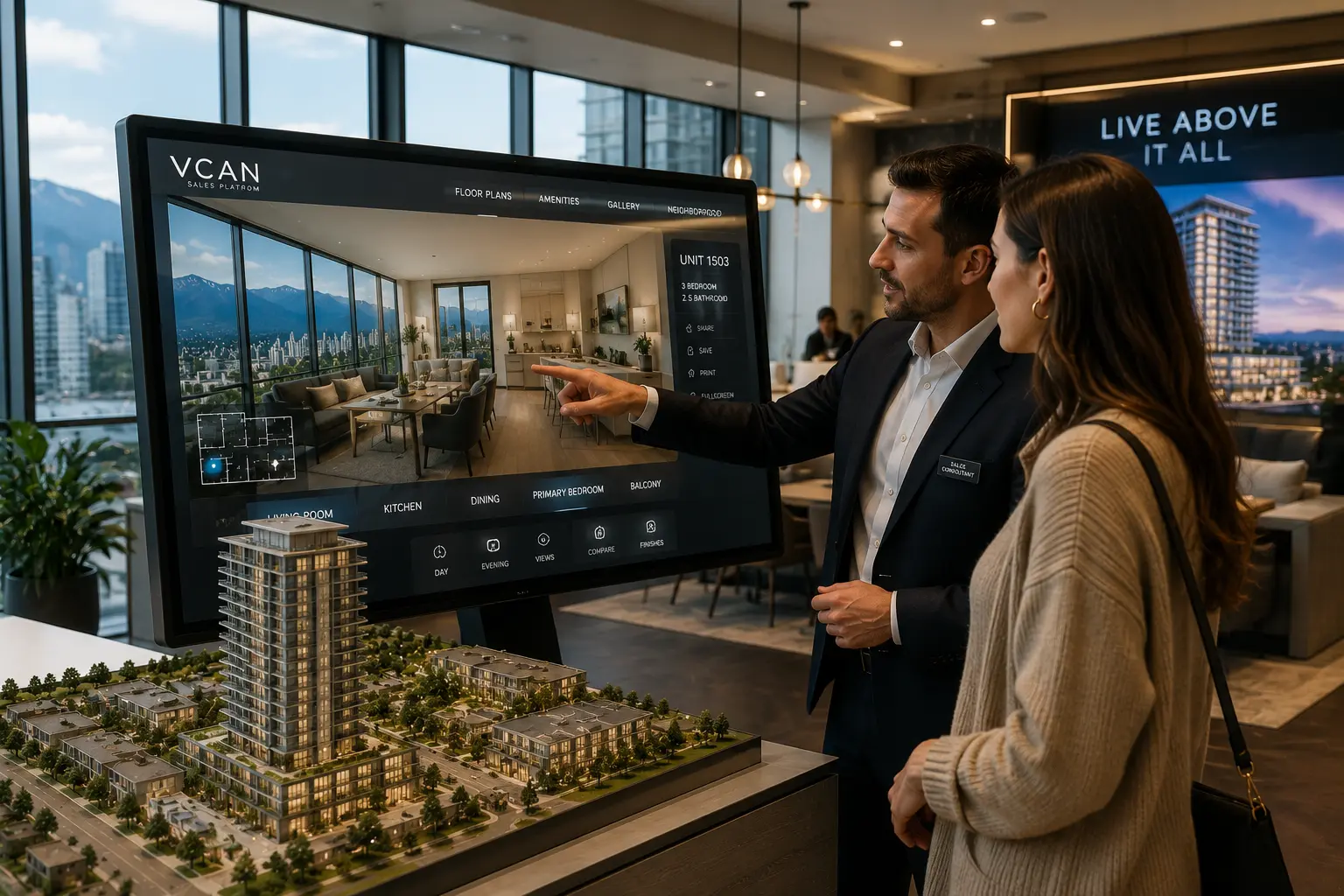
Interactive visualization — real-time walkthroughs, configurable platforms, spatial exploration environments — gives buyers direct spatial agency, allowing them to navigate and understand a property’s layout and finish options independently. Virtual production for architecture gives buyers something categorically different: a directed cinematic experience of inhabiting the space as a human being, shaped by deliberate narrative design rather than self-directed exploration.
A buyer who has explored a unit through an interactive visualization understands it spatially and functionally. A buyer who has watched a film produced through this methodology understands it emotionally and aspirationally — they have seen real people living the life the space makes possible. HUUR Studios deploys both capabilities within comprehensive presale campaigns because they address distinct buyer questions and together produce stronger purchase conviction than either format achieves independently.
How HUUR Studios Delivers Virtual Production for Architecture
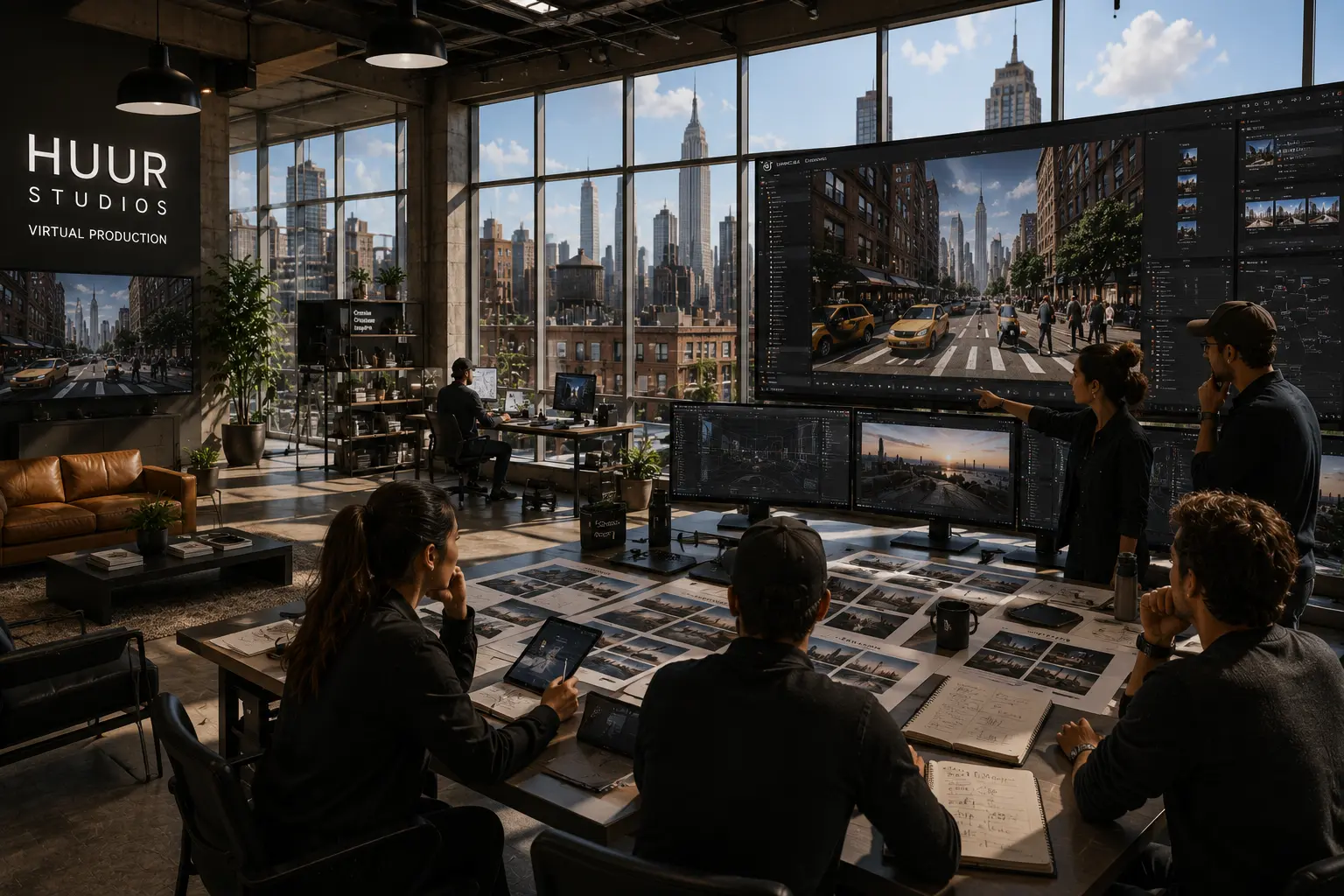
HUUR Studios’ delivery process for virtual production for architecture begins with a creative and technical discovery phase establishing both the storytelling intent and the production requirements before any infrastructure is configured or any digital environment is built. This discovery phase examines the development’s brand positioning, target buyer demographics, competitive context, and the specific marketing channels the content will serve — ensuring the session is designed to produce the exact assets the campaign requires.
The digital environment build phase deploys HUUR Studios’ architectural visualization artists to construct the Unreal Engine environment at the same photorealistic quality standard that defines all of the studio’s visualization output. Every material, every lighting configuration, and every spatial detail is calibrated precisely against the architectural design documentation — ensuring content accurately represents the eventual delivered property rather than an idealized approximation that creates post-purchase dissatisfaction.
On-Set Direction and Accelerated Post-Production
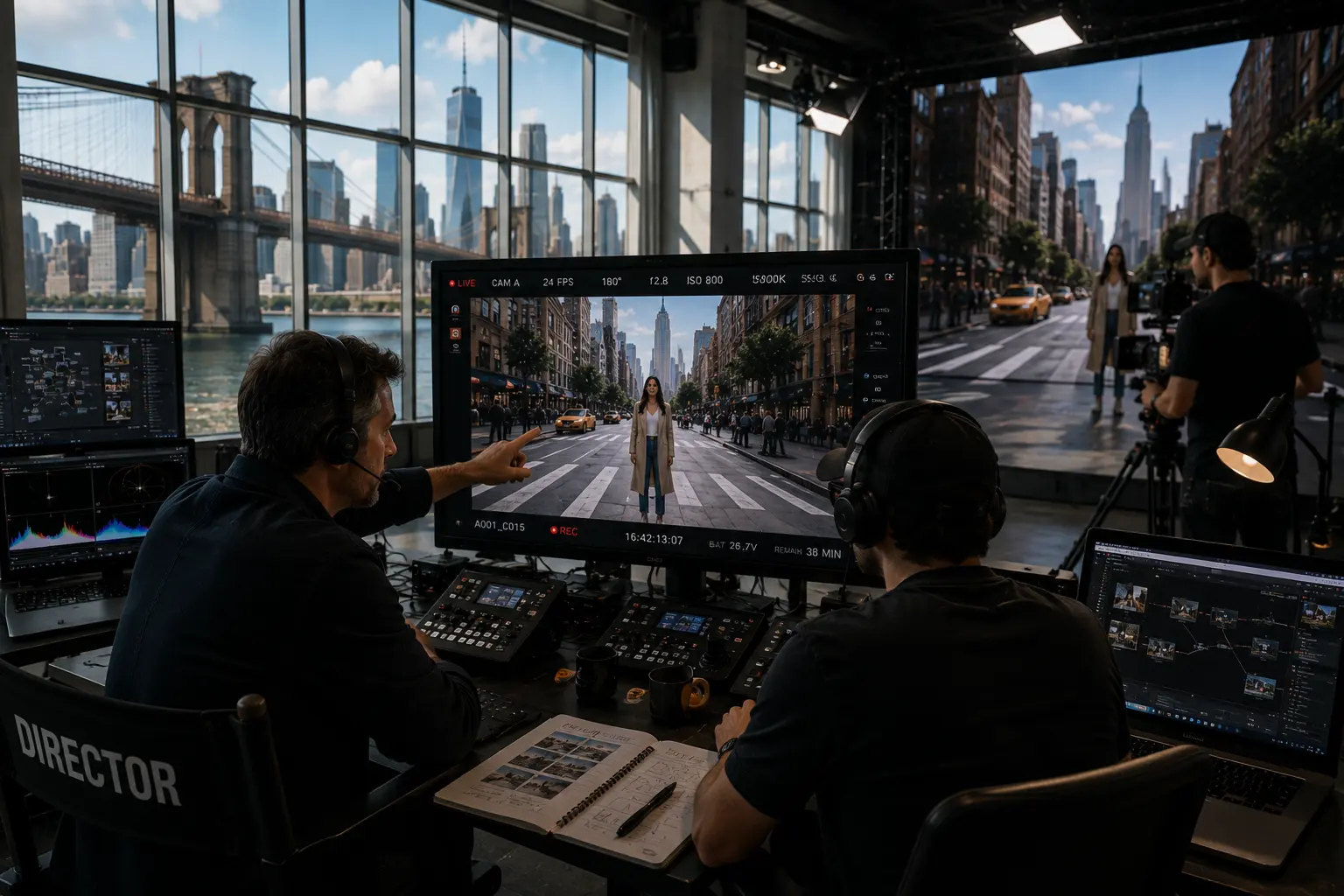
The production session is directed by HUUR Studios’ creative leadership, who combine architectural visualization expertise with film production experience — dual capability essential for simultaneously achieving cinematic quality and architectural accuracy. Post-production for virtual production for architecture focuses on colour grading and asset formatting rather than compositing, dramatically reducing delivery time and cost compared to conventional multi-stage workflows.
As Epic Games explains in its published documentation on real-time production workflows, virtual production merges physical filmmaking with digital environments in real time, using LED volumes powered by game engines to display photorealistic backgrounds that shift perfectly as the camera moves, eliminating post-production compositing entirely (Unreal Engine — What Is Virtual Production?). HUUR Studios applies this capability to architectural marketing for Vancouver and North American clients, delivering final asset packages in timelines that conventional multi-stage production cannot approach.
Applications Across Project Types and Contexts
Virtual production for architecture delivers measurable commercial value across project types where cinematic quality, human presence, and narrative control create differentiation that conventional formats cannot generate. For luxury residential presale developments, this methodology produces content that justifies premium pricing and converts serious buyer interest into signed offers. For commercial and mixed-use developments targeting institutional investors, it transforms presentations into immersive briefings that build stakeholder confidence at a depth that static materials cannot achieve.
For architectural firms competing for landmark commissions, this production approach provides pitch materials that demonstrate both design quality and production sophistication simultaneously. HUUR Studios has partnered with Vancouver architectural firms specifically for competitive pitch support, delivering content that clients consistently credit as the decisive differentiating factor that separated them from equally strong competing proposals — before design quality or fee competitiveness were even fully evaluated.
FAQ — Virtual Production for Architecture
What is virtual production for architecture?
Virtual production for architecture combines physical filmmaking with real-time digital architectural environments on LED volume screens, placing talent inside photorealistic unbuilt spaces during live production. Digital and physical elements share the same light and moment of capture — producing cinematic marketing content with naturalism that post-production compositing cannot replicate regardless of budget.
How does virtual production for architecture differ from conventional CGI?
Conventional CGI creates digital and physical elements separately and combines them in post-production compositing, typically over 12 to 16 weeks. Virtual production for architecture captures both simultaneously — talent inhabits the digital environment in real time, lit by LED panels, with authentic reflections and spatial interaction. The full production and delivery timeline compresses to 4 to 6 weeks.
What does a virtual production for architecture session produce?
A single session generates hero film content, social media assets, still photography, and VR-ready footage simultaneously in one consistent visual environment. This multi-deliverable efficiency makes virtual production for architecture significantly more cost-effective than producing each asset format through separate conventional production approaches requiring separate crews, locations, and post-production phases.
Why are Vancouver developers choosing virtual production for architecture over conventional CGI?
Vancouver’s premium market demands content that signals genuine quality to sophisticated local and international buyers simultaneously. Virtual production for architecture delivers film-industry production values, authentic human presence, and cinematic narrative c
control that CGI cannot match — creating a quality differential that influences buyer perception and investor confidence from first digital contact with the development.
Your architecture already has a story. The question is whether your audience can feel it before the building exists.
Traditional renders can show a development. Virtual production can place people inside its world—bringing human presence, cinematic storytelling, and real-time architectural environments together in a single visual experience.
At HUUR Studios, we combine Unreal Engine-powered environments, immersive production workflows, and architectural storytelling to create film-grade content for developments that deserve more than conventional property marketing.
Whether you’re preparing a luxury presale campaign, presenting a landmark architectural vision, or building a global visual identity for your next development, we help transform unbuilt spaces into cinematic experiences people can see, feel, and remember.
Bring us your project. Let’s explore how virtual production can turn its architectural vision into a story worth experiencing.
Conclusion
Virtual production for architecture has established itself as the highest-quality, most commercially compelling format for presenting premium unbuilt properties — and the Vancouver developers and architectural firms embracing this methodology now are building marketing advantages that will compound as virtual production for architecture becomes the standard expectation for every competitive project in the market. The cinematic real-time environments, immersive production workflows, and film-grade narrative control this approach delivers cannot be replicated through conventional CGI or location-based production at comparable timelines and investment levels.
HUUR Studios has built a virtual production for architecture practice specifically calibrated to the demands of Vancouver’s luxury real estate and architectural design markets — combining Unreal Engine-powered real-time environments, LED volume production infrastructure, and the dual architectural visualization and film production expertise that ensures every session produces content that is both cinematically compelling and architecturally precise. From presale campaigns and investor presentations to design review and competitive pitch materials, this production methodology through HUUR Studios gives every project the visual authority its design deserves.
If your next development or commission deserves to be seen and felt the way only film-grade production technology can make possible, virtual production for architecture is exactly what HUUR Studios delivers.