Introduction:
A pre-construction visualization platform is the single highest-leverage marketing investment most developers underestimate — and the expensive mistake repeated across Vancouver’s presale market is treating a handful of static renders as sufficient to sell units that buyers cannot yet physically walk through. The static rendering approach became the industry standard because it was, for decades, the only commercially viable option for representing unbuilt properties to prospective buyers. That baseline has shifted permanently, driven by rising buyer expectations and the dramatically improved accessibility of interactive, real-time visualization technology.
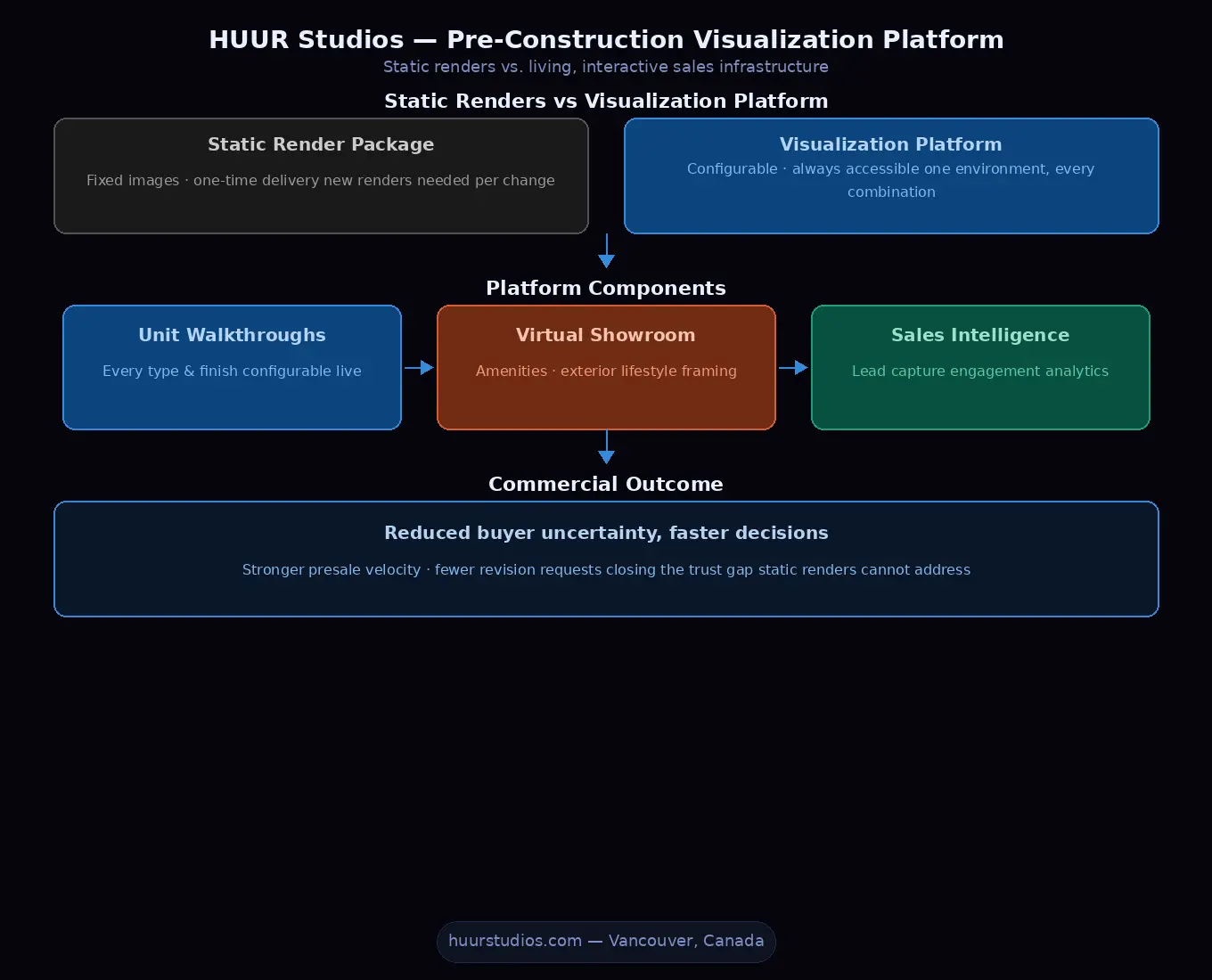
Buyers now compare every presale experience against the interactive, explorable digital products they encounter across every other part of their lives — and a fixed image gallery reads as under-investment rather than restraint. A genuine pre-construction visualization platform replaces the static gallery with a living, navigable environment that buyers can explore, configure, and revisit independently — addressing the questions that a fixed image simply cannot answer because it cannot respond to what any individual buyer most needs to understand about the space.
This article examines exactly what separates a true pre-construction visualization platform from a static render package, why the commercial difference is more significant in 2026 than at any previous point in the industry’s history, and how HUUR Studios builds platforms that convert presale marketing from documentation into genuine sales infrastructure for Vancouver and North American developers across the full range of residential, commercial, and mixed-use project types.
What Is a Pre-Construction Visualization Platform?
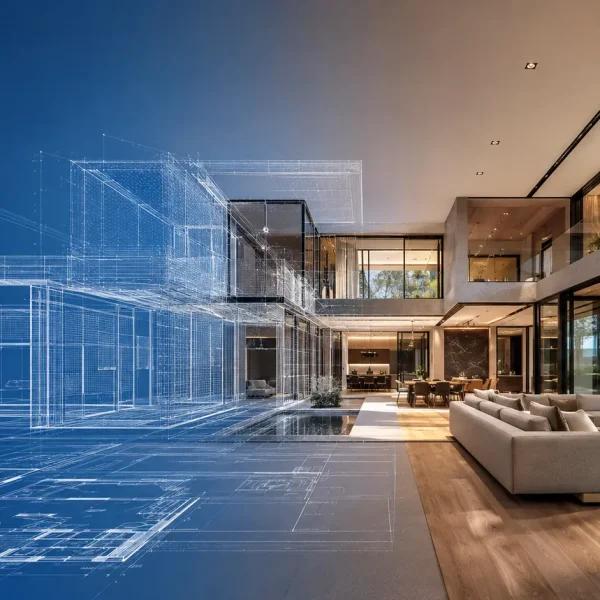
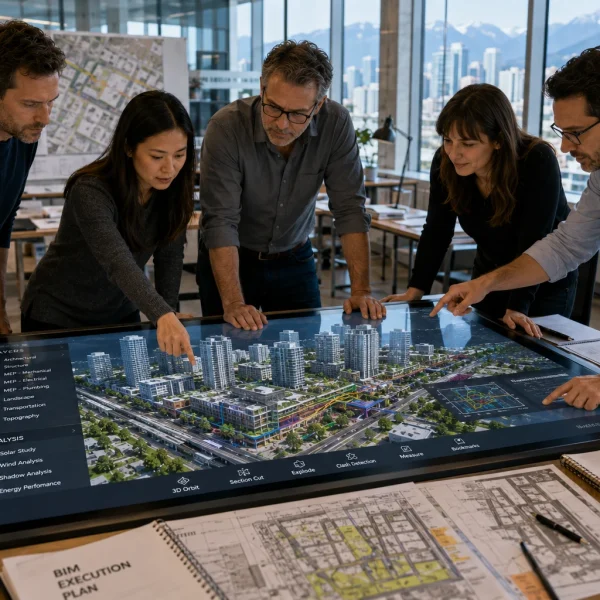
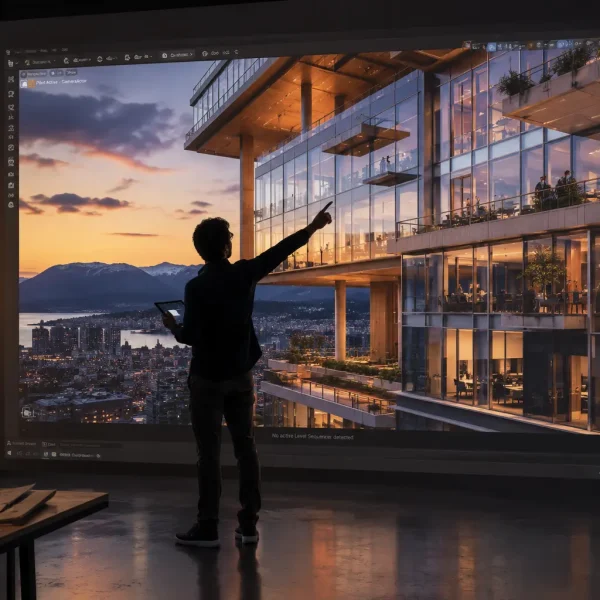
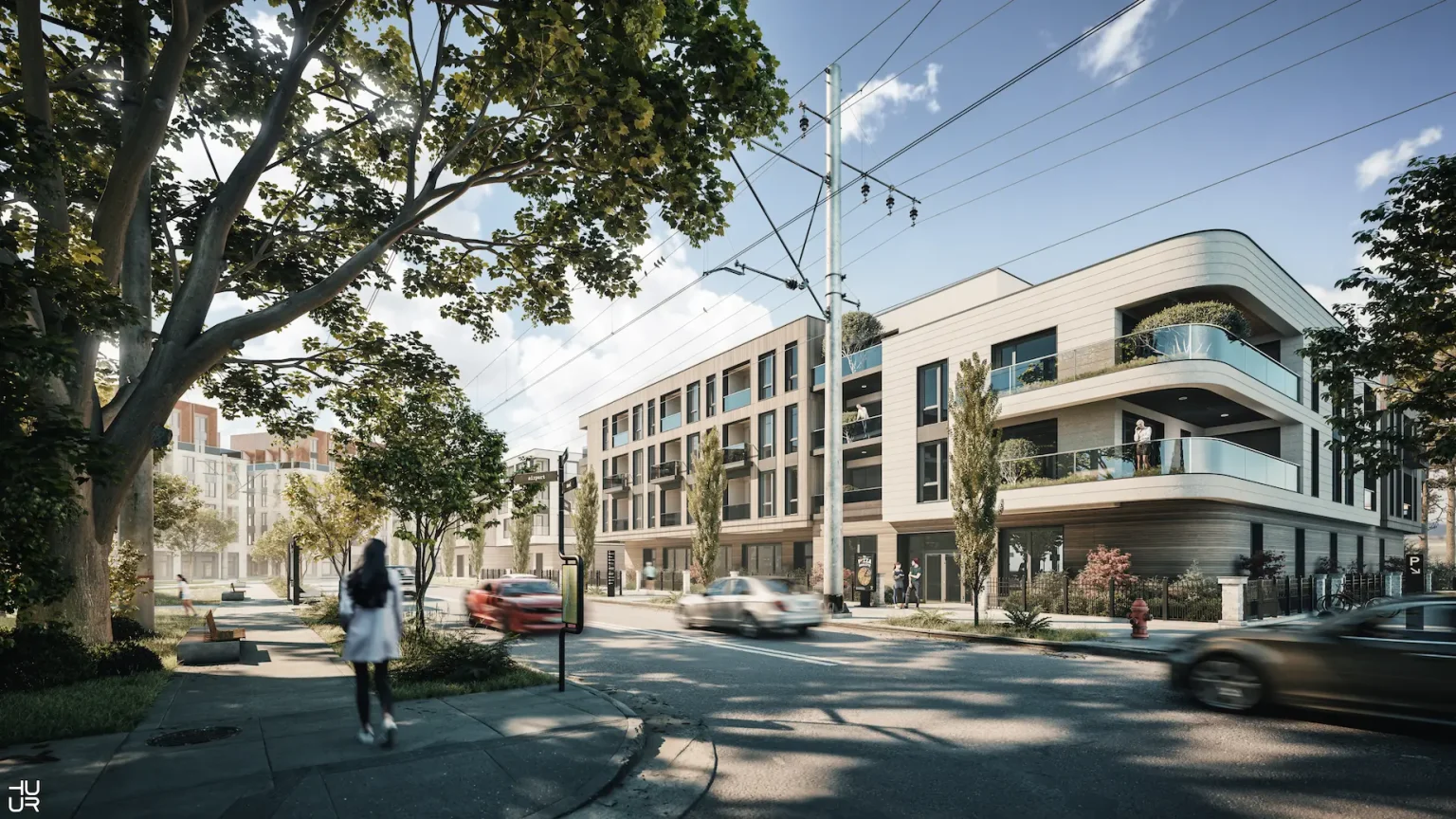
A pre-construction visualization platform is a comprehensive interactive digital environment — built from architectural plans before construction begins — that allows prospective buyers to explore, configure, and navigate a property that exists only as design documentation. This distinguishes it fundamentally from a static render package, which produces a fixed set of polished images representing the predetermined views, angles, and configurations that the studio’s creative team selected on the developer’s behalf rather than the configurations that any individual buyer most wants to explore.
The platform model treats visualization as ongoing sales infrastructure rather than a one-time marketing deliverable. Where a static render package is produced, delivered, and remains permanently fixed for the duration of the sales campaign, a genuine pre-construction visualization platform is a living, updatable environment — accessible to every prospective buyer across the full campaign duration, configurable to their specific unit and finish preferences, and capable of being updated as the campaign evolves or the design is refined without commissioning entirely new static production.
Platform Architecture and Production Economy at Scale
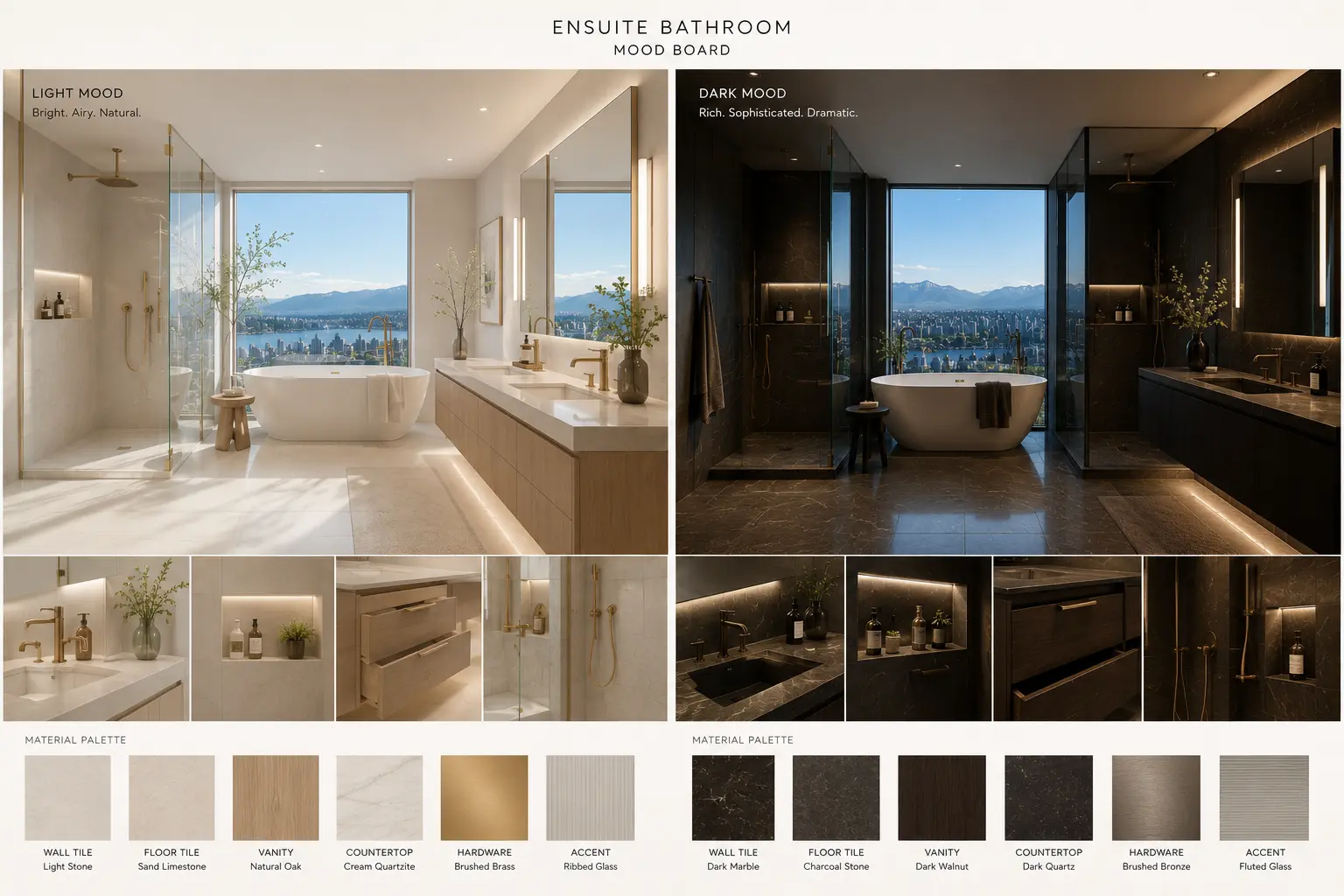
HUUR Studios builds every pre-construction visualization platform on real-time rendering technology, primarily Unreal Engine, because this architecture supports the interactivity, configurability, and ongoing accessibility that define the platform model in practice. Every unit type, finish package, and meaningful viewing angle exists within a single coherent digital environment rather than as a separate static asset requiring individual production, revision management, and distribution management for each version.
This architectural approach produces a significant production economy at scale that compounds as project complexity increases. A developer with 12 unit types and 3 finish packages each, marketed through static renders, faces 36 separate render sets — each requiring separate revision cycles, approval processes, and artwork preparation when any design element changes. The same project built as a single pre-construction visualization platform represents every combination within one configurable environment, eliminating the multiplicative production burden that static rendering imposes and making design refinements far less costly to incorporate into marketing materials.
Web Accessibility and the International Buyer Opportunity
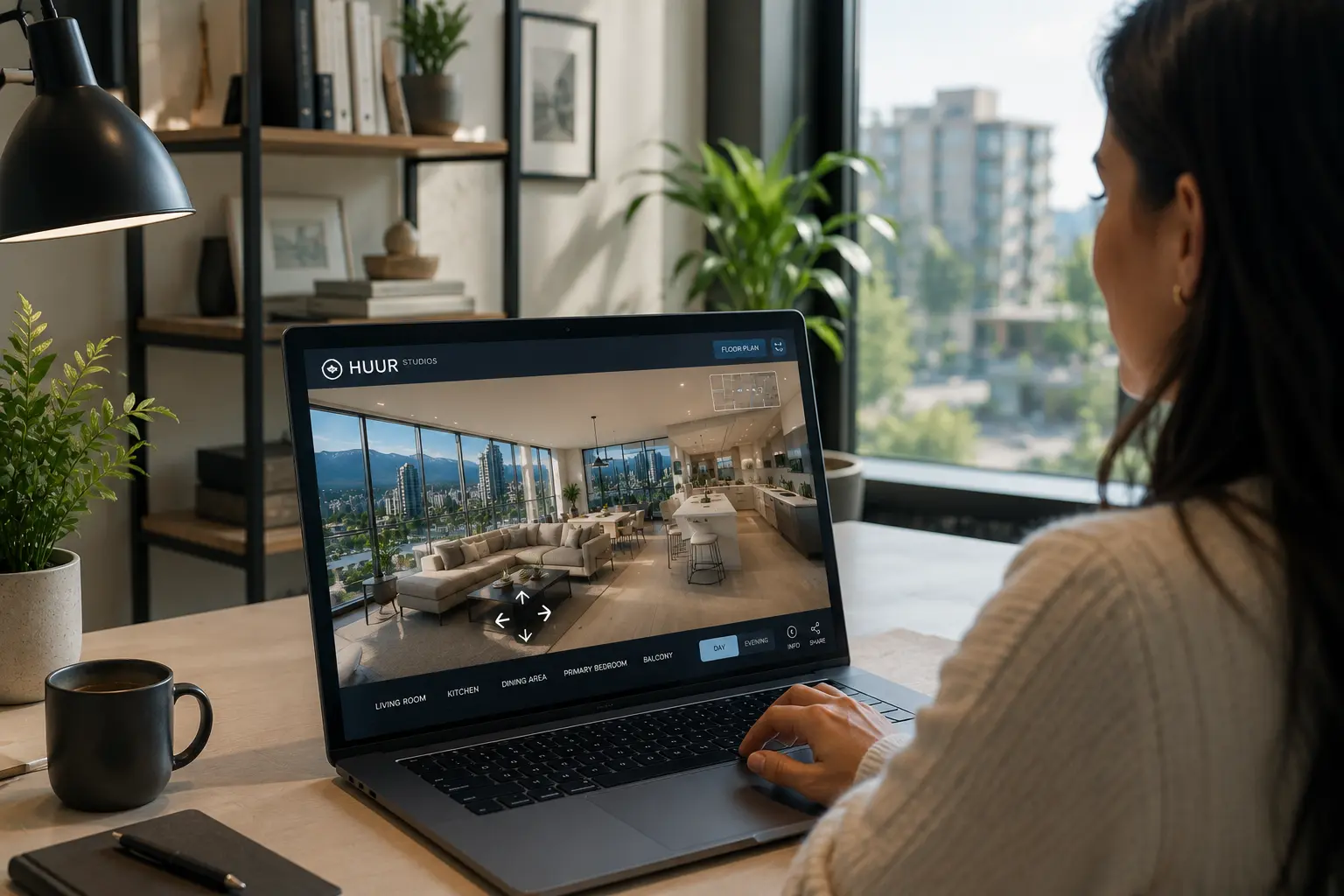
Every pre-construction visualization platform HUUR Studios builds is designed for web-based delivery where technically feasible, allowing buyers to access fully interactive, configurable property experiences through a standard web browser on any device — without downloading specialized software, owning particular hardware, or scheduling access through a physical sales suite visit. For Vancouver developers targeting the significant international buyer communities that characterize the city’s most active luxury and investment property segments, this accessibility removes a critical barrier from the international digital evaluation process.
A buyer evaluating a Vancouver development from abroad can access the pre-construction visualization platform on any device at any hour, exploring available units, comparing finish configurations, and sharing their session with family members or financial advisors — without scheduling constraints, time zone limitations, or the logistical requirements of a physical site visit. The platform becomes the development’s permanent global sales presence, simultaneously available to every potential buyer anywhere in the world who discovers the project through digital marketing channels.
Why Selling Unbuilt Properties Requires More Than Images
Selling a property that does not yet physically exist places a unique communication burden on developers that selling a finished home does not share. A buyer touring a completed property relies on direct sensory experience — they see actual light quality, walk actual room proportions, and touch actual material finishes. A presale buyer has none of this firsthand experience available to them. Every impression they form about the eventual finished property is constructed entirely from whatever visual communication the developer provides, which makes the quality, completeness, and buyer-responsiveness of that communication disproportionately important.
A static render package answers only the specific questions its predetermined images happen to address. A pre-construction visualization platform responds to whatever question any individual buyer brings to their evaluation — because the buyer controls the exploration rather than viewing what the developer’s marketing team has pre-selected for them to see. This responsiveness to individual buyer priorities is the fundamental commercial advantage of the platform model over the static render model, and it is what drives the measurable differences in buyer engagement, decision confidence, and conversion velocity that developers consistently observe when they make the transition.
The Trust Gap That Static Renders Cannot Close
Vancouver’s presale market carries particular sensitivity around the trust gap between what developers communicate in their presale marketing and what buyers eventually receive in the delivered property. Sophisticated local purchasers and international investors both apply considerable scrutiny to presale marketing claims before committing substantial capital to an asset that does not yet physically exist. A pre-construction visualization platform addresses this scrutiny directly — giving buyers the tools to investigate the property on their own terms rather than asking them to trust a curated set of images selected by the developer.
HUUR Studios designs every pre-construction visualization platform with this trust-building function as a core objective alongside the commercial conversion objectives, ensuring that buyers exploring the platform encounter a level of transparency and exploratory freedom that static renders structurally cannot provide regardless of how skillfully those renders are produced. When buyers can walk to any corner of any unit, verify the actual view from each window, and explore how different material choices change the character of each space, the trust relationship between buyer and developer shifts fundamentally toward confidence that supports rather than inhibits the purchase decision.
How a Pre-Construction Visualization Platform Accelerates Buyer Decisions
A pre-construction visualization platform accelerates buyer decision-making by closing the gap between what a buyer expects and what they will eventually receive — a gap that, left unaddressed, becomes the primary driver of both lost presale conversions and post-purchase dissatisfaction once the property is delivered. When buyers can navigate freely through unit configurations, adjust lighting conditions to understand the space at different times of day, and explore finish alternatives within the actual space rather than referring to a separate sample book, the eventual delivered property holds far fewer surprises and the purchase decision requires far less courage in the face of uncertainty.
This decision-acceleration effect compounds throughout the presale campaign in ways that deliver measurable financial value to developers managing carrying costs. A buyer who has thoroughly explored a unit through the platform approaches contract signing with substantially reduced uncertainty, requiring fewer clarifying questions, fewer additional showings, and shorter decision cycles than buyers working from static materials alone. For Vancouver developers where every week of additional carrying cost represents significant financial exposure, this compression of the buyer decision timeline translates directly into material financial benefit.
Interactive Capability That Empowers Sales Teams
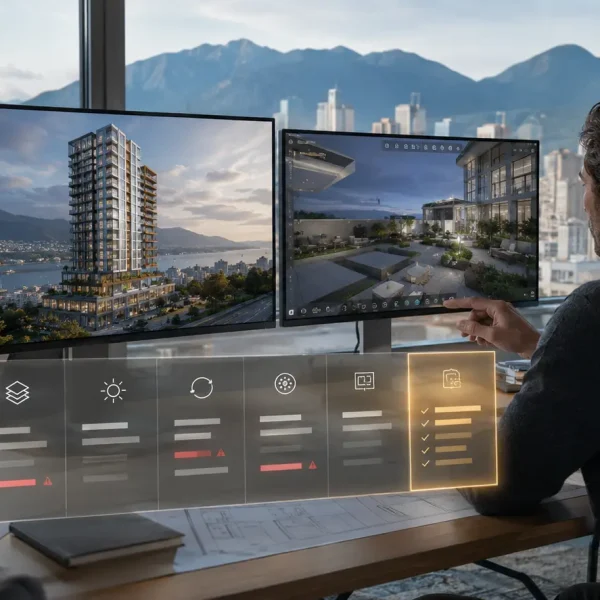
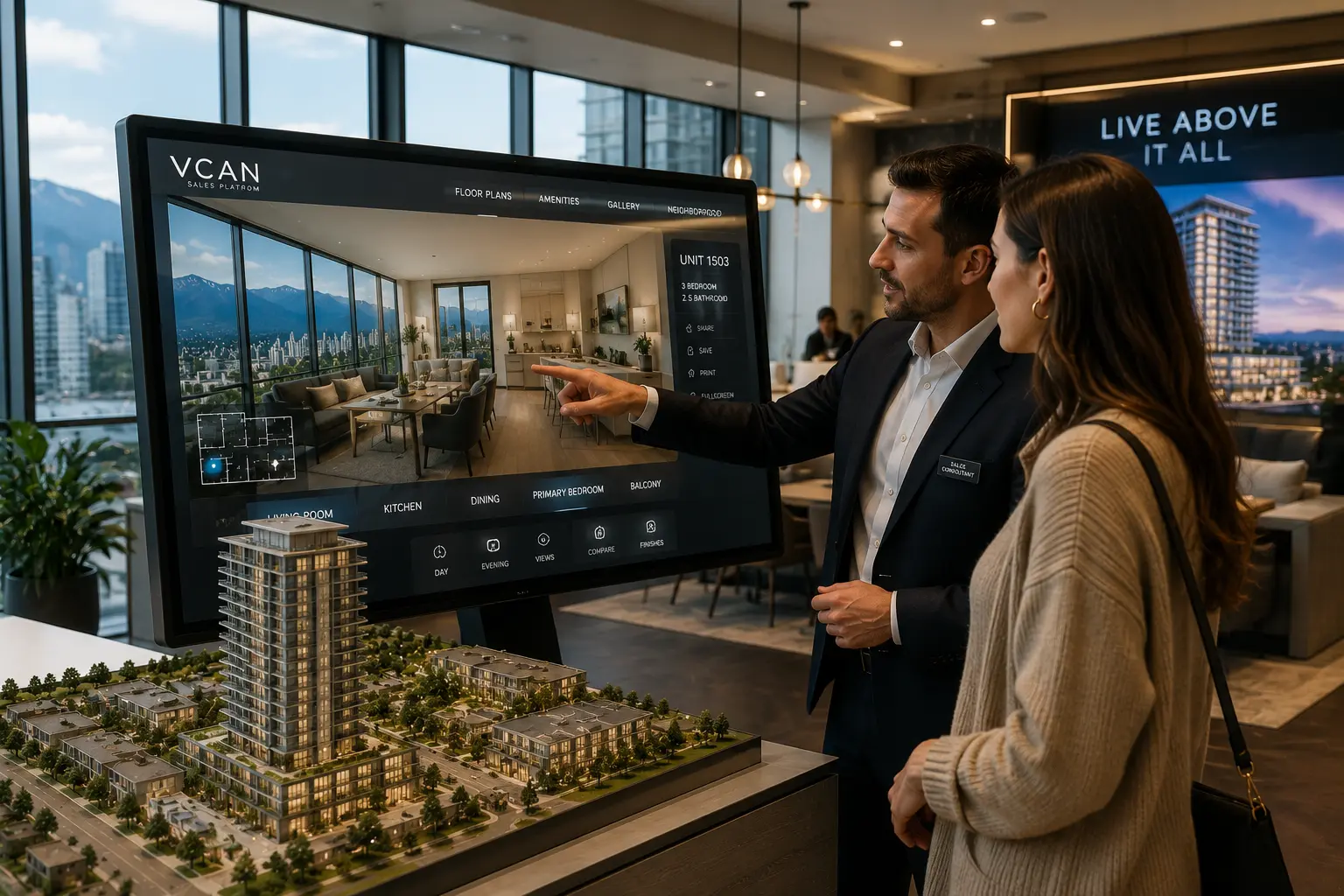
A pre-construction visualization platform also serves sales teams directly as a presentation tool that any team member can operate confidently during live buyer meetings without requiring technical assistance or specialized training beyond normal product knowledge. HUUR Studios builds every platform for this operational reality — designing the user experience to be intuitive enough for non-technical sales staff to guide a buyer through confidently, while sophisticated enough in its underlying capability to represent the full complexity of a presale project’s unit types, floor plan variations, and finish options without limitation or workaround.
According to industry research from McKinsey and Company on real estate proptech adoption, the commercial case for digital-first buyer engagement in presale real estate has become increasingly well established across North American markets as buyer expectations continue aligning with the interactive digital experiences they encounter in every other sector of their consumer lives — making the pre-construction visualization platform a competitive necessity rather than a premium differentiator.
The Role of Virtual Showrooms in Pre-Construction Sales
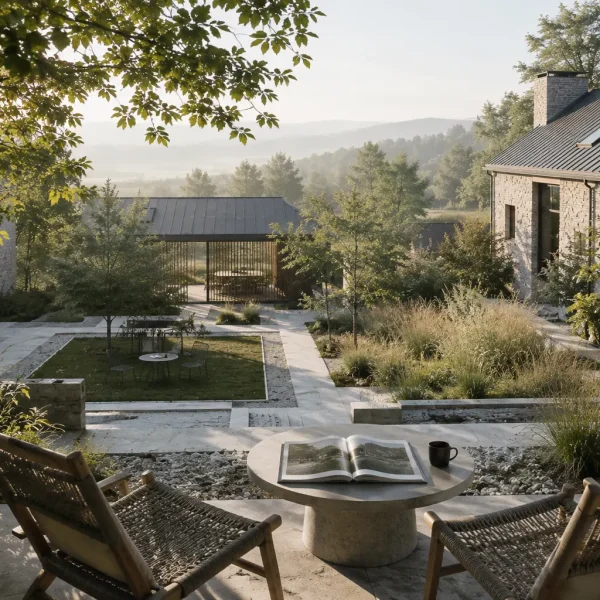
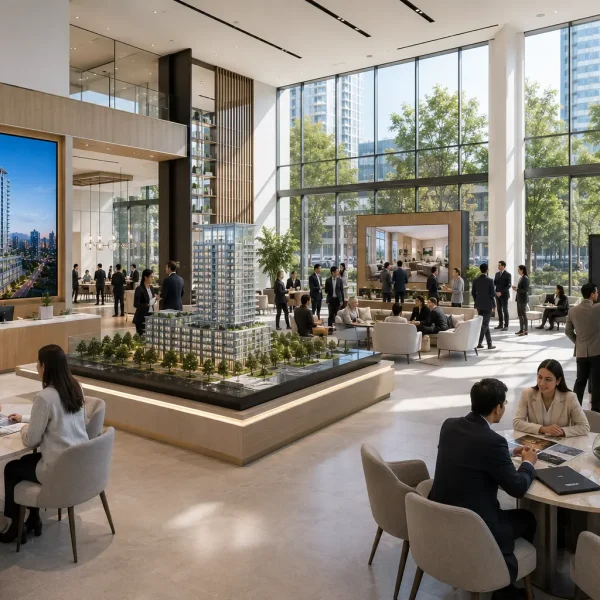
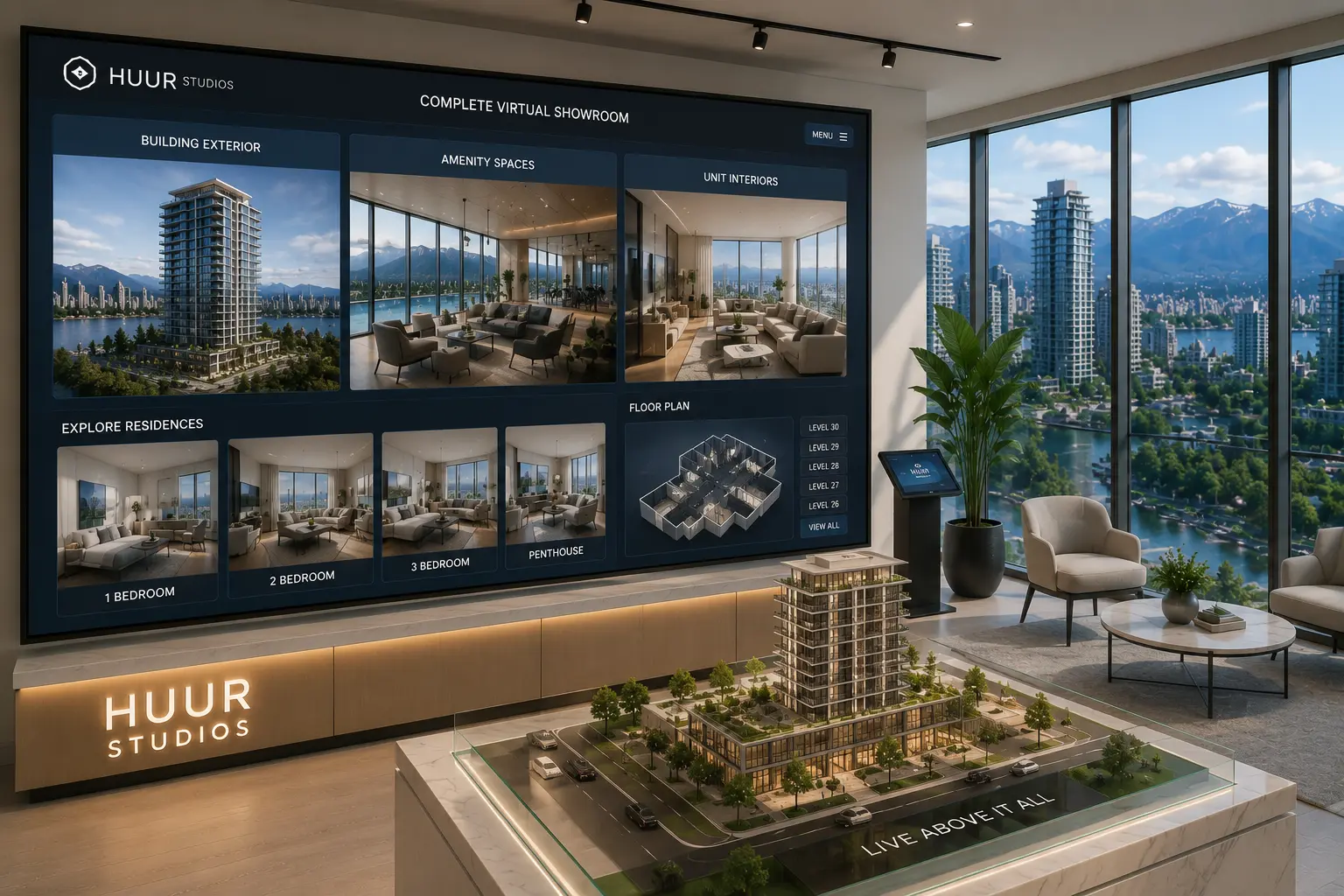
A pre-construction virtual showroom extends the platform concept into a complete digital sales environment — combining explorable unit walkthroughs with broader project context including communal amenity spaces, building exteriors, neighbourhood positioning, and lifestyle framing that together communicate not just what individual units look like but what the experience of living in the development would actually feel like on a daily basis. This comprehensive approach distinguishes a true virtual showroom from a narrower unit-only visualization tool that addresses spatial questions without addressing aspirational ones.
For Vancouver developments where amenity quality, building positioning, and lifestyle associations play significant roles in justifying premium pricing relative to competing projects, the virtual showroom format allows developers to present this full value proposition within a single coherent digital experience. A buyer exploring a HUUR Studios virtual showroom moves seamlessly from neighbourhood context and building approach through lobby and communal amenity spaces into specific unit configurations and finish selections — experiencing the complete story of the development rather than assembling fragments from separate marketing assets.
Engagement Analytics as a Sales Intelligence Asset
A properly built pre-construction visualization platform incorporates engagement analytics that give developers ongoing visibility into which units, which finish configurations, and which spaces receive the most sustained buyer attention — sales intelligence that static render campaigns cannot generate at any level of sophistication. HUUR Studios builds this analytics capability into every platform, allowing sales teams to prioritize follow-up based on demonstrated individual buyer engagement rather than assumptions, and allowing developers to adjust marketing emphasis and sales conversation priorities based on actual aggregated buyer behaviour data across the full buyer pool.
This intelligence layer transforms the pre-construction visualization platform from a one-directional presentation tool into an ongoing feedback loop that continuously improves campaign performance throughout the presale period. Understanding which unit types generate the most sustained exploration, which finish combinations buyers configure most frequently during their self-directed sessions, and which aspects of the development most consistently hold buyer attention allows marketing and sales resources to be concentrated on the highest-leverage opportunities throughout the campaign lifecycle.
START YOUR PROJECT WITH HUUR
Contact our team or explain and submit your project .
Why the Market Is Moving Toward Interactive Platforms
The shift toward pre-construction visualization platforms reflects both rising buyer expectations and a maturing industry understanding of the measurable commercial return that genuine interactive environments deliver relative to static render packages. Developers who have made this transition consistently report stronger buyer engagement metrics, faster presale velocity, and reduced post-sale revision and dispute requests compared to campaigns built entirely on static marketing materials — a pattern that has accelerated adoption substantially across Vancouver and broader North American presale markets over the past 3 years.
For Vancouver developers specifically, this shift carries competitive urgency that extends beyond marketing best practice. Developments still marketed through static renders are increasingly perceived as under-resourced relative to competing projects offering genuinely interactive pre-construction visualization platforms — a perception gap that can influence buyer impressions of overall project quality and development team credibility regardless of the underlying architectural merit of the development itself.
Updateability as a Campaign Advantage
One of the most practically significant advantages of a pre-construction visualization platform over static renders is the ability to update the environment as the design evolves through the development approval and presale process without incurring the timeline and cost of new static production. Design changes that would require commissioning new renders — modified floor plan dimensions, updated finish specifications, revised cladding selections, refined interior design choices — can be incorporated into the platform environment far more efficiently than comparable updates to a static render library.
HUUR Studios structures every pre-construction visualization platform with updateability as a foundational design requirement, ensuring that Vancouver developers can refine and improve their developments through the natural evolution that characterizes every complex building project without the marketing materials falling progressively out of alignment with the current design intent or requiring prohibitively expensive full-scale reproductions of the visualization asset library.
FAQ — Pre-Construction Visualization Platform
What is a pre-construction visualization platform?
A pre-construction visualization platform is an interactive digital environment built from architectural plans, allowing buyers to explore, configure, and navigate a property before construction begins — replacing fixed static renders with a living, explorable sales tool that responds to individual buyer priorities and serves every unit configuration within a single deployment.
How does it help sell unbuilt properties?
A pre-construction visualization platform closes the communication gap created by selling property buyers cannot physically experience, allowing them to investigate layouts, lighting, and finishes directly rather than relying on imagination and predetermined images. This investigative agency is what transforms buyer uncertainty into the spatial conviction that drives purchase decisions.
What distinguishes a virtual showroom from a pre-construction platform?
A pre-construction visualization platform typically focuses on individual unit exploration. A virtual showroom expands this into a complete sales environment including communal amenities, building exterior, neighbourhood context, and lifestyle framing — with integrated engagement analytics tracking buyer behaviour across every element of the development.
Can it reduce post-purchase change requests and disputes?
Yes — buyers who formed expectations through accurate, detailed pre-construction visualization platforms arrive at occupancy with calibrated expectations, producing measurably higher satisfaction scores, fewer post-possession change requests, and stronger referral behaviour that contributes to the success of a developer’s subsequent projects in the same market.
Explore More From HUUR
Digital Twin Architecture for Real Estate: The Ultimate Guide to Smarter Property Marketing
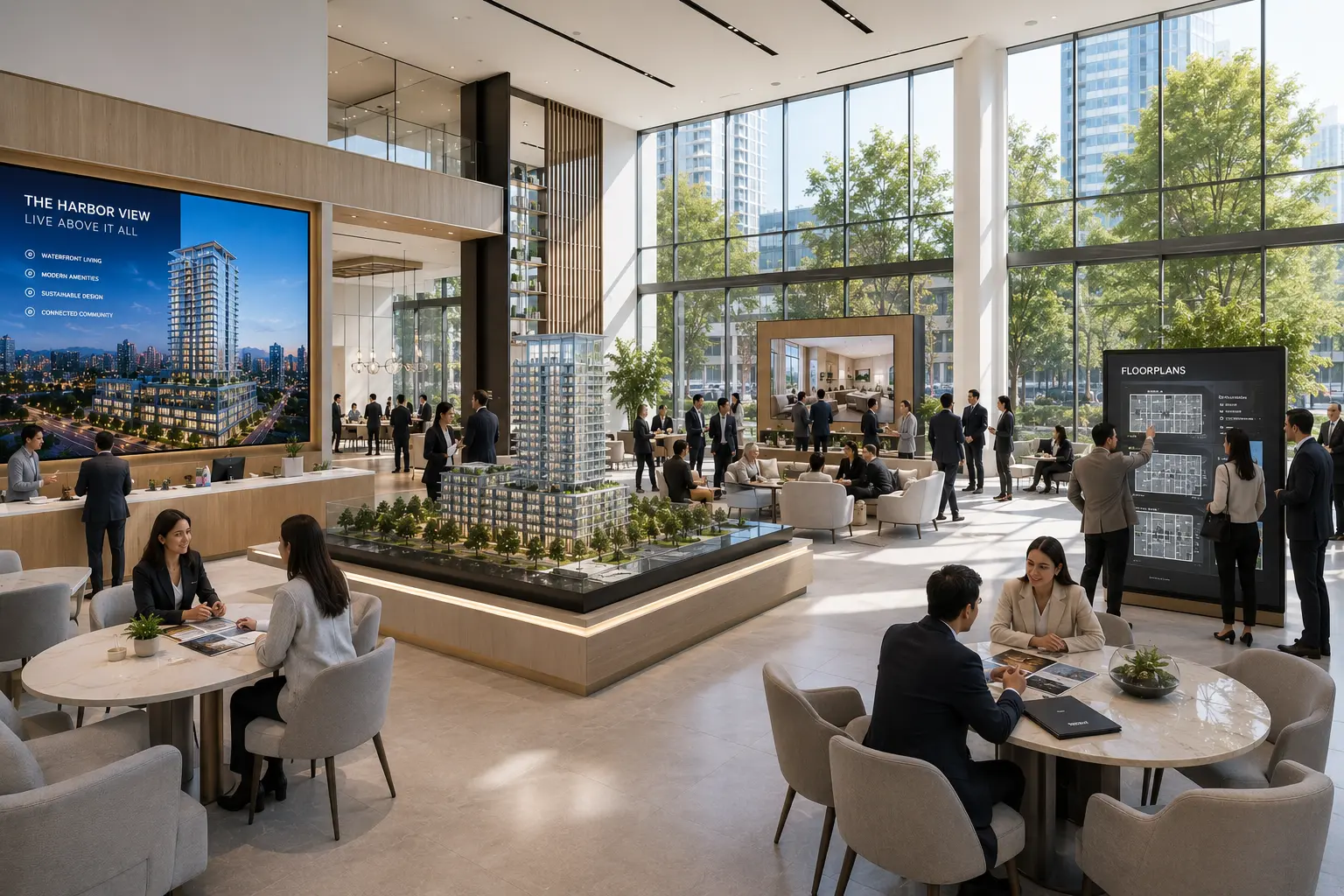
The success of a pre-construction project is shaped long before the first buyer walks into a sales centre. It begins with how confidently people can experience a place that doesn’t yet exist.
Static renderings can introduce a project. An interactive visualization platform can build trust, answer questions, and help buyers make confident decisions on their own terms.
At HUUR Studios, we create real-time pre-construction visualization platforms that bring architecture, storytelling, and immersive technology together in one intelligent sales experience. From configurable residences and mixed-use developments to large-scale commercial projects, every platform is designed to engage buyers, support sales teams, and create lasting confidence throughout the entire presale journey.
Whether you’re launching your first development or scaling a multi-phase project, we’ll help you create a digital experience that performs as strategically as the architecture behind it.
Speak with our team about building a pre-construction visualization platform tailored to your next development.
Conclusion
A pre-construction visualization platform is not a marketing enhancement layered on top of a static render campaign — it is the foundational sales infrastructure that determines whether a presale campaign builds the buyer conviction required to convert interest into signed offers, or leaves qualified buyers without the spatial understanding and decision confidence they need to commit. The expensive mistake is investing in static renders while believing they deliver the same commercial value as a genuine, interactive, configurable pre-construction visualization platform.
HUUR Studios builds pre-construction visualization platforms that replace fixed image galleries with living, configurable sales environments — serving Vancouver developers and architectural firms across British Columbia and North America with the explorable, trust-building digital experiences that modern presale buyers now expect before committing to an unbuilt property. Every platform is designed not just to represent a development accurately but to create the genuine spatial conviction that drives signed offers within competitive presale timelines.
If your next presale campaign deserves more than a static render package, a genuine pre-construction visualization platform is exactly what HUUR Studios delivers.