
Introduction
A virtual art gallery is no longer a compromise for audiences who cannot attend a physical exhibition — it is becoming the primary format through which the most ambitious curators, artists, and cultural institutions are choosing to present work to global audiences. The constraints that once defined the difference between physical and digital exhibition experiences — the absence of spatial presence, the flatness of screen-based presentation, the inability to communicate the true scale and relationship between works — are dissolving as real-time rendering technology, spatial computing, and immersive platform infrastructure bring photorealistic, navigable gallery environments to audiences on every device, in every geography, without the admission queue, the travel requirement, or the closing time.
The audience that a physical gallery can reach is bounded by geography, capacity, and operating hours. A virtual art gallery built on real-time rendering technology reaches every person with a web browser or a VR headset, simultaneously, at any hour, anywhere in the world — with an experience that communicates spatial presence, curatorial intent, and the authentic visual character of each work with a fidelity that the jpeg-and-scroll online exhibition model has never approached. For artists, curators, and institutions who understand that audience reach is as much a creative responsibility as it is a commercial consideration, this capability changes what exhibition means.
HUUR Studios builds virtual art gallery environments for artists, curators, cultural institutions, and brands across Vancouver and throughout North America — applying the same cinematic production quality and spatial precision that defines HUUR Studios’ architectural visualization practice to the design of digital exhibition spaces that give every work presented within them the context, scale, and curatorial setting it deserves. This article examines how the format is evolving, what it delivers for every participant in the art world ecosystem, and where it is heading next.
Why Traditional Online Galleries Can No Longer Meet Audience Expectations
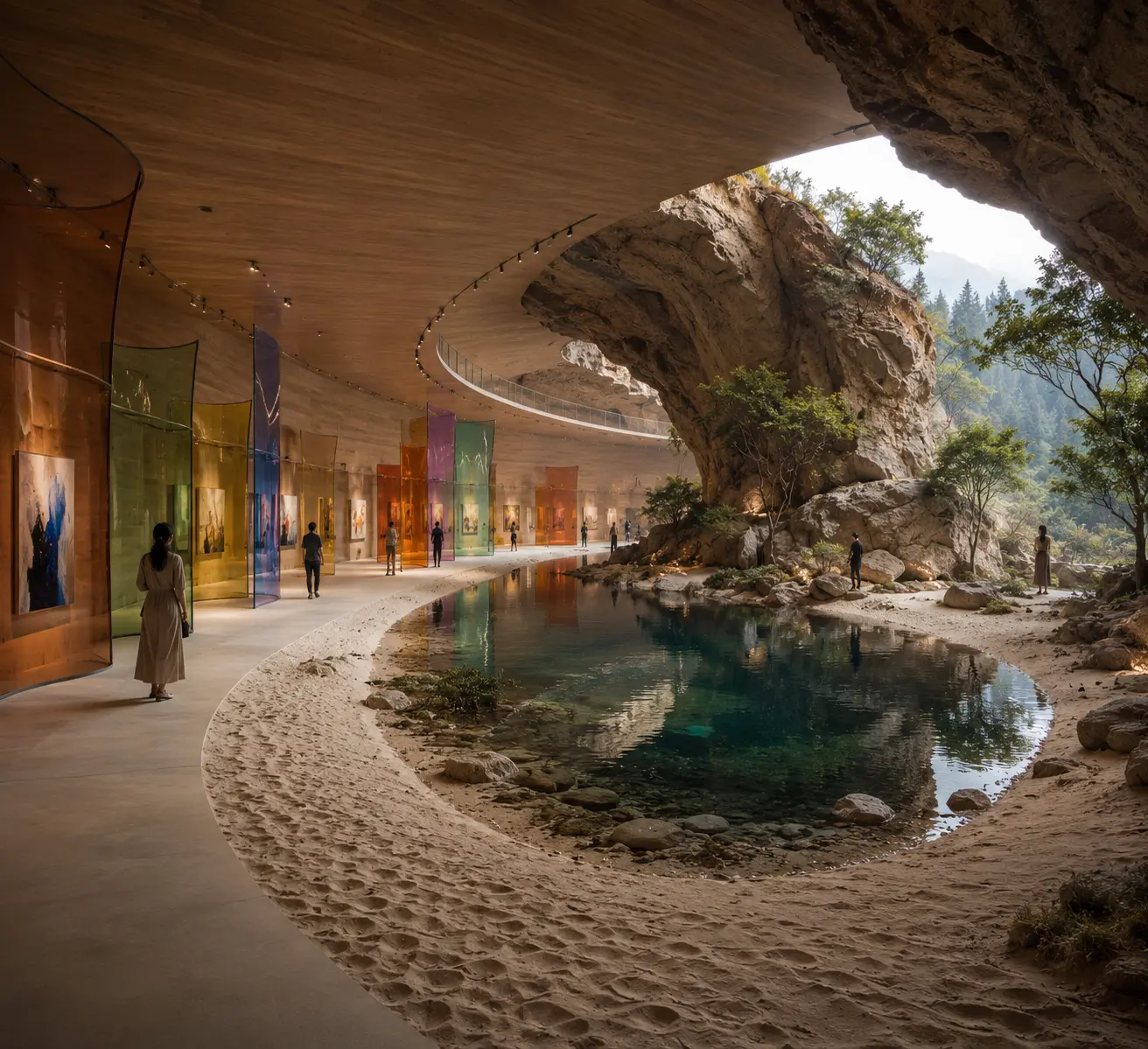
The standard approach to presenting art online — high-resolution images arranged on a scrollable web page with metadata captions — was an acceptable approximation of exhibition access when the alternative was no digital access at all. It is no longer acceptable as a primary digital exhibition format, for the same reason that a printed catalogue is no longer an acceptable alternative to visiting a gallery: the audience’s experience baseline has been recalibrated by every other immersive digital environment they encounter across gaming, entertainment, and brand experience. A virtual art gallery that offers genuine spatial navigation, accurate scale, and the ambient environmental presence of a curated space is now what distinguishes a serious digital exhibition from a digital catalogue.
WebGL and the First Generation of 3D Online Exhibitions
WebGL — the browser-native graphics technology that allows three-dimensional content to render directly within a standard web browser without plugins or downloads — enabled the first commercially accessible generation of 3D online exhibition formats, beginning around 2019 and accelerating dramatically through the pandemic period when physical gallery closure made digital exhibition urgency acute. These early WebGL virtual art gallery implementations varied enormously in quality — from rudimentary geometric spaces with low-resolution image textures to genuinely sophisticated environments that communicated spatial quality convincingly — but collectively established the audience expectation that digital exhibitions should offer navigable three-dimensional environments rather than flat image galleries.
The WebGL generation demonstrated the concept but was limited by the rendering quality and interactive feature set that browser-native 3D technology could economically support at the time. The next generation — built on Unreal Engine’s real-time rendering capability deployed through optimized web streaming or native VR applications — is producing virtual art gallery experiences whose visual and spatial quality competes directly with physical exhibition environments at a fraction of the logistical complexity and geographic constraint.
The Audience Expectations Gap
Audiences who regularly encounter photorealistic interactive environments across gaming, brand experience, and entertainment bring those quality expectations to every digital cultural encounter — including digital art exhibition experiences. A viewer who has navigated photorealistic virtual worlds in their daily leisure will not accept a pixelated corridor with jpeg thumbnails as a serious presentation of serious art. The gallery that builds a genuinely immersive virtual art gallery — a virtual art gallery designed at exhibition quality — one that communicates curatorial intent, spatial presence, and visual fidelity at a standard that matches the quality of the work being presented — immediately differentiates itself as an institution whose commitment to presentation quality matches its commitment to acquisition and curatorial excellence.
Building Immersive Experiences Inside a Virtual Art Gallery
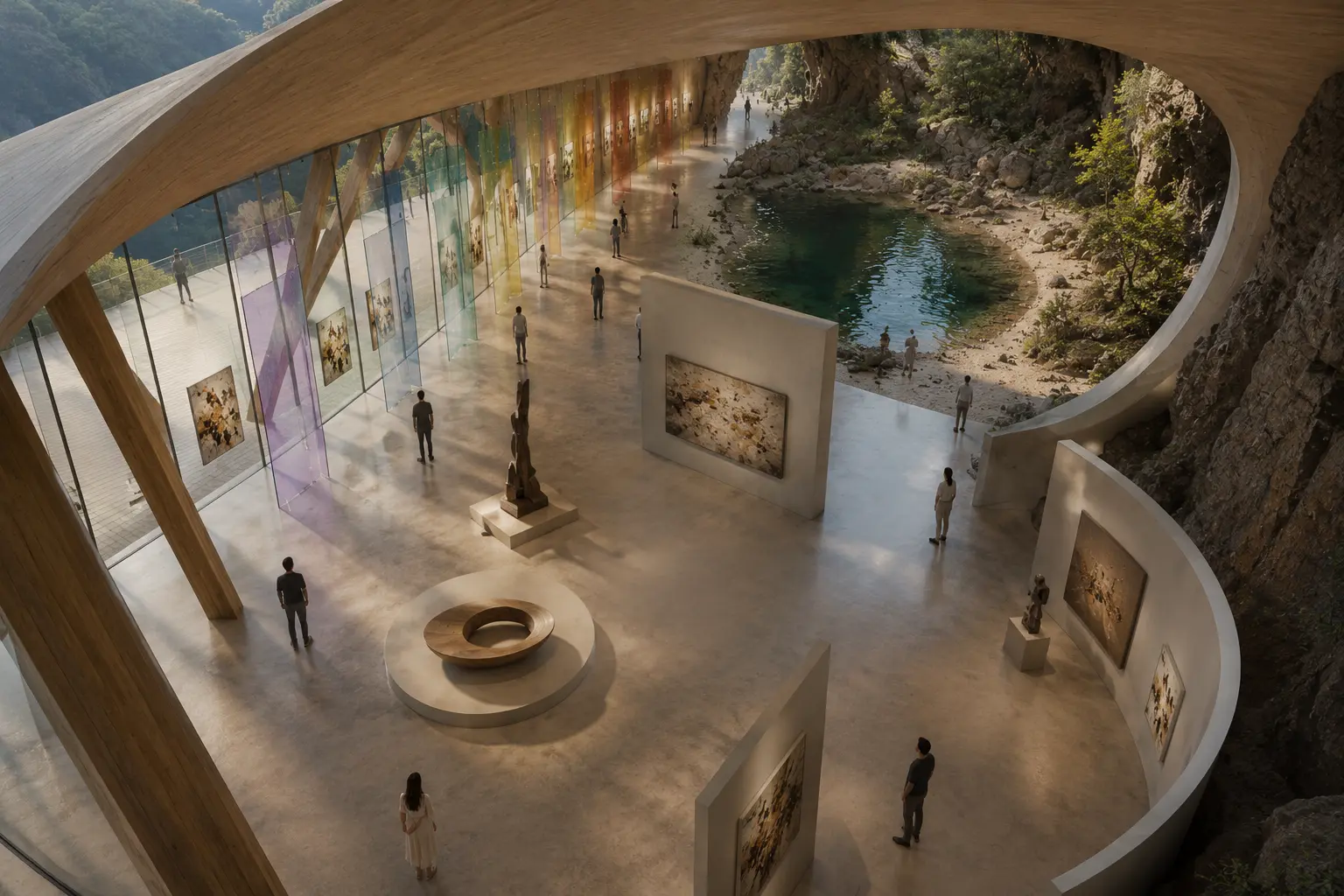
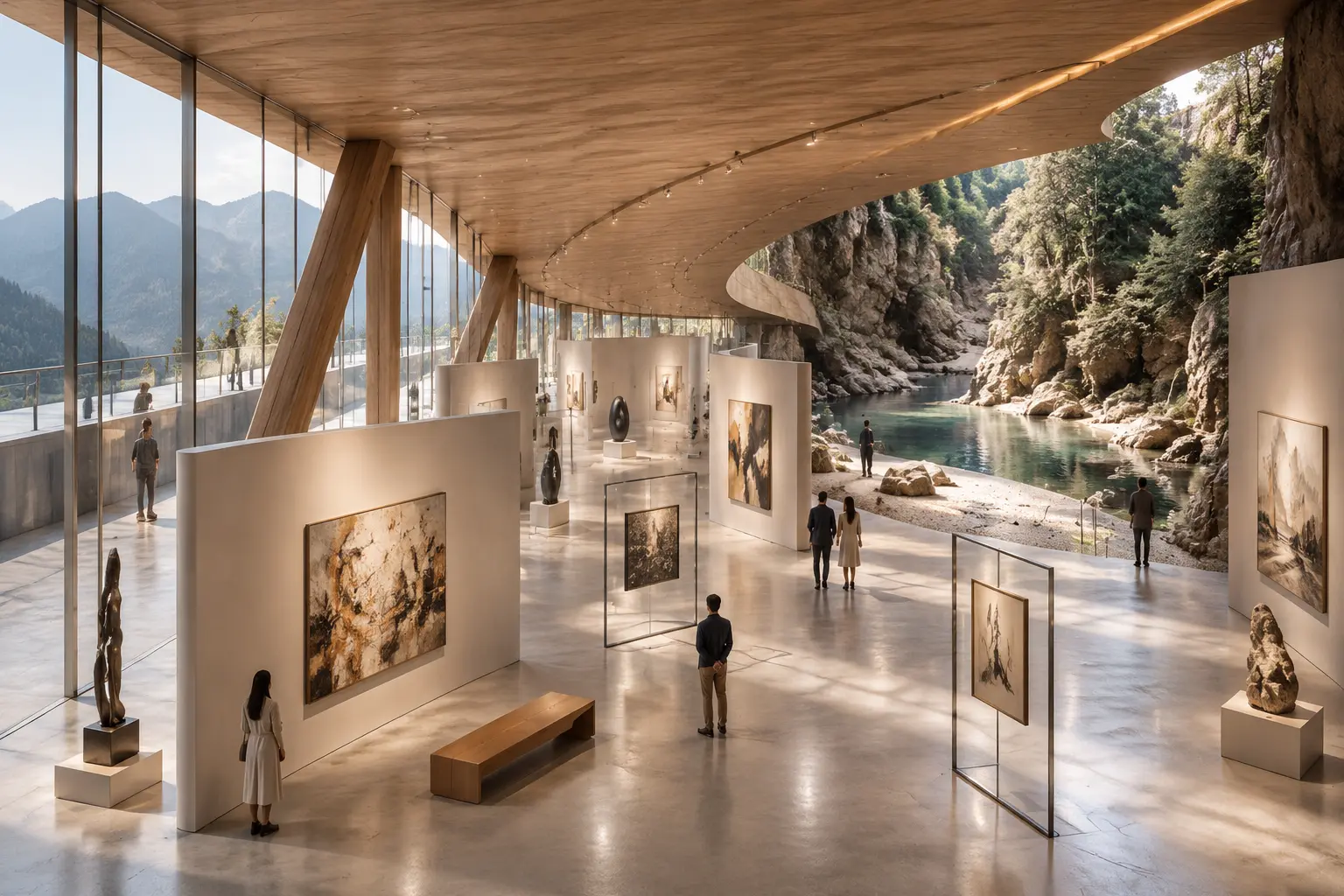
A genuinely immersive virtual art gallery environment is not produced by placing image textures on the walls of a simple three-dimensional box — it is designed with the same deliberateness that a skilled gallery architect brings to a physical exhibition space: controlled sight lines that sequence the viewer’s encounter with each work, lighting that communicates the specific emotional register each work invites, spatial proportions calibrated to the scale and character of the work being presented, and transitional spaces that modulate the pace and rhythm of the exhibition experience rather than presenting every work at equal visual weight simultaneously.
HUUR Studios approaches every virtual art gallery commission as an architectural and curatorial design problem — not simply a technical production task. The spatial design of the gallery environment is developed in direct response to the specific works being exhibited, the curatorial narrative that connects them, and the emotional journey the exhibition is designed to take the viewer through from entry to exit. This curatorial-spatial integration is what separates environments that function as genuine exhibition spaces from those that function as three-dimensional image libraries with navigation capability.
Unreal Engine and Photorealistic Gallery Environments
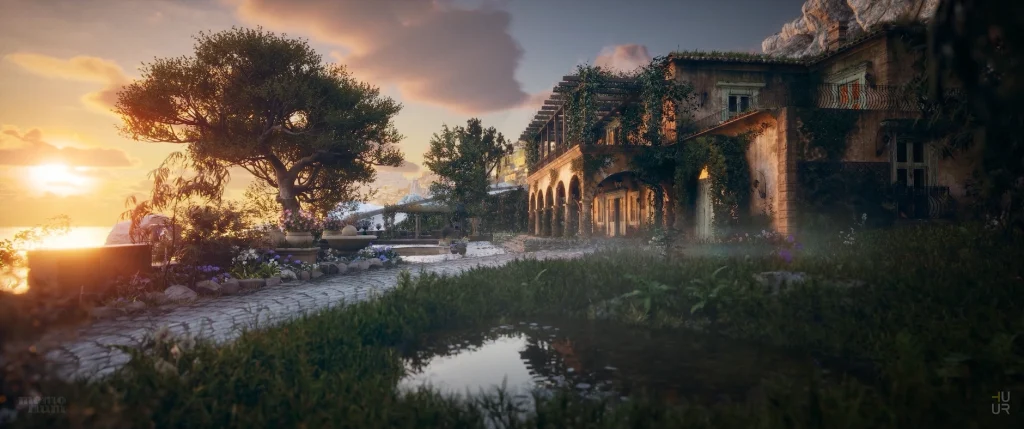
Unreal Engine’s real-time rendering architecture provides the technical foundation for virtual art gallery environments of the highest visual quality currently achievable — calculating lighting, shadow, material behaviour, and spatial atmosphere in real time as the viewer navigates, with the nuanced accuracy that distinguishes a space that feels genuinely inhabited and considered from one that reads as a geometrically accurate but atmospherically empty digital construction. The Lumen global illumination system within Unreal Engine calculates how gallery lighting interacts with wall surfaces, floor materials, and the artworks themselves — simulating the specific quality of light that each gallery’s architectural and lighting design produces.
Virtual Reality deployment through Meta Quest and other XR headsets extends the virtual art gallery experience into full spatial immersion — placing the viewer inside the gallery environment at true human scale, with every artwork presented at its actual dimensions within a space whose proportions the body experiences rather than the eye observes. This embodied scale is the dimension of physical gallery experience that all screen-based formats have historically failed to communicate — and it is the dimension that Virtual Reality-capable gallery environments restore to digital exhibition — and Virtual Reality adoption is accelerating that restoration for the first time.
Interactive Gallery Design and Curatorial Tools
Interactive gallery design within a virtual art gallery environment extends beyond navigation to include the curatorial layers that deepen a viewer’s encounter with each work: artist statement audio that plays as the viewer approaches a work, companion material panels that appear contextually rather than requiring a separate tab or page, process documentation that shows the development of the finished work, and collector annotation that provides provenance and exhibition history within the gallery experience itself. These interactive layers — delivering immersive art experiences beyond anything a flat screen format can achieve — transform a virtual exhibition platform from a display environment into a genuinely educational and relationship-building space between artists, works, and their audiences.
As Epic Games notes in its documentation on real-time rendering workflows, Unreal Engine enables creators to build fully immersive environments where lighting, materials, and spatial atmosphere are calculated in real time — a capability that transforms digital exhibition spaces from static image displays into genuinely experiential environments (Unreal Engine — Real-Time Rendering). HUUR Studios applies this to virtual art gallery production — making every virtual art gallery for artists and cultural institutions across Vancouver and North America.Unreal Engine — Real-Time Rendering
Explore More From HUUR
Blueprint to Virtual Experience: Avoid Costly Real Estate Mistakes
How Artists, Curators, and Collectors Benefit From Interactive Exhibitions
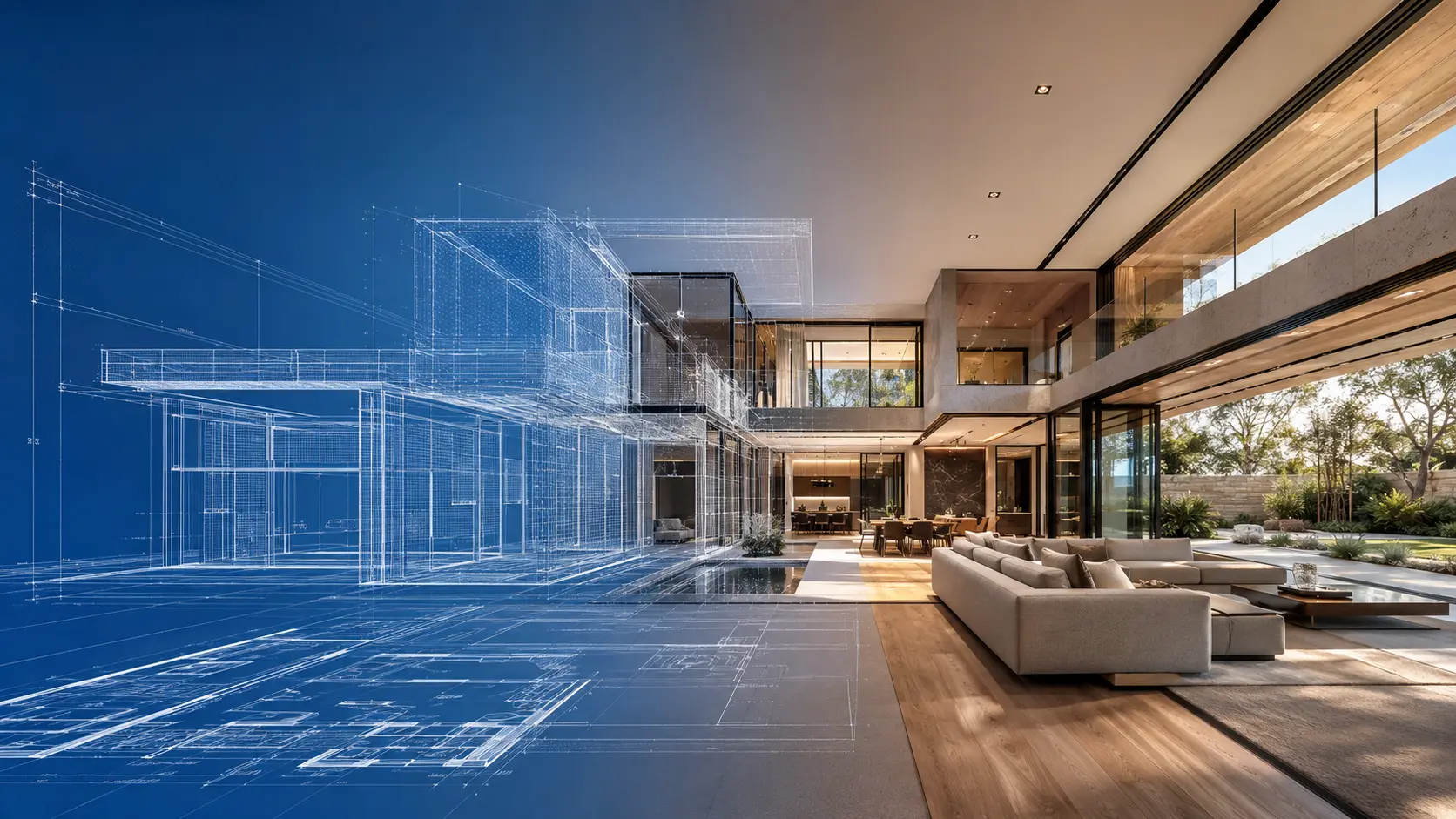
The virtual art gallery model distributes its benefits across every participant in the art world ecosystem — artists, curators, collectors, and audiences — in ways that compound as the format matures and as the global reach of digital exhibition infrastructure continues expanding. For artists, the primary benefit is audience reach that physical exhibition geography cannot match: a solo exhibition in a Vancouver gallery is physically accessible to a few thousand people over its run; the same exhibition presented in a well-promoted virtual art gallery environment is accessible to every interested viewer anywhere in the world for as long as the gallery remains active.
For curators and institutions, the virtual gallery model removes the principal logistical constraints that limit ambition in physical exhibition programming — the cost of shipping, insurance, and installation for borrowed works, the physical capacity limits that prevent comprehensive retrospectives from being complete, and the geographic constraint that prevents simultaneous presentation of works held in collections across North America, Europe, and Asia. A virtual museum experience built from digital representations of collected works can present the complete holdings of a collection that is physically distributed across a dozen institutions as a coherent, navigable exhibition without moving a single physical work.
Collectors and the Spatial Computing Marketplace
For collectors, the virtual art gallery format enables a fundamentally new kind of acquisition experience — viewing potential purchases in photorealistic gallery environments that communicate actual scale, framing requirements, and spatial impact rather than making acquisition decisions from screen-sized thumbnails. Spatial Computing platforms including Apple Vision Pro are extending this capability into the collector’s own home — allowing artworks to be previewed at actual dimensions in the actual spaces where they will be hung, through a pass-through AR layer that superimposes the work onto the collector’s physical wall before any physical work changes hands.
The combination of immersive art experiences in virtual gallery environments and AR preview capability in the collector’s own home is producing a significantly compressed and more confident acquisition decision process for digital-forward collectors — one that allows them to evaluate works in meaningful spatial context rather than relying on imagination to bridge the gap between a screen-based image and the eventual physical presence of the work in their environment. HUUR Studios designs virtual gallery environments for Vancouver artists and institutions with this collector journey in mind — building the spatial quality and scale accuracy that makes digital exhibition a genuine pre-acquisition environment.
The Digital Art Exhibition as an Archive
Virtual art gallery environments also serve a function that physical exhibitions structurally cannot: delivering a virtual museum experience of permanent, high-fidelity archival preservation of the exhibition as an ongoing virtual museum experience as it was experienced at a specific moment. A physical exhibition ends and its spatial configuration is lost — documented only through photography that cannot communicate the full three-dimensional experience. A digital art exhibition built on a real-time rendering platform exists indefinitely, precisely as it was experienced at launch, accessible to every researcher, critic, and audience member who encounters it years or decades after the physical context that gave it meaning has changed.
The Role of Real-Time Rendering in Digital Art Spaces
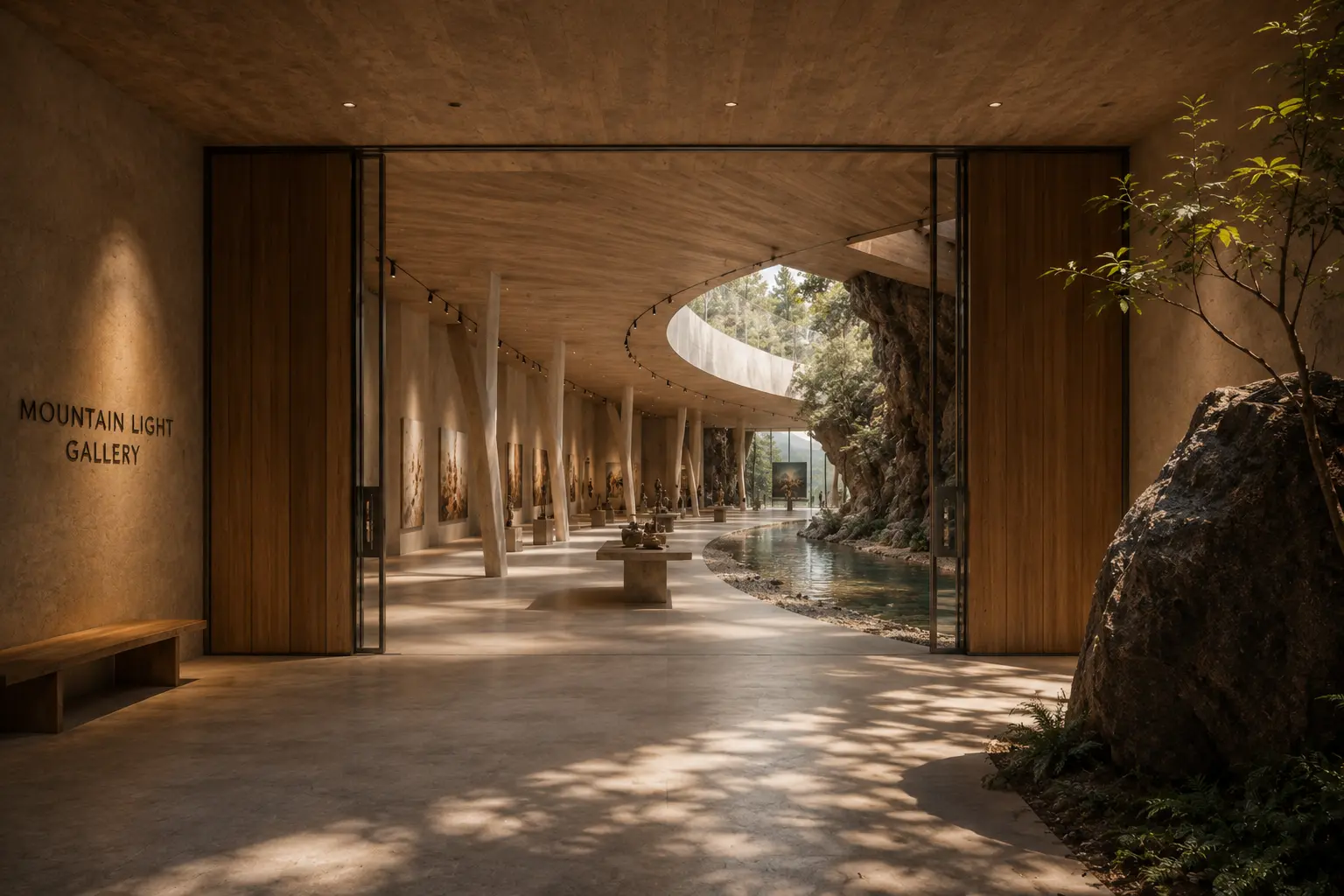
Real-time rendering is the technical capability that most fundamentally differentiates a genuine virtual art gallery experience from a three-dimensional image slideshow. When lighting, shadow, and material behaviour are calculated in real time as the viewer navigates — rather than being pre-baked into fixed images from predetermined viewpoints — the gallery environment responds to the viewer’s presence and movement with the same dynamic quality that physical spaces produce through actual light interacting with actual surfaces. This dynamism is what gives a high-quality virtual gallery environment the felt quality of spatial presence that distinguishes it from a navigable image library.
The specific lighting quality achievable within a virtual art gallery through Unreal Engine’s Lumen global illumination system allows gallery designers to specify lighting conditions with the same precision and intentionality that a museum lighting designer brings to a physical installation — controlling the direction, colour temperature, intensity, and beam spread of each gallery lighting element with complete flexibility, and seeing the results in real time rather than committing to a lighting plan in advance and discovering its effect only after physical installation. This real-time creative feedback produces better lighting decisions for each work’s specific presentation requirements.
3D Art Gallery Design and Digital Twin Architecture
A 3D art gallery environment built on Digital Twin architecture — where the virtual space is a precise, data-rich digital replica of an actual or proposed physical gallery — enables a new category of exhibition planning capability: spatial presence testing, lighting simulation, and circulation flow analysis before a single physical installation decision is made. HUUR Studios applies Digital Twin methodology to virtual gallery design for institutional clients planning major physical exhibitions — using the digital environment to test installation configurations, evaluate lighting options, and simulate visitor flow patterns before committing to the logistical and financial realities of physical installation.
NVIDIA Omniverse and Extended Reality Integration
NVIDIA Omniverse extends the virtual art gallery infrastructure into collaborative real-time 3D design environments — allowing geographically distributed gallery teams, artists, and curators to inhabit and work within the same digital gallery environment simultaneously, making installation decisions, adjusting work placement, and evaluating lighting in shared real-time sessions rather than through asynchronous file exchange and image approval rounds. Extended Reality platforms running on this infrastructure allow participants in different cities to meet within the gallery as avatars, pointing to specific works and discussing their presentation with a spatial immediacy that screen-sharing and video conferencing cannot replicate.
START YOUR PROJECT WITH HUUR
Contact our team or explain and submit your project .
What the Future of Virtual Art Galleries Looks Like
The virtual art gallery is evolving toward capabilities that will further dissolve the distinction between physical and digital exhibition experience — driven by hardware advancement, rendering quality improvement, and the expanding cultural legitimacy of digital-native art forms that are designed specifically for immersive virtual exhibition rather than adapted from physical media. Apple Vision Pro represents the current frontier of spatial computing hardware accessible to general audiences — a device that delivers photorealistic XR experiences with the display quality and field-of-view coverage that makes virtual gallery presence genuinely convincing at a consumer hardware price point for the first time.
As Apple Vision Pro, Meta Quest, and successive spatial computing hardware generations continue improving resolution, field of view, and haptic integration, the virtual art gallery experience available through XR headsets will progressively approximate the full sensory richness of physical gallery presence — not replacing it, but extending it to audiences that physical exhibition geography currently excludes. HUUR Studios designs every virtual gallery environment for the hardware trajectory ahead rather than only for the current installed base — ensuring that environments built today remain relevant and capable of delivering stronger experiences as the hardware available to audiences improves.
Online Art Exhibition and the Global Collector Market
The maturation of virtual art gallery and online art exhibition infrastructure is creating new commercial opportunities for artists and galleries across Vancouver and throughout North America whose work deserves global collector attention but whose physical exhibition geography has historically limited their international market reach. A virtual art gallery that presents work at genuine scale in a curated spatial context to a global audience of collectors — with purchase inquiry and acquisition functionality integrated directly into the gallery experience — creates commercial access to collector markets that physical exhibition would require international representation agreements and significant logistical investment to reach.
HUUR Studios builds virtual gallery environments with the cinematic architectural visualization quality and interactive experiences capability that transform online presentation into genuine exhibition. Every environment is designed as an immersive virtual environment purpose-built for the specific works, curatorial voice, and audience it is designed to serve.
NVIDIA Omniverse and the Collaborative Exhibition Future
NVIDIA Omniverse’s expanding role in digital content creation is pointing toward a future where virtual art gallery environments are collaboratively produced by geographically distributed teams in real time — where an artist in Vancouver, a curator in London, and a gallery director in New York can inhabit the same digital gallery simultaneously, making installation decisions through direct spatial interaction rather than through the slow, asynchronous approval rounds that currently govern remote curatorial collaboration on major international exhibition projects.
FAQ — Virtual Art Gallery
What is a virtual art gallery?
A virtual art gallery is a photorealistic, navigable three-dimensional exhibition environment — built using real-time rendering technology — that presents artworks at accurate scale within curated spatial settings, accessible through web browsers, VR headsets, or spatial computing devices from any location worldwide.
How does a virtual art gallery work?
Virtual art gallery environments are built on real-time rendering platforms like Unreal Engine, with gallery architecture designed specifically for the works being exhibited. Viewers navigate freely through three-dimensional spaces, encounter works at scale, and access interactive curatorial layers — all within a standard browser or VR application.
Which technologies are used to build virtual exhibitions?
Unreal Engine and WebGL for real-time rendering, Spatial Computing platforms including Apple Vision Pro and Meta Quest for VR and XR delivery, NVIDIA Omniverse for collaborative environment production, and Digital Twin architecture for precision spatial design. HUUR Studios combines these to create gallery environments of the highest currently available standard.
Can artists sell artwork through virtual galleries?
Yes — a virtual art gallery can integrate acquisition inquiry, purchase, and collector engagement functionality directly within the exhibition experience. Through this virtual exhibition platform, works can be viewed at scale, previewed in the collector’s own space through AR, and purchased without the gallery experience being interrupted by external commerce platforms.
Conclusion
A virtual art gallery is not a consolation prize for exhibitions that cannot exist physically — it is a distinctly powerful virtual art gallery format that offers capabilities no physical gallery can match: unlimited geographic reach, permanent archival presence, photorealistic spatial immersion at any scale, interactive curatorial depth, and the ability to present work to the entire world simultaneously from the moment the exhibition opens. For artists, curators, and institutions across Vancouver and throughout North America whose ambition extends beyond the audiences that physical geography allows, the virtual gallery is not a supplement to their exhibition program — it is an essential component of it.
HUUR Studios builds virtual art gallery environments that meet the highest standards of cinematic production quality, spatial design sophistication, and curatorial responsiveness available in the market today — applying the same technical depth and creative ambition to digital exhibition design that HUUR Studios brings to architectural visualization, virtual production, and immersive real estate experiences for clients across British Columbia and North America.
If your next exhibition deserves to reach every audience it is made for — not only those who can travel to a specific location on specific days — a virtual art gallery built by HUUR Studios is exactly how that reach becomes possible.
