Introduction
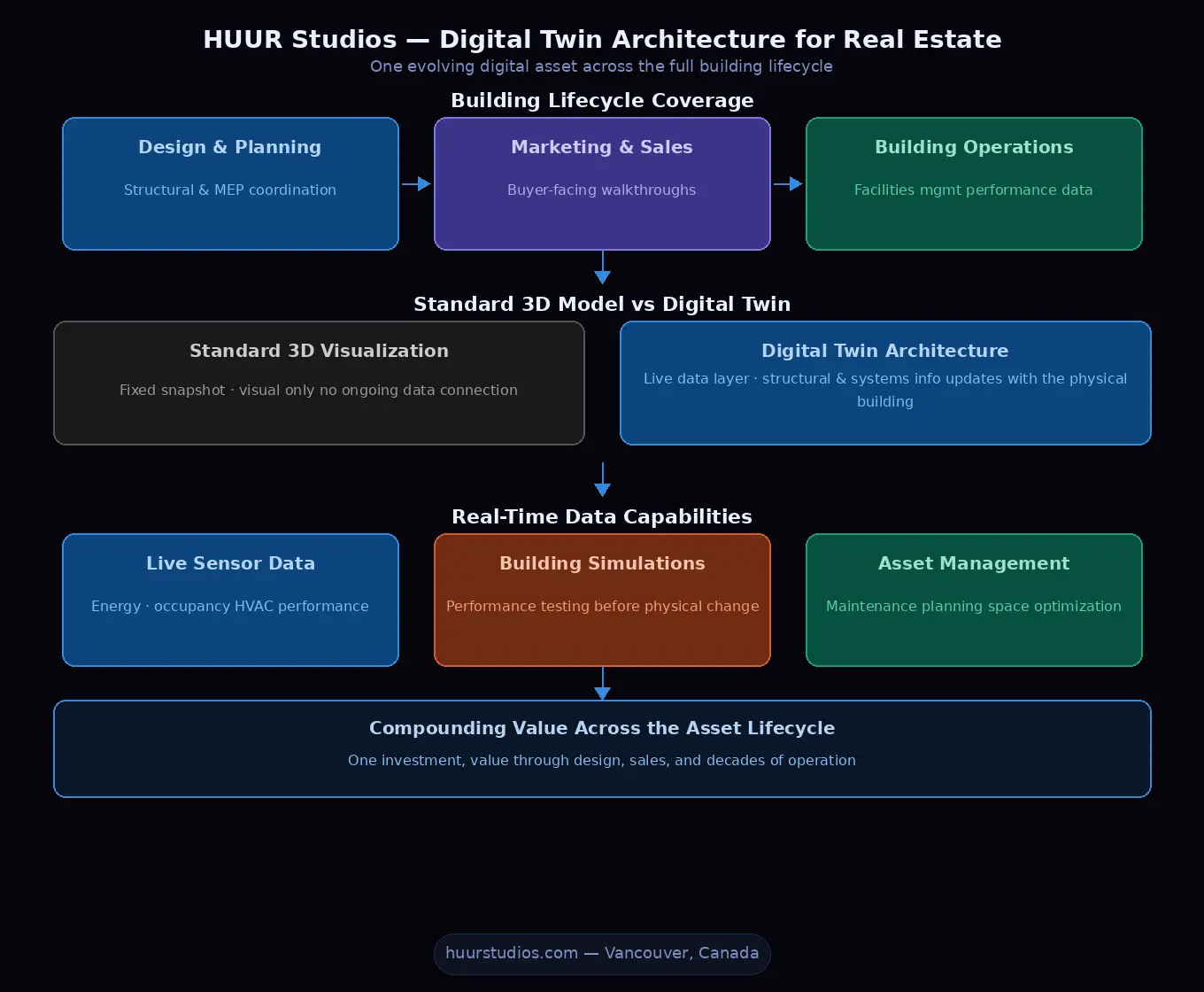
Digital twin architecture for real estate represents a fundamentally more sophisticated category of building visualization than the static and interactive 3D models that have defined property marketing until now — and the developers, architects, and asset managers who understand this distinction early are positioning themselves to extract compounding value across marketing, planning, and ongoing operations from a single unified digital asset. Where conventional visualization produces a fixed representation of a building at a specific moment, a true digital twin maintains an evolving, data-connected model that mirrors the physical asset throughout its entire lifecycle from initial design through construction and into decades of long-term operation.
This is not a marginal upgrade to existing visualization practice. Digital twin architecture for real estate fundamentally changes what a building model is for and what it continues to deliver across a building’s lifetime. Rather than serving a single marketing purpose — representing a presale unit during the campaign period, for instance — a properly built digital twin becomes infrastructure that supports design coordination during planning, buyer engagement during sales, coordination of construction activity, and operational management once the building is occupied and generating revenue.
This article examines what distinguishes genuine digital twin architecture for real estate from standard 3D visualization, how real-time data integration extends a twin’s value beyond simple representation, the specific lifecycle applications where this approach delivers the strongest return on visualization investment, and why HUUR Studios builds digital twin environments as strategic multi-lifecycle assets rather than one-time marketing deliverables for Vancouver and North American clients.
What Is Digital Twin Architecture in Real Estate?
Digital twin architecture for real estate refers to a dynamic, data-connected digital replica of a physical building or development that remains synchronized with the actual asset throughout its operational lifecycle — from initial design and construction through ongoing operation and eventual renovation or redevelopment. This distinguishes a genuine digital twin fundamentally from a conventional 3D visualization model, which is typically created once for a specific purpose and remains static thereafter regardless of what happens to the physical building it was created to represent.
The defining characteristic of a genuine digital twin is this ongoing, maintained connection between the digital and physical assets. As a building moves through design revisions, construction progress, and eventual occupancy, the digital twin model updates to reflect the current state of the physical asset rather than freezing at whatever stage it was originally produced. Digital twin architecture for real estate therefore creates a continuously accurate digital companion to the physical building — one that can be consulted, analyzed, and modified to inform decisions across every phase of the building’s operational life.
Explore More From HUUR
3D Real Estate Walkthrough Software: Stop Losing Buyers With Outdated Listings
Digital Twins Versus Single-Purpose Visualization Models
The broader category of digital twin architecture for real estate spans applications from design-stage coordination through post-occupancy facilities management, unified by the core principle of a continuously updated, data-connected digital asset that mirrors the physical building’s current state. A presale marketing visualization, by contrast, is commissioned, produced, and delivered as a fixed asset with no expectation of ongoing connection to the physical building’s actual construction progress, design evolution, or eventual operational performance data.
HUUR Studios builds digital twin architecture specifically to serve this broader, multi-phase value proposition — designing initial digital models with the data architecture, update pathways, and system integration capabilities necessary to support evolution from design and marketing tools into genuine operational assets. This design-for-lifecycle approach means clients receive a single investment that continues delivering value long after the presale campaign has concluded, rather than a visualization asset that must be discarded or rebuilt from scratch when its original single purpose has been served.
BIM Integration and Foundational Data Architecture
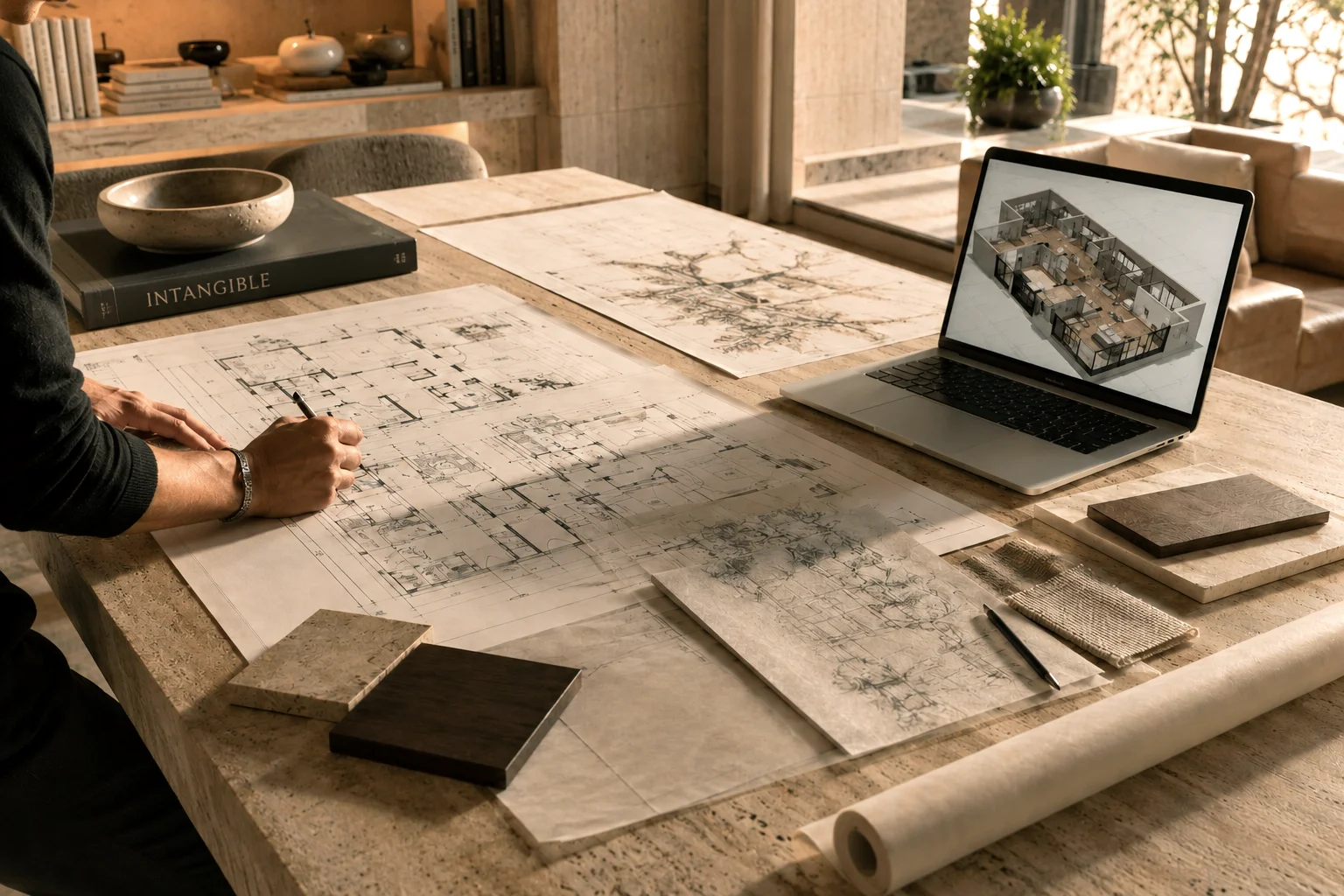
Digital twin architecture for real estate frequently integrates with Building Information Modeling — the structured, data-rich approach to architectural design that captures not just geometric form but material specifications, structural relationships, mechanical and electrical systems, and the complete technical information that defines how a building is to be built and how it will perform once occupied. When a digital twin is built on a properly structured BIM foundation, the resulting model carries design intelligence extending well beyond visual representation into genuine, actionable building knowledge.
For Vancouver developers working with architectural firms that already use BIM-based design workflows — increasingly standard across British Columbia’s larger development and architectural practices — HUUR Studios’ digital twin approach leverages this existing design data rather than requiring a parallel, disconnected model to be built from scratch specifically for visualization and marketing purposes. This integration produces both efficiency advantages and accuracy advantages over models created independently of the underlying design process.
How Digital Twins Differ From Standard 3D Visualization
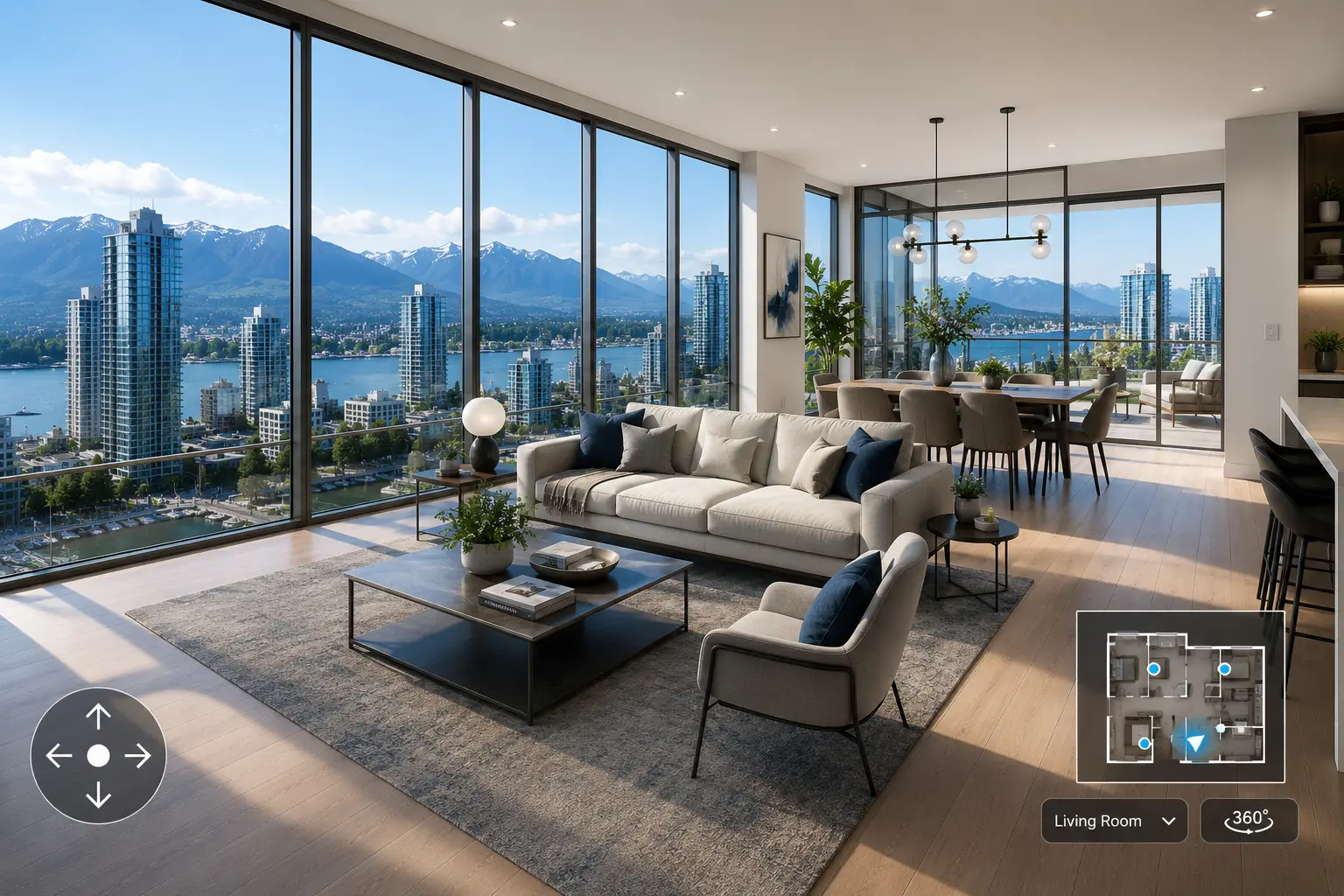
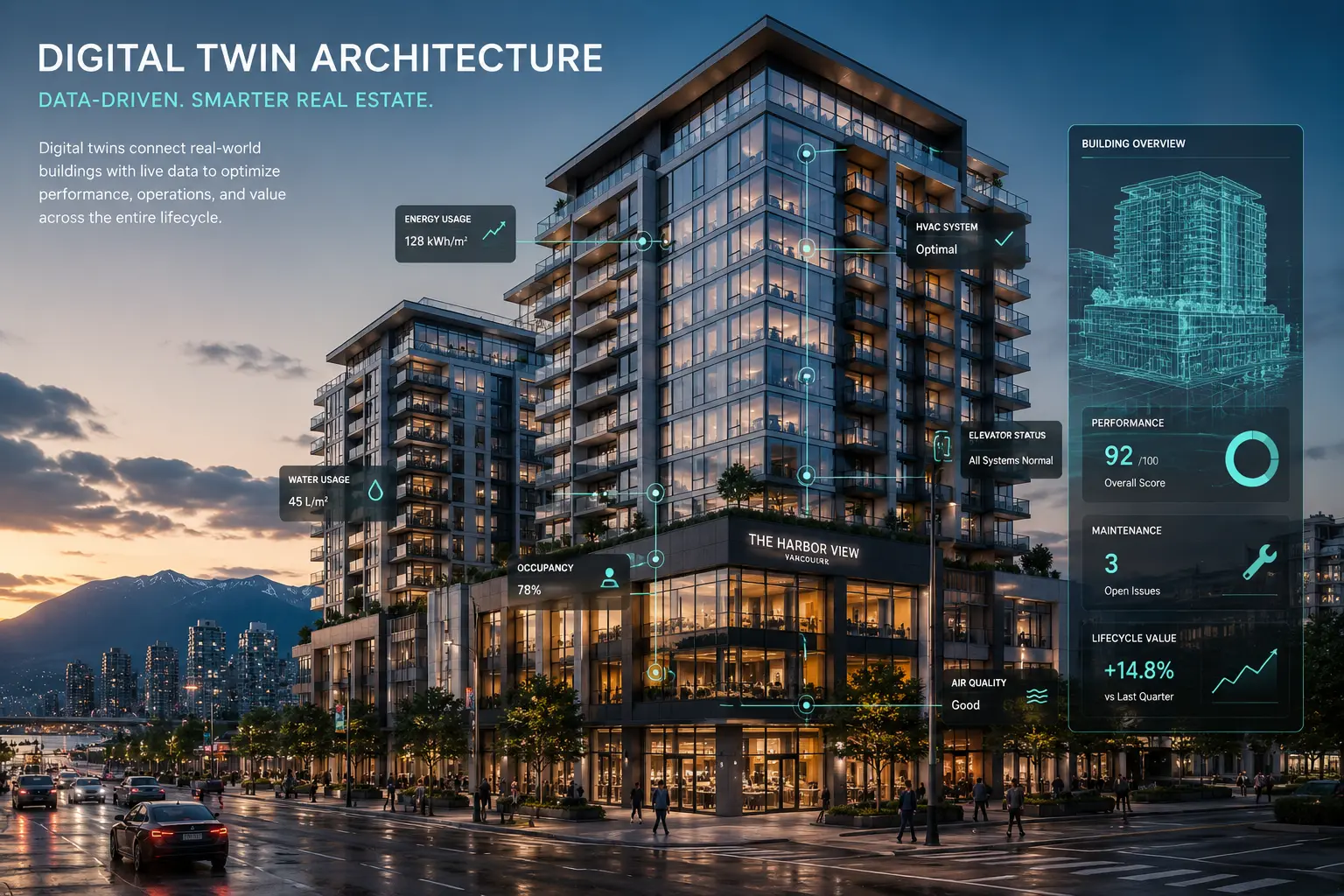
Standard 3D visualization, including the sophisticated real-time walkthroughs and configurable platforms that define modern presale marketing practice, focuses on visual and spatial representation — communicating what a building looks and feels like to a viewer navigating its digital model. Digital twin architecture for real estate extends well beyond this visual layer to incorporate structured data about every significant element of the building — structural information, mechanical and electrical systems, material specifications, maintenance requirements, and increasingly, real-time sensor data once the building is occupied and operational.
This data layer is what enables a digital twin’s expanded utility across the full building lifecycle. A standard visualization model, however photorealistic and interactive, contains no information about a building’s structural load paths, HVAC performance characteristics, or energy consumption patterns under different occupancy and climate conditions. A digital twin built with proper data architecture can support structural engineering coordination during design, construction sequencing during the build phase, facilities management once the building is operational, and investment performance analysis throughout the asset’s holding period.
Data-Driven Visualization as the Bridge
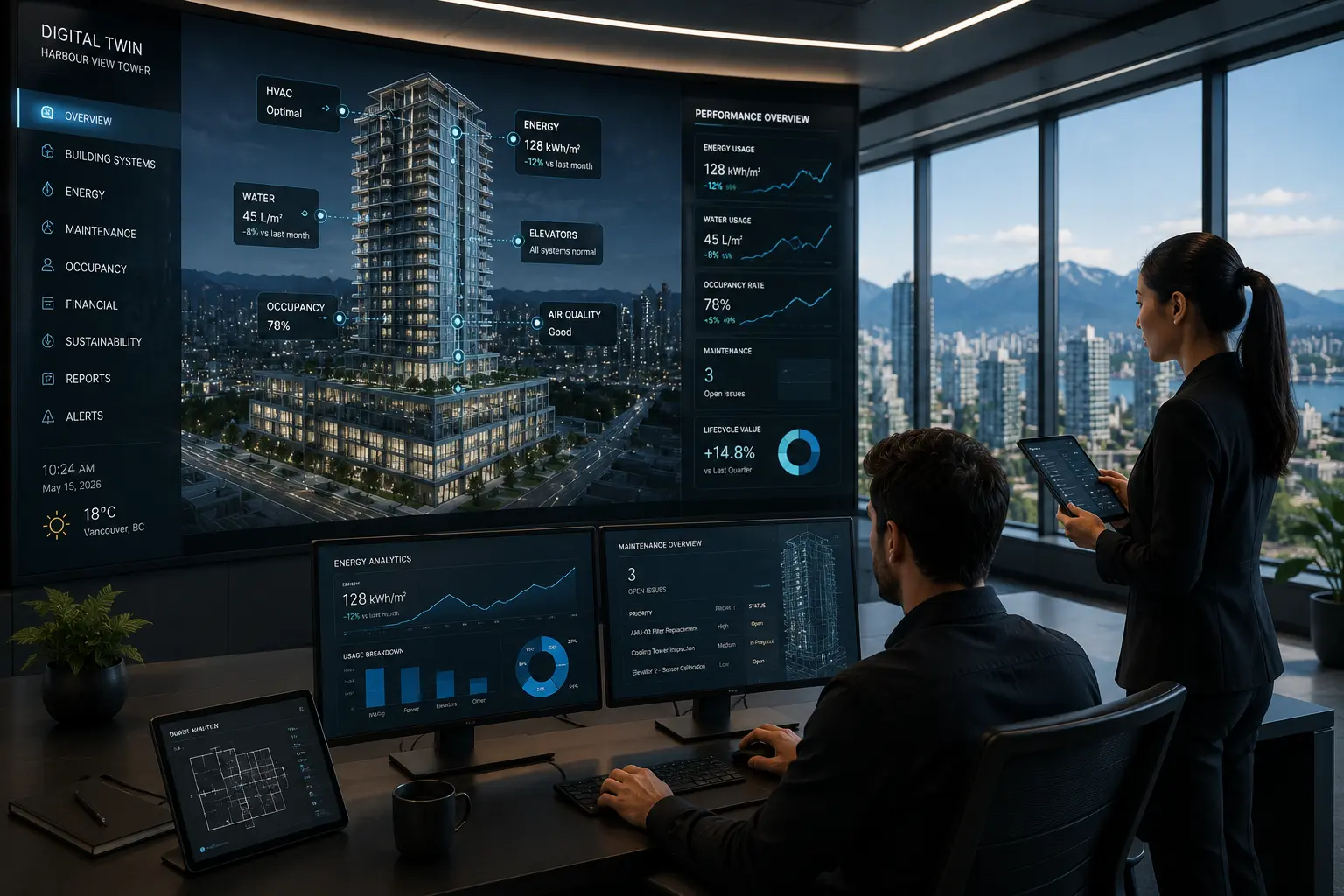
Data-driven architectural visualization represents the practical bridge between conventional visualization practice and full digital twin capability — incorporating meaningful, structured data layers into visually sophisticated models without necessarily achieving the complete real-time operational connection that defines the most advanced digital twin implementations. HUUR Studios approaches digital twin architecture for real estate along this spectrum, scaling the data integration to match each client’s specific requirements, existing systems, and budget rather than treating every project as requiring the same maximum level of twin implementation.
For a Vancouver mixed-use development client, this might mean a digital twin environment that incorporates detailed material and systems data for design coordination purposes during the planning phase, with the data architecture in place to extend toward operational performance monitoring once the building reaches occupancy — a scalable approach that captures immediate visualization and design coordination value while building the foundational infrastructure for more comprehensive digital twin capability as the project matures.
The Role of Real-Time Data in Smart Property Models
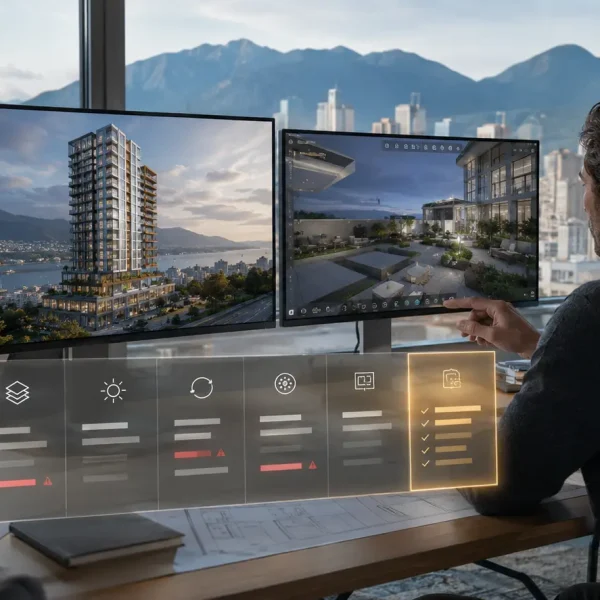
Real-time digital twins incorporate live data feeds from building sensors, management systems, and operational platforms, allowing the digital model to reflect not just the static physical configuration of a building but its current, real-time performance and operational condition. This capability transforms a digital twin from a sophisticated visualization tool into genuine operational infrastructure — a dynamic model that facilities managers, building operators, and asset owners can consult to monitor and optimize building performance continuously across the full operational life of the asset.
For commercial and mixed-use developments where operational efficiency directly affects net operating income and asset valuation, real-time data integration delivers financial value extending well beyond what any visualization tool, however sophisticated, can provide. Energy consumption patterns, occupancy distribution data, HVAC performance metrics, and maintenance scheduling can all be monitored, modelled, and optimized through a properly architected digital twin — creating ongoing financial value for asset owners long after a building’s marketing and sales phase has concluded and the presale team has moved to the next project.
Immersive Building Simulations for Performance Analysis
Immersive building simulations built on digital twin architecture for real estate allow architects, engineers, and facilities managers to model and test building performance scenarios before committing to costly physical changes or operational policy decisions — simulating energy performance under different seasonal climate conditions, testing structural responses to load variations, modelling how proposed fit-out renovations would affect mechanical system performance, or projecting how different occupancy patterns would impact energy costs under various utility pricing scenarios.
According to research from Deloitte’s built environment digital twin analysis, digital twin adoption across commercial real estate is accelerating significantly as organizations recognize the operational efficiency, risk management, and asset valuation benefits that continuously updated, data-connected building models provide throughout the full lifecycle of a property asset — not just during the initial marketing and presale phase.
Using Digital Twins Across the Full Building Lifecycle
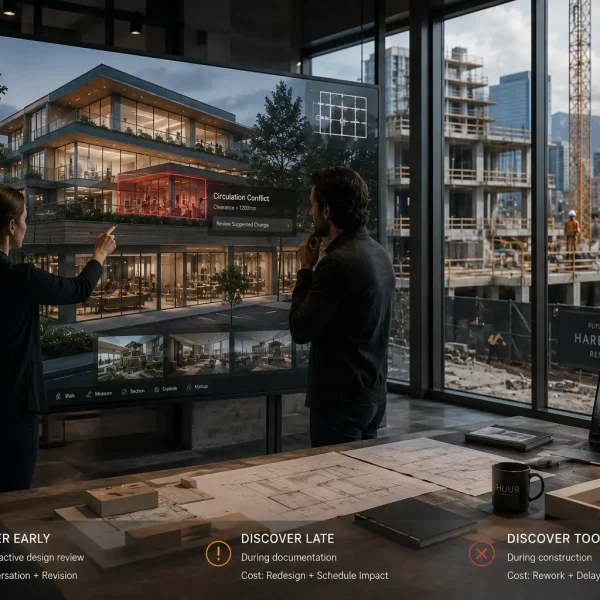
The multi-phase value of digital twin architecture for real estate becomes most compelling when examined across a complete operational lifecycle — and digital twin architecture for real estate continues compounding in value at every stage from initial design through decades of active use. During the planning and design phase, the twin supports coordination between architectural, structural, mechanical, and electrical disciplines — allowing design teams to identify and resolve conflicts, test performance scenarios, and validate design decisions before they become expensive construction problems that cost far more to address in the field than on screen.
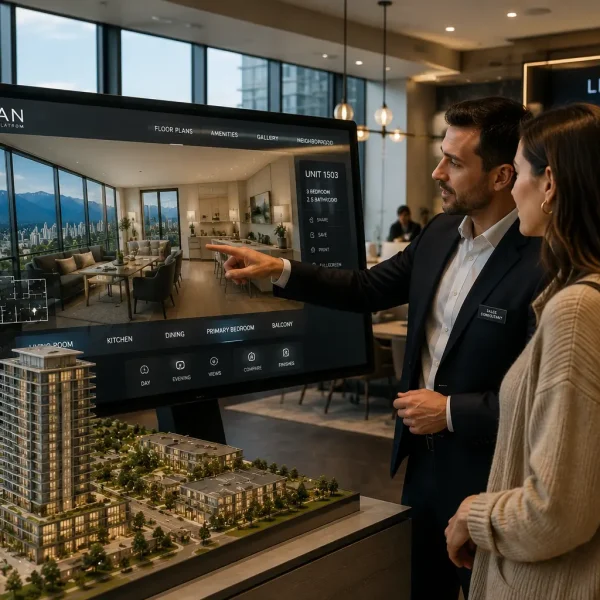
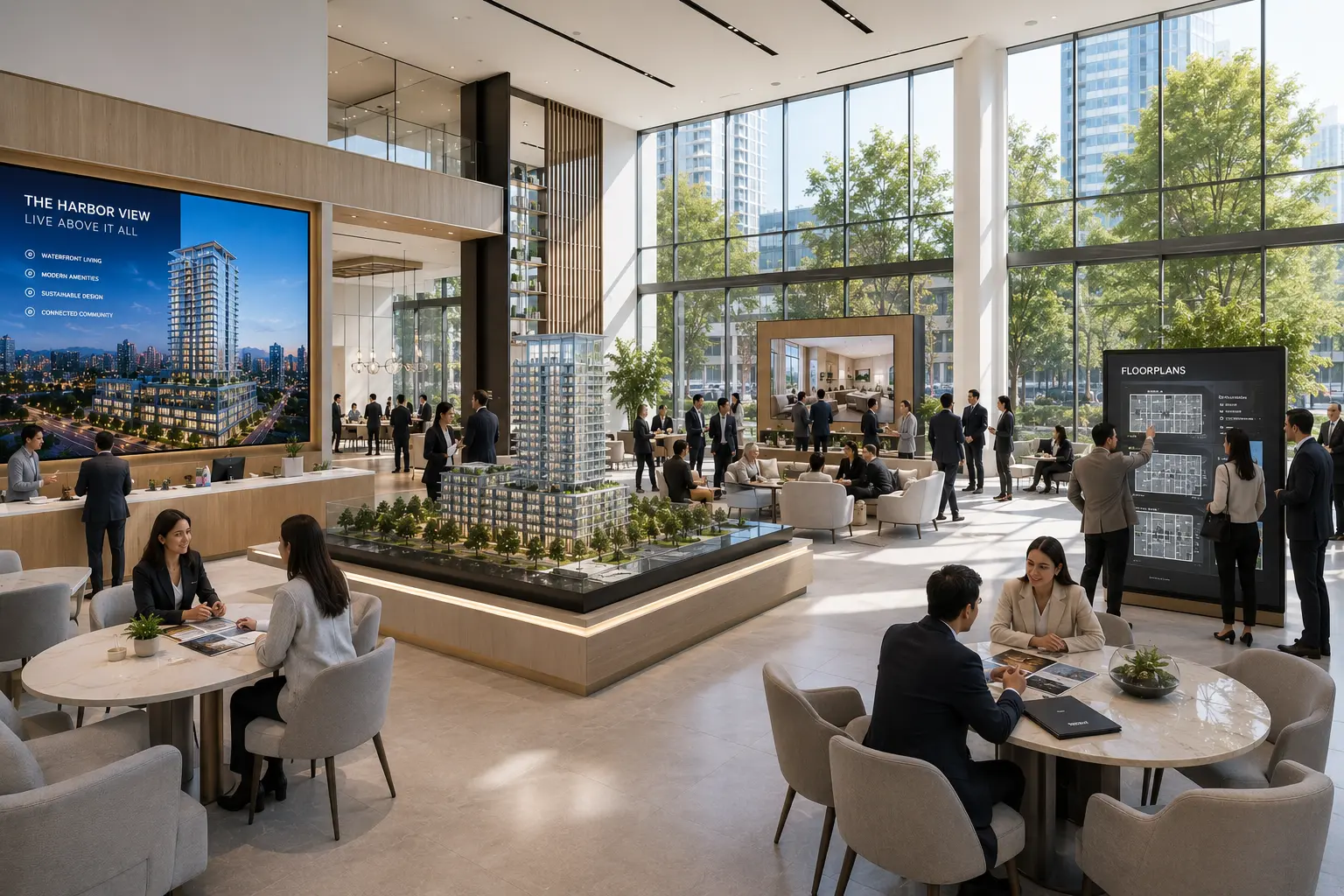
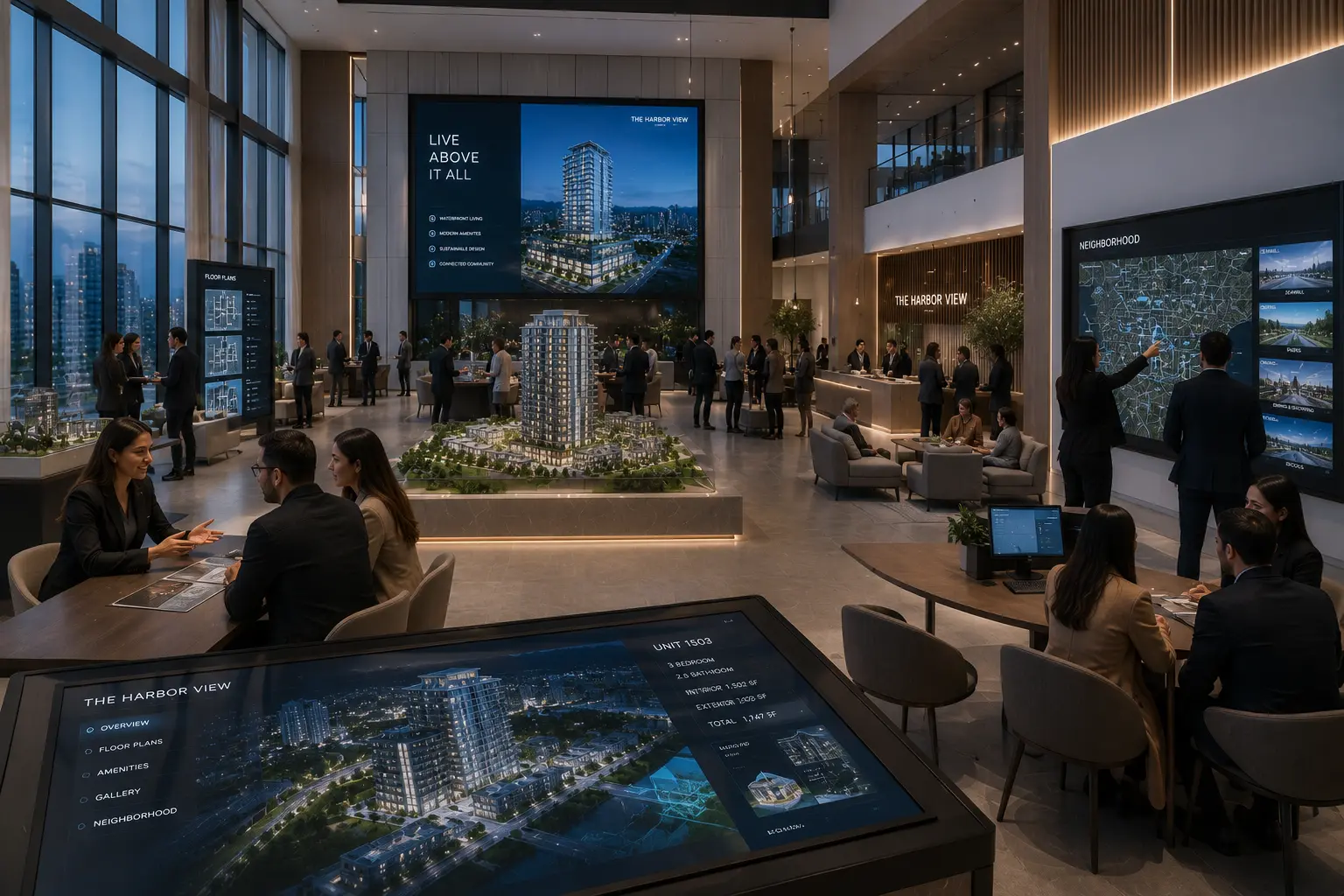
During the marketing and sales phase, the same underlying digital twin model serves as the foundation for buyer-facing visualization, interactive walkthrough environments, and configurable presale platforms — carrying the design accuracy of the BIM-based twin directly into marketing materials rather than requiring a separate, potentially inconsistent visualization model to be built from scratch. Once the building reaches occupancy, the digital twin transitions into an operational asset that facilities managers and asset owners can use to manage the building more efficiently and more cost-effectively than would be possible without this continuously accurate digital record of the building’s physical and operational state.
Portfolio Compounding Value for Vancouver Developers
For Vancouver developers managing portfolios of multiple projects across different stages of development, design, and operation, digital twin architecture for real estate creates compounding value that multiplies across the portfolio as more assets are brought under digital twin management. Each digital twin architecture for real estate implementation accumulates operational data, performance benchmarks, and maintenance histories that improve the quality of decision-making across the entire portfolio — informing better design decisions for future projects, identifying operational improvements applicable across multiple buildings, and supporting more sophisticated asset management practices that enhance portfolio-wide performance.
HUUR Studios builds digital twin architecture for Vancouver and North American clients with this portfolio-level strategic value in mind, ensuring that the investment in sophisticated digital twin capability compounds in value across multiple projects and multiple years rather than being consumed by a single presale campaign and then abandoned when that campaign concludes.
Why Digital Twin Architecture Is Becoming a Strategic Priority
The strategic importance of digital twin architecture for real estate is accelerating — and the investment case for digital twin architecture for real estate strengthens each year as the technology matures and as developers, asset managers, and institutional investors increasingly recognize the operational and financial value that data-connected building models deliver throughout the full asset lifecycle — not just during the marketing and presale period. Commercial real estate investors and institutional buyers are beginning to evaluate digital twin capability as a meaningful factor in assessing asset management sophistication, recognizing the operational efficiency and risk management benefits that real-time building performance data enables for owners and operators.
For Vancouver developers and institutional asset owners managing complex mixed-use developments, digital twin architecture for real estate increasingly represents not just a sophisticated marketing tool but a genuine differentiator in long-term asset management capability — one that supports the kind of detailed, data-driven building operations that institutional buyers, sophisticated tenants, and investment partners increasingly expect from premium commercial and residential developments.
START YOUR PROJECT WITH HUUR
Contact our team or explain and submit your project .
Future-Proofing the Visualization Investment
The most forward-thinking Vancouver developers and architectural firms are beginning to evaluate their visualization investments not just on the marketing value delivered during the presale campaign but on the total operational value delivered across the full building lifecycle. Digital twin architecture for real estate scores significantly better on this full-lifecycle evaluation than any single-purpose visualization model can, because the twin continues delivering operational value — and financial return on the original visualization investment — throughout the building’s occupied life.
HUUR Studios positions its digital twin architecture for real estate practice to serve clients making this longer-term investment evaluation, designing every environment from the outset with lifecycle continuity as a foundational requirement rather than a future retrofit possibility — ensuring that the digital twin architecture for real estate investment made during the presale campaign continues delivering measurable value to the operations team managing the building for years after the last presale unit has closed.
FAQ — Digital Twin Architecture for Real Estate
What is digital twin architecture in real estate?
Digital twin architecture for real estate is a dynamic, data-connected digital replica of a physical building that remains synchronized with the actual asset throughout its lifecycle — supporting design coordination, presale marketing, construction management, and ongoing building operations from a single continuously updated model.
How does a digital twin differ from a virtual tour or 3D model?
Virtual tours and 3D visualization models focus on visual spatial representation. Digital twin architecture for real estate incorporates structured data about building systems, materials, and performance — supporting engineering coordination and operational management applications that extend far beyond marketing visualization alone.
Can a digital twin support both presale marketing and building operations?
Yes — a properly implemented digital twin architecture for real estate serves as a single coherent asset throughout a building’s lifecycle, supporting buyer-facing presale visualization during the sales phase and transitioning to operational management support once the building is occupied. The same underlying model serves both purposes without requiring separate production.
What types of developments benefit most from this approach?
Complex mixed-use developments, commercial buildings, and any project where ongoing operational efficiency is a priority benefit most from digital twin architecture for real estate. The investment justification for digital twin architecture for real estate strengthens with building complexity and the length of the operational period over which the twin continues delivering management value and financial return.
A digital twin shouldn’t be built for a single milestone—it should create value throughout the entire lifecycle of your project.
The most successful developments don’t separate visualization, design coordination, marketing, and operations into disconnected workflows. They connect them through a single intelligent digital asset that continues to evolve alongside the building itself.
At HUUR Studios, we create digital twin environments that combine real-time visualization, BIM-driven intelligence, immersive user experiences, and scalable data architecture—helping developers, architects, and asset owners make better decisions from concept through long-term building operations.
Whether you’re planning a new mixed-use development, a commercial asset, or a large-scale residential project, we’ll help you build a digital foundation that delivers value long after construction is complete.
Talk with our team about developing a Digital Twin strategy tailored to your next project.
Conclusion
Digital twin architecture for real estate represents the next meaningful evolution beyond even sophisticated interactive visualization, extending a building’s digital model into genuine multi-phase infrastructure that delivers compounding value across design, marketing, construction, and operations from a single coherent, continuously updated digital asset. For Vancouver developers and architectural firms managing increasingly complex mixed-use and commercial projects, this extended utility represents a fundamentally different and more compelling return on visualization investment than any single-purpose marketing model can achieve.
HUUR Studios builds digital twin architecture for clients across British Columbia and North America who recognize that the most sophisticated building visualization should deliver value throughout a building’s entire lifecycle rather than expiring with the presale campaign. From design coordination through buyer engagement to long-term operational management, a properly built digital twin compounds in value across every stage a building moves through — making the digital twin architecture for real estate investment more financially productive with every year the building remains in operation.
If your next project deserves a digital asset that works as hard after occupancy as it did during presale, digital twin architecture for real estate is exactly what HUUR Studios delivers.