Introduction
A concept design agency that combines architectural imagination with real-time immersive technology is redefining what is possible at the earliest and most critical stage of any built environment project. Concept design is where architecture begins — the phase where raw ideas, spatial ambitions, and design values are translated from abstract intent into communicable form. It is also the phase where the gap between what a designer envisions and what a client, investor, or stakeholder understands has historically been widest — and most costly.
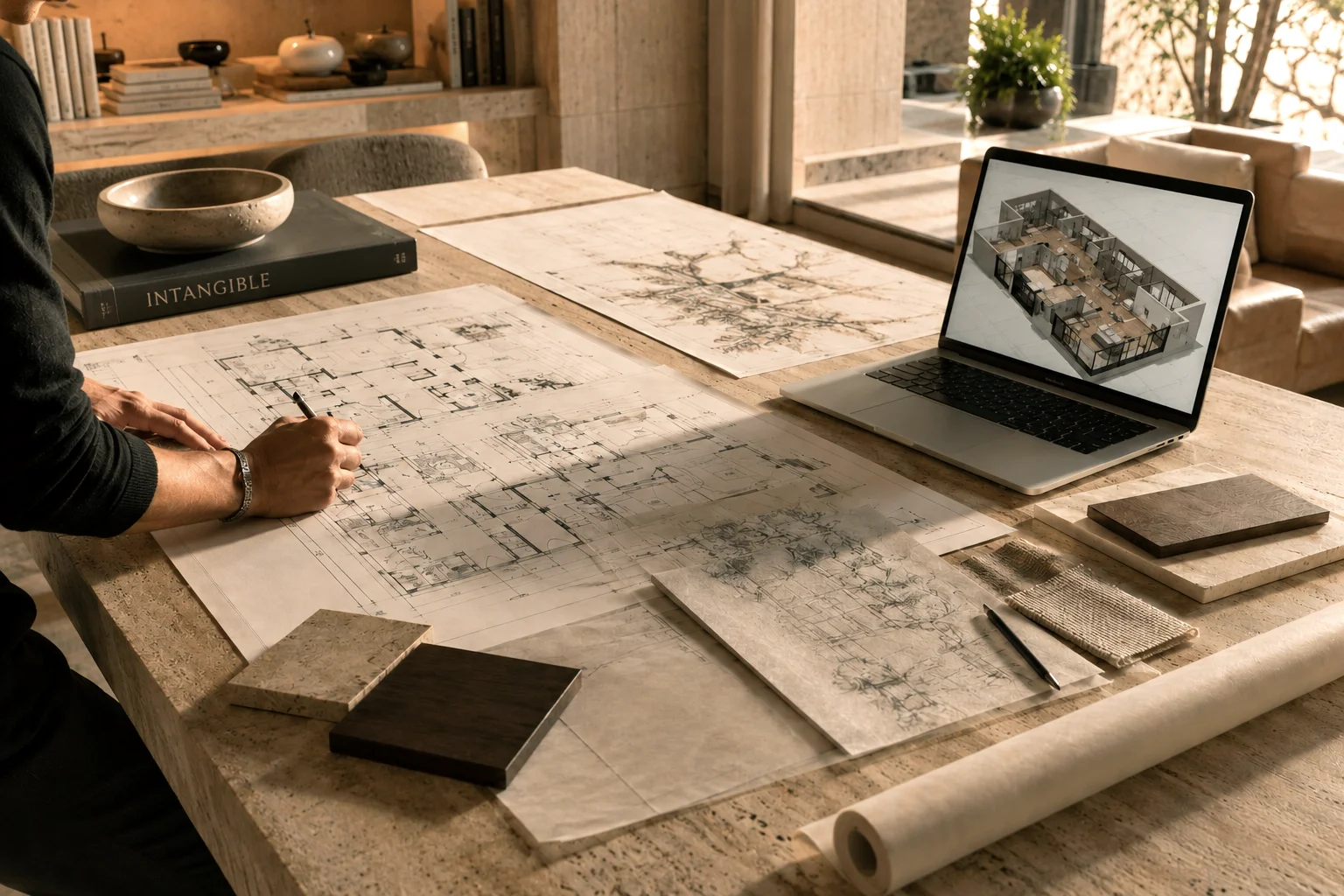
“When all customer needs and designed requirements are fully defined, you can start to generate multiple design solutions, or concepts. The next step is to choose only one solution that matches the initial requirements and specifications in a best way.(MacGill)”Traditional concept design communication relied on sketches, physical models, and early-stage renders that required significant interpretive effort from their audience. A client viewing a conceptual architectural rendering in the early stages of a project was asked to extrapolate a complete spatial and atmospheric experience from deliberately incomplete visual information. The results were predictable — misaligned expectations, expensive design pivots, and the quiet erosion of confidence that occurs when clients cannot genuinely see what their investment will become.
Real-time immersive technology changes this dynamic completely. A concept design agency equipped with the tools and talent to build photorealistic, interactive environments from the earliest stages of a project gives every stakeholder something unprecedented: the ability to genuinely experience a design concept before it has been resolved, refined, or committed to construction documentation. In Vancouver’s competitive architectural and development market — and across North America’s most demanding built environment sectors — this capability is transforming how concepts are developed, communicated, and approved.
From luxury residential developments on the North Shore to commercial mixed-use projects in Vancouver’s evolving urban core, the most successful projects of 2026 share a common advantage — they were shaped from the beginning by a concept design agency that made the invisible visible from day one.
What Is Concept Design in Architecture?
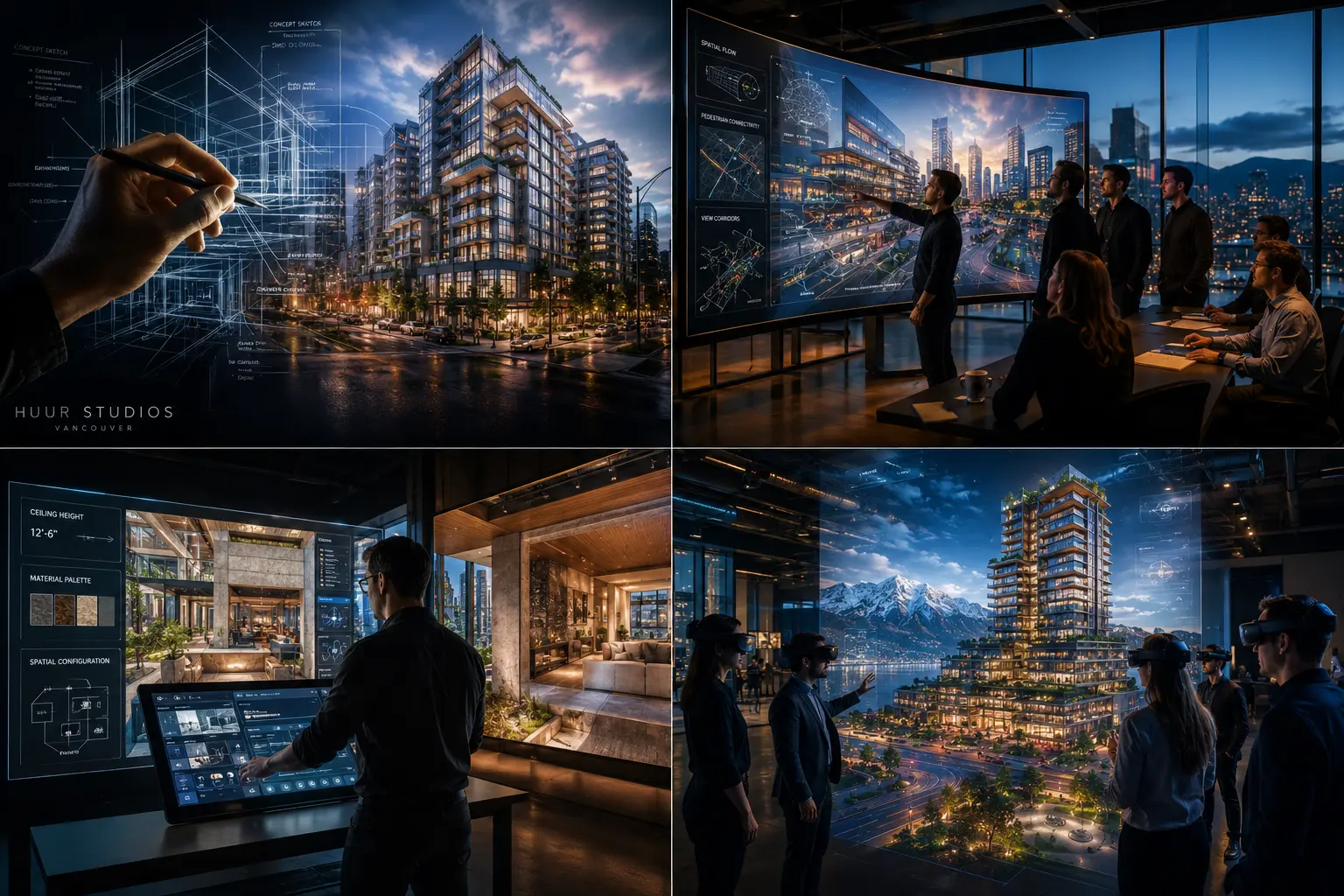
A concept design agency operates at the intersection of architectural thinking, spatial storytelling, and immersive technology — translating the earliest, most fluid stage of design development into experiences that communicate with clarity and conviction. Concept design in architecture is not simply the first phase of a project timeline. It is the foundational creative act that establishes the spatial, atmospheric, and experiential identity of everything that follows. Get the concept right and every subsequent design decision has a reference point. Lose the concept in translation and the project loses its coherence — often permanently.
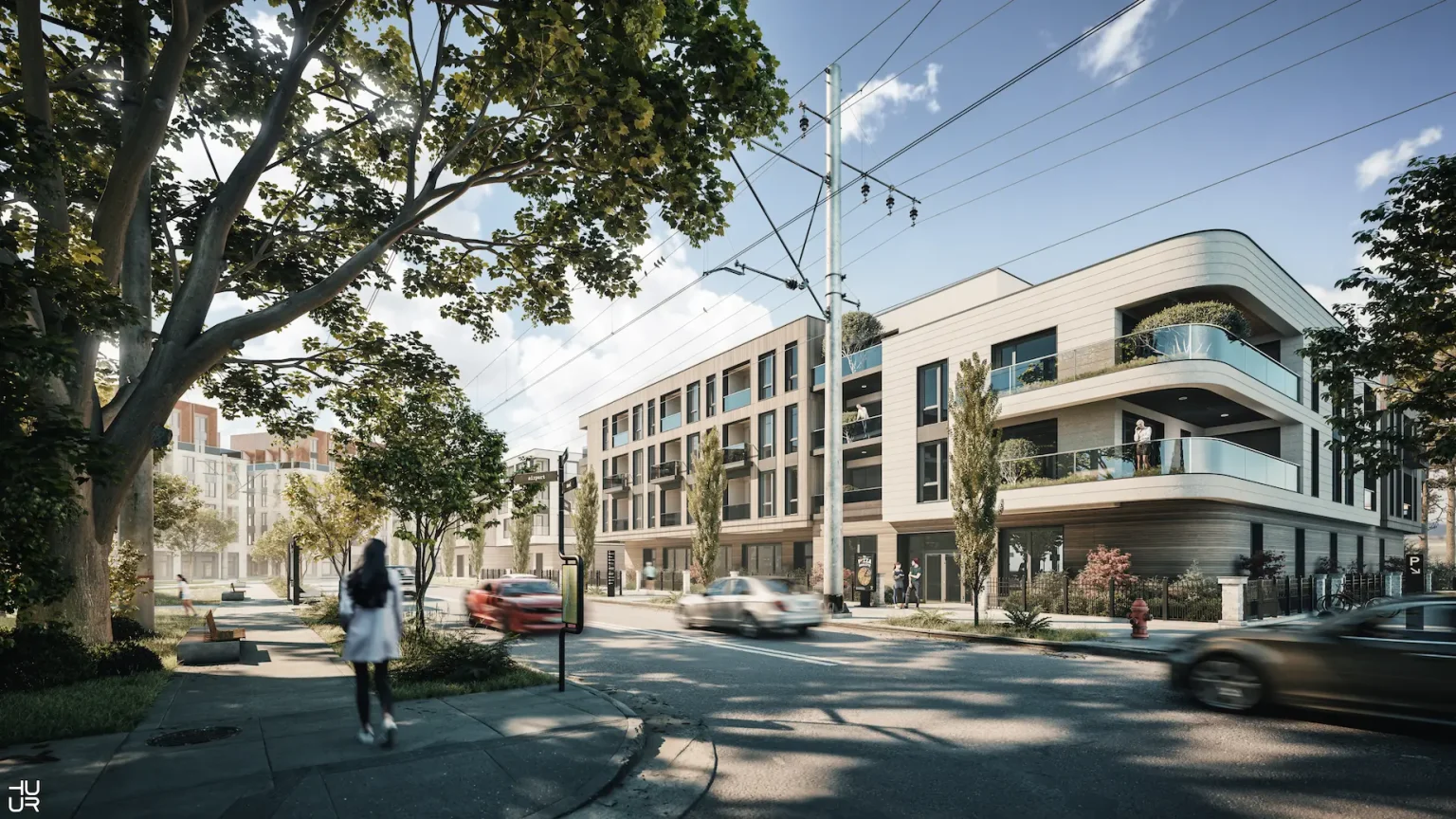
Architectural concept design encompasses the core spatial decisions of a project — the relationship between built form and landscape, the organization of movement through space, the quality of light at different times of day, the material palette that defines the project’s sensory identity, and the narrative logic that connects individual spaces into a coherent whole. These decisions are made at a stage when very little is fixed — when the freedom to explore is greatest and the cost of change is lowest. A concept design agency that can make these decisions visible and experiential at this early stage gives design teams and their clients an extraordinary advantage.
Architectural Concept Visualization — From Sketch to Experience
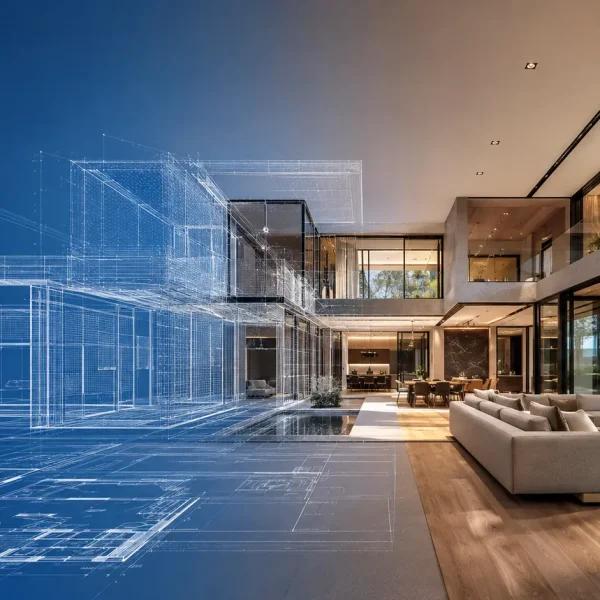
Architectural concept visualization is the discipline that bridges the gap between the designer’s internal spatial vision and the client’s comprehension of it. In its traditional form — sketch perspectives, physical study models, and early-stage digital renders — architectural concept visualization has always been a translation exercise: converting the designer’s spatial thinking into a format accessible to non-specialist audiences.
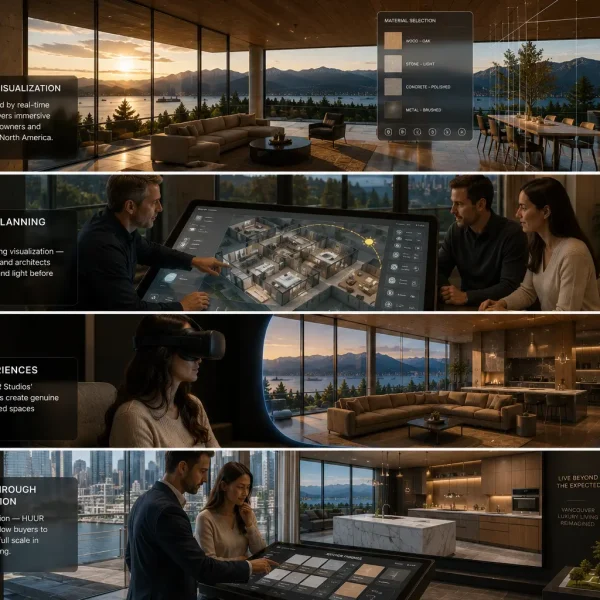
A concept design agency deploying real-time technology fundamentally changes what architectural concept visualization can achieve at this early stage. Rather than producing a fixed representation of one interpretive moment in the design — one angle, one lighting condition, one material hypothesis — real-time concept environments present the design as a living, navigable space. Stakeholders explore it from any angle, experience it at different times of day, and engage with spatial qualities that static images can only approximate.
For Vancouver architects and developers working in a market where concept approval from investors, municipal planners, and presale buyers must often occur simultaneously and at speed, this capability is not a premium service. It is the competitive standard that separates studios capable of winning and delivering complex projects from those that cannot move fast enough to hold client confidence through the concept phase.
Spatial Concept Development as a Commercial Discipline
Spatial concept development — the iterative process of testing, refining, and communicating spatial ideas — is where a concept design agency delivers its most fundamental value. The concept phase is the cheapest point in a project’s lifecycle to make changes. A spatial decision revised in concept costs a fraction of the same revision made during design development, construction documentation, or — most expensively — on site.
HUUR Studios approaches spatial concept development as a commercial discipline as much as a creative one. Every concept visualization environment it builds is designed not just to communicate a design idea but to stress-test it — exposing spatial issues, proportion miscalculations, and experiential contradictions that are invisible in 2D at a stage when they cost nothing to resolve. The concept design agency that identifies and addresses these issues in real-time visualization before design development begins delivers projects that arrive at construction documentation with their spatial logic intact and their client relationships strengthened by a process of genuine collaborative discovery.
Why Visualization Matters During Early Design Stages
The concept design agency that understands why visualization matters during early design stages — not just how to produce it — delivers work of categorically different quality from studios that treat concept visualization as a presentation afterthought. Visualization at the concept stage is not decoration. It is a thinking tool, a communication instrument, and a commercial risk management strategy simultaneously.
Early-stage design visualization shapes the design itself. When architects and designers can see their spatial concepts rendered in real-time photorealistic quality — experiencing the consequences of their decisions at human scale, in real light, with real material behavior — they make better decisions faster. The design intelligence that emerges from seeing a concept clearly is qualitatively different from the intelligence available in drawings and physical models alone.
The Cost of Poor Early-Stage Communication
The financial consequences of inadequate early-stage design visualization are well documented in the North American construction industry. Research from the Royal Institute of British Architects confirms that design changes made during concept cost approximately 1% of their equivalent change made during construction. A spatial reconfiguration that costs $5,000 to address in concept visualization costs $500,000 to address on site — a ratio that makes investment in a concept design agency with genuine early-stage visualization capability one of the highest-ROI decisions a developer or architect can make.
For Vancouver developers managing projects where construction costs consistently exceed $400 per square foot and project timelines are measured in years, this ratio is not theoretical. The concept design agency that prevents even one significant mid-construction design revision more than justifies its entire engagement cost. HUUR Studios’ clients across British Columbia report consistently that the real-time concept visualization process identifies and resolves spatial issues that would otherwise have surfaced during construction — delivering cost savings that substantially exceed the visualization investment.
Early-Stage Design Visualization and Stakeholder Alignment
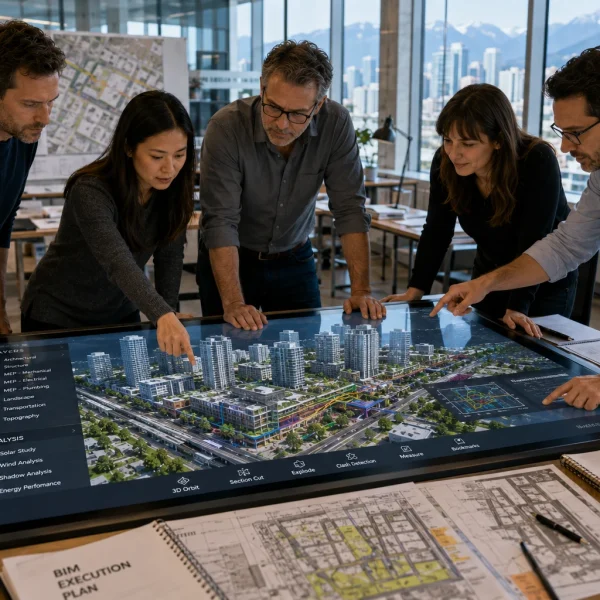
Early-stage design visualization serves a stakeholder alignment function that is as commercially significant as its design development role. Complex architectural projects involve multiple stakeholder groups — architects, developers, investors, municipal planners, future tenants, and community representatives — each of whom must develop sufficient understanding of a proposed design to make informed decisions about it.
A concept design agency that delivers immersive real-time visualization at the concept stage gives all stakeholder groups the spatial comprehension they need to engage meaningfully with the project at the moment their input is most valuable. Municipal planners who can navigate a real-time concept environment of a proposed development understand its relationship to the surrounding urban fabric far better than those reviewing 2D drawings and rendered perspectives. Investors who experience a concept design immersively commit with greater confidence than those approving a project from a board presentation.
In Vancouver’s development environment — where community consultation, municipal review, and investor alignment must often occur concurrently at the concept stage — this simultaneous stakeholder communication capability is a significant competitive advantage for developers working with a concept design agency equipped to deliver it.
How Real-Time Environments Improve Concept Exploration and Iteration
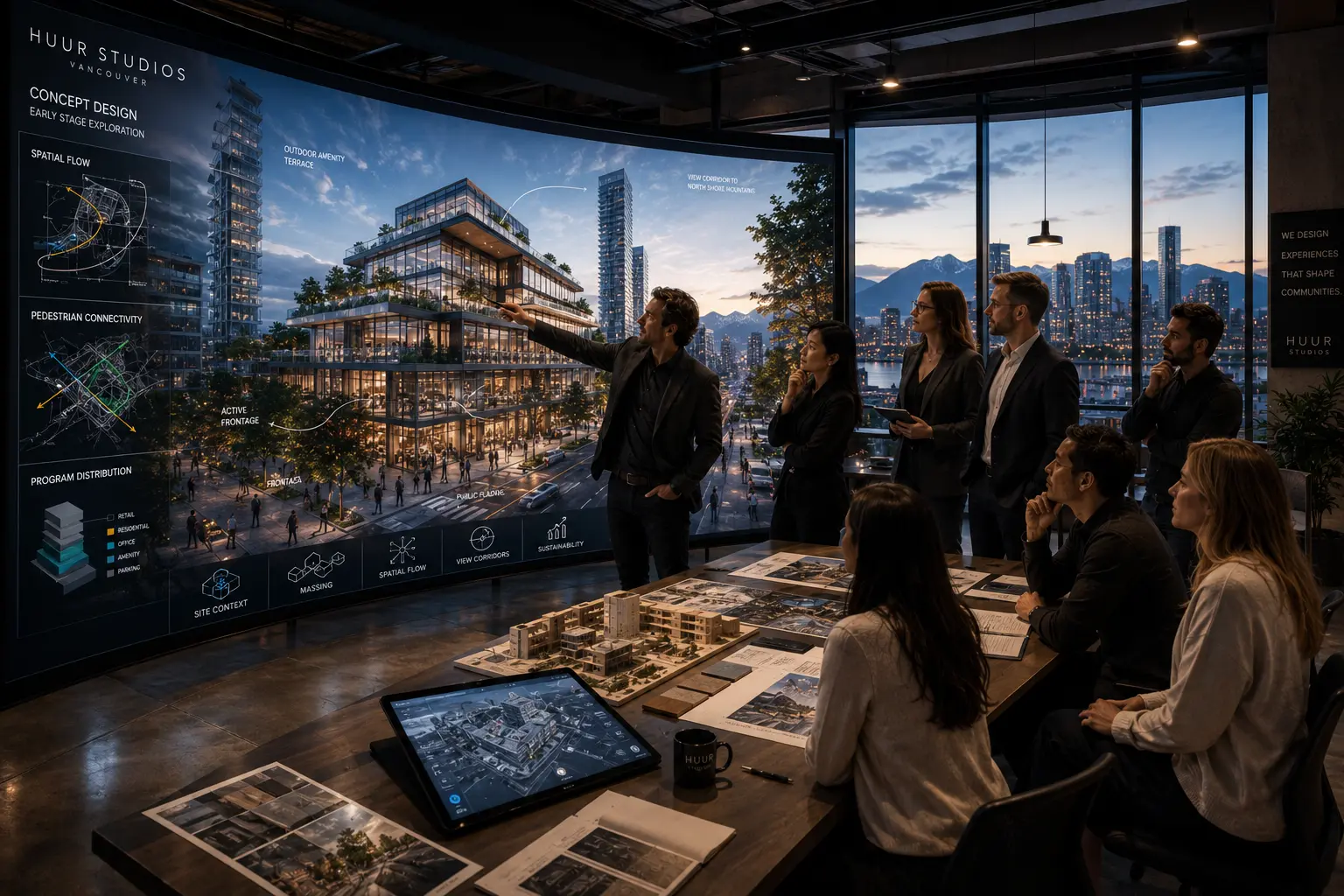
Real-time residential visualization and commercial concept exploration share a defining characteristic: the ability to evaluate design decisions in living environments rather than fixed representations. A concept design agency that builds its concept exploration process around real-time technology gives design teams and their clients a fundamentally more productive creative process — one where iteration is instant, exploration is unlimited, and every design hypothesis can be tested experientially rather than theoretically.
The traditional concept exploration process — sketch, render, review, revise, re-render — creates a rhythm of creative momentum interrupted by production cycles. Each render takes hours to produce. Each round of client feedback requires a new production cycle before its implications can be evaluated. A project with 4 concept directions and 3 rounds of refinement per direction generates 12 rendering cycles before a preferred concept is selected — a process that can consume weeks of a project timeline and tens of thousands of dollars in studio fees.
A concept design agency using real-time environments replaces this cycle entirely. Concept directions are built as navigable real-time environments — each explorable from any angle, in any lighting condition, with any material hypothesis applied. Client review sessions become live design explorations rather than passive presentations. Feedback is incorporated in real time, evaluated immediately, and either adopted or discarded based on direct spatial evidence rather than informed speculation.
Conceptual Architectural Rendering at Real-Time Speed
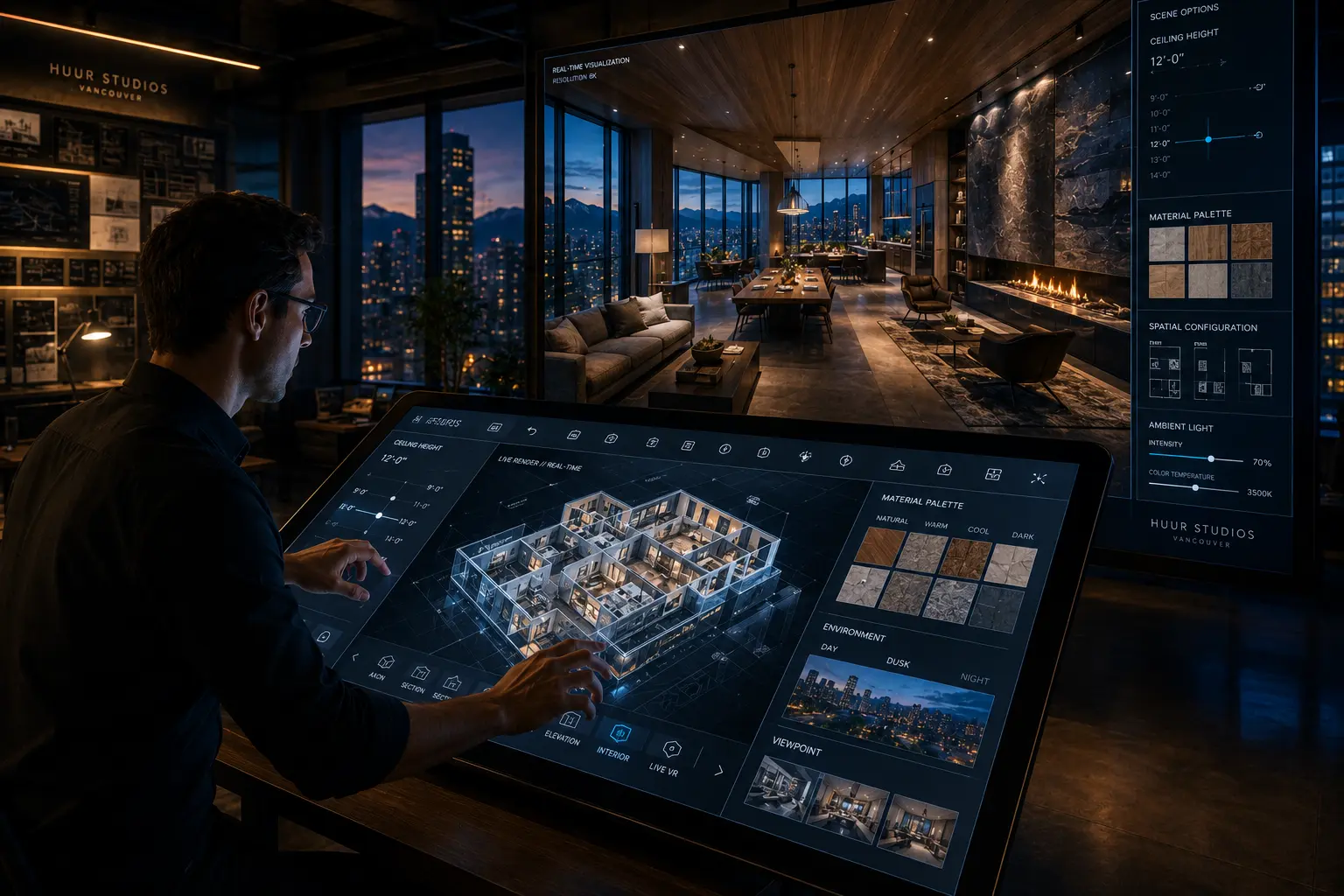
Conceptual architectural rendering in a real-time environment operates at a speed that transforms the economics and creative dynamics of the concept phase. HUUR Studios builds concept environments that allow design teams to test spatial ideas at the speed of conversation — adjusting ceiling heights, shifting wall positions, changing material palettes, and evaluating the atmospheric consequences of structural decisions in real time during collaborative design sessions.
For architectural practices in Vancouver and across North America working under the compressed timelines that competitive project delivery demands, this speed advantage is commercially decisive. A concept design agency that can present a refined, immersive concept environment 2 weeks into a project — rather than the 6 to 8 weeks that traditional rendering-based concept workflows typically require — gives its clients a timeline advantage that compounds through every subsequent phase of the project.
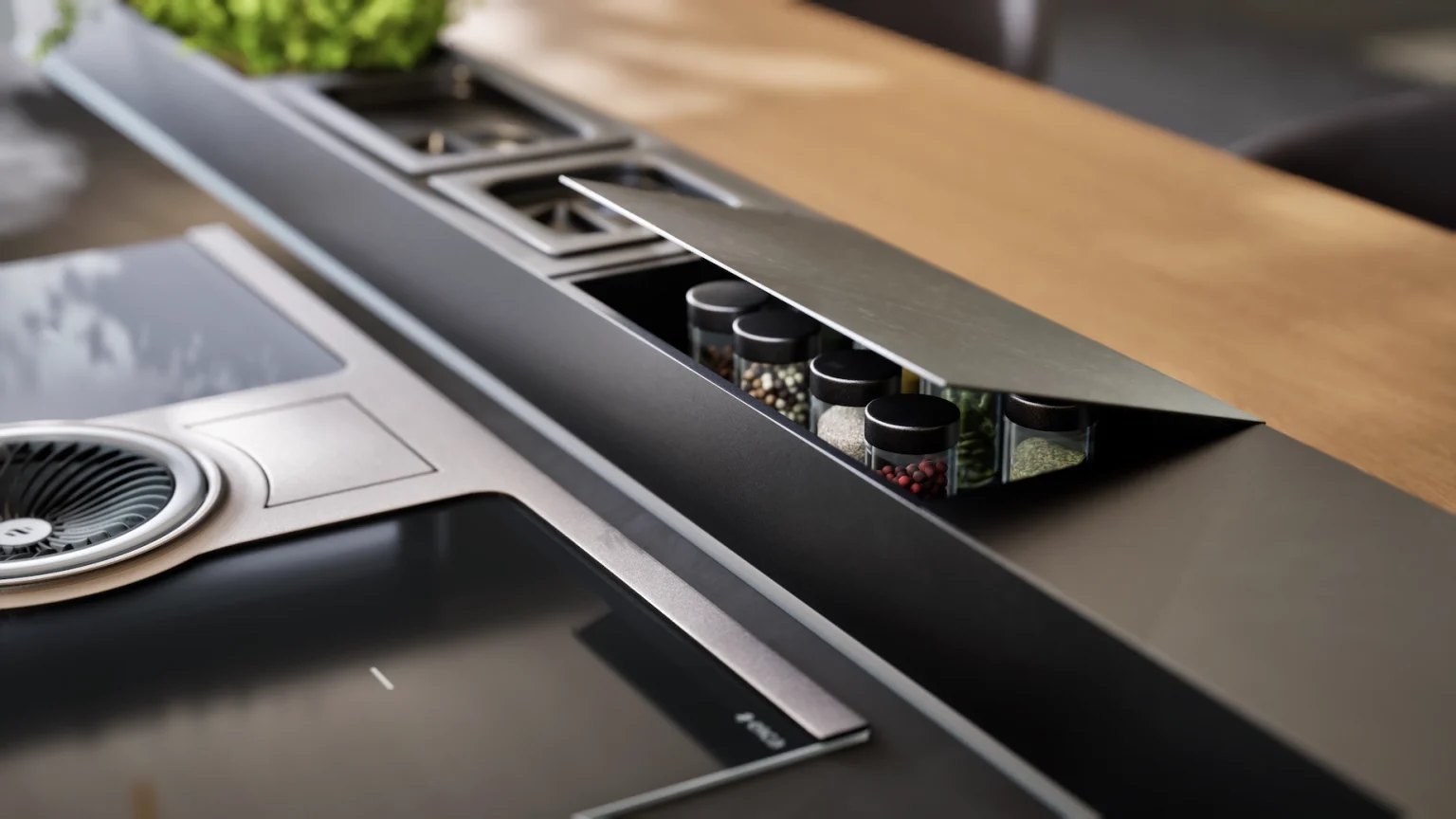
The quality advantage is equally significant. Conceptual architectural rendering produced in a real-time environment at the HUUR Studios standard communicates with a photorealistic precision and atmospheric richness that early-stage rendering has historically been unable to achieve — because the computational power previously required to produce this quality of image could not operate in real time. Game engine technology has dissolved that constraint, and a concept design agency that has mastered it operates at a level of quality and speed that redefines client expectations for the concept phase.
Iteration Without Penalty
The defining commercial advantage of real-time concept environments is iteration without penalty — the ability to explore design alternatives freely without the cost and time implications that made iteration expensive under traditional rendering workflows. A concept design agency that removes the penalty from iteration removes the creative constraint that most damages concept design quality: the tendency to commit to a direction prematurely because exploring alternatives costs too much.
HUUR Studios’ real-time concept environments are built from the ground up to support unlimited iteration — with modular spatial components, interchangeable material libraries, and parametric lighting systems that allow design teams to reconfigure concept environments rapidly during collaborative sessions. The result is a concept process where the best idea wins — not the idea that was committed to before the budget for iteration ran out.
For architects and developers across Vancouver and British Columbia, this iteration freedom consistently produces concepts of higher design quality than traditional processes allow — because the design team and client have genuinely explored the alternatives rather than defaulted to the first direction that seemed acceptable.
Using Immersive Visualization to Communicate Design Intent
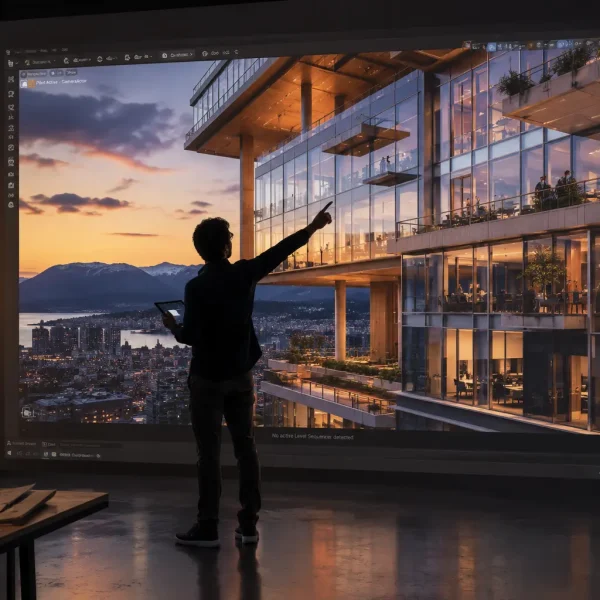
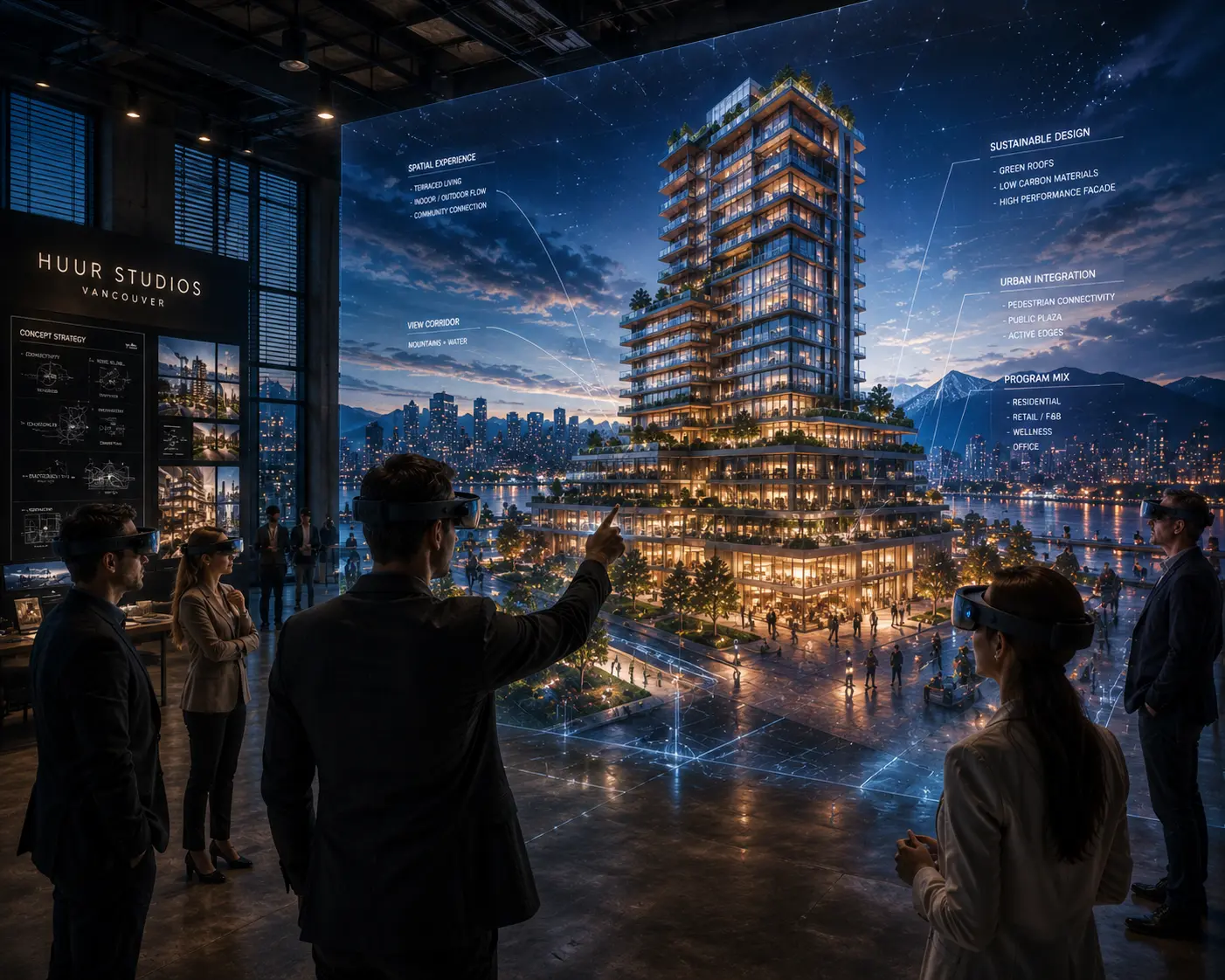
Immersive concept presentation — the delivery of architectural concepts through photorealistic, navigable real-time environments rather than static images and drawings — is the most powerful communication tool available to a concept design agency in 2026. The gap between what a designer intends and what a client understands from conventional presentation materials is the primary source of misalignment, revision, and disappointment in architectural practice. Immersive visualization closes this gap by replacing interpretation with experience.
Conceptual design storytelling — the narrative architecture of how a design concept is experienced and understood — is a discipline HUUR Studios applies to every concept visualization project. A concept environment is not simply a navigable model. It is a curated experience with a beginning, a middle, and an end — a sequence of spatial moments, atmospheric revelations, and design ideas encountered in an order that builds understanding progressively and creates the emotional conviction that drives stakeholder commitment.
Explore More From HUUR
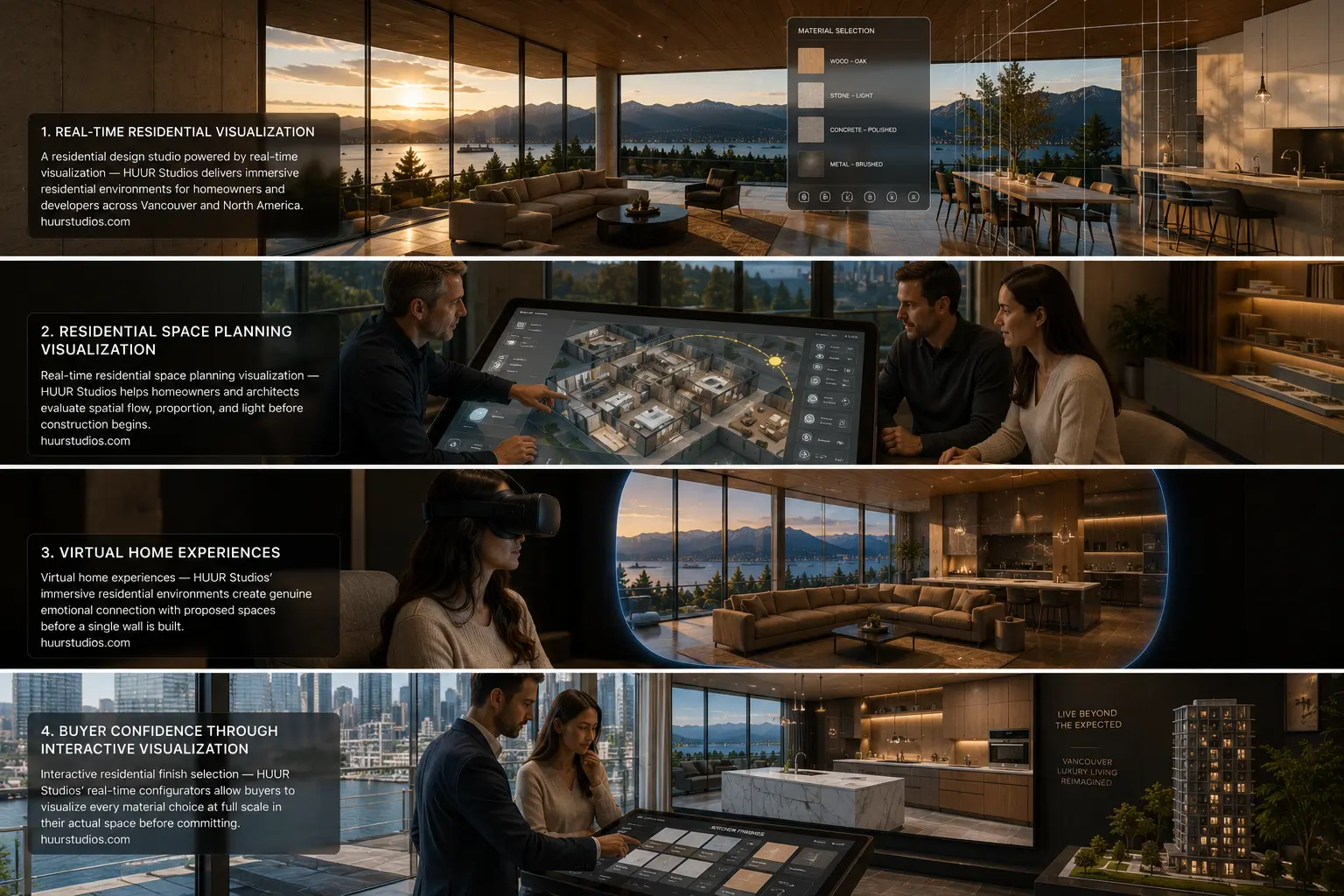
Residential Design Studio Explained: How Real-Time Visualization Helps Homeowners and Developers in New Construction
Narrative Architecture in Concept Presentation
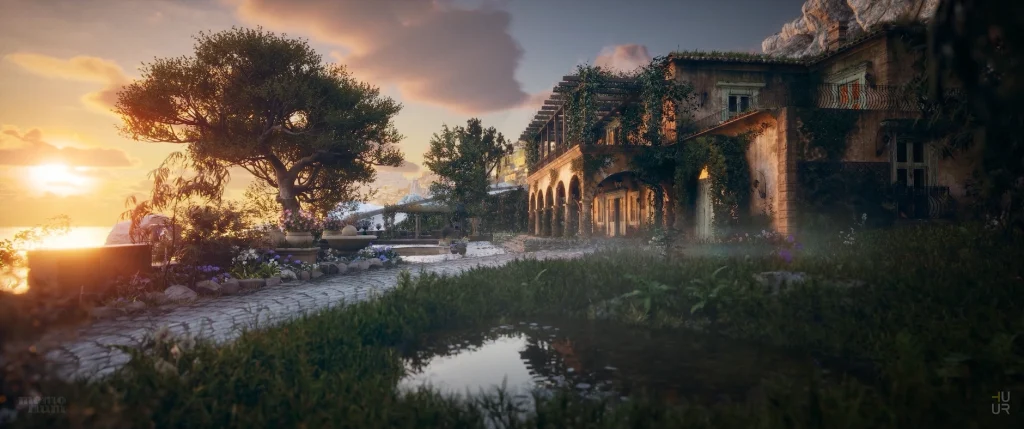
The narrative dimension of a concept design agency presentation distinguishes immersive concept visualization from mere 3D model navigation. HUUR Studios choreographs every concept environment as a spatial story — establishing the project’s identity through a carefully designed arrival sequence, building spatial understanding through a progression of key views and experiential moments, and delivering the design’s most compelling qualities at the moments of highest emotional receptivity.
For Vancouver luxury residential projects where the emotional resonance of a concept — its atmosphere, its relationship to landscape, its sense of domesticity and aspiration — is as commercially significant as its spatial logic, this narrative approach produces concept presentations of extraordinary persuasive power. Investors who experience a HUUR Studios immersive concept presentation are not evaluating a design proposal. They are experiencing a future reality — and the conviction that experience creates is qualitatively different from anything a conventional concept presentation achieves.
Conceptual design storytelling also serves a practical communication function in complex multi-stakeholder projects. When a concept must be understood and supported by audiences with different levels of architectural literacy — from design professionals to community members to municipal planning committees — a narrative concept environment communicates the design’s essential qualities accessibly and compellingly to all of them simultaneously. The concept design agency that masters this communication discipline delivers not just better presentations but better project outcomes — because stakeholders who truly understand a concept support it more consistently through the design and approval process that follows.
Web-Based Concept Delivery for Global Audiences
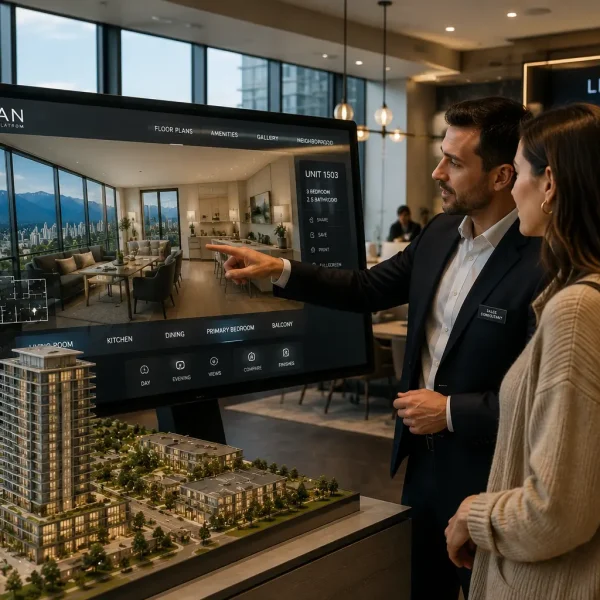
A concept design agency serving North American clients in 2026 must deliver concept visualization experiences that reach audiences wherever they are — not just in a Vancouver design studio or sales suite, but in investment offices in Toronto, planning departments in Victoria, and client homes anywhere in the world. HUUR Studios builds every concept environment with web-based delivery as a standard capability — ensuring that the full immersive quality of the concept experience is accessible through any standard browser, on any device, without specialized hardware or software installation.
This web accessibility transforms the commercial reach of immersive concept visualization. A concept design agency that previously delivered concept presentations only in controlled in-person settings can now share a fully immersive, navigable concept environment with international investors, remote stakeholders, and geographically distributed design teams — all experiencing the same photorealistic spatial quality simultaneously, from anywhere in the world.
Why Strong Concept Design Creates Better Long-Term Architectural Outcomes
The concept design agency that invests in genuine immersive visualization capability at the concept stage creates a ripple effect of quality and efficiency that extends through every subsequent phase of a project’s lifecycle. Strong concept design — grounded in real spatial testing, genuine client understanding, and immersive stakeholder alignment — produces better buildings, more satisfied clients, and more profitable projects than concepts that were approved without being truly understood.
The relationship between concept quality and long-term project outcomes is direct and measurable. Projects with well-developed, clearly communicated concepts arrive at design development with fewer unresolved spatial questions. They navigate the approval process with greater stakeholder confidence. They move through construction documentation with less rework. And they deliver finished buildings that match — or exceed — the expectations of everyone who invested in them.
Spatial Concept Development as Risk Management
Spatial concept development through immersive real-time visualization is one of the most effective forms of project risk management available to North American architects and developers. The risks that concept visualization addresses — misaligned stakeholder expectations, unresolved spatial logic, premature design commitment, and inadequate early-stage communication — are the same risks that generate the most costly and damaging outcomes in construction practice.
A concept design agency that systematically reduces these risks through real-time immersive visualization delivers value that extends far beyond the visualization product itself. HUUR Studios positions its concept visualization capability explicitly as a risk management tool — quantifying the cost exposure that inadequate early-stage communication creates and demonstrating the return on investment that immersive concept visualization delivers against that exposure.
For Vancouver developers managing projects where financing costs, construction escalation, and market timing make project risk management a primary operational priority, this framing resonates directly. The concept design agency that speaks the language of risk and return — not just design quality — earns the trust of the development community at the highest levels of project decision-making.
Building Design Excellence From the First Idea
The most enduring argument for investing in a concept design agency with genuine immersive visualization capability is the simplest one: better concepts produce better buildings. Architecture that begins with a clearly articulated, spatially tested, and genuinely understood concept — one that every stakeholder has experienced rather than merely interpreted — retains its design integrity through the pressures of value engineering, regulatory negotiation, and construction reality that inevitably act on every project between concept and completion.
HUUR Studios has observed this outcome consistently across its Vancouver and North American project portfolio. The buildings that emerge from concept processes supported by immersive real-time visualization are more coherent, more atmospheric, and more aligned with their original design ambitions than those shaped by traditional concept workflows. The spatial decisions made in the clarity of a real-time concept environment survive the project lifecycle in a way that decisions made in the ambiguity of sketch presentations and early-stage renders rarely do.
The concept design agency that builds this quality into the foundation of a project from its first idea is not simply delivering a visualization service. It is shaping the entire trajectory of what that project becomes.
FAQ — Concept Design Agency Explained
1. What is concept design in architecture? Concept design is the foundational creative phase where core spatial, atmospheric, and experiential decisions are established. A concept design agency translates these early ideas into communicable form — using immersive real-time visualization to give clients, investors, and stakeholders genuine spatial understanding of a design before it advances to development.
2. Why is visualization important during concept development? Early-stage design visualization allows spatial issues to be identified and resolved at the lowest possible cost. A concept design agency using real-time environments gives design teams and clients direct spatial evidence for their decisions — replacing abstract interpretation with genuine experience and reducing the risk of costly misalignment later in the project.
3. Can real-time visualization improve early-stage design workflows? Yes — decisively. Real-time concept environments replace the render-review-revise cycle with instant iteration — allowing design teams to test spatial hypotheses, explore alternatives, and refine concepts at the speed of conversation. A concept design agency using this approach compresses concept phase timelines and improves design quality simultaneously.
4. How does immersive visualization help communicate design ideas? Immersive concept presentation replaces interpretation with experience — giving every stakeholder genuine spatial comprehension of a proposed design regardless of their architectural literacy. A concept design agency that delivers navigable, photorealistic concept environments communicates design intent with a clarity and persuasive power that no conventional presentation format achieves.

Conclusion
A concept design agency equipped with real-time immersive visualization capability is not simply a better way to present early-stage architectural ideas — it is a fundamentally more intelligent way to develop, test, and communicate the design decisions that determine every project’s long-term quality and commercial success. The concept phase is where architecture is made or lost — where spatial logic is established, client expectations are formed, and stakeholder alignment is either achieved or deferred to a later stage where misalignment costs exponentially more to resolve.
HUUR Studios delivers concept design agency services that combine architectural design intelligence, real-time visualization technology, and conceptual design storytelling into immersive concept experiences that transform how projects begin across Vancouver, British Columbia, and North America. From early-stage design visualization through immersive stakeholder presentations, every HUUR Studios concept project is built on one conviction: that the most valuable thing a concept design agency can give a project is genuine spatial clarity at the moment when clarity costs least and matters most.
If your next project deserves to begin with a concept that everyone truly understands, a concept design agency powered by real-time immersive visualization is where that clarity starts — and HUUR Studios is where it is built.