Unreal Engine architectural visualization is changing how architects, developers, and real estate teams present projects before they are built. Instead of relying only on static renderings or pre-rendered animations, professionals can now create real-time 3D visualization experiences that allow users to walk through spaces, test materials, and understand design intent more clearly.
“With Unreal Engine, you can create immersive designs that feel stunningly real, and explore them in lifelike detail before you ever break ground.(Unreal Engine)”
Originally developed for gaming, Unreal Engine has evolved into a powerful platform for immersive architectural visualization. It enables realistic lighting, dynamic materials, cinematic movement, and interactive environments that respond instantly to changes. This makes the design process faster, more collaborative, and more engaging for both technical teams and clients.
The technology is especially valuable in real estate marketing, where developers often need to sell projects before construction begins. Through Unreal Engine real estate visualization, buyers and investors can explore units, amenities, and public spaces in a more convincing way. In markets such as Canada, where pre-sale presentation quality can directly affect buyer confidence, these tools offer a major competitive advantage.
As architecture and property marketing continue moving toward interactive digital experiences, Unreal Engine architectural visualization is becoming a core technology in next-generation design communication.
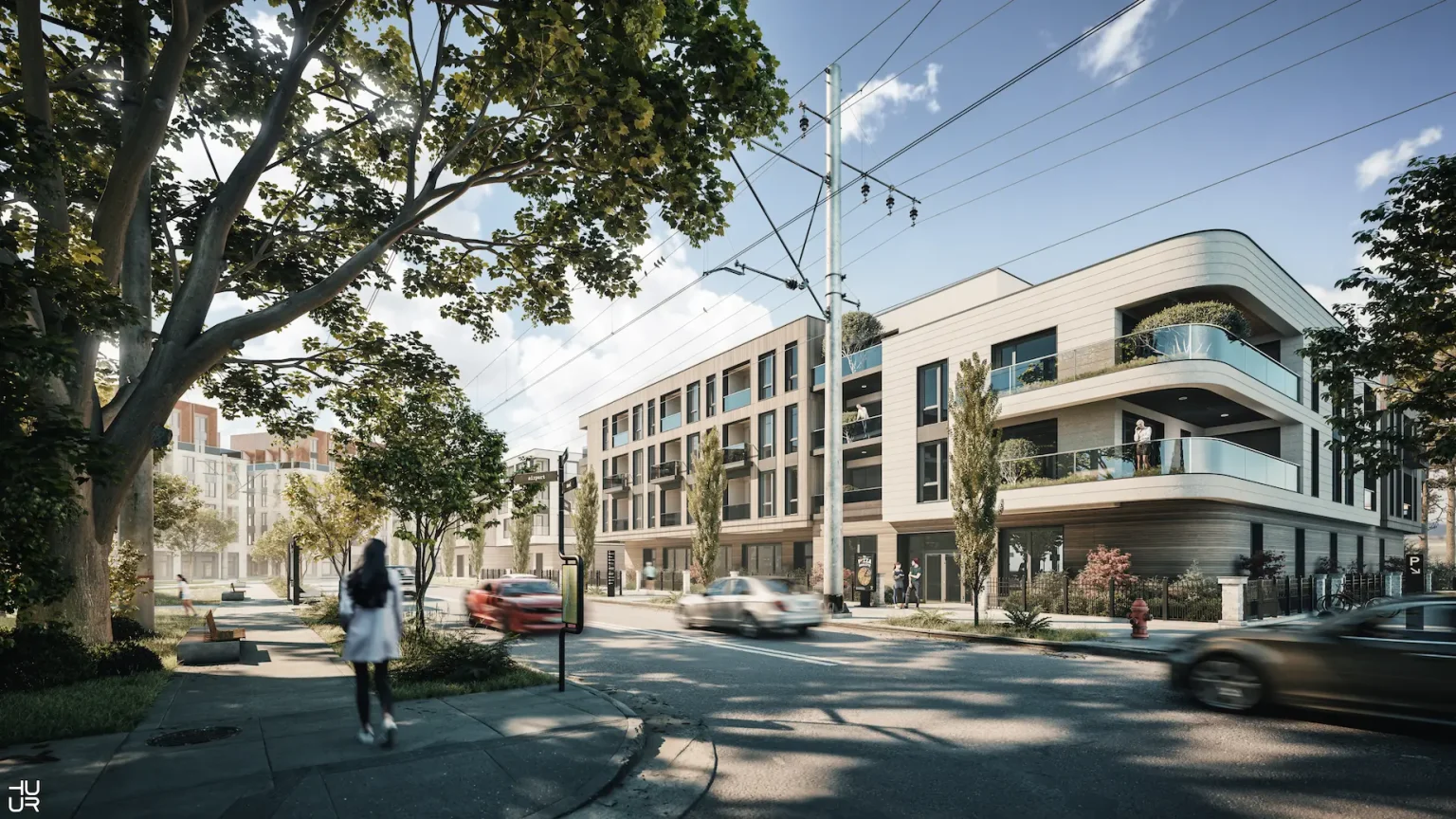
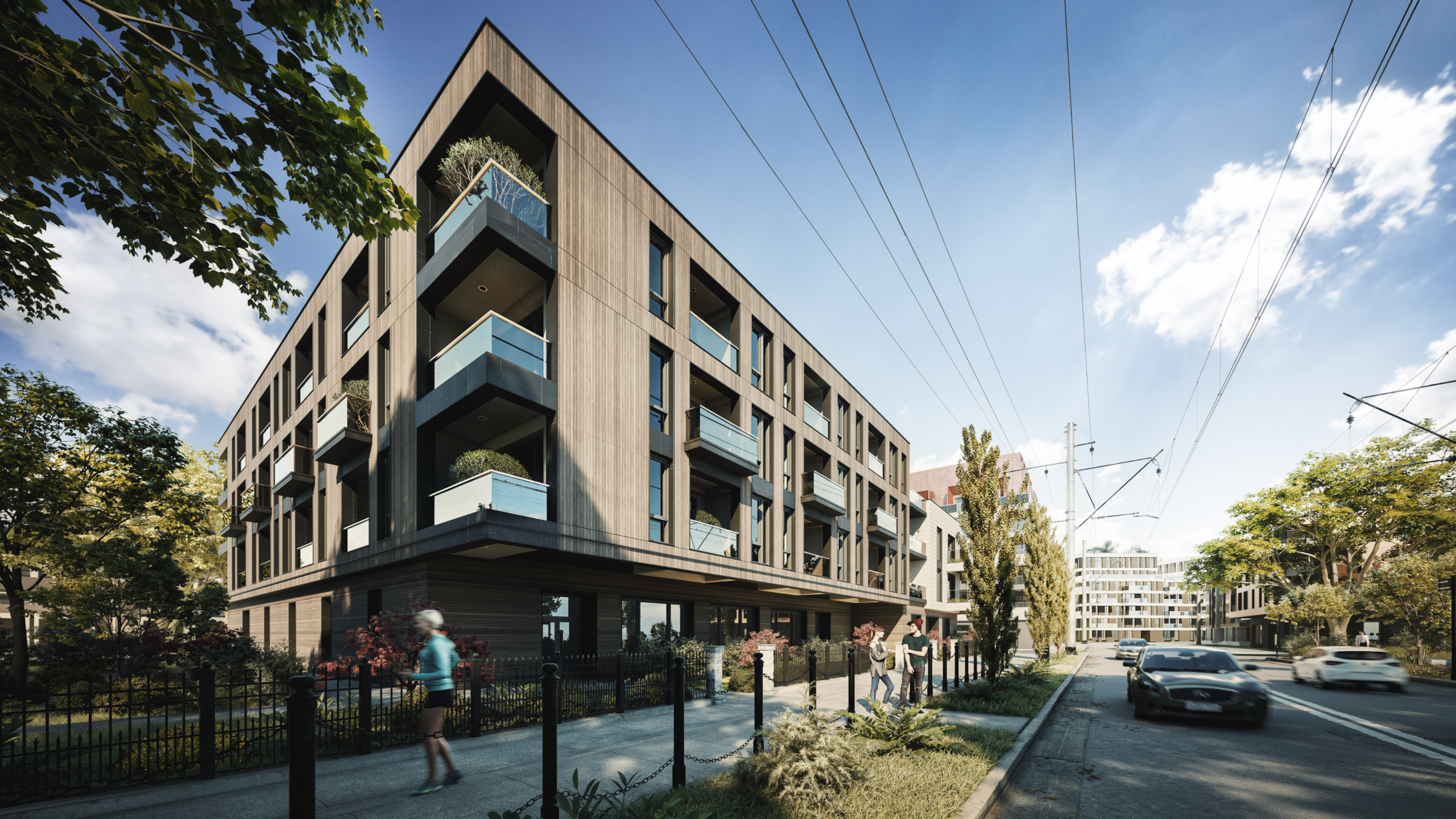
Unreal Engine architectural visualization showing a mixed-use urban development with interactive lighting, materials, and street-level activity. Image: HUUR Studios
What Is Unreal Engine and Why It Is Used in Architectural Visualization
The Origin of Unreal Engine and Its Evolution Beyond Gaming
Unreal Engine architectural visualization became possible when the Unreal Engine platform expanded beyond its original purpose as a video game engine. Developed by Epic Games, Unreal Engine was initially designed to create high-performance gaming environments with realistic graphics, advanced physics, and interactive worlds.
Over time, the engine evolved into a powerful real-time rendering platform used across multiple industries, including film production, automotive design, product visualization, and architecture. Its ability to generate highly realistic environments while maintaining real-time performance made it especially valuable for designers who needed both visual quality and interactive exploration.
In architectural workflows, Unreal Engine enables professionals to transform traditional 3D models into immersive architectural visualization environments. Buildings can be explored as digital spaces where lighting reacts dynamically, materials respond to environmental conditions, and users can move freely through interiors and landscapes.
This shift from static representation to real-time 3D visualization allows architecture to be communicated as a spatial experience rather than a collection of images.
Why Architects and Designers Are Adopting Unreal Engine
Architects and designers are increasingly adopting Unreal Engine because it allows them to present projects in ways that traditional rendering tools cannot easily achieve. Instead of producing isolated still images, teams can build entire environments where clients and stakeholders can explore spaces interactively.
This approach improves communication between architects, developers, and investors. Complex design ideas become easier to understand when users can walk through spaces, evaluate scale, and observe how materials and lighting behave in real time. By enabling immersive architectural visualization, Unreal Engine helps reduce misunderstandings during the design process.
Another advantage is the ability to combine cinematic architectural visualization with interactive exploration. Designers can produce high-quality animated sequences for marketing while also allowing users to navigate the same environment in real time.
This flexibility makes Unreal Engine particularly valuable for design presentations, investor meetings, and real estate marketing campaigns.
In cities such as Vancouver, Toronto, and other growing Canadian urban markets, developers increasingly rely on immersive visualization technologies to support competitive pre-sale marketing strategies.
How Unreal Engine Enables Immersive Architectural Visualization
Unreal Engine supports immersive architectural visualization through several advanced technologies working together within a real-time environment.
First, the engine provides physically accurate lighting systems. Global illumination, reflections, and shadow behavior simulate real-world conditions, allowing spaces to appear natural and believable.
Second, Unreal Engine efficiently processes complex geometry. Architectural models created in CAD or BIM software can be imported and optimized for real-time rendering in Unreal Engine, allowing detailed environments to remain interactive without sacrificing performance.
Third, the platform integrates seamlessly with VR architectural visualization technologies. Using virtual reality headsets, users can step directly inside a digital building and experience its scale, materials, and lighting as if they were physically present.
For architecture studios and real estate developers—especially in competitive markets such as Canada and North America—this level of interactive visualization creates stronger engagement with investors, buyers, and stakeholders.
How Real-Time Rendering Works in Unreal Engine
Understanding Real-Time Rendering in Unreal Engine
Real-time rendering in Unreal Engine is the technological foundation that enables interactive architectural environments. Unlike traditional rendering systems that calculate images over long processing times, real-time engines generate high-quality visuals instantly as users move through a scene.
In Unreal Engine architectural visualization, the software continuously calculates lighting, shadows, reflections, and textures while the viewer navigates the environment. As a result, designers and clients can explore spaces dynamically, just as they would in a video game or interactive simulation.
This capability allows architecture to be experienced rather than simply viewed. Instead of waiting for new renderings after each design adjustment, architects can modify materials, lighting conditions, or layouts while the scene updates immediately. This workflow dramatically improves communication between design teams and project stakeholders.
Lighting, Materials, and Geometry in Real-Time Visualization
One of the reasons immersive architectural visualization in Unreal Engine feels so realistic is the way the engine processes lighting, materials, and geometry simultaneously.
Unreal Engine uses advanced lighting systems such as global illumination and physically based rendering to simulate how light interacts with surfaces. Materials respond naturally to light sources, reflections behave accurately, and shadows change dynamically as the environment updates.
Architectural models imported from CAD or BIM software retain their geometric detail while being optimized for real-time 3D visualization performance. This allows complex environments—such as residential towers, mixed-use developments, or urban districts—to remain interactive without sacrificing visual quality.
Designers can also adjust environmental factors like time of day, sunlight direction, or interior lighting scenarios in real time. This ability helps architects evaluate how design decisions influence the atmosphere and functionality of a space.
Advantages of Real-Time 3D Visualization for Design Teams
The use of real-time 3D visualization provides significant advantages for architectural workflows and project communication.
First, real-time environments allow design teams to iterate quickly. Instead of waiting hours for traditional renders, architects can test multiple material combinations, lighting scenarios, and spatial layouts during a single design review.
Second, real-time environments improve collaboration. Architects, developers, investors, and marketing teams can explore the same digital environment together, making it easier to understand design intent and provide immediate feedback.
Third, Unreal Engine real estate visualization enhances marketing presentations. Developers can demonstrate entire projects interactively, allowing buyers to explore units, amenities, and surrounding environments before construction begins.
Because of these advantages, Unreal Engine architectural visualization is increasingly becoming a core technology in modern architecture studios, real estate development firms, and digital design agencies worldwide.
Why Unreal Engine Is Replacing Traditional Rendering Pipelines
Limitations of Traditional Rendering Engines
For many years, architectural visualization relied on traditional rendering engines such as V-Ray, Corona Renderer, and 3ds Max. These tools can produce extremely realistic still images, but they operate through a process known as offline rendering, which requires significant processing time to generate final visuals.
In a traditional workflow, designers must export a scene and wait while the computer calculates lighting, reflections, and shadows before producing a final image. For complex scenes—especially those used in cinematic architectural visualization—this process can take hours or even days.
This delay becomes a major limitation during design development. When clients request changes such as new materials, lighting adjustments, or layout modifications, the entire rendering process often needs to be repeated. As a result, designers may spend large amounts of time waiting for images to render rather than actively developing the project.
In contrast, Unreal Engine architectural visualization replaces this slow workflow with real-time rendering, where design updates appear instantly.
Speed, Iteration, and Real-Time Decision Making
One of the primary reasons real-time rendering in Unreal Engine is transforming architectural workflows is the dramatic increase in speed. Because the engine generates visuals instantly, architects and developers can test design variations during live meetings rather than waiting for new renderings.
This ability significantly improves collaboration between design teams and clients. Stakeholders can explore spaces interactively while evaluating different lighting scenarios, material options, or spatial layouts. Changes can be made immediately, allowing teams to refine ideas quickly and reach decisions faster.
In architecture studios and development companies, this level of rapid iteration reduces production time while increasing creative flexibility. Designers can explore multiple concepts without the delays associated with traditional rendering pipelines.
For real estate projects, especially those involving investor presentations or pre-sale marketing, Unreal Engine real estate visualization enables developers to demonstrate buildings as fully interactive environments, creating stronger engagement with potential buyers.
Cinematic Architectural Visualization with Unreal Engine
Beyond interactive exploration, Unreal Engine also supports cinematic architectural visualization that rivals high-end film production. The engine includes advanced camera tools, animation systems, and visual effects that allow designers to produce architectural films directly within the same environment used for real-time walkthroughs.
This unified workflow eliminates the need to rebuild scenes in separate rendering software. Designers can create promotional videos, animated flythroughs, and marketing content using the same digital environment that supports interactive exploration.
For real estate developers and marketing teams, this capability is particularly valuable. From a single real-time 3D visualization environment, studios can generate cinematic marketing videos, interactive tours, and VR architectural visualization experiences.
As a result, Unreal Engine architectural visualization is not simply replacing traditional rendering tools—it is redefining how architectural projects are communicated, experienced, and marketed.
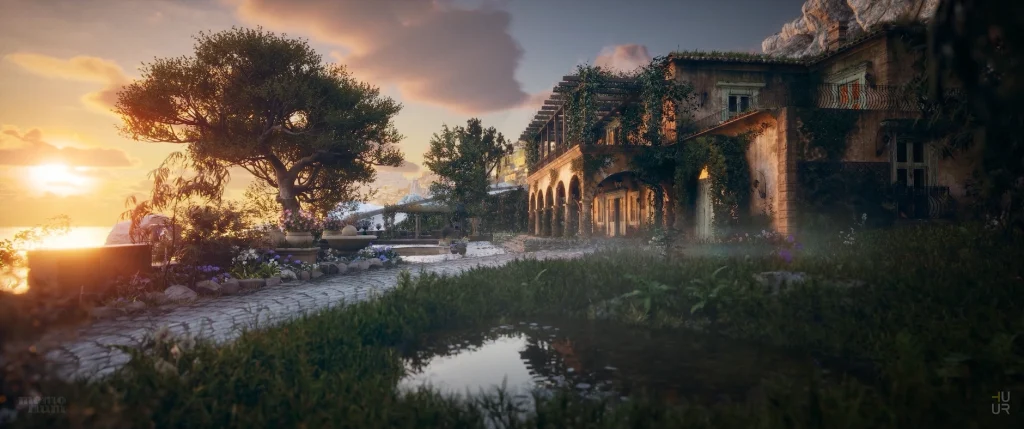
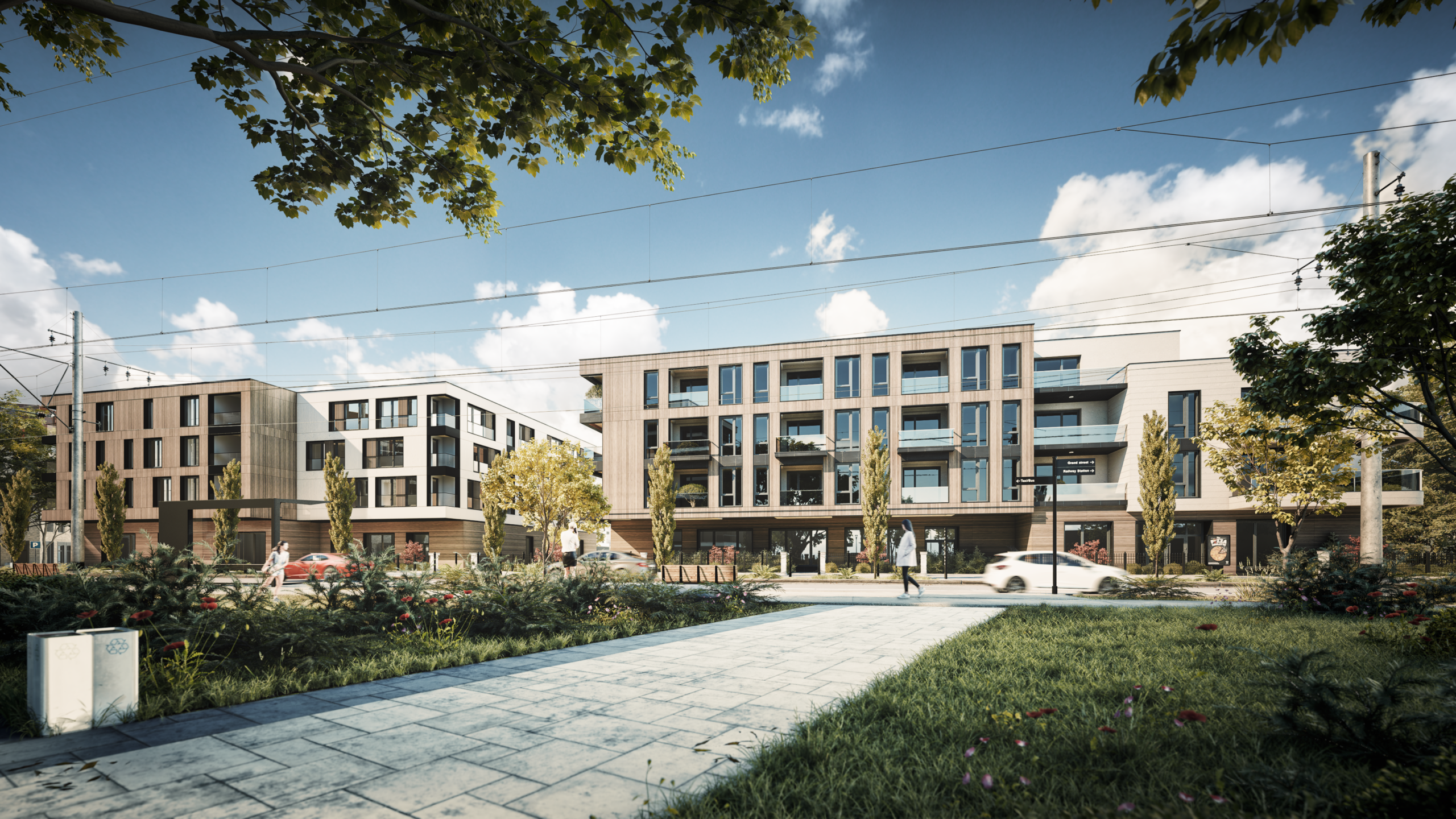
Real-time architectural visualization created with Unreal Engine, showing a contemporary mixed-use development integrated with green public space.
Key Use Cases in Architecture and Real Estate Visualization
Unreal Engine Real Estate Visualization for Pre-Sales
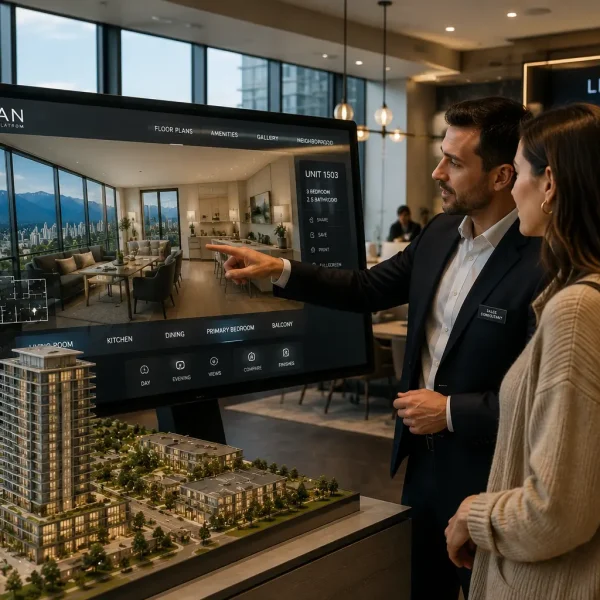
Unreal Engine real estate visualization has become one of the most powerful tools for presenting projects before construction begins. Developers often need to sell residential units, offices, or mixed-use buildings years before they are physically built. Traditional renderings provide visual impressions, but they rarely communicate the full spatial experience of a project.
With Unreal Engine architectural visualization, buyers and investors can explore projects through interactive environments. Instead of viewing static images, users can walk through digital apartments, examine views from balconies, and understand how different spaces connect within a building.
This level of interaction builds confidence in purchasing decisions. Potential buyers can better understand unit layouts, lighting conditions, and surrounding environments before committing to a property.
In competitive real estate markets such as **Canada—particularly cities like Vancouver and Toronto—**developers increasingly rely on immersive digital presentations to support pre-sale marketing campaigns and investor presentations.
VR Architectural Visualization and Interactive Walkthroughs
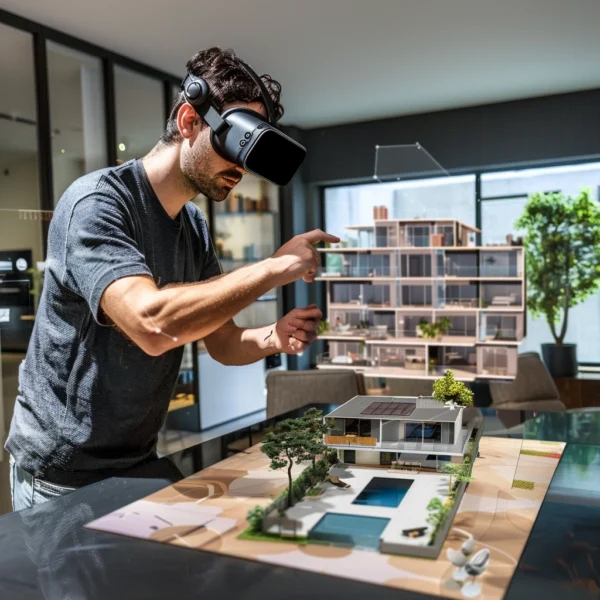
Another major application of immersive architectural visualization is the integration of VR architectural visualization technologies. Virtual reality allows users to step inside a digital building and experience spaces at full scale.
Through VR headsets, users can move naturally through interiors, observe materials closely, and understand spatial relationships more intuitively than with traditional drawings or static renderings.
This capability improves communication between architects and clients. Design proposals become easier to evaluate when stakeholders can physically experience a space rather than interpret it through plans or images.
Many architecture studios now combine real-time 3D visualization walkthroughs with VR experiences, allowing users to switch between desktop navigation and immersive headset environments depending on the presentation setting.
Real-Time 3D Visualization for Urban Planning and Development
Beyond individual buildings, real-time 3D visualization in Unreal Engine is increasingly used for large-scale urban planning and development projects.
Entire districts or neighborhoods can be recreated digitally, allowing planners to evaluate infrastructure, building relationships, and public spaces in a realistic environment. Urban designers can test building massing, sunlight exposure, pedestrian circulation, and transportation systems interactively.
This approach allows stakeholders—including municipalities, investors, and community members—to explore proposed developments before construction begins.
As cities adopt more advanced digital planning tools, Unreal Engine architectural visualization is becoming an important platform for presenting complex urban projects and evaluating how new developments integrate with existing environments.
HUUR’s Approach to Unreal Engine–Based Visualization
At HUUR Studios, Unreal Engine architectural visualization is used to transform architectural concepts into interactive digital environments that communicate design ideas clearly and effectively. Instead of relying only on static renderings, projects are developed as immersive architectural visualization experiences where users can move through spaces in real time.
These environments are designed to behave like real architecture. Lighting conditions respond dynamically, materials react naturally to environmental changes, and users can navigate through interiors and outdoor spaces as if they were physically present. Through real-time rendering in Unreal Engine, design presentations become more engaging and easier for clients, investors, and stakeholders to understand.
By combining architectural expertise with advanced visualization technology, HUUR Studios creates digital environments that support both design development and marketing communication.
Real-Time Collaboration for Architects, Developers, and Investors
One of the strongest advantages of real-time 3D visualization is the ability to support collaborative decision-making. During design presentations, architects, developers, and investors can explore a project simultaneously and evaluate different design options interactively.
Materials, lighting conditions, and spatial configurations can be adjusted during live sessions, allowing stakeholders to immediately see how changes affect the overall design. This approach significantly improves communication between design teams and project partners.
For development projects that require strong investor presentations or pre-sale marketing materials, Unreal Engine real estate visualization allows teams to demonstrate projects as fully navigable environments, creating a deeper level of engagement with potential buyers.
Using Unreal Engine for Real Estate Projects in Canada
The adoption of Unreal Engine architectural visualization is growing rapidly in real estate markets such as Canada, where developers often rely on pre-sale marketing strategies to finance construction projects.
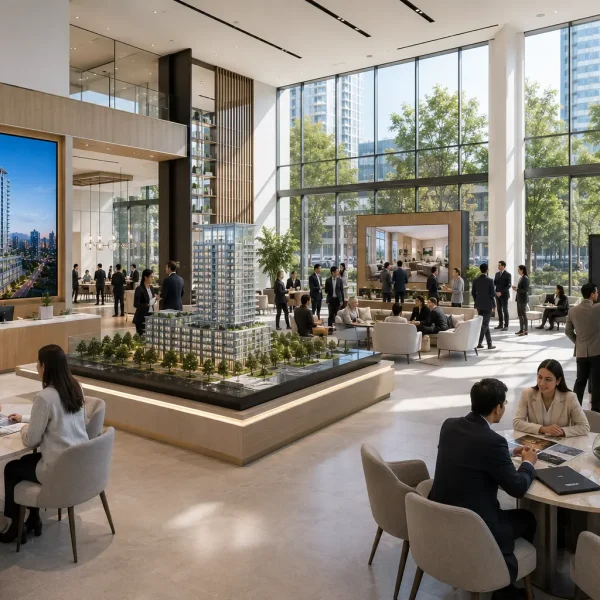
In cities like Vancouver and Toronto, developers increasingly present projects using cinematic architectural visualization, interactive walkthroughs, and VR architectural visualization experiences. These tools help potential buyers understand units, amenities, and building environments long before construction begins.
Studios such as HUUR combine real-time rendering in Unreal Engine, immersive walkthroughs, and cinematic storytelling to create complete digital marketing environments for architectural projects. This approach allows developers to present projects across multiple platforms—from sales centers and investor presentations to online marketing campaigns.
As real estate marketing continues shifting toward interactive experiences, Unreal Engine architectural visualization is becoming a foundational technology for communicating architectural projects effectively.
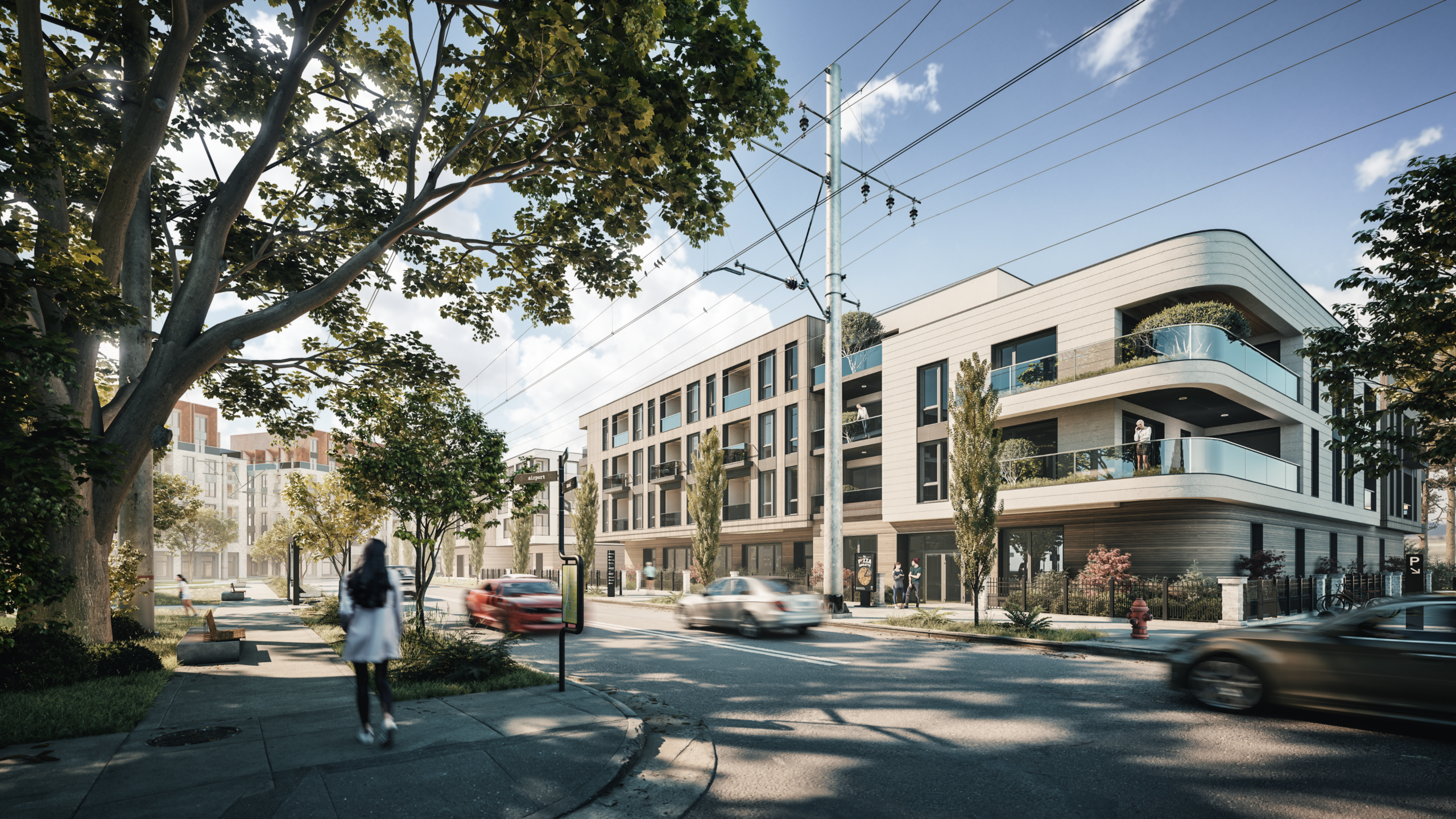
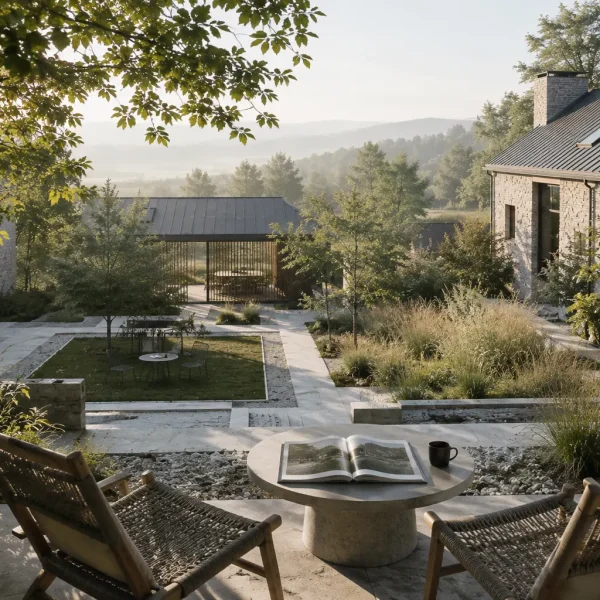
Unreal Engine architectural visualization created with Unreal Engine, illustrating a mixed-use urban development within a landscaped public space.
FAQ — Unreal Engine Architectural Visualization
What is Unreal Engine architectural visualization?
Unreal Engine architectural visualization is the process of creating interactive real-time 3D environments of buildings using the Unreal Engine platform. Instead of static images, users can explore spaces through walkthroughs, animations, or VR experiences that simulate real lighting, materials, and spatial conditions.Unreal Engine architectural visualization is the process of creating interactive 3D environments of buildings using the Unreal Engine platform, allowing users to explore architecture in real time through walkthroughs, animations, or VR experiences.
Why do architects use Unreal Engine instead of traditional renderers?
Architects use Unreal Engine because it supports real-time rendering in Unreal Engine, allowing instant updates to lighting, materials, and layouts. Unlike traditional rendering engines that require long processing times, Unreal Engine enables interactive design reviews and faster decision-making.
Is Unreal Engine suitable for real estate visualization?
Yes. Unreal Engine real estate visualization is widely used for pre-construction marketing. Developers can present interactive walkthroughs, cinematic videos, and immersive building experiences that help buyers understand spaces before construction begins.
Can Unreal Engine visualization be used for VR experiences?
Yes. Unreal Engine supports VR architectural visualization, allowing users to explore digital buildings through virtual reality headsets or real-time desktop walkthroughs. This makes it easier to understand spatial design, lighting conditions, and architectural details.
Is Unreal Engine architectural visualization used in Canada?
Yes. Many architecture studios and real estate developers in Canada, particularly in cities like Vancouver and Toronto, use Unreal Engine to present projects through interactive environments, real-time walkthroughs, and immersive marketing experiences.
Conclusion
Unreal Engine architectural visualization is redefining how architecture, urban development, and real estate projects are communicated before construction begins. By combining real-time rendering in Unreal Engine, immersive environments, and cinematic presentation tools, architects and developers can present projects with a level of clarity that traditional visualization methods cannot achieve.
The transition from static imagery to real-time 3D visualization allows stakeholders to explore buildings interactively, understand spatial relationships more clearly, and make design decisions faster. Whether through interactive walkthroughs, cinematic architectural visualization, or VR architectural visualization, Unreal Engine enables architecture to be experienced rather than simply viewed.
Across global markets—including Canada and North America—architecture firms and real estate developers are increasingly adopting immersive digital environments to support design communication, investor presentations, and pre-sale marketing strategies. As projects become more complex and buyers expect more engaging presentations, interactive visualization technologies are becoming essential.
For studios specializing in advanced visualization, platforms like Unreal Engine provide the ability to create environments where architecture can be explored long before construction begins. By integrating Unreal Engine real estate visualization, cinematic storytelling, and interactive digital experiences, professionals can transform complex architectural ideas into clear and engaging presentations.
As the architecture and real estate industries continue evolving toward interactive digital communication, Unreal Engine architectural visualization will remain one of the most important technologies shaping how we design, present, and experience the built environment.
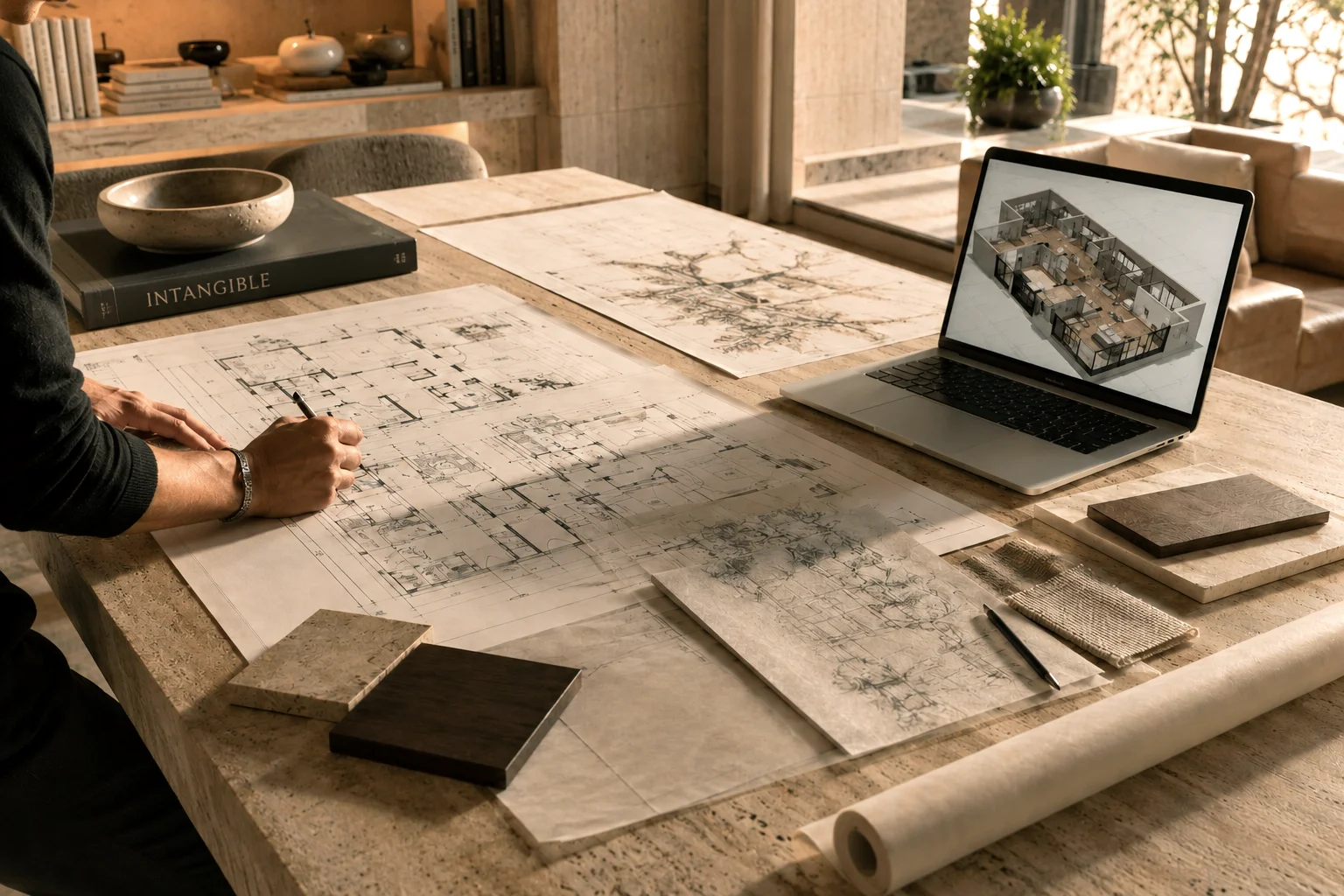
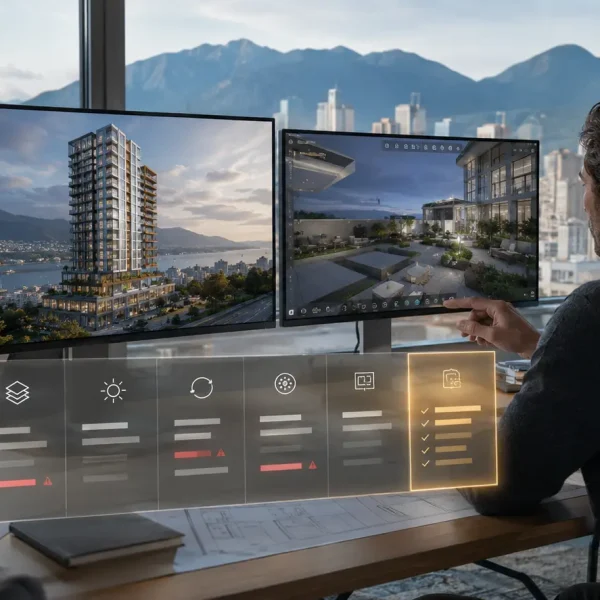
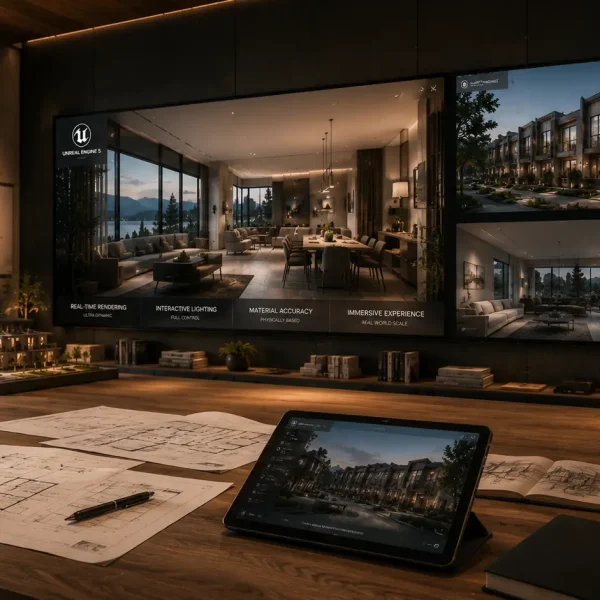
Unreal Engine architectural visualization — backstage screen recording of the software environment used to build real-time immersive architecture. Reference: HUUR Studios.