Introduction
A virtual production studio is where the boundaries between physical reality and digital imagination cease to exist — and where the most visually ambitious architectural, real estate, and entertainment projects in North America are being built right now. Virtual production has crossed from the exclusive domain of Hollywood blockbusters into a practical, commercially accessible discipline that is transforming how Canadian developers, architectural firms, and creative brands communicate their most ambitious visions. The technology that placed astronauts on alien planets in The Mandalorian is the same technology that HUUR Studios deploys to place buyers inside unbuilt Vancouver penthouses, investors inside unrealized commercial towers, and brands inside cinematic digital worlds that no physical location could provide.
The shift is being driven by a convergence of forces: real-time rendering engines powerful enough to produce photorealistic imagery at broadcast quality, LED volume technology that eliminates the gap between foreground and background, and immersive production workflows that collapse the traditional separation between pre-production, production, and post-production into a single continuous creative process. For architects, developers, and visualization studios, this convergence represents an opportunity that extends far beyond what traditional CGI or static rendering ever offered.
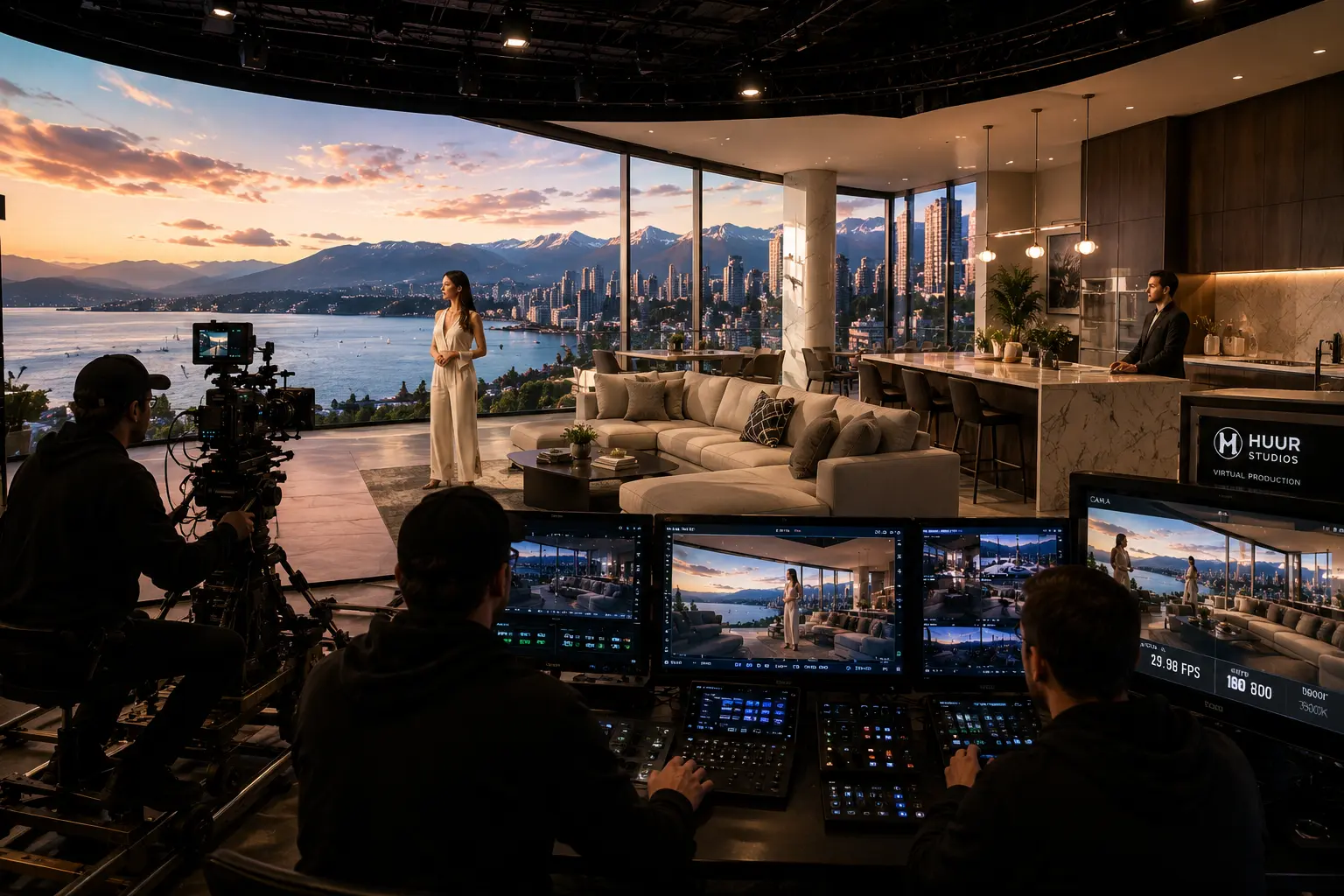
For Canadian businesses operating in Vancouver’s competitive design and development landscape, access to a professional virtual production studio is no longer a luxury reserved for global entertainment franchises. HUUR Studios has built a virtual production studio capability specifically calibrated for architectural visualization, real estate marketing, and immersive brand experiences — delivering the cinematic quality of a film production at the speed and flexibility that commercial projects demand.
What Is Virtual Production?
A virtual production studio is a production environment that combines physical filmmaking elements with real-time digital technology — creating a seamless fusion of live action and computer-generated imagery within a single, unified production space. Rather than shooting actors or subjects against a green screen and adding digital backgrounds in post-production, a virtual production studio surrounds the physical set with photorealistic digital environments that are visible, interactive, and fully rendered in real time during the shoot itself.
This distinction is fundamental. Green screen production separates the physical and digital elements — the actor performs in an empty stage, the background is added weeks later in post-production, and the creative decisions about lighting, perspective, and environmental detail happen in 2 disconnected phases. A virtual production studio eliminates this separation entirely. The director sees the final composite image through the camera lens in real time. The talent performs within a fully realized environment. Lighting decisions are made on set, against the actual digital background, with immediate visual feedback. The creative process becomes continuous, collaborative, and exponentially faster.
The Technology Stack of a Modern Virtual Production Studio
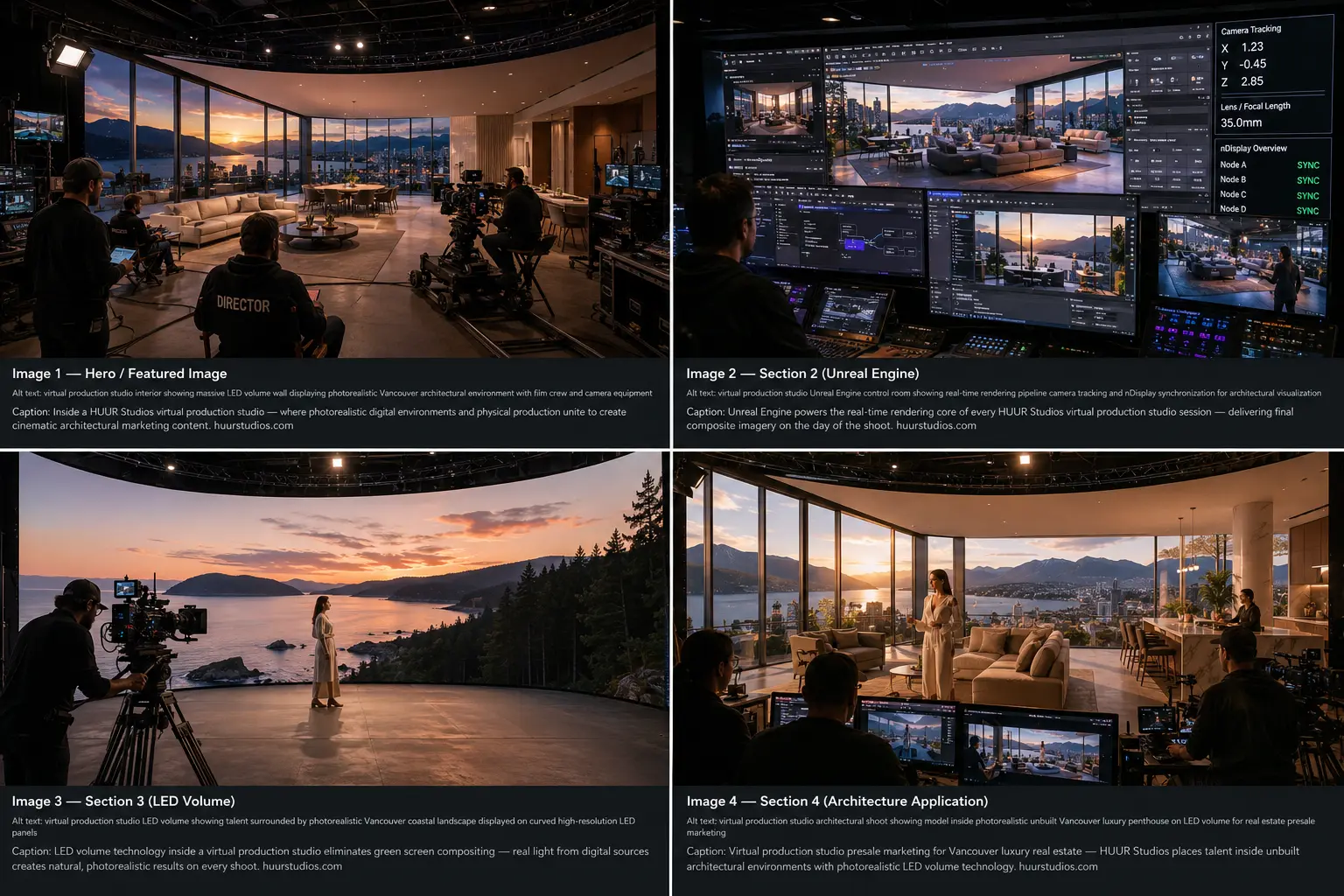
Every professional virtual production studio is built on a technology stack that combines real-time rendering, spatial tracking, and display systems into a unified production platform. At its core, the virtual production studio runs a real-time game engine — most commonly Unreal Engine — that renders photorealistic digital environments at the frame rates required for live production. This engine connects to camera tracking systems that update the digital perspective in real time as the physical camera moves — maintaining perfect perspective alignment between the physical set and the digital background regardless of camera angle, lens, or movement.
The display layer of a virtual production studio has evolved significantly over the past 5 years. Early virtual production implementations used rear-projection screens — functional but limited in brightness, resolution, and viewing angle. The current generation of virtual production studio infrastructure uses LED volume technology — massive curved arrays of high-resolution LED panels that surround the physical set with a continuous, high-brightness digital display. These panels produce light that interacts naturally with physical subjects, eliminating the artificial separation that green screen compositing always introduces.
For HUUR Studios, this technology stack enables a virtual production studio capability that serves architectural visualization, real estate marketing, and immersive brand production simultaneously — delivering final-quality imagery at a fraction of the time and cost that traditional multi-stage production workflows require.
How Unreal Engine Powers Modern Virtual Production Pipelines
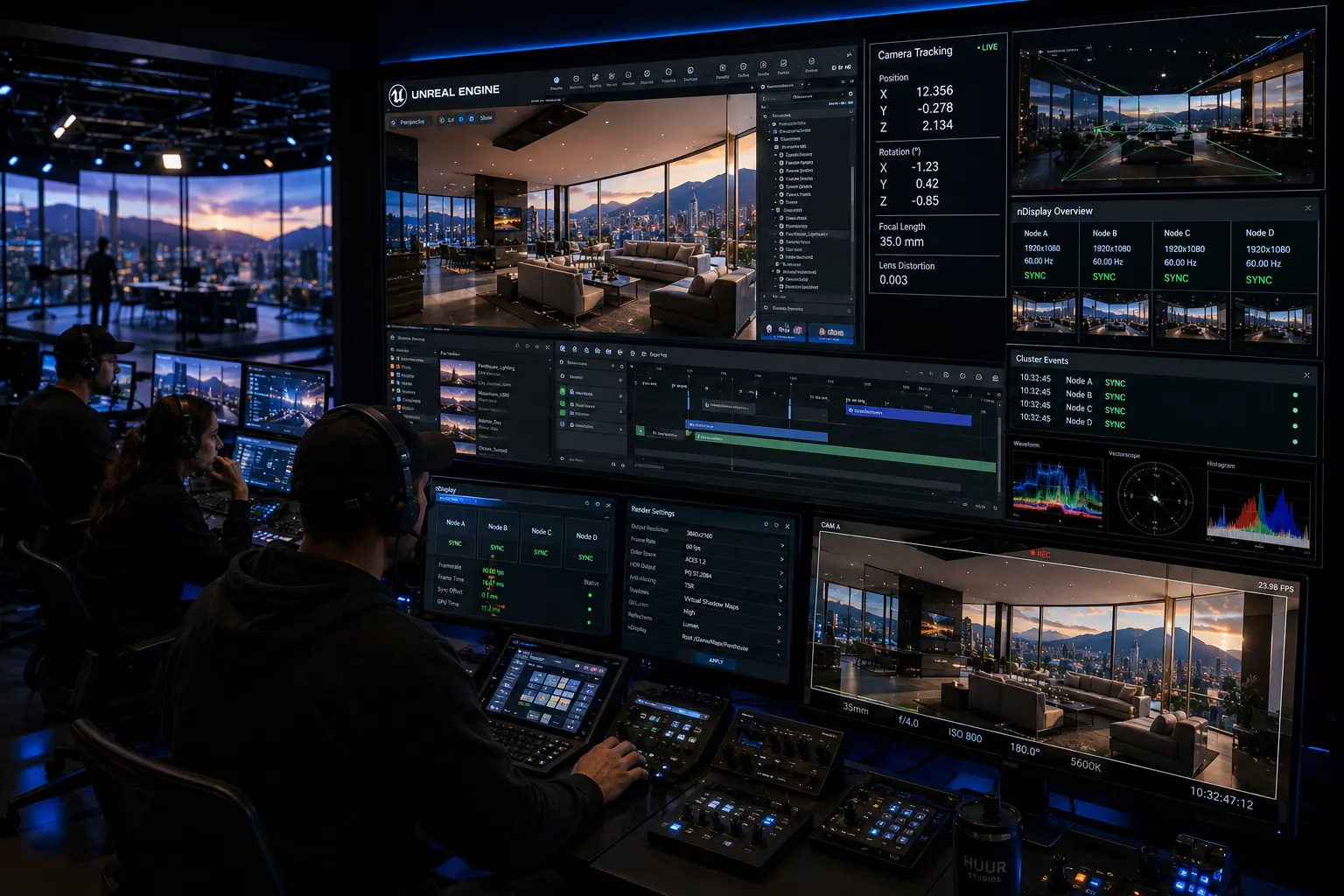
Unreal Engine is the engine at the heart of every serious virtual production studio operating in North America today — and for good reason. Epic Games’ real-time rendering platform was designed from the ground up to produce photorealistic imagery at interactive frame rates, and its capabilities align precisely with what a virtual production studio requires: instant visual feedback, dynamic lighting, physically accurate materials, and the computational performance to render complex environments without the render farm delays that traditional CGI pipelines demand.
The virtual production Unreal Engine workflow begins in pre-production. Environment artists build photorealistic digital sets within Unreal Engine — architectural spaces, exterior landscapes, abstract environments, or hyper-realistic recreations of real-world locations. These environments are lit with physically accurate lighting systems, textured with photorealistic materials, and optimized for real-time performance. By the time a virtual production studio shoot begins, the digital environment is complete, navigable, and fully interactive — ready to be used as a live backdrop rather than a post-production element.
Real-Time Virtual Production and the End of Post-Production Delay
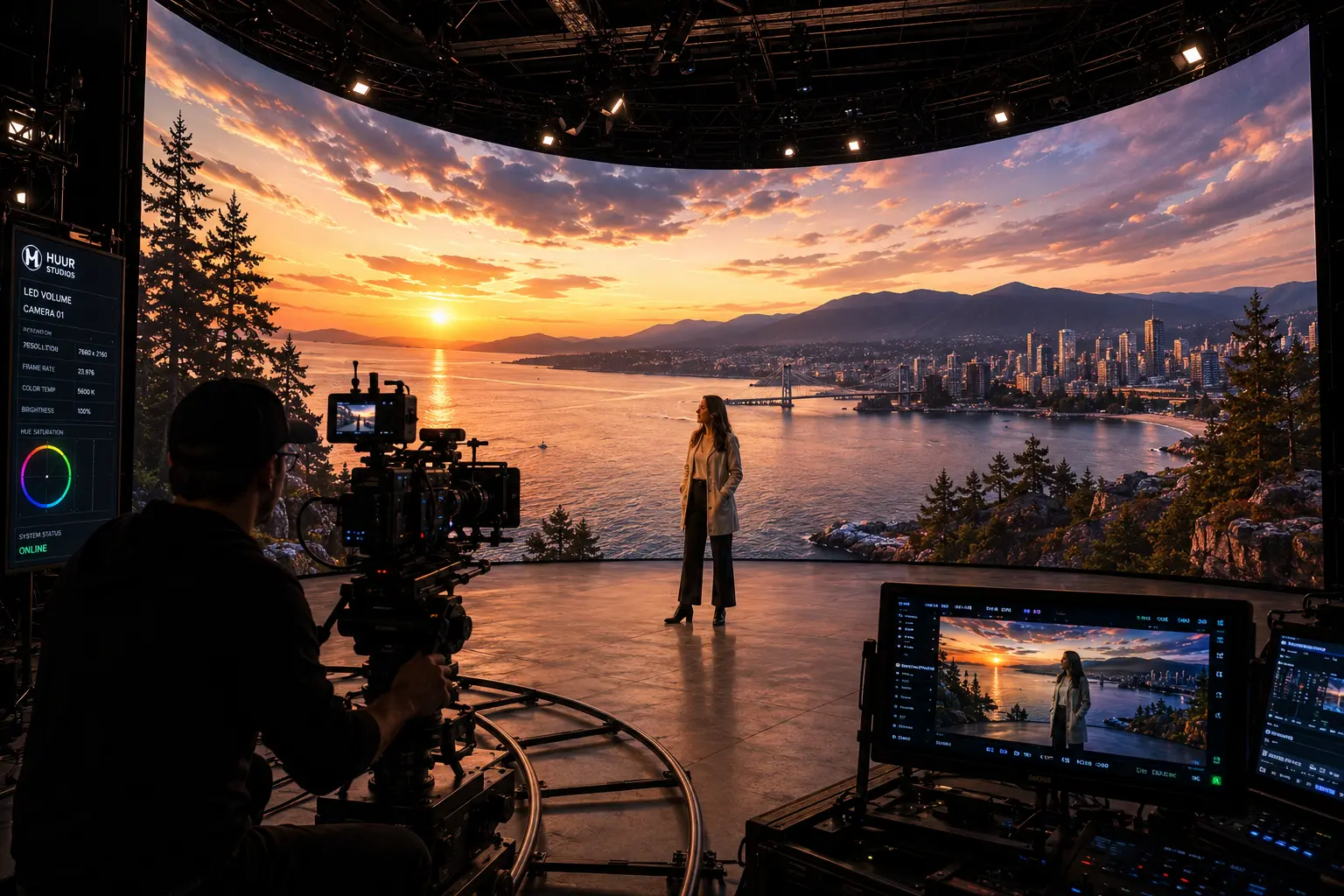
The most commercially significant advantage of real-time virtual production is the elimination of the post-production delay that has defined film and visualization production for decades. In a traditional CGI pipeline, a production shoots against green screen, then hands footage to a VFX team that spends weeks or months compositing digital backgrounds, matching lighting, and resolving the inevitable inconsistencies between physical and digital elements. A virtual production studio powered by Unreal Engine collapses this timeline to near zero.
At HUUR Studios, real-time virtual production workflows deliver final-quality composite imagery on the day of the shoot — not weeks later. For architectural visualization clients on tight presale timelines, for real estate developers who need marketing content before construction begins, and for brands that require cinematic production values at commercial turnaround speeds, this timeline advantage is transformative. A virtual production studio project that would take 12 weeks in a traditional CGI pipeline delivers in 3 to 4 weeks — without sacrificing a single frame of visual quality.
The Unreal Engine nDisplay system — the specific technology that drives multi-screen LED volume environments in a virtual production studio — synchronizes rendering across dozens or hundreds of individual LED panels simultaneously, ensuring that the digital background displays with perfect color, brightness, and perspective consistency across the entire curved volume. Camera tracking data feeds directly into Unreal Engine in real time, updating the rendered perspective 60 or more times per second to maintain perfect parallax alignment as the camera moves through the physical space.
Explore More From HUUR
Residential Design Studio Explained: How Real-Time Visualization Helps Homeowners and Developers in New Construction
Cinematic Real-Time Environments Built for Every Brief
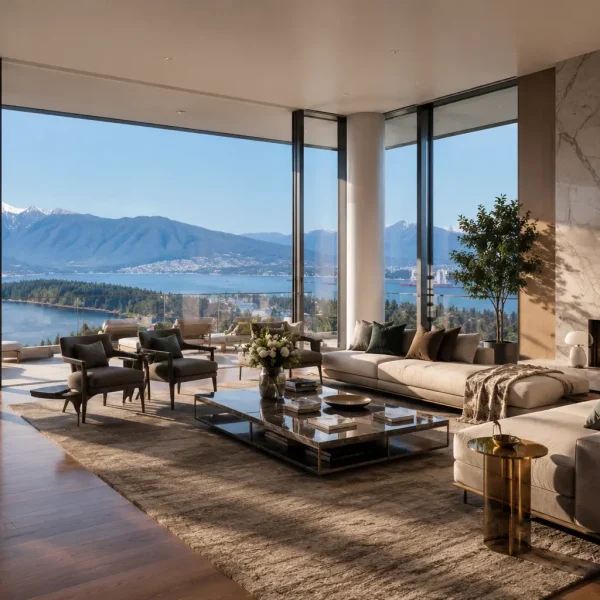
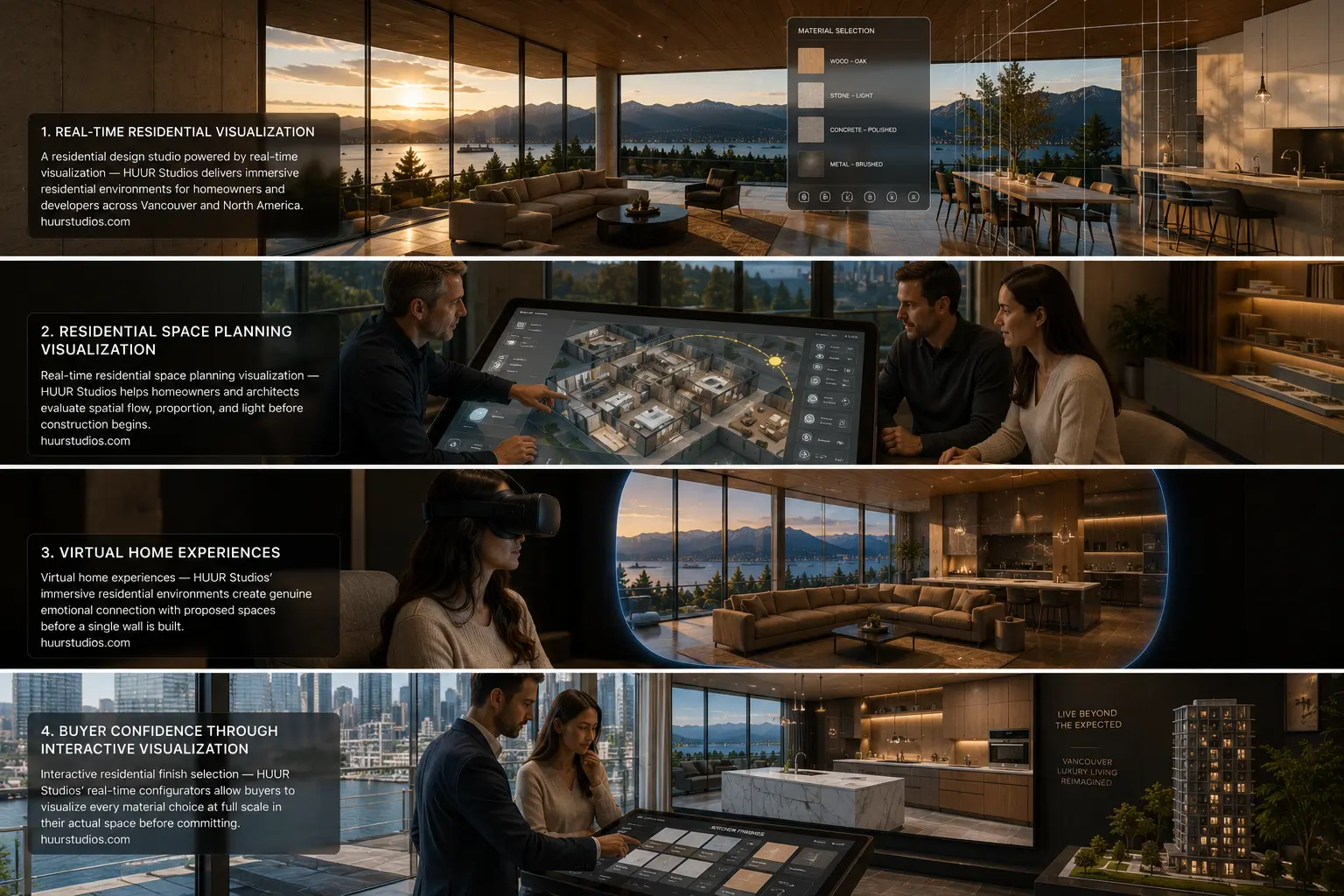
HUUR Studios’ virtual production studio capability extends beyond standard architectural environments into fully custom cinematic real-time environments — digital worlds built from scratch to serve the specific narrative and visual requirements of each project. A luxury residential developer who needs to position their project within an aspirational lifestyle context receives a custom environment — perhaps a dramatic coastal landscape, an alpine setting, or a carefully designed urban streetscape — built in Unreal Engine and delivered as a live virtual production studio backdrop.
This custom environment capability is where the virtual production studio model delivers value that no location shoot or post-production VFX pipeline can match. Physical locations are constrained by weather, access, permits, and the irreducible reality of what they actually look like. A cinematic real-time environment built in a virtual production studio is constrained only by creative vision — fully controllable, repeatable, and modifiable in real time during the shoot to explore every creative direction the project requires.
The Role of LED Volumes and Real-Time Environments in Production
The LED volume is the physical centrepiece of a modern virtual production studio — the large-format, high-resolution display infrastructure that transforms a real-time digital environment from a monitor image into an immersive physical space. Understanding how LED volumes work, and what they make possible, is essential to understanding why the virtual production studio model has disrupted traditional production so decisively.
An LED volume in a virtual production studio typically consists of a curved rear wall of LED panels, a ceiling section extending overhead, and in some configurations side panels that create a fully enclosed environment. The panels are driven by the real-time rendering engine at frame rates synchronized to the camera, displaying the digital environment at the brightness levels required to produce natural-looking light on physical subjects within the volume. The result is a physical space where real light from a digital source illuminates real people and objects — creating the natural interaction between subject and environment that compositing has always struggled to replicate convincingly.
How LED Volume Technology Eliminates Green Screen Limitations
The limitations of green screen production are well understood by anyone who has worked with it professionally. Reflective surfaces pick up green spill. Fine details — hair, fabric textures, transparent materials — composite poorly against digital backgrounds. The lighting on the physical subject must be matched to a background that does not yet exist, requiring experienced VFX supervision and inevitably producing inconsistencies that require time-consuming remediation in post.
A virtual production studio LED volume eliminates all of these limitations simultaneously. Because the digital background is physically present during the shoot — emitting real light onto real subjects in real time — there is no compositing step to introduce inconsistencies. Reflective surfaces accurately reflect the digital environment. Hair and transparent materials render perfectly because they are captured against a real background. The lighting director makes creative decisions in response to the actual visual result, not an approximation of what post-production will eventually produce.
For HUUR Studios clients producing architectural marketing content in Vancouver, this quality advantage translates directly into commercial impact. A virtual production studio campaign for a luxury residential development produces imagery of a visual quality and authenticity that distinguishes the project from every competitor still using green screen compositing or static CGI renders — a differentiator that is immediately perceptible to sophisticated buyers and investors in North America’s most discerning real estate markets.
Applications of Virtual Production in Architecture and Visualization
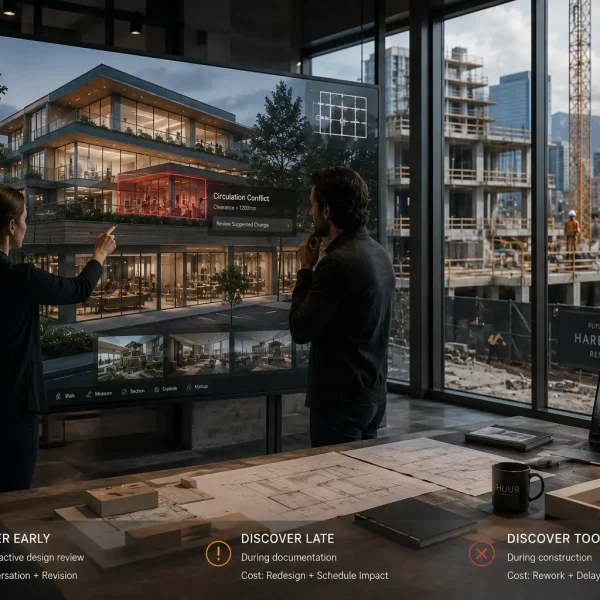
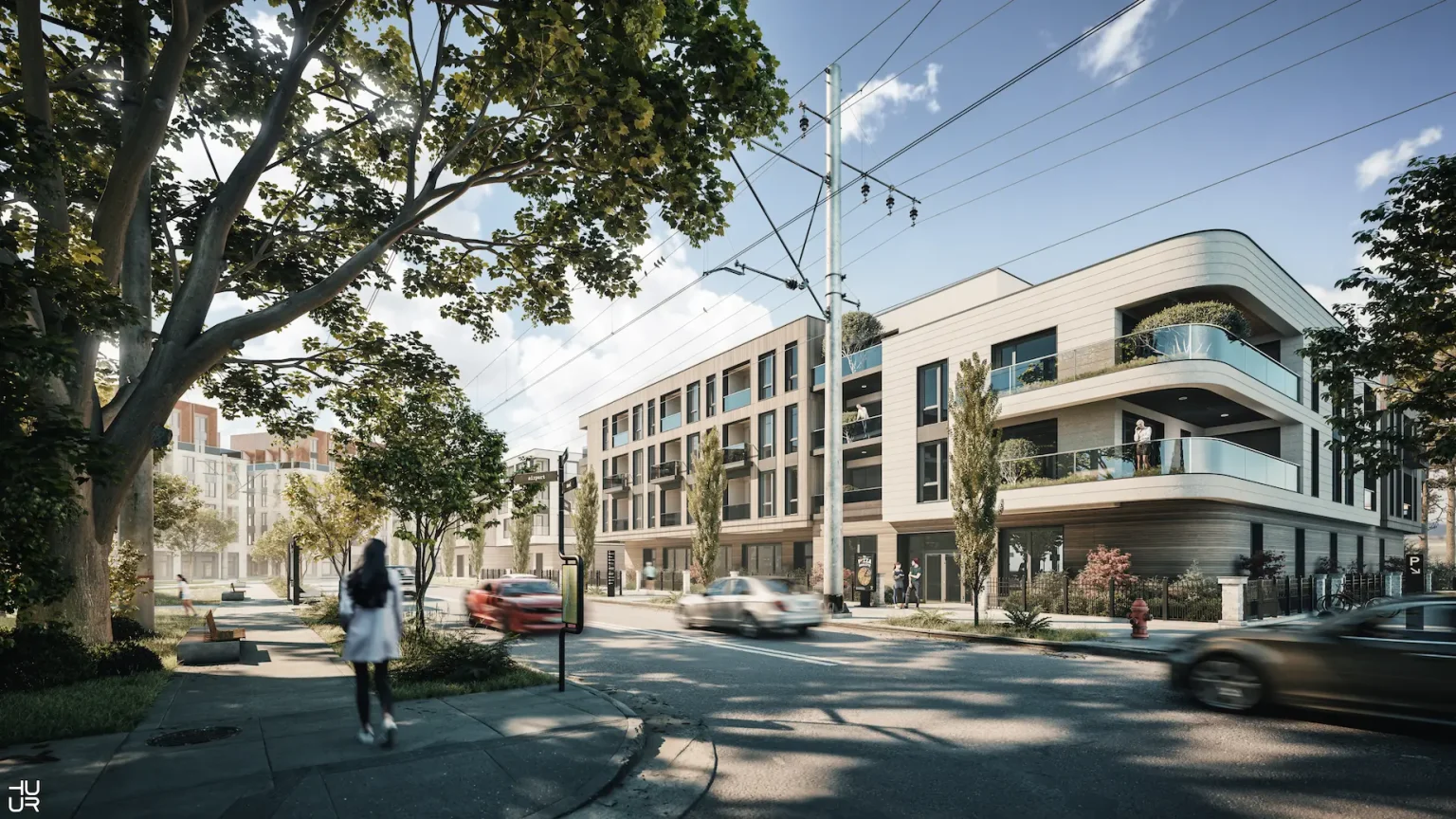
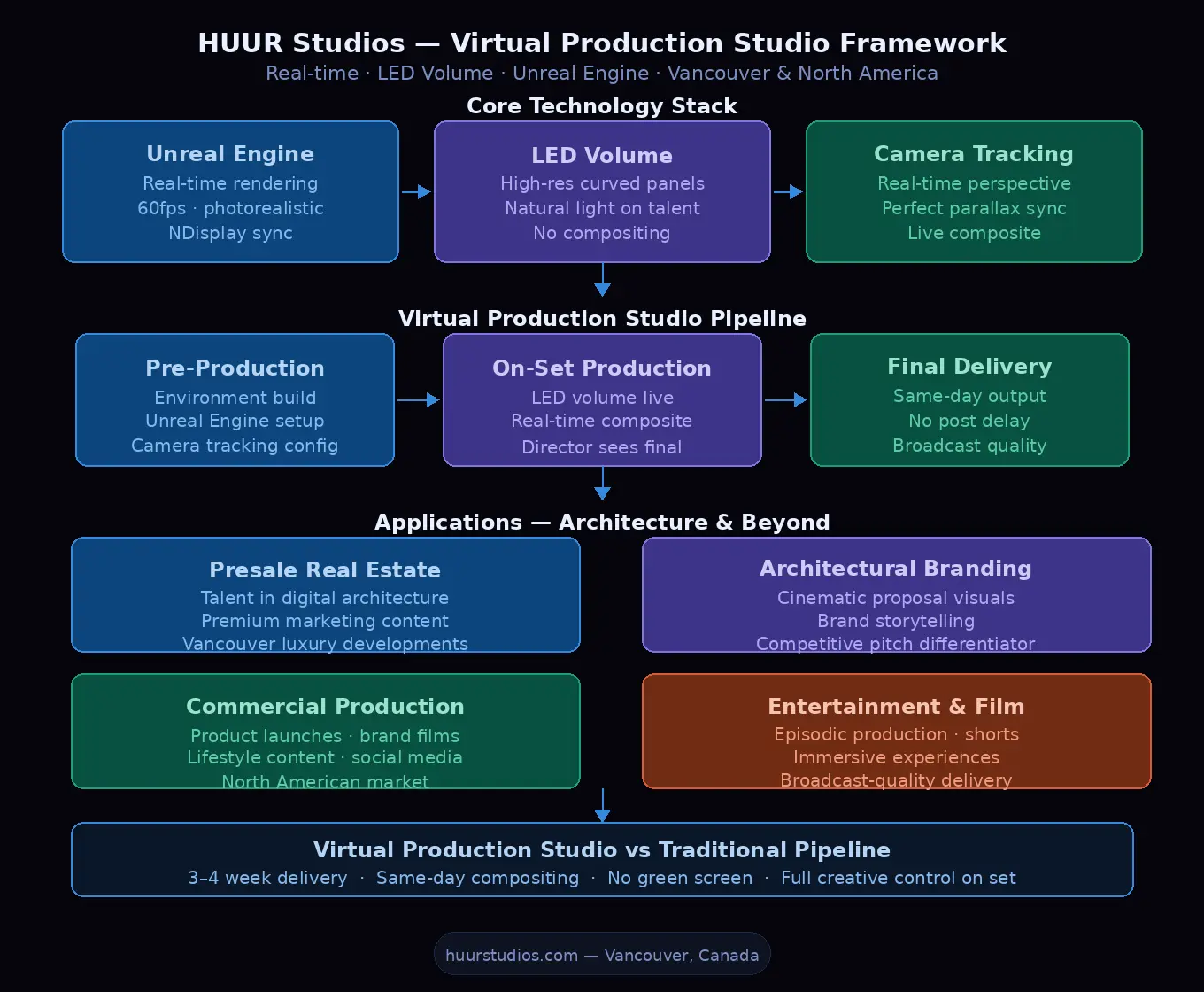
Virtual production for architecture represents one of the most commercially compelling applications of virtual production studio technology available to North American developers and visualization studios in 2026. The ability to place photorealistic architectural environments — interior spaces, building exteriors, site contexts, and lifestyle scenarios — into a live production workflow opens creative and commercial possibilities that neither traditional CGI nor location-based production can match.
A virtual production studio architecture shoot produces marketing content of a fundamentally different character than a CGI render or a virtual tour. Because real people — models, actors, or the developer’s own team — physically inhabit the digital architectural environment during the shoot, the resulting imagery has a naturalism and spatial authenticity that pure CGI cannot replicate. The way light from the LED volume falls on a person standing in a virtual penthouse, the way reflections from a digital ocean view appear in a glass surface, the way a model interacts with a space they can genuinely see around them — all of these elements contribute to marketing content that reads as real rather than rendered.
Virtual Production for Presale Real Estate Marketing
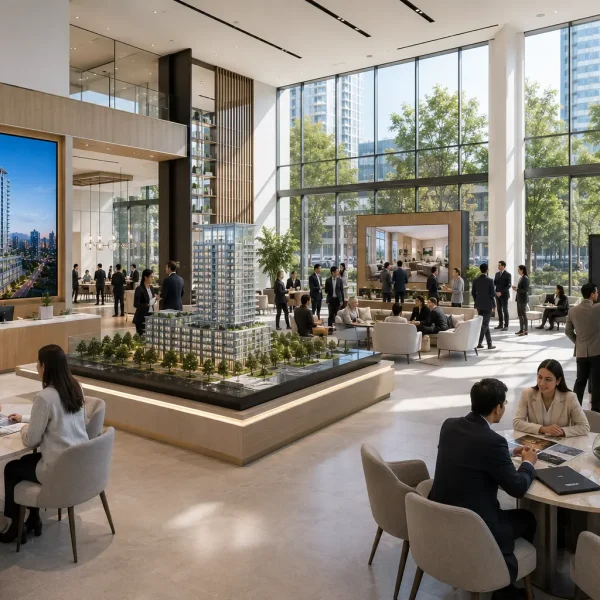
The presale real estate marketing application of virtual production studio technology is particularly powerful for high-value residential and commercial developments where the quality of the marketing content directly influences buyer perception of the project’s premium positioning. HUUR Studios delivers virtual production studio presale campaigns for Vancouver developers that combine photorealistic Unreal Engine architectural environments with live talent production — creating a suite of marketing assets including hero films, social content, print imagery, and interactive experiences from a single production session.
The efficiency of the virtual production studio model in this context is significant. A traditional presale marketing campaign for a luxury Vancouver development might require a CGI render package, a separate lifestyle photography shoot at a physical location, a video production at another location, and weeks of post-production to bring all elements into visual consistency. A virtual production studio session at HUUR Studios produces all of these content types simultaneously — in a single controlled environment, with consistent lighting and visual language across every asset — at a total timeline and cost that the multi-stage traditional approach cannot approach.
Immersive Production Workflows for Architectural Brands
Beyond presale marketing, immersive production workflows powered by virtual production studio technology serve architectural firms, interior design practices, and property brands that require consistent, high-quality visual content across multiple projects and communications channels. A virtual production studio relationship with HUUR Studios gives architectural clients a standing production infrastructure — a library of custom digital environments, an established real-time production workflow, and a team that understands their visual language — that transforms how they produce and deploy visual content across their entire business.
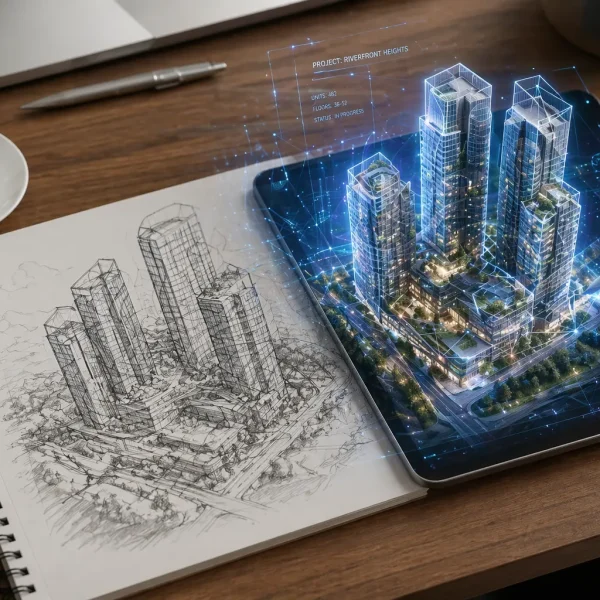
For Vancouver architectural firms competing for landmark commissions, the ability to present design concepts within a virtual production studio environment — as cinematic films, interactive experiences, or broadcast-quality imagery — represents a proposal capability that distinguishes them from competitors still relying on static renders and physical models. The virtual production studio becomes a competitive differentiator embedded in the practice’s design communication process.
Why Virtual Production Is Changing the Future of Digital Storytelling
The broader significance of the virtual production studio extends beyond any single industry application into a fundamental transformation of how stories are told with moving images. Virtual production is dismantling the physical constraints that have shaped visual storytelling since the beginning of cinema — the requirement that every visual element either exist physically or be created in post-production at significant time and cost.
A virtual production studio replaces these constraints with creative freedom. Any environment, any lighting condition, any time of day, any weather, any location — real or imagined — is accessible in real time, on set, controllable by the director and available to the camera. For architectural storytelling, this means that the narrative context of a building — its relationship to landscape, sky, season, and time — is as flexible and controllable as any other production element.
The Democratization of Cinematic Production Quality
One of the most significant developments in the virtual production studio landscape is the democratization of cinematic production quality that the technology enables. For the first decade of virtual production’s existence, the technology was accessible only to productions with budgets in the tens of millions — major studio films and premium streaming series that could justify the infrastructure investment of a permanent LED volume facility.
In 2026, the virtual production studio model has become commercially accessible to a much broader range of clients. Portable LED volume systems, cloud-rendered Unreal Engine environments, and modular virtual production studio configurations have reduced the infrastructure investment required to deliver broadcast-quality virtual production results — making the technology available to architectural visualization studios, real estate developers, brand agencies, and commercial production companies operating at commercial rather than Hollywood budget levels.
HUUR Studios has designed its virtual production studio service offering to serve this democratized market — delivering cinematic real-time environments and immersive production workflows to Canadian clients across Vancouver, British Columbia, and North America at price points and timelines that deliver clear, measurable ROI against traditional production alternatives.
FAQ — Virtual Production Studio Explained
1. What is virtual production? A virtual production studio combines physical production with real-time digital environments — surrounding talent with photorealistic LED volume displays driven by Unreal Engine. This eliminates green screen compositing, produces natural lighting on physical subjects from digital sources, and delivers final-quality imagery on the day of the shoot rather than weeks later in post-production.
2. How is Unreal Engine used in virtual production? Unreal Engine powers the real-time rendering at the heart of every virtual production studio — generating photorealistic digital environments at 60+ frames per second, synchronized to camera tracking data to maintain perfect perspective alignment. Virtual production Unreal Engine workflows eliminate post-production delays, delivering broadcast-quality composite imagery in real time during the shoot.
3. What is an LED volume in virtual production? An LED volume is the large-format, curved display infrastructure that physically surrounds a virtual production studio set with a high-resolution, high-brightness digital environment. Unlike green screen, LED volumes emit real light onto physical subjects, creating natural interaction between talent and digital background and eliminating the compositing inconsistencies that green screen production always produces.
4. Can virtual production be used for architecture and real estate visualization? Yes — virtual production for architecture is one of the most commercially compelling applications of virtual production studio technology. HUUR Studios delivers presale real estate campaigns, architectural brand content, and immersive visualization experiences using real-time Unreal Engine environments and LED volume production — creating marketing assets of a visual quality and naturalism that traditional CGI cannot match.
Conclusion
“Virtual production is an umbrella term for workflows that merge physical filmmaking with digital environments in real-time. Instead of using traditional green screens, filmmakers use massive LED walls (known as “the volume”) powered by game engines like Unreal Engine to display photorealistic 3D backgrounds that shift perfectly as the camera moves.(Unreal Engine)”
Virtual production studio technology has permanently changed what is possible in architectural visualization, real estate marketing, and cinematic brand storytelling — and HUUR Studios has built a virtual production studio capability that makes these possibilities accessible to North American developers, architects, and brands operating at the highest levels of their respective markets. The combination of real-time virtual production, LED volume infrastructure, Unreal Engine environments, and immersive production workflows creates a production model that is simultaneously more creative, more efficient, and more commercially effective than anything traditional production pipelines offer.For Vancouver developers who need presale marketing content that commands premium positioning, for architectural firms that need proposal visuals that win landmark commissions, and for brands that need cinematic storytelling that transcends physical constraints, HUUR Studios delivers the virtual production studio solution that makes the impossible standard practice.
If your next project deserves to be seen in a world built exactly as you imagined it, a virtual production studio is where that world comes to life.