


Introduction
Architectural visualization ROI is the question every Vancouver developer eventually faces — and the ones who ask it before commissioning visualization rather than after consistently make better production investments and extract measurably stronger commercial returns from every dollar they allocate to digital marketing and buyer communication assets. The architectural visualization ROI investment decision is no longer about whether to invest — the market has answered that question decisively — but of how to invest strategically enough that the production budget generates returns that compound across presale velocity, buyer conversion rates, and the long-term brand equity that carries from one development to the next.
The challenge for most developers is that architectural visualization ROI is multidimensional — and architectural visualization ROI that is measured narrowly in ways that a simple cost-per-render calculation misses entirely. The architectural visualization ROI direct return comes from faster sales cycles, higher conversion rates, and premium pricing justification that photorealistic visualization enables. The indirect return comes from reduced revision cycles, fewer post-sale disputes, stronger planning authority submissions, and the developer reputation compounding that accrues to practices consistently presenting their projects at the highest possible visual standard. Together, these returns make visualization investment one of the highest-ROI line items in a presale marketing budget — when executed with the production quality and strategic discipline that separates returns from expenditure.
HUUR Studios works with Vancouver developers on architectural visualization ROI across British Columbia and throughout North America who have learned to evaluate their architectural visualization ROI across all of these dimensions rather than only the direct marketing costs the visualization budget appears on. This article examines how that multidimensional return is generated, which specific visualization investments consistently deliver the strongest measurable outcomes, and how developers can build a rigorous ROI framework before making their next visualization investment decision.

How Visualization Generates Measurable Business Value
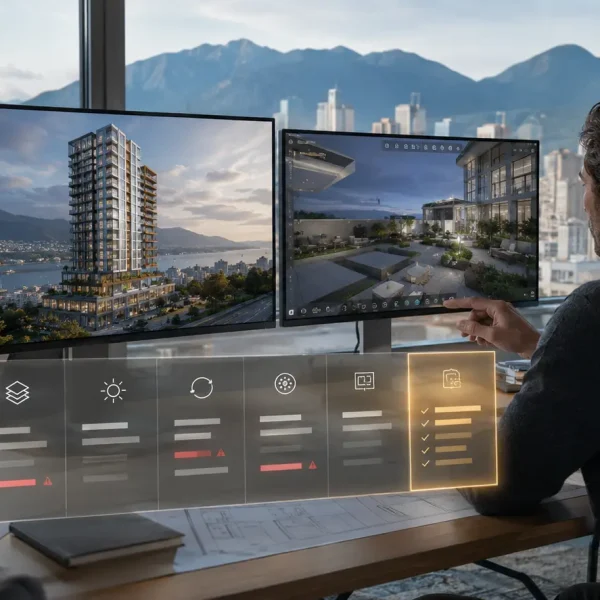
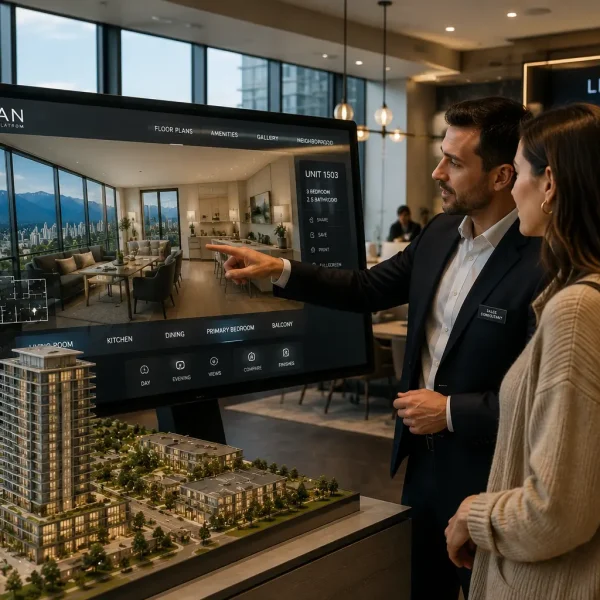
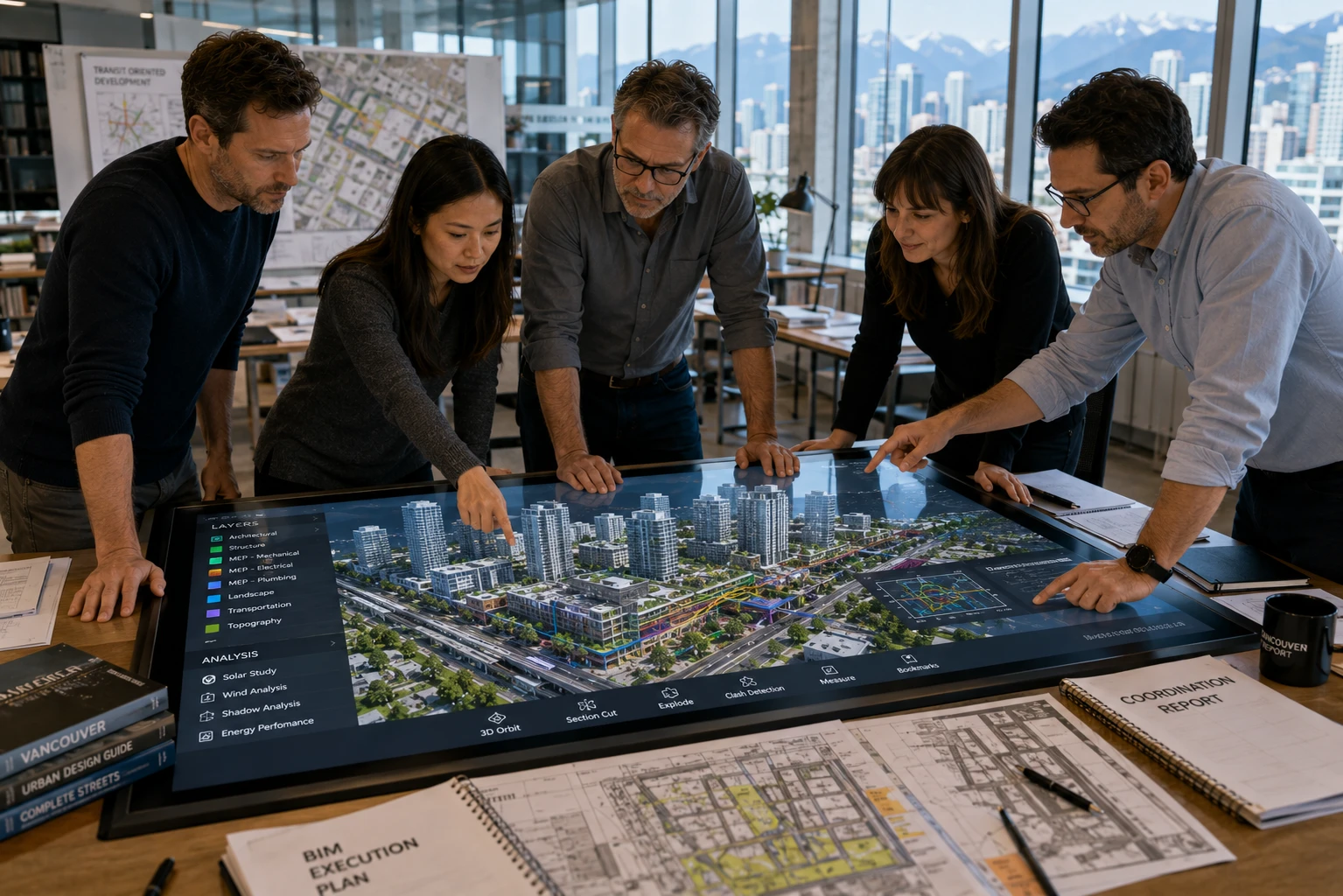
Architectural visualization ROI begins with the most direct commercial mechanism: the conversion rate improvement generated when prospective buyers engage with photorealistic, interactive property environments rather than static floor plans and specification sheets. A buyer who can navigate through a proposed development’s unit types, examine finish configurations in the actual space, and form genuine spatial conviction about the investment they are being asked to make converts from inquiry to offer at measurably higher rates than one working from two-dimensional documentation alone — and that conversion rate differential is the most direct expression of visualization investment value in pure financial terms.
The PropTech research landscape has consistently documented the buyer engagement impact of immersive real estate visualization relative to conventional static marketing materials. Listings that offer interactive exploration consistently generate longer engagement durations, higher inquiry conversion rates, and stronger showing-to-offer ratios than those relying on photography and rendered images alone. For Vancouver presale developments where each unsold unit represents significant carrying cost per month, the sales velocity improvement from superior visualization investment translates directly into financial return that is measurable in weeks of carrying cost avoided per unit sold.
Real-Time Rendering as a Value Multiplier
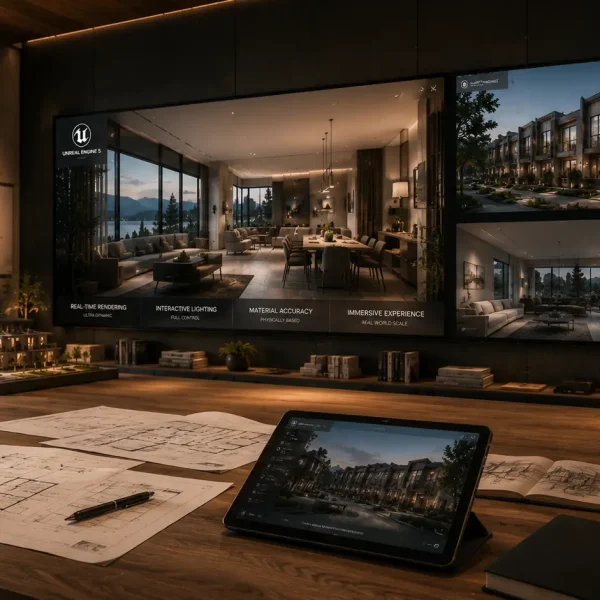
Real-Time Rendering technology has transformed architectural visualization ROI by making configurable, interactive visualization financially viable for developments that previously could only justify static render packages. Unreal Engine’s real-time rendering capability produces a single configurable environment representing every unit type and finish package combination within one platform — replacing the multiplicative static render production that equivalent coverage would previously have required. A development with 10 unit types and 4 finish packages that once required 40 separate static render sets now requires one real-time environment that buyers configure themselves — at lower total production cost and higher buyer engagement simultaneously.
This production economy directly improves architectural visualization ROI — it is not merely a cost reduction — it is a return amplifier. Every dollar saved on redundant static render production is available for higher-quality production on the primary hero renders and cinematic marketing content that serves the broadest buyer audience, while the interactive configurator handles the detailed unit exploration that static renders would otherwise require dozens of individual assets to cover incompletely. HUUR Studios structures every visualization investment for Vancouver clients with this production economy logic as a foundational design principle.
BIM Integration and Accuracy-Based ROI
BIM-linked visualization delivers an architectural visualization ROI dimension that purely aesthetic production cannot capture: the prevention of post-sale disputes arising from buyer expectations that diverge from delivered reality. When visualization is produced from BIM documentation rather than independently from design intent, the buyer’s digital experience of the proposed development is spatially and materially accurate to the specifications encoded in the design model — rather than an aspirational representation that trades accuracy for visual appeal. Buyers who purchased based on accurate visualization arrive at occupancy with calibrated expectations, producing measurably higher satisfaction scores and fewer post-possession disputes.
The financial value of post-sale satisfaction improvement compounds across a developer’s portfolio — not just through the direct cost savings of avoided disputes and remediation claims, but through the referral and repeat purchase behaviour that satisfied buyers generate in subsequent projects. A Vancouver developer with a reputation for delivering exactly what their visualization promised enters every future presale campaign with a credibility advantage that is impossible to replicate through marketing alone — and it originates directly from the accuracy of their visualization investment.
Reducing Marketing Costs Through Better Digital Experiences
One of the most underappreciated dimensions of architectural visualization ROI is its ability to reduce total marketing spend per qualified lead through the pre-qualification effect that immersive buyer engagement generates. A prospective buyer who has spent 30 to 45 minutes navigating a development’s unit types, exploring views, and configuring finish options has self-selected as genuinely interested and spatially informed before their first contact with a sales team member. This pre-qualification reduces the per-qualified-lead cost of every other marketing channel driving traffic to the visualization environment.
The visualization investment therefore generates a positive spillover effect across the entire marketing budget: digital advertising spend, event investment, and agent commission all deliver stronger per-lead returns when every buyer those channels deliver has been further qualified through genuine engagement with an immersive project presentation environment before reaching the sales conversation. A sales team receiving only visualization-engaged inquiries achieves a closing rate that makes every upstream marketing dollar more productive.
Replacing Physical Sales Collateral With Digital Assets
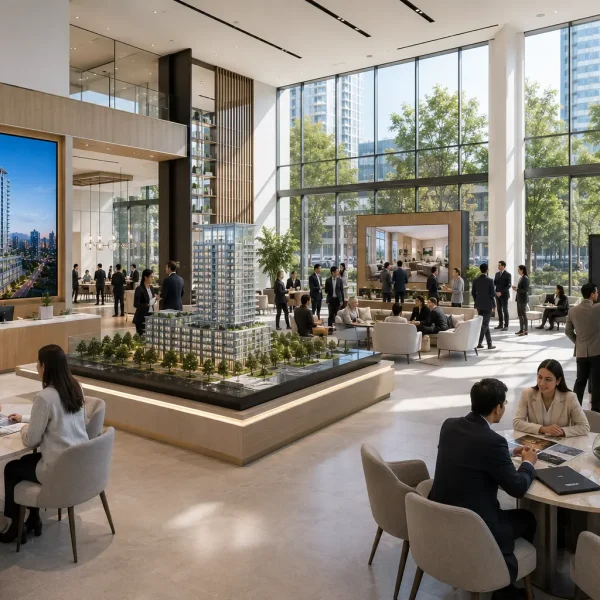
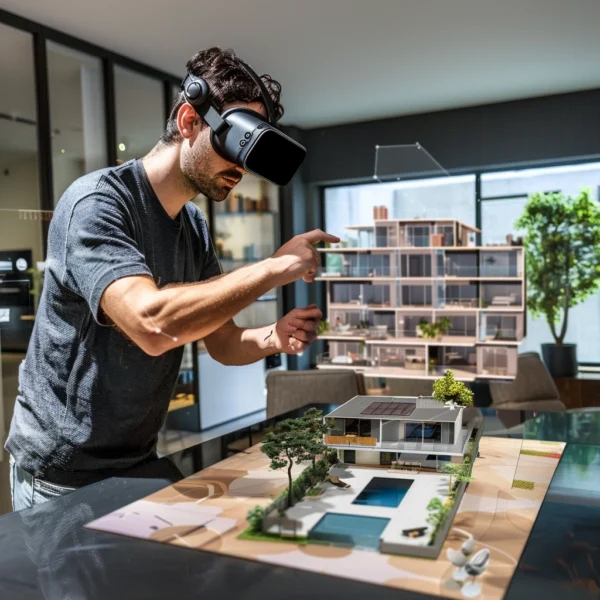
Architectural visualization ROI also accrues through the replacement of expensive, time-limited physical sales collateral — printed brochures, physical scale models, and sales suite fit-outs — with digital assets that are updateable, globally accessible, and deployed across multiple campaigns without reproduction cost. A physical scale model produced for a sales suite serves buyers who visit that specific location during opening hours. An interactive real estate visualization environment — rendered in Unreal Engine quality — serves every buyer globally, at any hour, on any device — and when design changes require updates, the digital environment is modified without reprinting or rebuilding the physical asset.
For Vancouver developments with international buyer components — common across the city’s luxury residential and investment property segments — the reach difference between a physical-only sales suite and a web-delivered immersive visualization environment is the difference between a marketing campaign that serves buyers in one location and one that serves buyers across Asia, Europe, and throughout North America simultaneously. This reach expansion delivers measurable property marketing ROI — and property marketing ROI of this kind through access to buyer pools that physical-only campaigns structurally cannot reach.
Design Revision Cost Reduction
A frequently overlooked architectural visualization ROI category is the design revision cost reduction generated when clients experience proposed designs through interactive environments during concept development rather than only through technical drawings that allow misunderstandings to accumulate until later, more expensive stages of design development. When a client can navigate a proposed design at concept stage and identify their spatial concerns directly — rather than discovering them months later during detailed design review — the resulting revisions are made at a fraction of the cost they would generate if discovered during construction documentation or, worse, during construction itself.
Explore More From HUUR
7 Powerful Architectural Communication Strategies That Win Client Approval Faster
Increasing Buyer Confidence Before Construction Starts
Buyer confidence is the conversion variable that architectural visualization ROI most directly produces for presale developments — and it operates through a mechanism that is fundamentally different from the awareness and interest that advertising campaigns generate. Visualization does not just show buyers a property — it gives buyers the spatial understanding, material conviction, and experiential familiarity that moves them from interested to committed. This distinction between awareness and conviction is the difference between a buyer who puts a development on their list and a buyer who signs a purchase agreement.
The confidence-building mechanism of interactive visualization operates through agency — the buyer’s ability to investigate the development on their own terms rather than accepting the developer’s curated presentation. Buyers who have verified for themselves through direct digital exploration that the master bedroom views, the kitchen proportions, and the finish quality meet their standards have answered their own evaluation questions — producing a purchase conviction that is more durable and more resistant to competitive comparison than conviction built on developer-curated presentations alone.
Immersive Sales Tools and the International Buyer
The buyer confidence argument for architectural visualization ROI is strongest for international buyers evaluating Vancouver developments without the ability to visit in person. An international buyer relying on static renders and floor plans faces a significant information gap between what the marketing materials communicate and what the spatial experience of the proposed development would actually be — a gap that immersive sales tools close by delivering the equivalent of a self-directed site visit through a web browser on any device at any hour.
According to research published by the National Association of Realtors, interactive and immersive digital property content consistently generates measurably higher engagement duration and inquiry conversion rates than static photography alone — a pattern that HUUR Studios observes across every Vancouver presale campaign where interactive visualization is deployed, with buyer engagement time in immersive environments averaging 3 to 5 times longer than engagement with equivalent static marketing content.
Finish Configurability and Conviction Quality
Finish configurability — the ability to swap flooring, cabinetry, and material packages within a photorealistic environment and see the results rendered instantly in the actual space — represents one of the strongest buyer confidence drivers in architectural visualization ROI because it eliminates the imagination gap that generates post-purchase regret when delivered finishes do not match what buyers pictured when making their selection from a sample board. A buyer who selected the dark walnut finish package after seeing it rendered in their specific unit type — with the actual kitchen geometry, the actual window light, and the actual spatial proportions of that specific floor plan — arrives at occupancy with genuine certainty about their choice.

How Interactive Visualization Accelerates Sales Cycles
Sales cycle acceleration is the most financially concrete expression of architectural visualization ROI — and architectural visualization ROI compounds across every week of velocity improvement for Vancouver developers managing presale campaigns where carrying cost is a material financial variable. Every week of additional time between launch and contract on a presale unit represents real financial cost — construction financing interest, sales team overhead, and marketing spend to maintain buyer pipeline across an extended campaign period. Interactive visualization accelerates this timeline by delivering the spatial conviction that drives purchase decisions in fewer buyer interactions than static alternatives require.
The pre-qualification effect of immersive buyer engagement produces sales conversations with buyers who have already resolved their primary evaluation questions through direct exploration — reducing the number of interactions required between first contact and contract, the number of showings required before a buyer achieves decision readiness, and the length of the negotiation period that follows initial offer because buyers who understood what they were purchasing before signing have fewer grounds for late-stage reconsideration based on newly discovered spatial concerns.
CRM Integration and Lead Intelligence
CRM integration with interactive visualization platforms extends the architectural visualization ROI calculation into lead intelligence — capturing engagement data showing which unit types individual buyers explored, which finish combinations they configured, and how much total time they invested in the exploration session. Sales teams that receive this engagement data for every inbound inquiry can prioritize their outreach toward buyers whose engagement depth signals genuine purchase interest rather than casual browsing — applying their limited in-person time most productively toward the buyers most likely to convert within the campaign’s target timeline.
HUUR Studios designs every interactive property presentation environment with CRM data capture architecture built in from the outset — ensuring that every buyer interaction with the visualization environment generates the engagement intelligence that sales teams need to make their follow-up conversations as targeted and efficient as possible. This CRM connectivity converts the visualization platform from a passive presentation tool into an active sales intelligence asset that improves the productivity of every sales team member who works with it.
Project Presentation Quality and Investor Timelines
Investment decision timelines compress significantly when architectural visualization ROI is demonstrated through high-quality interactive project presentation the quality of investor and lender presentations. Development financing decisions, equity partner commitments, and institutional investor approvals all move faster when decision-makers can form genuine spatial conviction about a proposed project through a high-quality interactive project presentation rather than evaluating schematic plans and precedent image boards that require imagination to bridge the gap between two-dimensional documentation and eventual three-dimensional reality. A developer who can show investors and lenders a photorealistic navigable model of a proposed project closes capital faster than one presenting from drawings alone.
START YOUR PROJECT WITH HUUR
Contact our team or explain and submit your project .
Measuring Architectural Visualization ROI Beyond Property Sales
Architectural visualization ROI extends well beyond the presale campaign period into the long-term operational and brand value that visualization investment generates for a development portfolio. Developers who evaluate architectural visualization ROI only in terms of direct marketing cost relative to presale revenue miss the compounding portfolio-level returns that visualization quality consistency generates across multiple projects over multiple years. Brand reputation for visualization excellence reduces the marketing cost required to launch subsequent projects — buyers who have experienced a developer’s visualization quality on one project engage with their next project from a starting point of established trust.
The real estate visualization investment case is further strengthened when developers build their visualization infrastructure with the lifecycle value of Digital Twin data architecture in mind. A visualization environment built on a properly structured data foundation does not expire at the end of the presale campaign — it becomes the foundation for the operational Digital Twin that building operators and asset managers use to monitor and optimize building performance throughout the occupied lifetime of the development.
Planning Authority Submissions and Approval Value
Architectural visualization ROI includes the commercial value generated through stronger planning authority submissions — photorealistic contextual visualizations and immersive neighbourhood impact presentations that give planning authorities the spatial understanding they need to evaluate a proposed development’s relationship to its context with genuine confidence. Stronger submissions produce faster approval timelines, fewer requests for additional information, and less exposure to planning conditions that could have been proactively addressed through clearer contextual visualization. Each week saved in the approval timeline represents real financial value for Vancouver developers managing construction financing costs.
HUUR Studios designs every visualization environment with this extended value horizon in mind — building the buyer confidence architecture, the Digital Twins data foundation, and the integrated real estate sales platform connectivity that transform a single-campaign marketing investment into a multi-year asset that continues generating return across presale marketing, planning submissions, investor relations, and ongoing building operations.
PropTech Investment and Portfolio Differentiation
PropTech investment in visualization technology is becoming a portfolio differentiation factor as institutional buyers and sophisticated investors increasingly evaluate a developer’s digital capability alongside their track record, design quality, and construction performance. A developer whose portfolio is consistently presented at the highest available visualization standard signals a level of market sophistication and commitment to buyer communication transparency that distinguishes premium developers from commodity development operators across Vancouver’s competitive market. This positioning compounds across successive projects — each high-quality architectural visualization investment — and the architectural visualization ROI it generates — reinforces the portfolio brand that makes the next investment easier to raise and the next presale easier to close.

FAQ — Architectural Visualization ROI
What is architectural visualization ROI?
Architectural visualization ROI measures the commercial return generated by visualization investment across presale conversion rate improvement, sales cycle acceleration, marketing cost reduction, design revision prevention, and the long-term brand equity that consistent visualization quality builds across a development portfolio.
Does visualization increase property sales?
Yes — interactive and immersive visualization consistently improves presale conversion rates, shortens buyer decision timelines, and supports premium pricing justification relative to developments relying on static renders. The architectural visualization ROI from sales acceleration alone frequently exceeds the total production investment within the first presale quarter.
How can developers measure visualization ROI?
Measure architectural visualization ROI by tracking inquiry-to-offer conversion rates, average days from first engagement to signed offer, buyer engagement time in visualization environments, and post-sale satisfaction scores — comparing each metric against baselines from campaigns relying on static marketing materials alone.
Is architectural visualization worth the investment?
For presale developments in competitive markets, architectural visualization ROI is strongly positive across every measured commercial outcome. The production investment is typically recovered within weeks of presale launch through carrying cost reduction from faster sales velocity, making visualization one of the highest-returning line items in a presale marketing budget.

Conclusion
Architectural visualization ROI is not a single-dimension calculation — it is a multidimensional commercial return that spans presale conversion, sales cycle acceleration, marketing cost reduction, design revision prevention, planning authority efficiency, investor relations quality, and the long-term brand equity that compounds across a developer’s portfolio over years. The developers who approach visualization investment with this full-dimension return framework consistently outperform those evaluating only the direct production cost against the most immediately visible presale outcomes — because they are capturing every dimension of return that their visualization investment generates rather than only the most easily measured one.
HUUR Studios builds visualization environments for Vancouver and North American developers and architectural firms with this complete ROI framework as the production design brief — ensuring every environment serves presale buyers, investor audiences, planning authorities, and long-term building operations from a single coherent digital asset whose value compounds rather than depreciates as the project matures. Every architectural visualization ROI investment HUUR Studios delivers is structured to generate maximum return across the full lifecycle of value it can produce for the development it serves.