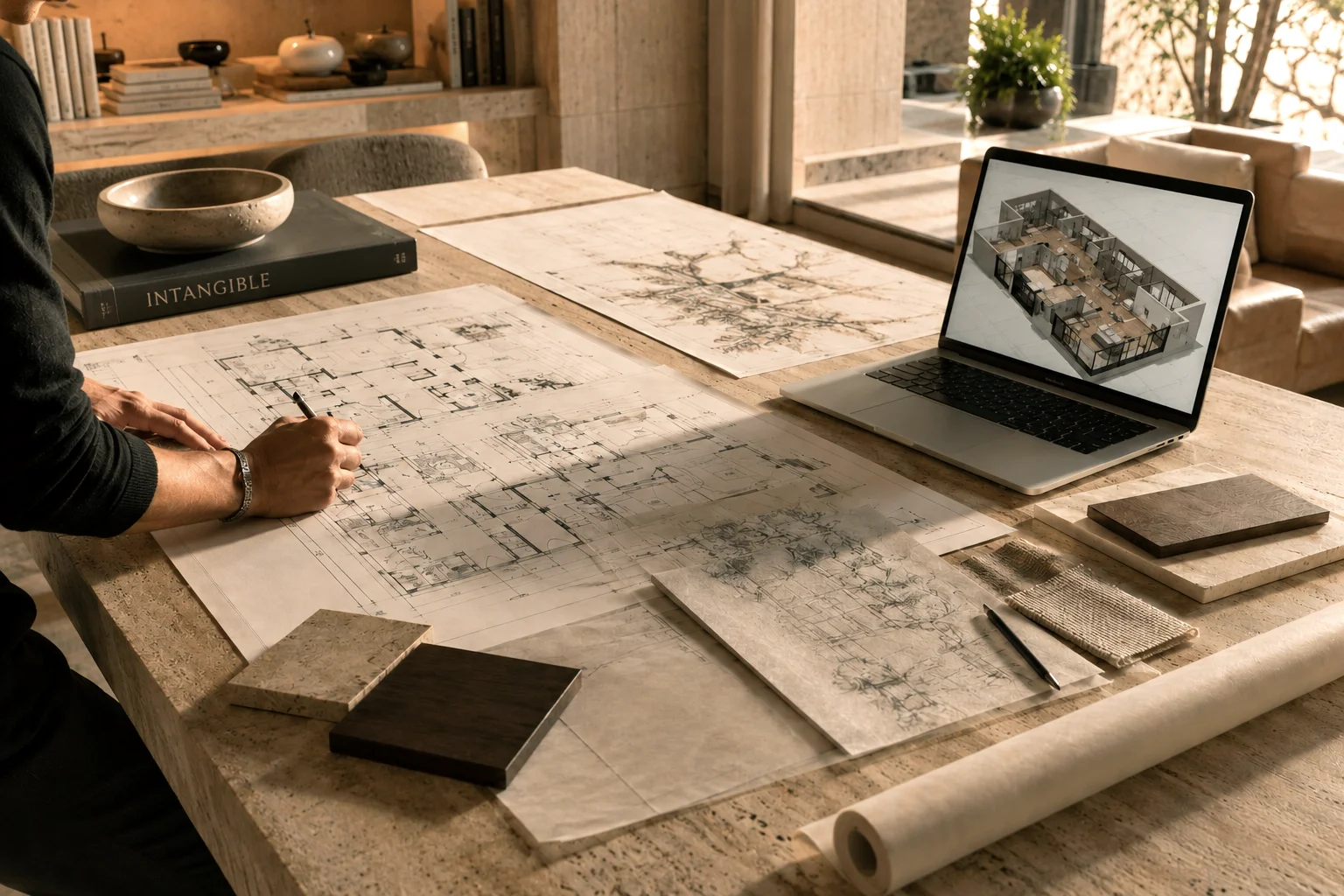
Introduction:
The journey from blueprint to virtual experience is where the most costly real estate development mistakes are either prevented or set in motion — and the developers, architects, and visualization studios that have closed this gap with photorealistic, interactive digital environments are no longer watching buyers hesitate, revision cycles compound, and presale campaigns stall while competing developments offer buyers the spatial conviction that flat drawings and static renders structurally cannot generate. For Vancouver’s most ambitious presale developments, transforming design documentation into navigable, immersive digital environments is no longer a premium enhancement — it is the baseline standard that sophisticated buyers expect before they commit.
HUUR Studios has built its practice around making the blueprint to virtual experience pipeline available — and blueprint to virtual experience quality commercially accessible to Vancouver developers and architectural firms across British Columbia and North America — combining technical production precision with cinematic visualization quality and the interactive capability that modern buyers, investors, and planning authorities require before they commit to a development that does not yet physically exist. This article examines every stage of this transformation and the specific commercial outcomes it generates for developments that execute it well.
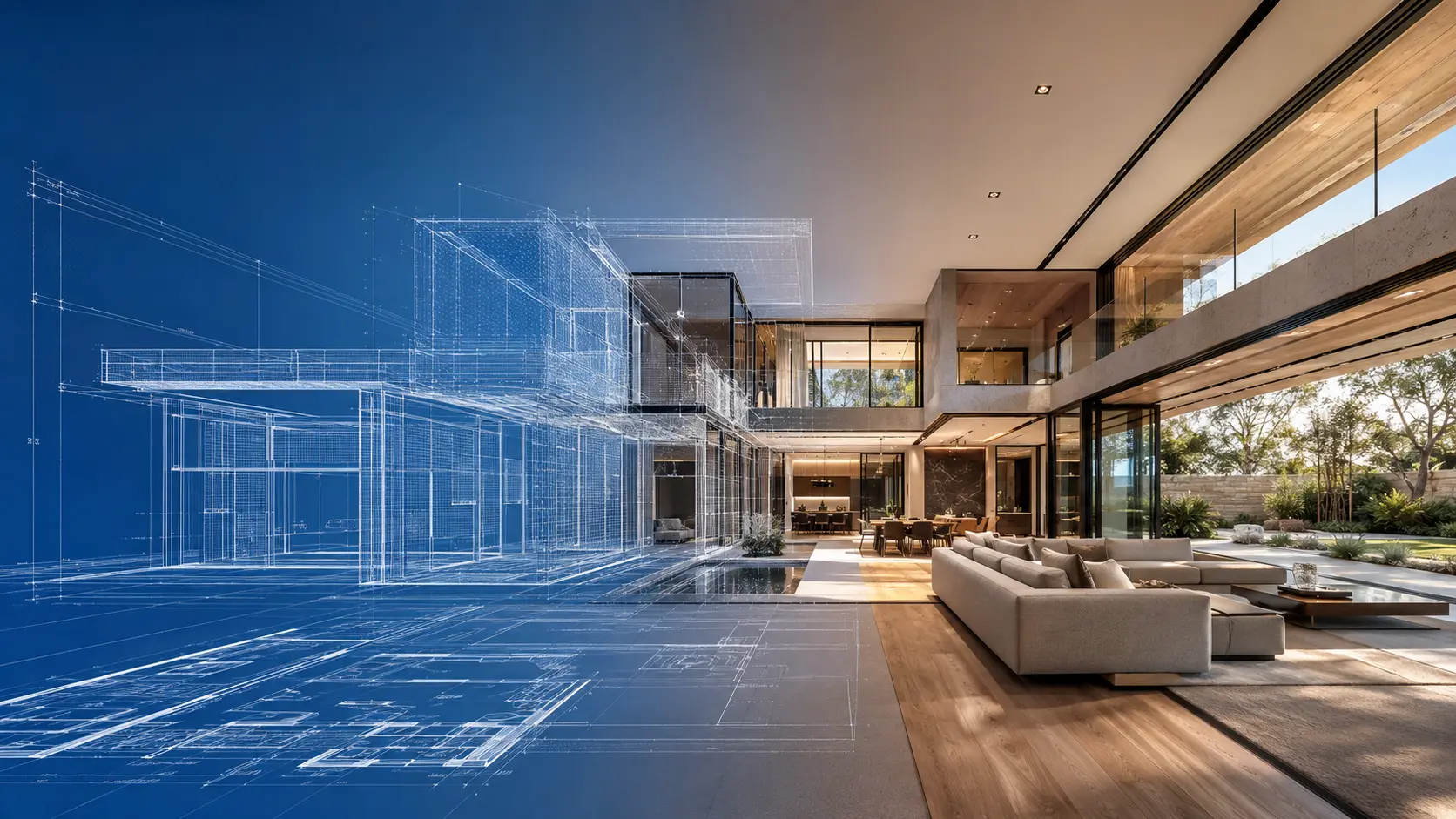
Why Blueprints Alone Are No Longer Enough
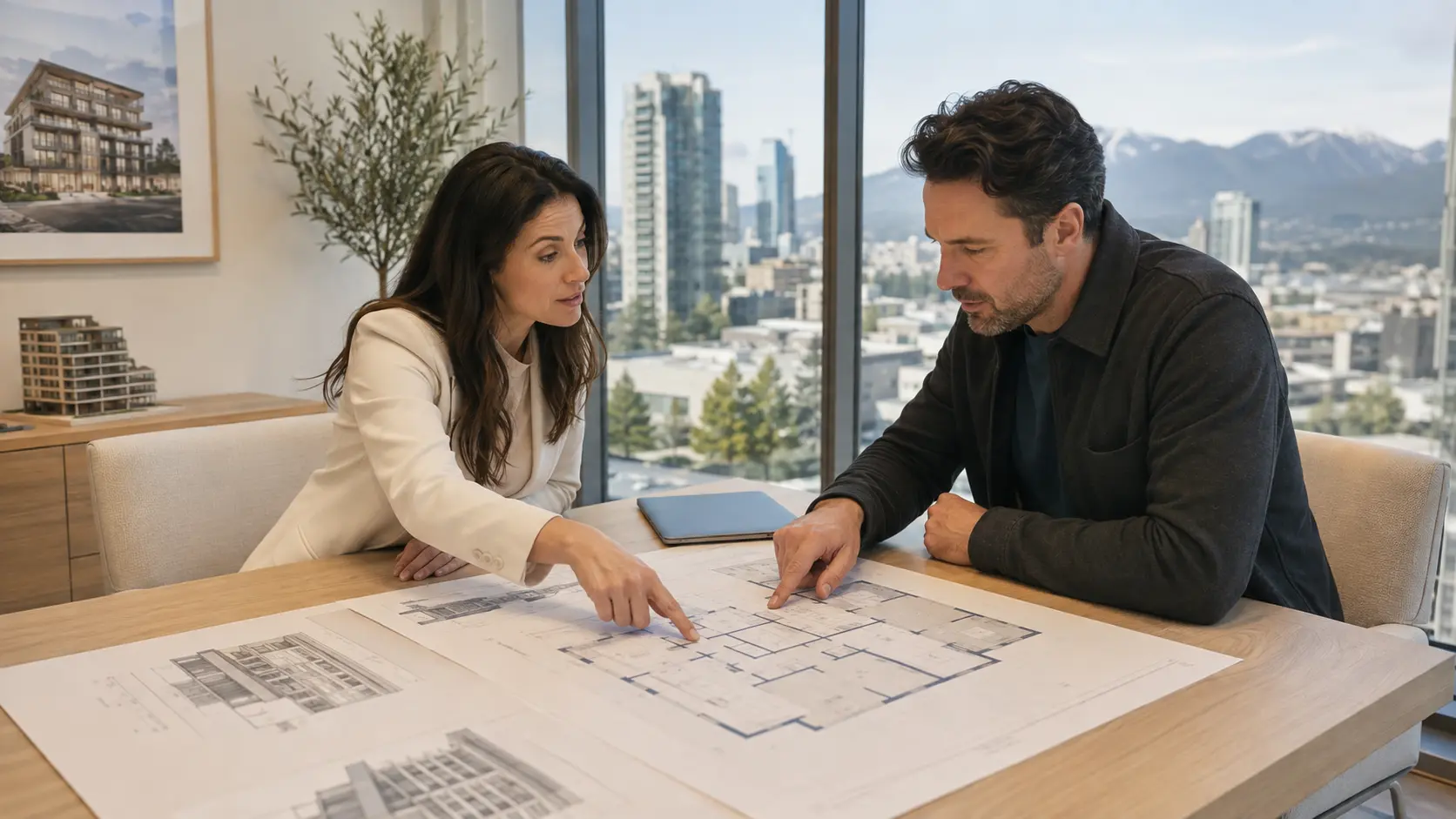
Architectural blueprints and technical drawings communicate everything a trained professional needs to understand a proposed building — dimensional accuracy, spatial relationships, structural logic, and specification intent — with extraordinary precision. They communicate almost nothing that a non-technical stakeholder needs to understand the experience of inhabiting that building: what the light will feel like at different times of day, how the proportions of a room will feel at human scale, what the view from each window actually shows, and whether the sequence of spaces creates the flow and character the designer intended. This communication gap is the origin of most presale misunderstandings — and it is precisely the gap that the blueprint to virtual experience pipeline is designed to close.
The professional expertise required to read architectural drawings accurately represents years of training that clients, buyers, and planning authorities do not possess. When stakeholders without this expertise are asked to make significant financial or regulatory decisions based on drawing sets they cannot fully interpret, 2 outcomes consistently follow: either they approve based on an incomplete or inaccurate mental picture that sets up future disappointment, or they delay while requesting more accessible representation — extending decision timelines and increasing campaign costs. Both outcomes are avoidable through architectural visualization that communicates spatial experience directly.
The Limitations of CGI Renders
CGI renders addressed the communication gap between technical drawings and buyer understanding by providing photorealistic visual representations of proposed spaces rather than technical encodings of their geometry. A well-produced CGI render gives a buyer a genuine visual impression of how a space will look and feel — but it gives them only that impression, from only the angles the studio selected, in only the lighting conditions the studio chose, at only the time of day the studio captured. Every question a buyer has that falls outside those predetermined parameters remains unanswered — and in the journey from blueprint to virtual experience, unanswered buyer questions are the primary driver of hesitation, revision requests, and extended presale campaigns.
The production economy of CGI renders also works against developers managing complex presale campaigns with multiple unit types and finish packages. A development with 12 unit types and 4 finish packages requires 48 separate CGI render sets to achieve equivalent coverage through static imagery — each requiring individual production, revision management, and artwork preparation. The blueprint to virtual experience approach replaces this multiplicative production burden with a single configurable environment that represents every unit type and finish combination within one platform, at lower total production cost and higher buyer engagement simultaneously.
Explore More From HUUR
Interactive Design Reviews: The Smarter Way to Avoid Costly Design Mistakes
BIM as the Accuracy Foundation
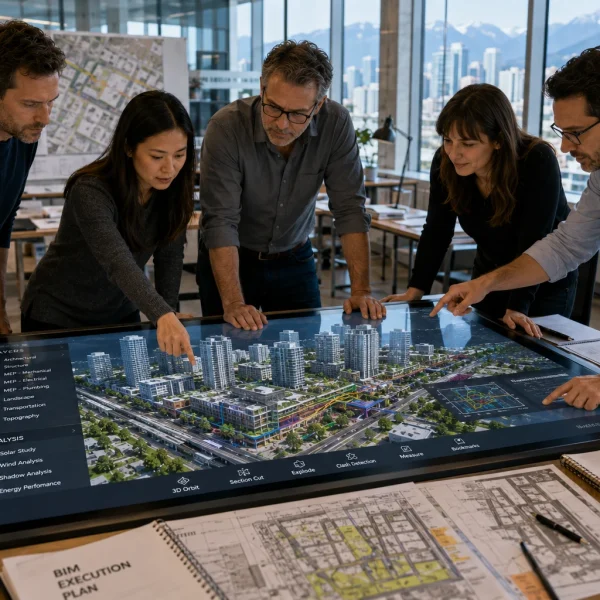
BIM — Building Information Modeling — represents the technical foundation that makes the blueprint to virtual experience pipeline both accurate and efficient. When the interactive visualization environment is built directly from BIM documentation rather than produced independently from design intent, the digital experience buyers navigate reflects the actual spatial dimensions, material specifications, and design geometry of the proposed building — rather than an aspirational approximation that may differ from the eventual delivered design in ways that only become apparent at occupancy. This BIM-accuracy connection is what makes the blueprint to virtual experience a genuine design communication tool rather than simply a more visually sophisticated version of the static marketing materials they replace.
For Vancouver developers working with architectural firms that already use BIM-based design workflows, HUUR Studios’ approach leverages existing design documentation rather than requiring a parallel, independently produced model for visualization purposes — producing both efficiency advantages and accuracy advantages that separately produced CGI environments cannot match.
Turning Technical Drawings Into Interactive Experiences
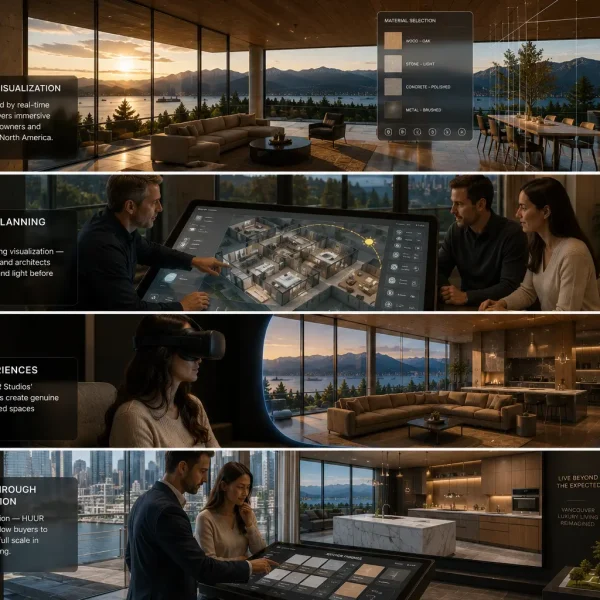
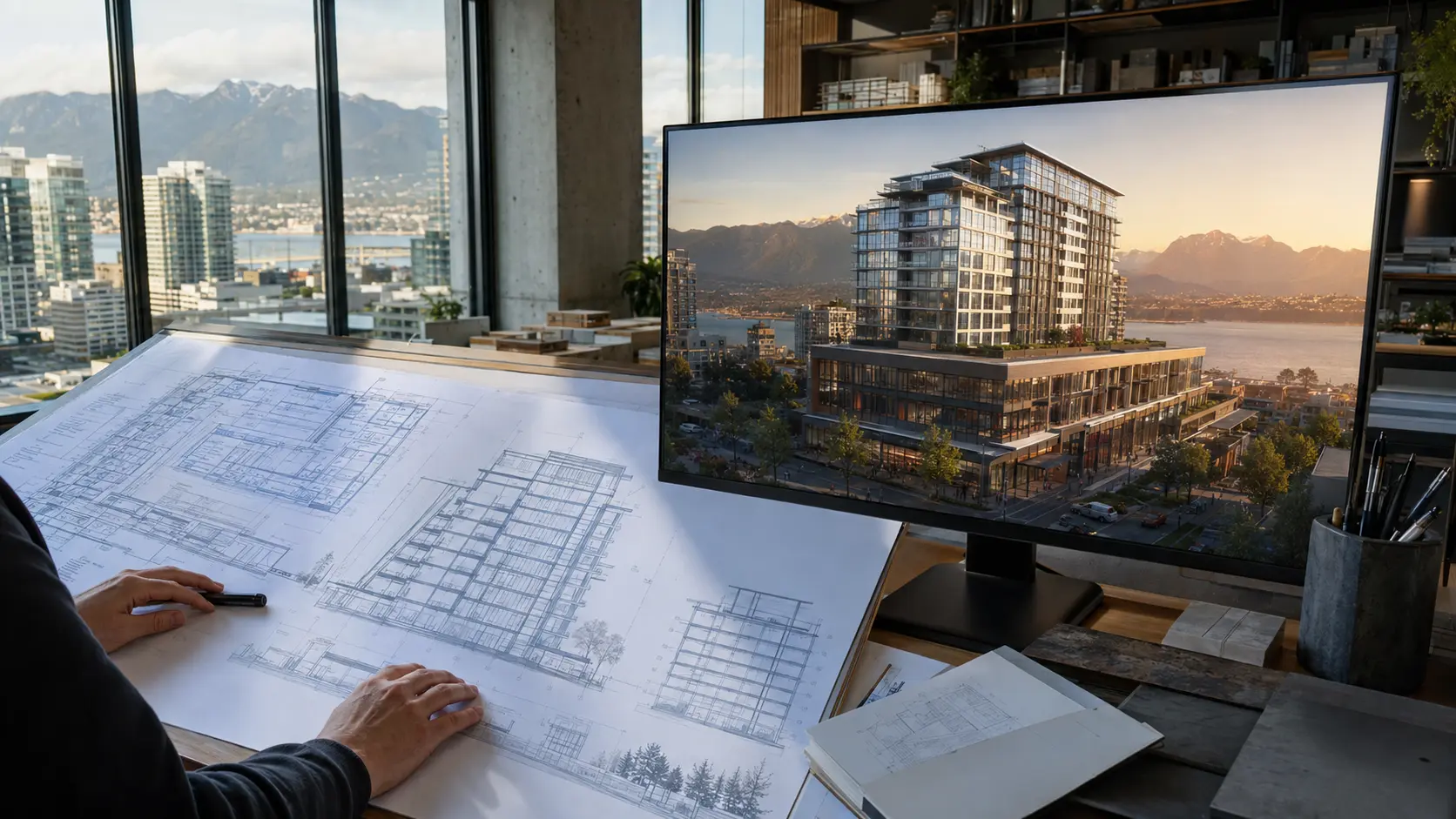
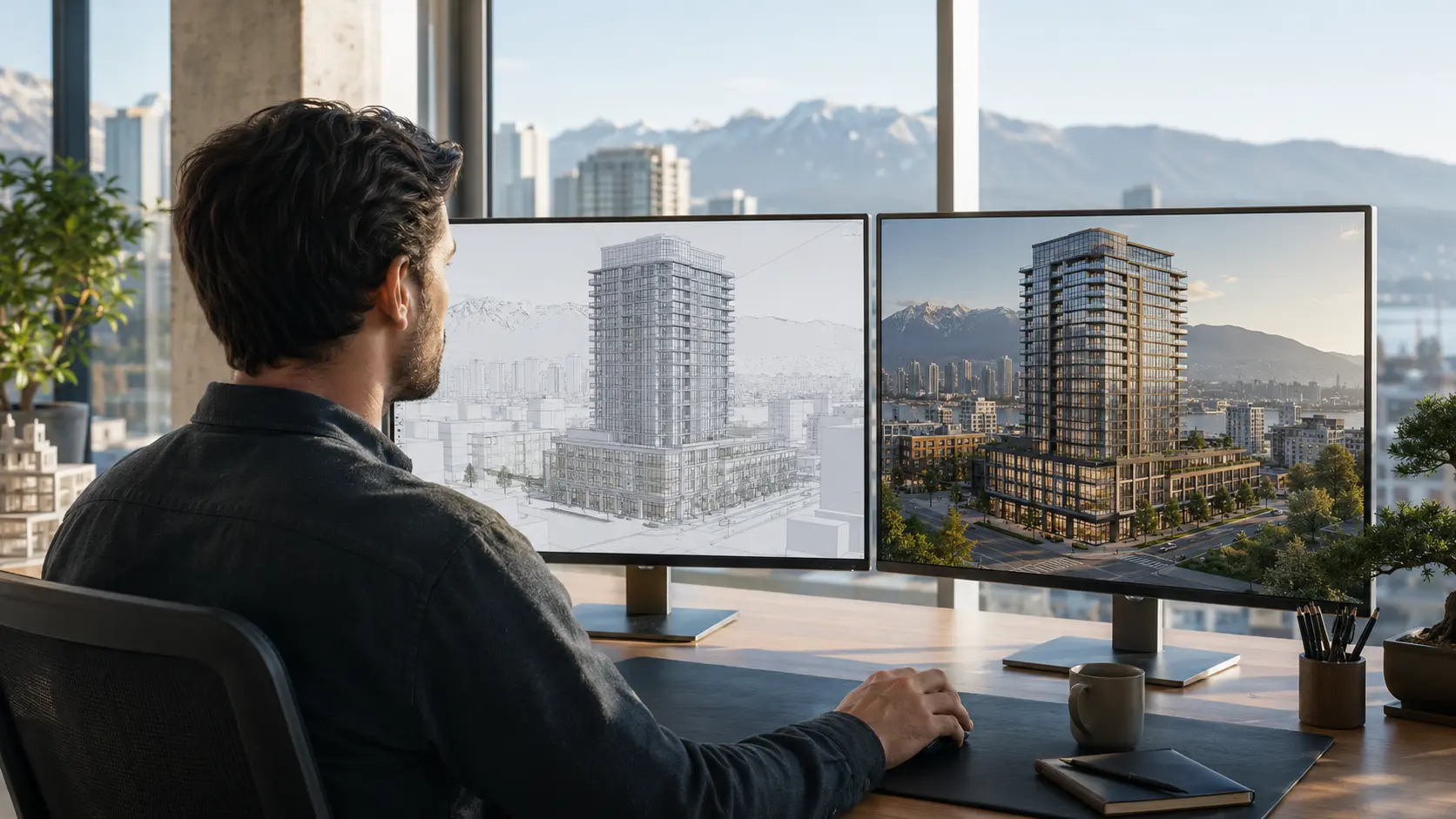
The technical process of the blueprint to virtual experience — turning documentation into a navigable virtual environment — the blueprint to virtual experience pipeline — begins with the BIM or CAD documentation that defines the proposed building’s geometry, materials, and spatial relationships, and progresses through several production stages that transform that technical data into a photorealistic, navigable digital environment. Each stage requires specific expertise: architectural knowledge to ensure spatial accuracy, 3D production skill to build the detailed models that populate the environment, lighting and materials expertise to achieve photorealistic visual quality, and platform engineering to deploy the environment across the delivery formats the client requires.
HUUR Studios manages every stage of the blueprint to virtual experience pipeline — from BIM documentation review through model production, materials and lighting, environment integration, interactive feature development, and multi-platform deployment — as a unified production engagement rather than a series of separately contracted specializations. This unified production approach ensures that the accuracy, quality, and interactive capability of the final blueprint to virtual experience environment reflect a coherent creative and technical standard across every component, rather than the inconsistencies that arise when different stages are managed by different vendors with different quality standards and production approaches.
Unreal Engine and Twinmotion: Platform Selection
Platform selection shapes the blueprint to virtual experience outcome more than any other single decision — determining the visual quality ceiling, the interactive capability range, the production timeline, and the deployment format options available for the final environment. HUUR Studios primarily builds on Unreal Engine for projects requiring the highest available photorealistic quality, full finish configurability, VR headset support, and web-based browser delivery — capabilities that Unreal Engine’s real-time rendering architecture supports more comprehensively than any alternative platform currently available for architectural visualization production.
Twinmotion offers a viable alternative for projects where production timeline is the primary constraint, particularly for its direct live-link workflow with BIM platforms that allows design changes to update the visualization environment automatically without manual model reconstruction. For iterative design development programs where the blueprint to virtual experience environment needs to evolve rapidly through multiple design revision cycles, this live-link capability delivers meaningful production efficiency advantages that justify its selection for specific project types and timeline constraints.
Interactive Real Estate: Features That Drive Buyer Decisions
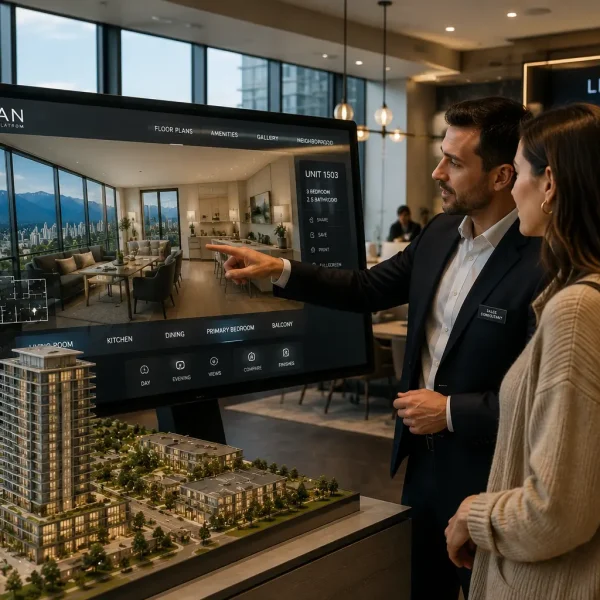
The interactive features built into a blueprint to virtual experience environment define what that blueprint to virtual experience can deliver are not decorative enhancements — they are the specific capabilities that allow buyers to resolve the evaluation questions that static marketing leaves unanswered. Finish configurability allows buyers to see their preferred material combinations rendered photorealistically in the actual unit space rather than imagining them from sample boards. Time-of-day lighting adjustment allows buyers to understand how natural light moves through a space across the day. Free navigation allows buyers to examine any sightline, approach any surface, and verify any spatial relationship their evaluation concerns require.
According to research published by the National Association of Realtors, buyers engaging with immersive and interactive digital property content consistently demonstrate measurably higher engagement duration and conversion rates than those relying on static photography alone — reinforcing the commercial case for interactive real estate environments that give buyers the spatial exploration capability they need to move from interest to conviction before the presale campaign window closes.
Helping Buyers Understand Space Before Construction
The most commercially consequential function of the blueprint to virtual experience pipeline — and the reason blueprint to virtual experience investment pays back fastest for presale developments is its ability to give buyers genuine spatial understanding of a property that does not yet physically exist — closing the information gap that makes presale purchasing inherently more uncertain than purchasing an existing property that can be visited and assessed through direct sensory experience. A buyer who has navigated a proposed unit through a photorealistic interactive environment, resolved their key spatial questions through direct exploration, and formed genuine conviction about the space has experienced something that approaches a physical site visit in the quality of spatial understanding it generates.
This spatial understanding function delivers commercial value that extends well beyond the presale conversion rate improvement it generates. Buyers who engaged with an accurate virtual property presentation — a virtual property presentation calibrated to the eventual delivered design arrive at occupancy with calibrated expectations — producing significantly higher satisfaction scores, fewer post-possession change requests, and stronger referral behaviour that contributes directly to the success of the developer’s next presale campaign. Every buyer whose satisfaction at occupancy matches the experience they formed during the blueprint to virtual experience exploration becomes an advocate for the developer’s commitment to transparency and quality.
International Buyers and the Digital Sales Suite
For Vancouver developments targeting international buyer segments — significant across the city’s luxury residential and investment property markets — the blueprint to virtual experience pipeline delivers a capability that no other marketing format can replicate for remote buyers: a genuinely immersive spatial exploration that gives international buyers the equivalent of a self-directed site visit through a standard web browser on any device, at any hour, from any location in the world. A serious buyer evaluating a Vancouver development from abroad can explore units, compare views, configure finishes, and develop genuine purchase conviction without any of the logistical requirements that would otherwise make meaningful property evaluation from a distance almost impossible.
HUUR Studios delivers the full interactive property presentation capability that international buyers expect from the world’s most competitive presale markets — web-accessible, device-agnostic, and built to the production quality standard that communicates genuine development quality alongside genuine spatial understanding.
Architectural Visualization and Design Decision Support
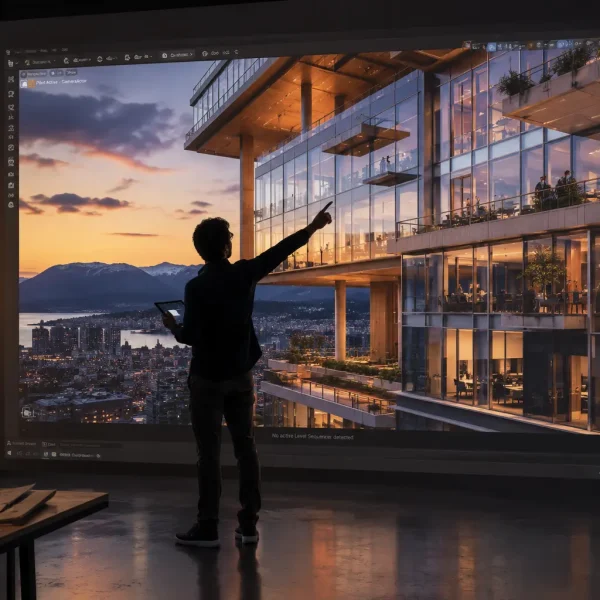
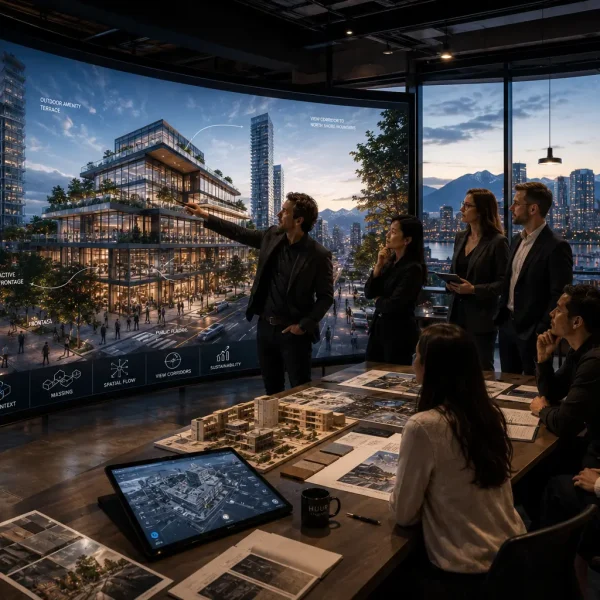
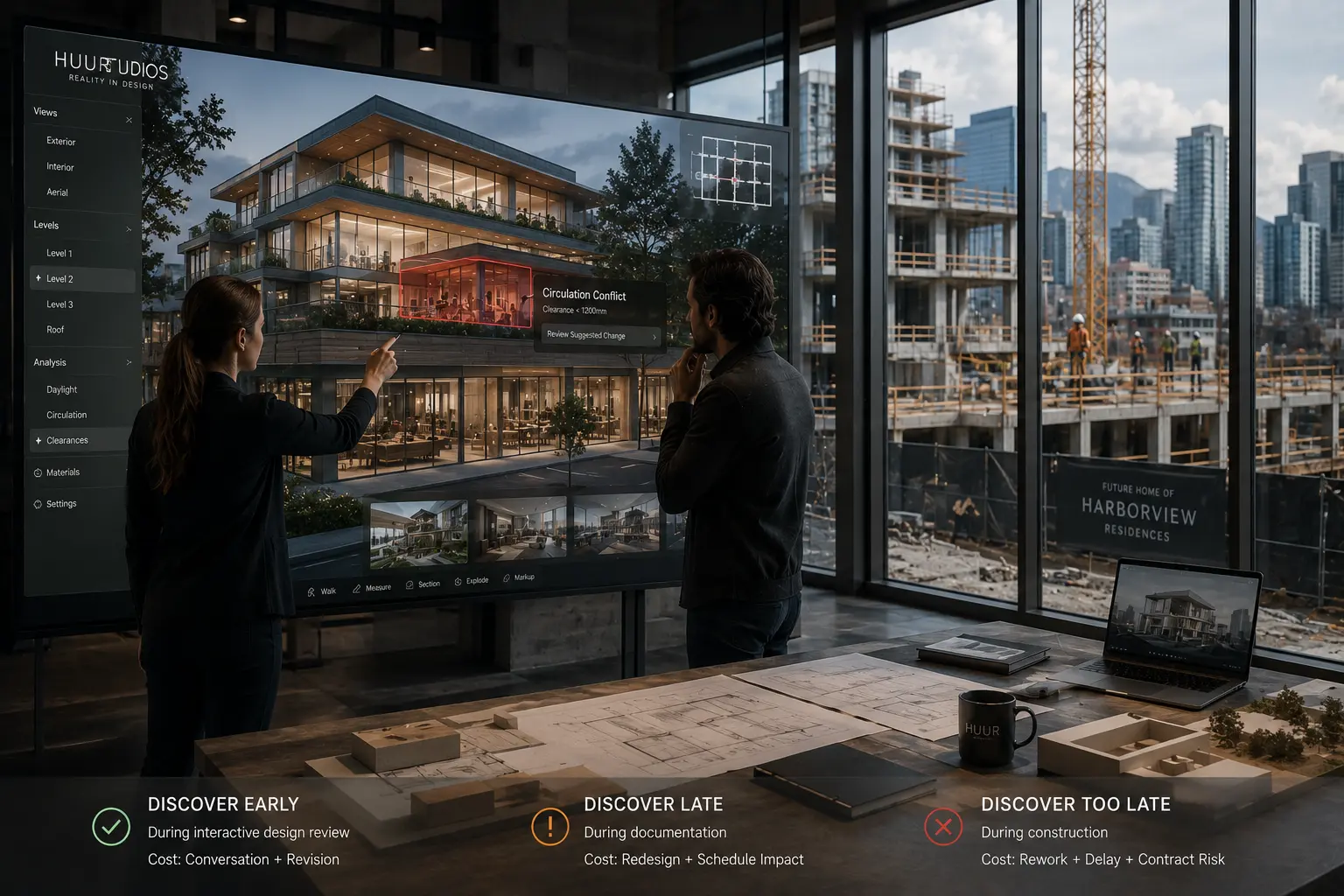
Architectural visualization built at the blueprint to virtual experience standard serves design teams as well as buyers — providing a shared reference environment that allows architects, clients, and consultants to evaluate design decisions in the actual three-dimensional spatial context where those decisions have effect. A client who can navigate the proposed design at concept development stage and identify concerns directly — rather than forming those concerns from drawn documentation and raising them months later during construction documentation — generates revisions that are orders of magnitude cheaper to execute than the same revisions would be if discovered later.
Increasing Sales Through Immersive Visualization
The PropTech transformation of real estate marketing has made immersive visualization the baseline expectation at the luxury presale tier across Vancouver and throughout North American markets — with buyers who regularly encounter photorealistic interactive environments in their evaluations of competing developments reading static render alternatives as a signal of reduced development quality rather than simply a different marketing approach. The presale campaign that cannot offer genuine spatial exploration is increasingly competing at a disadvantage that compounds as the campaign period extends.
The Sales Velocity Argument
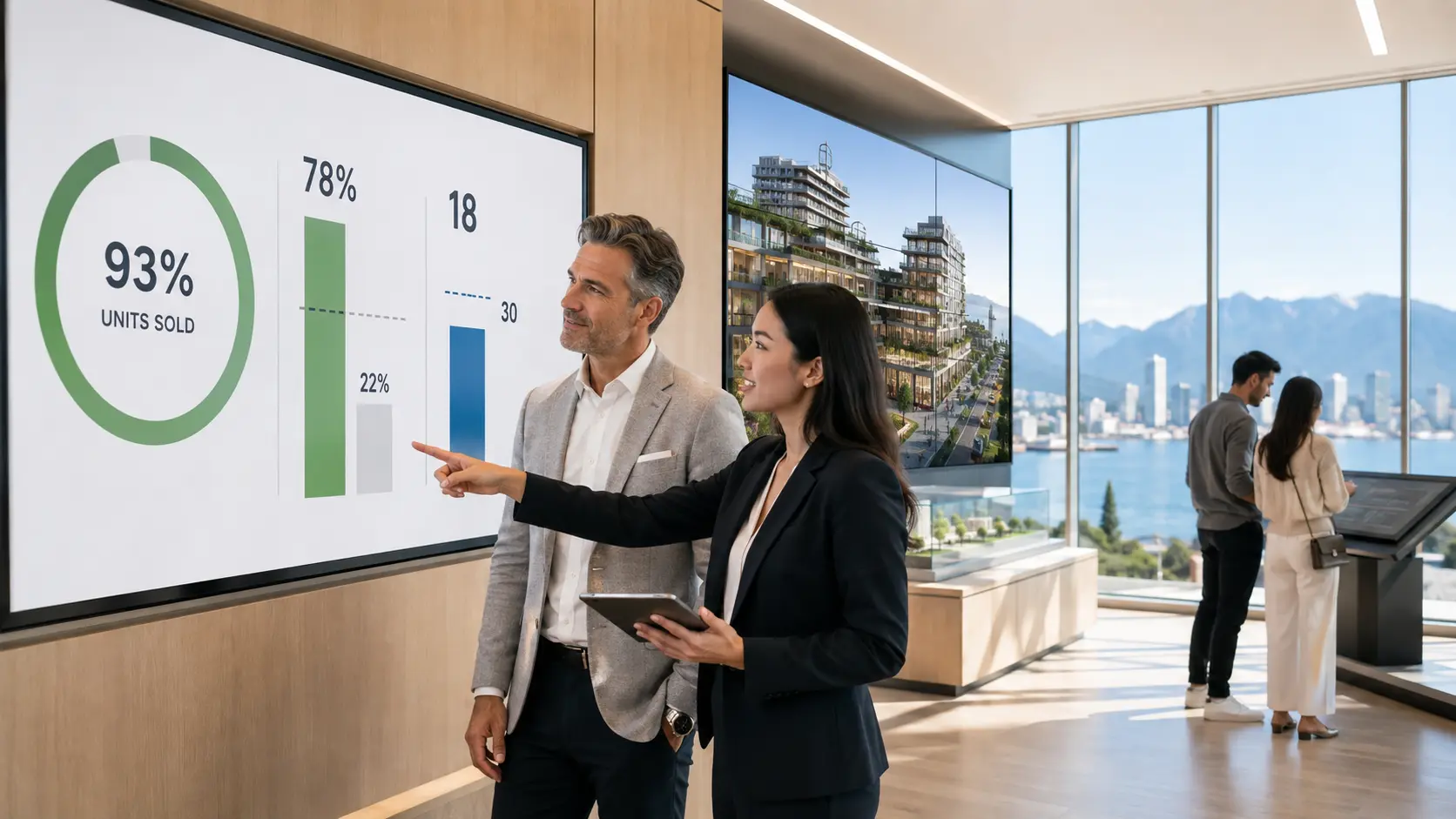
Sales velocity is the financial argument for immersive visualization that most directly addresses a developer’s core economic concern: carrying cost. Every week between presale launch and construction financing fully subscribed represents real interest cost, real overhead, and real competitive exposure to market shifts that could reduce achievable pricing before full subscription is reached. The blueprint to virtual experience pipeline accelerates this timeline by delivering the buyer conviction that drives signed offers faster than any static marketing format can generate from the same qualified buyer pool.
The real-time rendering quality that HUUR Studios builds into every presale visualization environment is the production standard that communicates development quality as compellingly as it communicates spatial experience — ensuring that every buyer’s first encounter with the development creates the impression of quality and credibility that supports premium pricing and accelerates purchase decisions throughout the presale campaign.
START YOUR PROJECT WITH HUUR
Contact our team or explain and submit your project .
Digital Twin Integration for the Full Lifecycle
The blueprint to virtual experience pipeline, when properly planned, reaches its maximum commercial return when the visualization environment is built with Digital Twin architecture in mind from the outset — ensuring that the data infrastructure and spatial accuracy of the presale visualization environment can support operational building management once the development is occupied. A presale visualization environment designed with lifecycle continuity delivers value across presale marketing, construction coordination, planning submissions, investor relations, and long-term building operations from a single coherent digital asset.Digital Twin architecture
HUUR Studios designs every blueprint to virtual experience environment for Vancouver developments with this lifecycle value in mind — building the data architecture and spatial accuracy standards that allow the presale visualization investment to continue generating return after the last unit has sold and the building’s operational phase has begun.
What the Future Looks Like
The blueprint to virtual experience pipeline is evolving toward capabilities that will further narrow the gap between digital and physical property experience — driven by advances in real-time rendering quality, AI-enhanced environment generation, and expanding PropTech infrastructure that is progressively integrating immersive visualization into every stage of the property development and marketing lifecycle. The most significant near-term developments include generative AI tools that accelerate environment production from BIM documentation, haptic feedback systems that extend VR property experiences into tactile material simulation, and live digital twins integration that updates presale environments — as digital twins become more embedded in presale workflows in real time as construction progresses on site.
For Vancouver developers and architectural firms making visualization investment decisions now, this technology trajectory carries a clear strategic implication: the digital infrastructure built through current blueprint to virtual experience implementations — the BIM integration, the data architecture, the interactive platform standards — is the same foundation that next-generation visualization capabilities will require. Current investment enables future capability rather than requiring replacement when the next generation of immersive visualization technology becomes commercially accessible across North American markets.
Immersive Visualization and the PropTech Ecosystem
PropTech platforms are increasingly integrating immersive visualization capability into the broader real estate transaction infrastructure — connecting interactive property environments to CRM systems, digital contract platforms, mortgage pre-qualification tools, and investor management systems. As this PropTech integration matures, the blueprint to virtual experience environment transitions from a standalone presentation tool into a node in a fully connected real estate transaction ecosystem — one where buyer engagement data, qualification signals, and purchase interest flow directly between the visualization platform and the operational systems that manage the presale campaign.
Virtual Home Tours and the Digital-First Buyer
The digital-first buyer generation that now constitutes the primary demographic across Vancouver’s presale market has grown up evaluating every significant purchase through immersive digital experiences — and they bring the same expectation of interactive, configurable, self-directed exploration to property evaluation. HUUR Studios’ virtual home tours capability serves this expectation directly — delivering the web-accessible, device-agnostic, self-directed exploration format that digital-first buyers expect as a baseline before investing time in any further engagement with a development.
FAQ — Blueprint to Virtual Experience
What is a virtual property experience?
A virtual property experience is a photorealistic, navigable digital environment built from architectural plans or BIM documentation — allowing buyers to explore a proposed development’s spatial qualities, views, and material finishes before construction begins, resolving evaluation questions that drawings and static renders cannot answer.
How are blueprints converted into virtual environments?
The blueprint to virtual experience pipeline converts BIM or CAD documentation through 3D model production, photorealistic materials and lighting, and real-time platform integration — producing a navigable interactive environment that reflects the actual design geometry with the visual quality that communicates genuine spatial character.
Why are developers replacing traditional presentations?
Static CGI renders and printed collateral answer only predetermined questions, serve only buyers who visit physical sales suites, and cannot adapt to design evolution without costly reproduction. The blueprint to virtual experience format answers any buyer question, reaches global audiences through any browser, and updates with design changes without full reproduction.
Does immersive visualization improve property sales?
Yes — immersive visualization consistently improves presale conversion rates, shortens buyer decision cycles, reduces post-possession dissatisfaction, and supports premium pricing justification relative to developments relying on static marketing. The spatial conviction it generates drives purchase decisions that static formats cannot produce equivalently.
Conclusion
The blueprint to virtual experience pipeline represents one of the most commercially significant investments available to Vancouver developers, architects, and visualization studios — preventing the costly mistakes that arise from spatial misunderstandings, accelerating the presale campaigns that determine development financial performance, and building the buyer confidence that translates signed offers into satisfied occupants who become advocates for the developer’s next project across British Columbia and throughout North America.
HUUR Studios delivers this blueprint to virtual experience pipeline at the highest technical and creative standard available to the Vancouver and North American market — combining BIM-accurate spatial production with Unreal Engine photorealistic quality, interactive finish configurability, and multi-platform deployment that serves every buyer, investor, and planning authority audience the development needs to reach and convince before construction begins.
If your next development deserves a blueprint to virtual experience that prevents costly mistakes and builds the buyer conviction that drives signed offers, HUUR Studios is exactly the partner that delivers it.