
Introduction
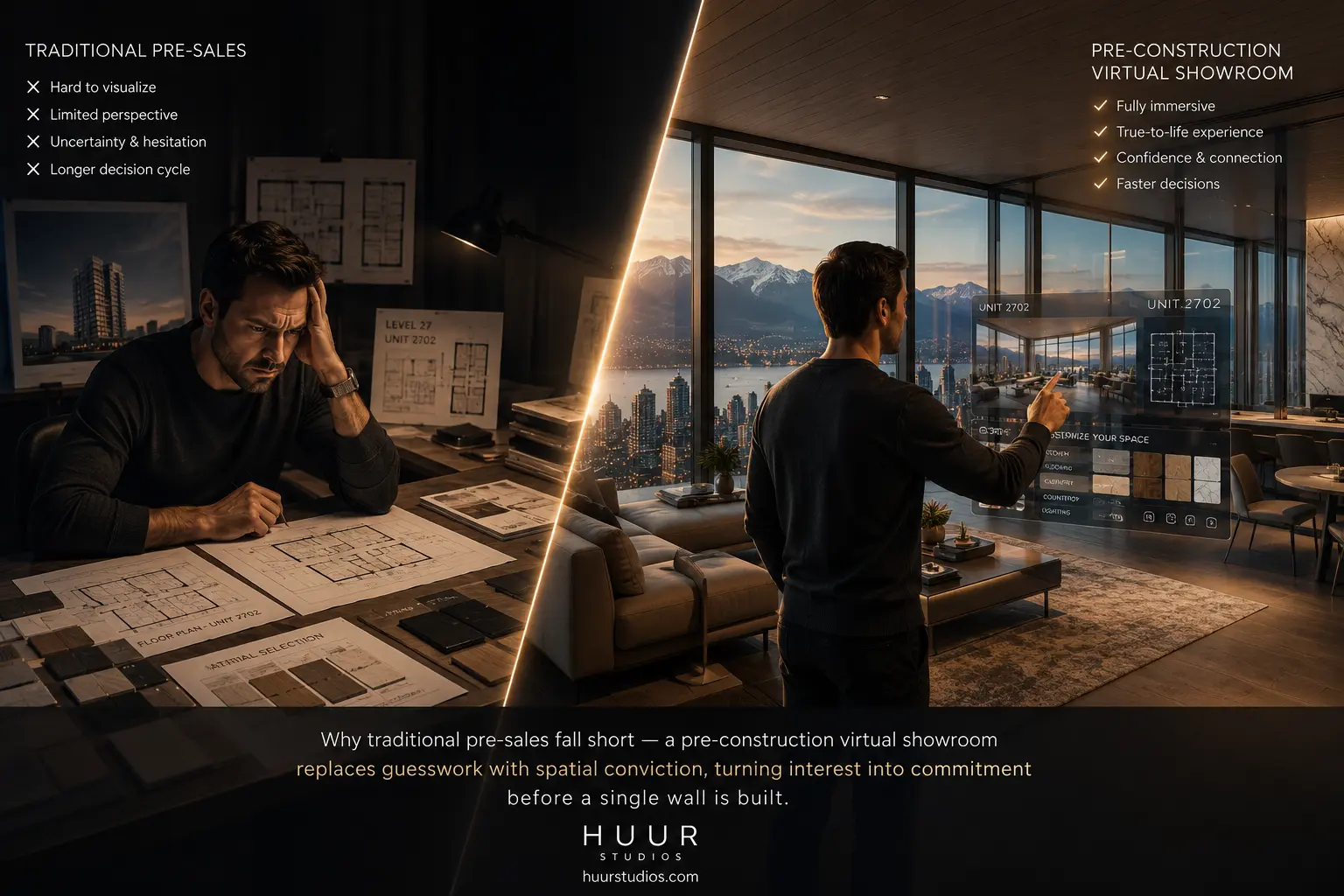
A pre-construction virtual showroom is the most powerful presale tool available to North American real estate developers in 2026 — and the gap between projects that deploy one and projects that rely on traditional sales methods is widening every quarter. Traditional pre-construction sales have always asked buyers to make one of the largest financial commitments of their lives based on floor plans, material samples, and the imagination required to bridge the gap between architectural drawings and lived experience. That gap costs developers leads, delays sales timelines, and generates the post-sale dissatisfaction that damages brand reputation in markets where referral momentum matters most.
The Vancouver luxury residential market — one of the most competitive and price-sensitive presale environments in North America — has become the proving ground for a better approach. Developers who deploy a pre-construction virtual showroom are not simply offering buyers a better presentation tool. They are fundamentally changing the buyer’s relationship with an unbuilt space — transforming a cognitive exercise into a sensory experience, replacing uncertainty with conviction, and converting interest into commitment at a speed and rate that traditional presale methods cannot approach.
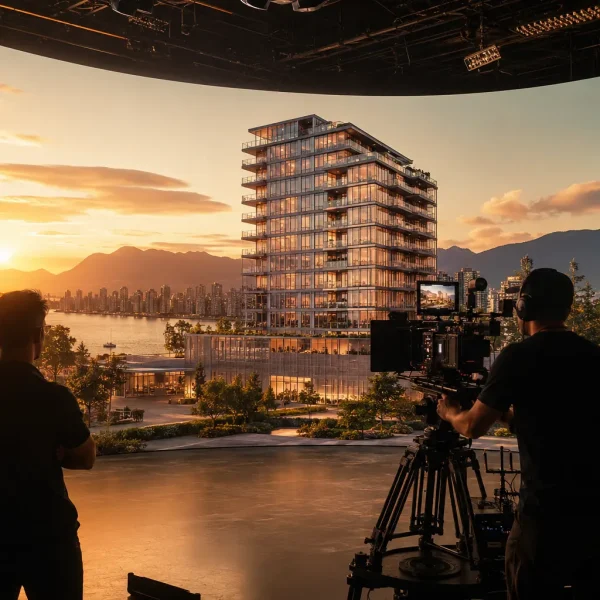
The technology enabling this transformation combines real-time rendering, interactive visualization platforms, and immersive delivery systems that place buyers inside photorealistic representations of spaces that will not physically exist for 12, 18, or 24 months. For developers, architects, and real estate brands across British Columbia and North America, a pre-construction virtual showroom is no longer a differentiator — it is becoming the baseline standard that sophisticated buyers expect before committing to a purchase.
What Is a Pre-Construction Virtual Showroom?
A pre-construction virtual showroom is an immersive digital environment that allows prospective buyers to explore, experience, and interact with a property that has not yet been built. Unlike a static render, a brochure, or even a video walkthrough, a pre-construction virtual showroom is a live, responsive platform — one that buyers navigate in real time, configure to reflect their specific unit and finish preferences, and experience with the spatial authenticity of a physical space.
The distinction between a pre-construction virtual showroom and a traditional visualization asset is architectural, not cosmetic. A static render is a fixed image — beautiful but frozen, informative but passive. A pre-construction virtual showroom is a platform — dynamic, interactive, and capable of responding to every question a buyer brings to their purchase decision. What does this unit look like with the premium finish package? How does afternoon light move through the living room? What is the view from the master bedroom on the 18th floor versus the 22nd? A pre-construction virtual showroom answers all of these questions instantly, in a single session, without a revision cycle or a return visit.
The Components of a Professional Pre-Construction Virtual Showroom
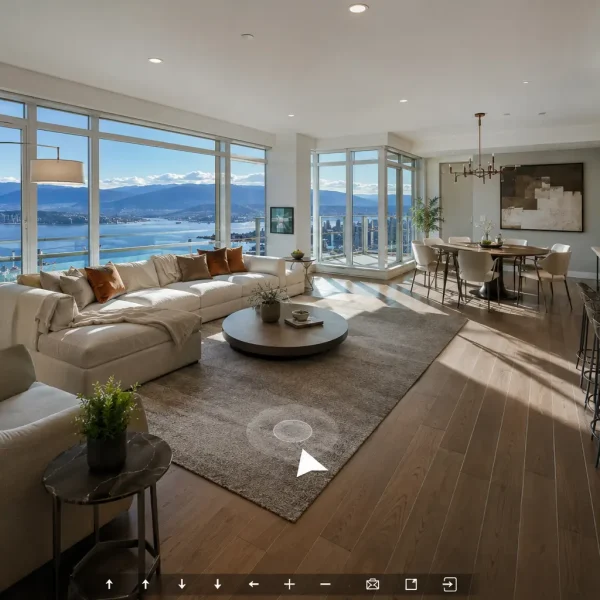
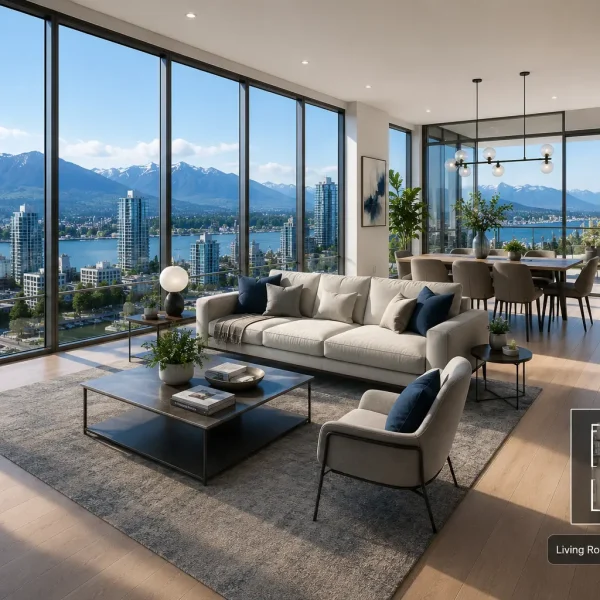
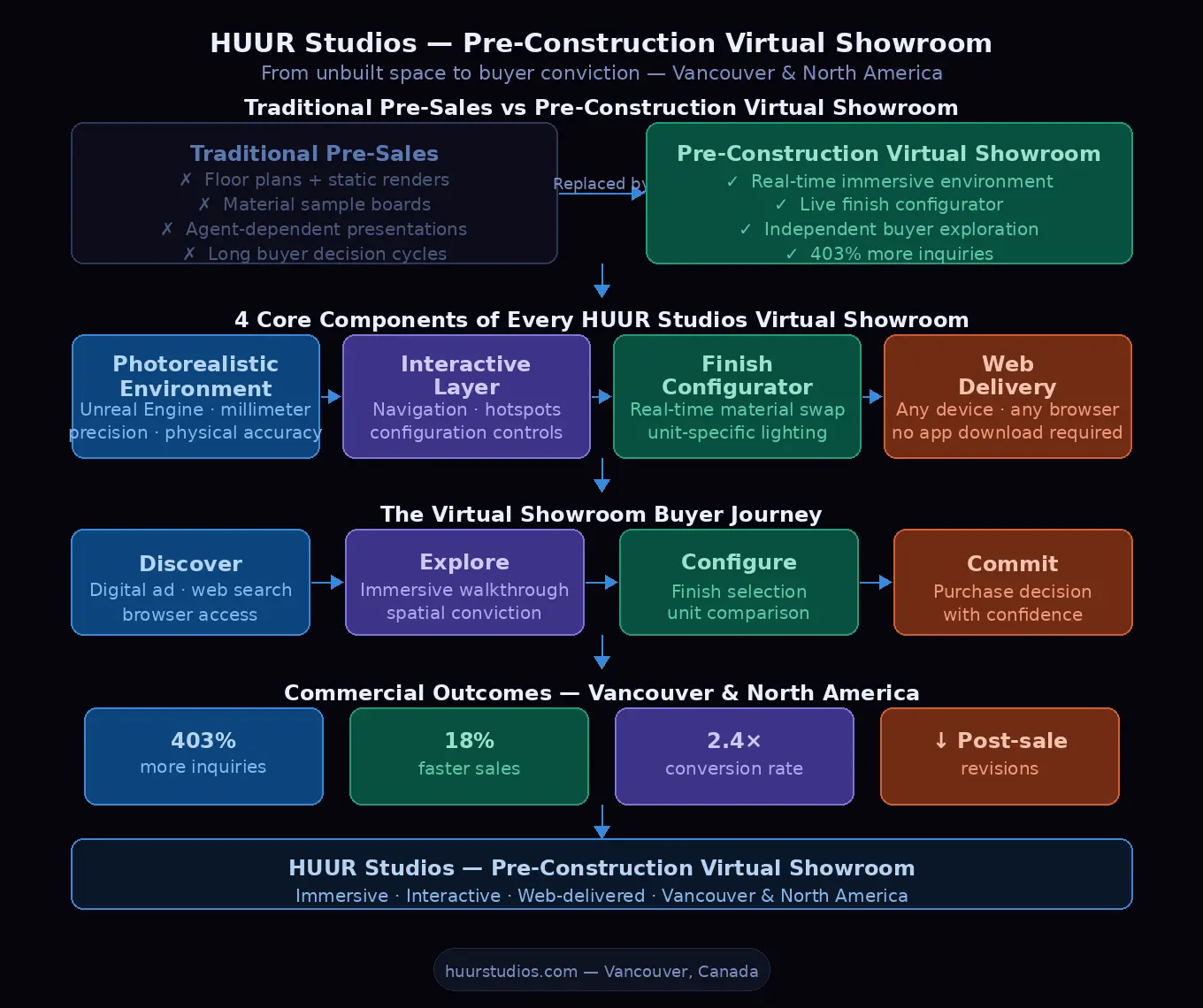
A professional pre-construction virtual showroom built by HUUR Studios integrates 4 core components into a unified buyer experience. The first is the photorealistic environment — a real-time Unreal Engine model of the property built to architectural precision, with physically accurate lighting, material textures, and spatial proportions that match the finished building to millimeter-level detail.
The second component is the interactive layer — the configuration tools, navigation controls, and information hotspots that allow buyers to move through the space, adjust variables, and access relevant information without requiring technical expertise or guided assistance. A pre-construction virtual showroom that requires a sales agent to operate is a presentation tool. One that buyers can explore independently is a sales platform.
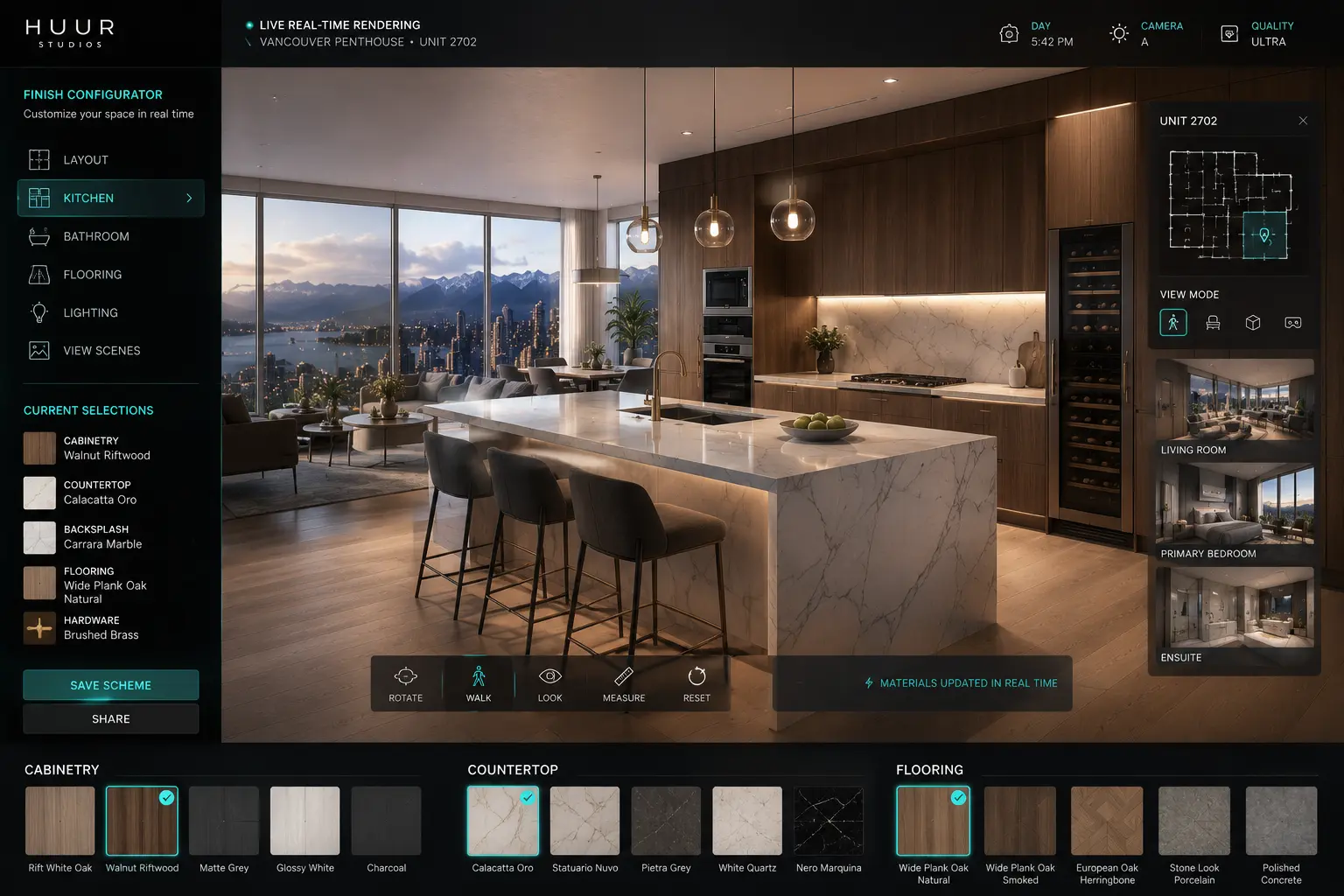
The third component is the finish configurator — the real-time material and finish selection system that allows buyers to visualize their specific combination of flooring, cabinetry, countertops, fixtures, and palette options rendered in the actual light conditions of their unit. For Vancouver developers offering multiple finish packages across dozens of unit types, the configurator embedded within a pre-construction virtual showroom replaces an unwieldy physical sample library with a single, intuitive digital experience.
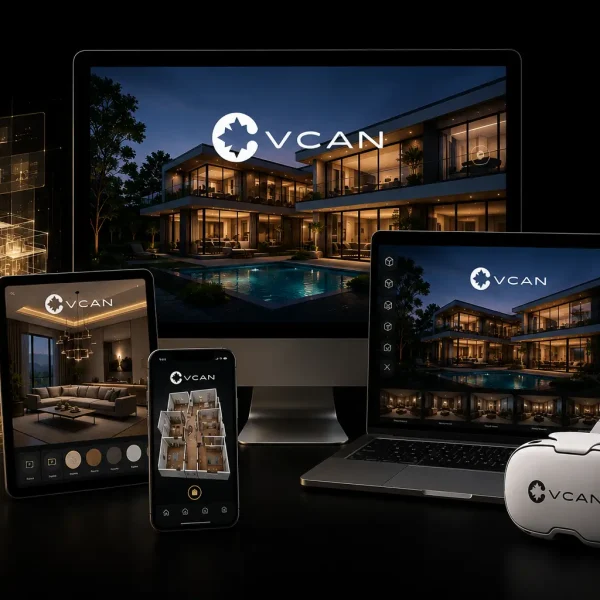
The fourth component is the delivery platform — the web-based, device-agnostic infrastructure that makes the pre-construction virtual showroom accessible to every buyer regardless of their location, device, or technical capability. A buyer in Hong Kong, a referral client in Toronto, and a walk-in at the Vancouver sales suite all access the same immersive experience through a standard browser — no app download, no VR headset, no specialized hardware required.
How Immersive Visualization Helps Buyers Understand Unbuilt Spaces
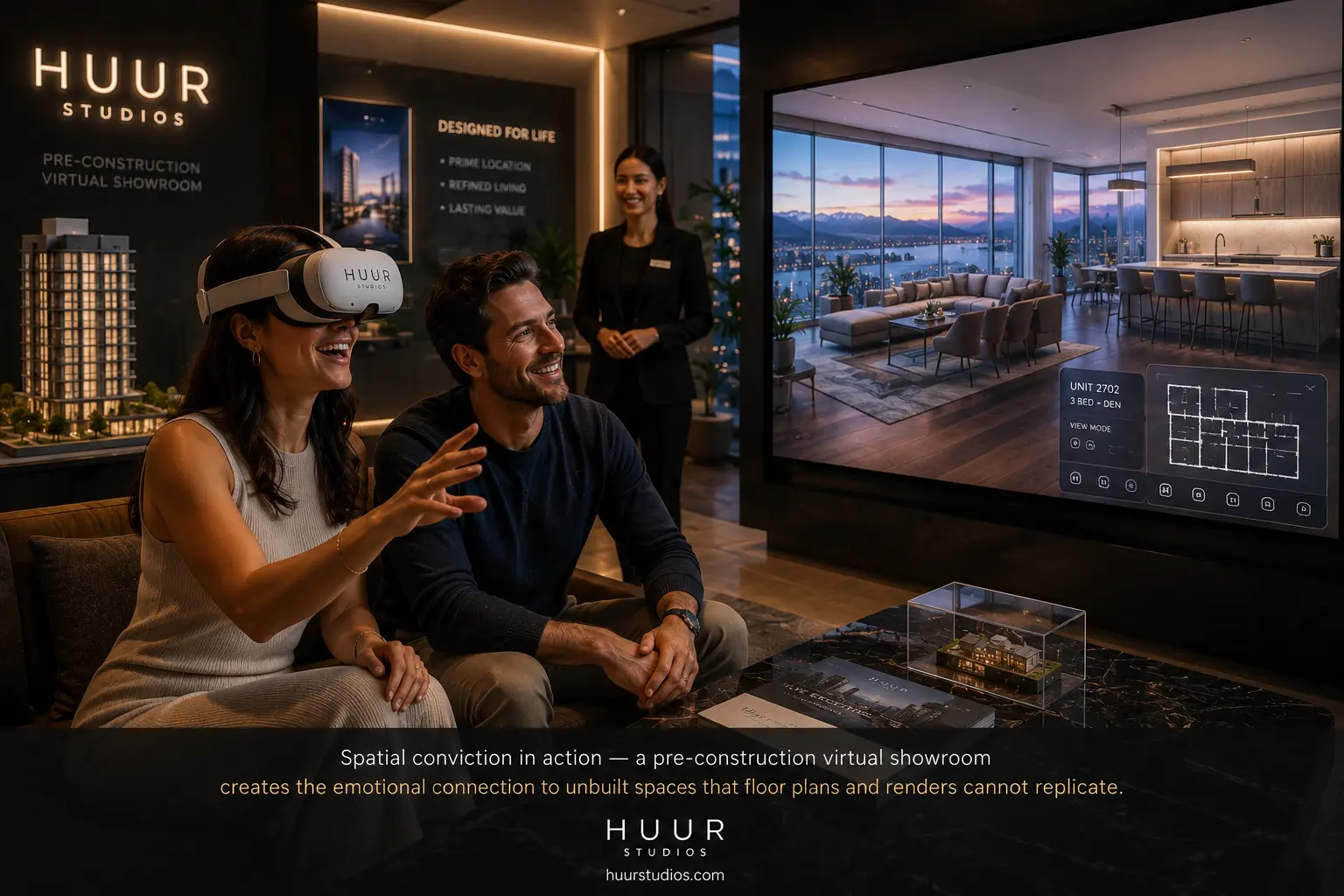
The fundamental challenge of pre-construction sales is cognitive — and a pre-construction virtual showroom solves it at the neurological level. Buyers asked to evaluate an unbuilt property must perform a complex act of spatial imagination: translating 2-dimensional floor plans into 3-dimensional space, scaling dimensions against their own sense of room proportions, extrapolating material samples into fully finished surfaces, and synthesizing all of these mental operations into a confident purchase decision. Many buyers cannot do this reliably — and the uncertainty this creates is the primary driver of pre-construction sales friction.
A pre-construction virtual showroom replaces this cognitive burden with direct spatial experience. Research from the National Association of Realtors confirms that properties marketed with immersive virtual experiences receive 403% more inquiries than those using static imagery alone — a statistic that reflects not just the appeal of the technology but the fundamental shift in buyer confidence that immersive visualization creates. When buyers can walk through a space rather than imagine it, the uncertainty that delays or prevents purchase decisions dissolves.
According to the Urban Land Institute, real estate developments that incorporate interactive visualization tools in their presale marketing achieve an average 18% improvement in sales velocity compared to those using traditional materials — evidence that the buyer confidence created by immersive visualization translates directly into faster, more decisive purchase behavior (Urban Land Institute).
Spatial Conviction — The Psychology of Immersive Property Presentation
The psychological mechanism behind the commercial effectiveness of a pre-construction virtual showroom is what spatial psychologists describe as presence — the subjective sense of actually being in a place rather than observing it from outside. Presence is the defining quality that separates an immersive property presentation from a video tour, a rendered image, or a physical scale model. It is also the quality that correlates most directly with purchase conviction.
A buyer who experiences genuine presence within a pre-construction virtual showroom environment forms an emotional relationship with the space that photographs and floor plans cannot create. They remember specific moments — the quality of light through a particular window, the sensation of scale in a double-height living area, the view that defines the unit’s premium positioning — with the vividness of physical memory rather than the abstraction of observed imagery. These emotional memories anchor the purchase decision in a way that purely rational evaluation cannot produce.
HUUR Studios designs every pre-construction virtual showroom around the creation of these defining moments — the specific spatial experiences that transform a prospect’s interest into conviction. The sequence of views, the progression through the space, the moments of reveal and transition are all narrative decisions that shape the emotional arc of the buyer’s experience within the pre-construction virtual showroom — ensuring that every session ends with the kind of spatial confidence that makes signing a contract feel like the natural next step.
The Role of Real-Time Rendering in Pre-Sale Real Estate Marketing
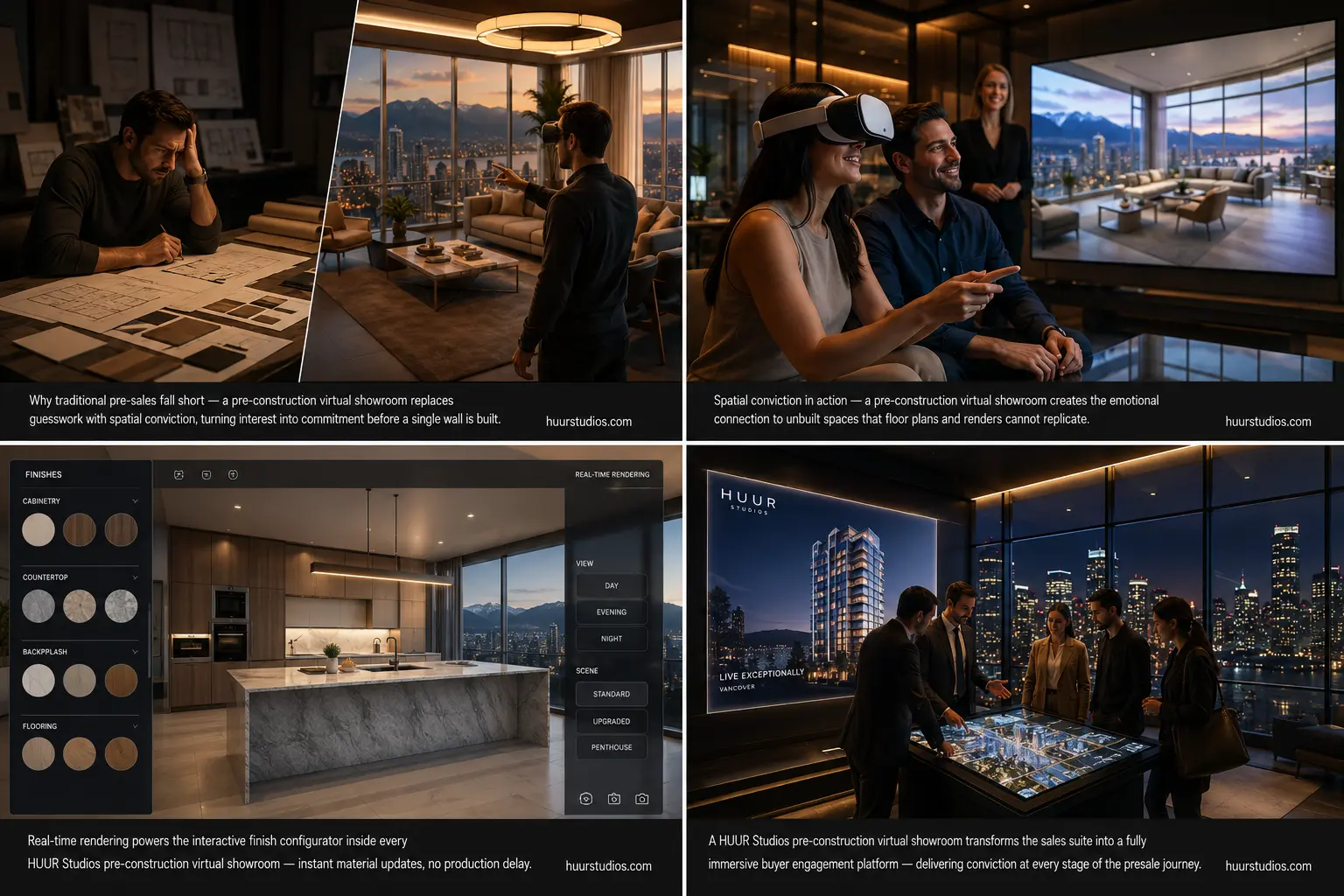
Real-time rendering real estate marketing is the technical engine that makes a pre-construction virtual showroom commercially viable — and the development of real-time rendering technology over the past 5 years has been the primary driver of the pre-construction virtual showroom model’s rapid adoption across North American real estate markets. Understanding what real-time rendering contributes — and what it replaces — is essential context for developers evaluating visualization investment decisions.
Traditional architectural visualization used offline rendering — a process where a computer calculates every pixel of an image from scratch, accounting for light bounces, material properties, shadow casting, and atmospheric effects. This process produces images of extraordinary quality but at significant time and computational cost. A single hero render might take 4 to 8 hours to produce. A visualization package with 20 images represents days of render time. Any revision — a material change, a lighting adjustment, a camera angle modification — restarts the process.
Real-time rendering real estate marketing replaces this static output model with a continuously rendered environment — one that responds instantly to user input, displays at 60 or more frames per second, and maintains photorealistic quality across every frame without the delay that makes traditional rendering incompatible with interactive use. A pre-construction virtual showroom powered by real-time rendering is never waiting to render the next image. It is always showing the current state of the environment, instantly, at full quality.
How Real-Time Rendering Changes the Economics of Visualization
The economic implications of real-time rendering for pre-construction virtual showroom production are significant and consistently underestimated by developers evaluating visualization investment options. The traditional rendering model charges for images — each render is a discrete deliverable with its own production cost, and revisions generate additional costs that compound throughout the campaign lifecycle.
A pre-construction virtual showroom built on real-time rendering inverts this economic model. The environment is the deliverable — a single investment that generates unlimited visual outputs. Want to see the unit from 30 different camera positions? The pre-construction virtual showroom produces them instantly. Need to show 5 different time-of-day lighting scenarios? Toggle between them in real time during the buyer meeting. Want to compare 3 finish packages side by side? The configurator renders all 3 simultaneously without a single additional production cost.
For Vancouver developers managing presale campaigns for projects with multiple towers, dozens of unit types, and 3 or 4 finish packages, this economic model transforms the visualization budget conversation entirely. A single pre-construction virtual showroom investment replaces a traditional render package that might have cost 3 to 4 times as much — while delivering exponentially more visual flexibility, buyer engagement capability, and campaign longevity.
Using Interactive Experiences to Improve Buyer Confidence and Engagement
Interactive pre-sale real estate platforms represent the commercial frontier of pre-construction virtual showroom deployment — the evolution from immersive but passive visualization into genuinely participatory buyer experiences that involve purchasers in the design of their own future spaces. The shift from showing buyers a space to allowing them to configure and personalize it is not a minor product refinement. It is a fundamental change in the buyer-developer relationship that has measurable commercial consequences.
HUUR Studios builds the interactive layer of every pre-construction virtual showroom around a core insight: buyers who participate in configuring their space develop a sense of ownership before purchase that passive observers do not. When a buyer chooses their kitchen finish package within the pre-construction virtual showroom, sees it rendered instantly in the actual light of their specific unit, and walks through the space with that selection active — they have already made a series of decisions that emotionally commit them to the property. The formal purchase decision becomes the confirmation of a choice they have already made in their imagination, reinforced by the spatial experience the pre-construction virtual showroom created.
Virtual Home Tour Pre-Construction — Beyond the Walkthrough
A virtual home tour pre-construction in its basic form is a navigable visualization — a step forward from static renders but still a fundamentally passive experience. The buyer moves through a predetermined space without the ability to modify, configure, or meaningfully interact with what they see. The pre-construction virtual showroom model advances significantly beyond this baseline.
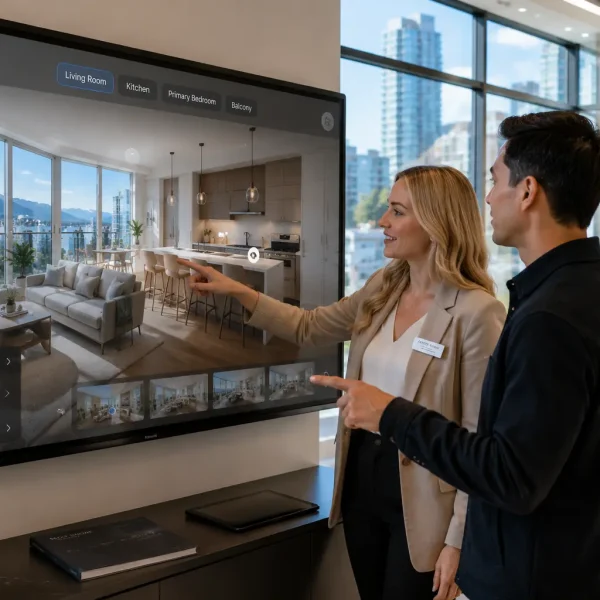
HUUR Studios’ pre-construction virtual showroom platforms include unit comparison tools that allow buyers to move between multiple floor plan options within a single session, viewing each at full scale with their chosen finish configuration active. They include view selectors that show the actual outlook from specific windows at different times of day and across different seasons — addressing the view premium question that drives so many luxury purchase decisions in Vancouver’s mountain and water-facing markets. They include embedded information layers that surface relevant project details — ceiling heights, storage specifications, building amenity access — at the precise moment in the buyer journey when each piece of information is most persuasive.
Together, these interactive elements transform a pre-construction virtual showroom from a visualization into a sales instrument — one capable of handling the full complexity of a sophisticated buyer’s evaluation process without requiring a senior sales agent to be physically present for every interaction.
Virtual Property Sales Experiences Across Every Channel
The pre-construction virtual showroom model extends far beyond the physical sales suite into every channel through which a developer reaches prospective buyers. Web-embedded virtual property sales experiences bring the immersive platform to buyers who discover the project through digital advertising, organic search, or social media — converting interest generated online into engagement that would previously have required a physical visit to the sales centre.
For Vancouver developers targeting international buyers — a significant segment of the luxury residential market across British Columbia — web-based pre-construction virtual showroom delivery is commercially critical. A buyer in Singapore, London, or Los Angeles who can explore a photorealistic interactive environment of their prospective Vancouver property, configure their finish preferences, and share the experience with family members before making a trans-Pacific purchase trip is a buyer who arrives at the sales suite with existing conviction rather than starting from zero.
HUUR Studios delivers pre-construction virtual showroom experiences optimized for every channel simultaneously — web-embedded for digital discovery, full-immersion VR for sales suite presentations, and shareable mobile experiences for referral marketing — ensuring that the investment in a single platform generates buyer engagement across the entire presale marketing ecosystem.
Why Virtual Showrooms Are Becoming Essential in Pre-Construction Sales
The shift from pre-construction virtual showroom as premium differentiator to market baseline expectation is happening faster in North American luxury real estate than most developers anticipated — and the drivers are structural rather than cyclical. Buyer demographics, technology accessibility, and competitive dynamics are all moving in the same direction simultaneously, and the developers who recognize this shift earliest gain the most durable competitive advantage.
The demographic driver is straightforward. The majority of presale buyers in North American luxury residential markets in 2026 are millennials and Gen X purchasers who have grown up with digital-first consumer experiences — from e-commerce to streaming to gaming. These buyers apply the same expectations to real estate: they want to research, evaluate, and emotionally engage with a property digitally before committing to a physical sales appointment. A developer who cannot offer a pre-construction virtual showroom experience is invisible to this demographic during the critical early evaluation phase of their purchase journey.
The competitive driver is equally clear. In Vancouver’s presale market, where multiple luxury residential projects compete simultaneously for the same pool of qualified buyers, the quality of the buyer experience during the evaluation phase directly influences which projects receive serious consideration. A pre-construction virtual showroom that creates spatial conviction, demonstrates design quality, and enables confident decision-making positions a project as premium in a way that no amount of print advertising or static imagery can replicate.
Explore More From HUUR
The Power of Cinematic World CGI – Why Most Brands Fail to Connect Online
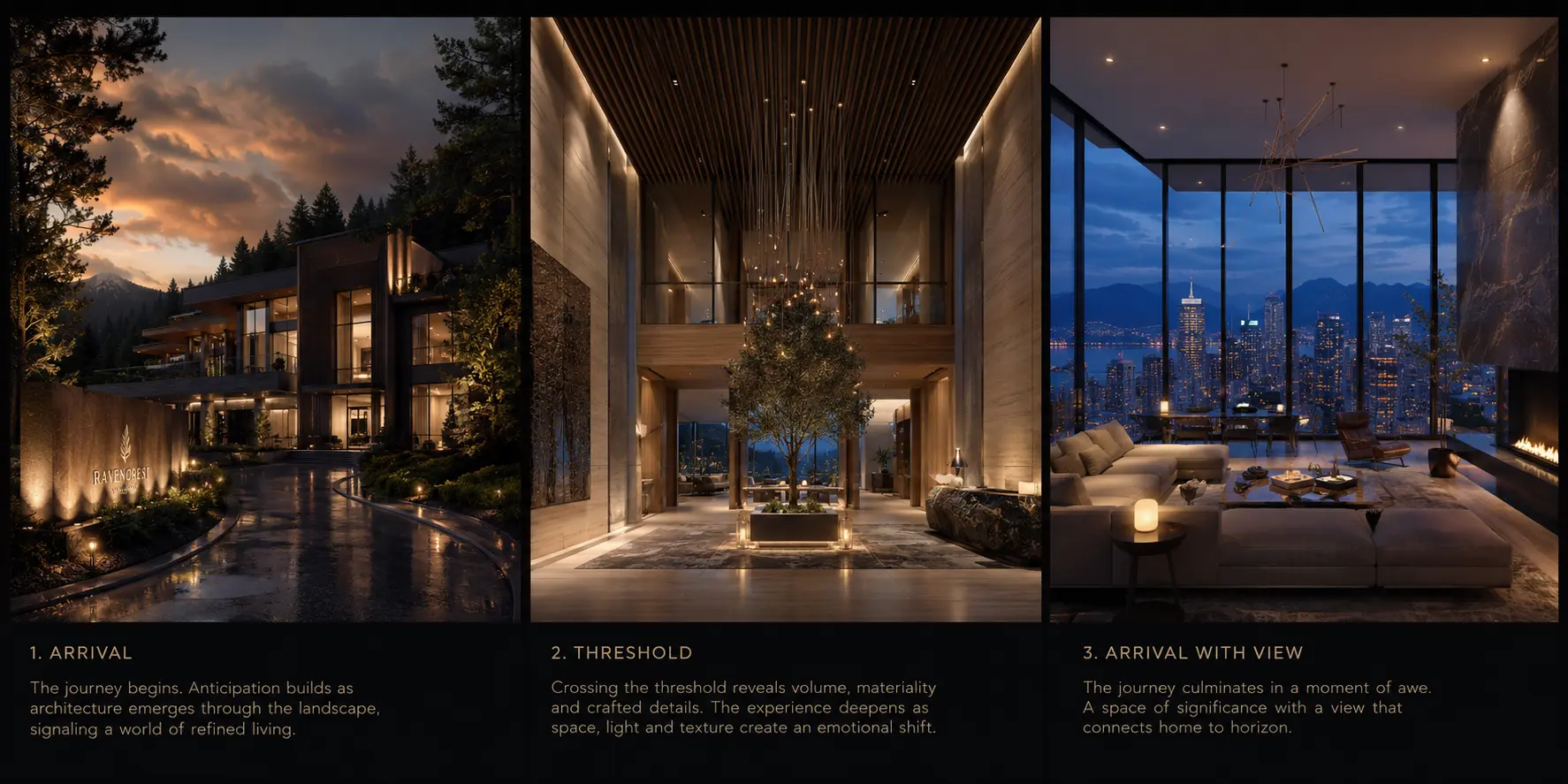
The HUUR Studios Pre-Construction Virtual Showroom Advantage
HUUR Studios brings a distinctive combination of architectural visualization expertise, real-time technology capability, and narrative design sensibility to every pre-construction virtual showroom it delivers for North American developers. The team does not build visualization tools — it builds buyer experiences, designed from the first creative decision to the final interactive element around the specific emotional and rational journey that converts a prospect into a purchaser.
Every pre-construction virtual showroom project begins with a discovery phase focused on buyer psychology: who is the target buyer, what are their primary purchase motivators, what are their hesitations, and what are the specific spatial experiences that will build conviction for this particular project in this particular market? The answers to these questions shape every creative and technical decision that follows — from the sequence of the virtual walkthrough to the configuration options offered to the information architecture of the interactive layer.
For developers across Vancouver, Victoria, Calgary, and the broader North American market, this approach produces pre-construction virtual showroom experiences that perform measurably better than generic visualization platforms — because they were designed for a specific buyer, for a specific project, with a specific commercial outcome in mind.
FAQ — Pre-Construction Virtual Showroom Explained
1. What is a pre-construction virtual showroom? A pre-construction virtual showroom is an immersive, interactive digital platform that allows buyers to explore, configure, and experience a property before it is built. Built on real-time rendering technology, it delivers photorealistic spatial experiences through any browser — enabling confident purchase decisions without requiring a physical visit to a completed space.
2. How do virtual showrooms help sell unbuilt properties? A pre-construction virtual showroom replaces the cognitive burden of imagining an unbuilt space with direct spatial experience — allowing buyers to walk through, configure, and emotionally connect with a property in real time. This creates the spatial conviction that accelerates purchase decisions, with research confirming 18% faster sales velocity for projects using immersive visualization tools.
3. Can buyers interact with spaces before construction starts? Yes — a pre-construction virtual showroom is fully interactive from day one of the presale campaign. Buyers configure finish packages, compare floor plans, select views, and explore unit details in real time within a photorealistic environment. HUUR Studios builds pre-construction virtual showroom platforms that buyers can access independently through any device, anywhere in the world.
4. Why is real-time visualization important for pre-sale marketing? Real-time rendering real estate marketing powers the interactivity that makes a pre-construction virtual showroom commercially effective. Unlike static renders, real-time environments respond instantly to buyer input — delivering finish configurations, lighting scenarios, and camera positions on demand without production delay. For Vancouver developers, this responsiveness transforms buyer meetings from presentations into participatory sales experiences.
Every pre-construction project asks buyers to believe in something they cannot yet see, touch, or experience. The difference between hesitation and commitment often comes down to one thing: confidence.
A well-designed virtual showroom does more than showcase a project — it helps buyers understand it, connect with it, and make decisions with clarity long before construction is complete.
At HUUR Studios, we create immersive pre-construction experiences that transform floor plans into places, presentations into conversations, and interest into genuine buyer conviction.
Whether you’re launching a luxury residential tower, a mixed-use development, or a boutique real estate project, we can help you create a sales experience that buyers remember long after they leave the showroom.
Talk to our team about building a pre-construction virtual showroom tailored to your project.
Conclusion
Pre-construction virtual showroom technology has permanently changed the standard for pre-sale real estate marketing in North America — and the developers who have adopted it earliest are demonstrating the commercial advantages that will make it the universal baseline within 3 years. The combination of immersive property presentation, real-time rendering real estate marketing, interactive pre-sale real estate platforms, and web-based delivery creates a buyer experience that traditional sales methods structurally cannot replicate — regardless of the quality of the renders, the elegance of the brochure, or the skill of the sales team.
HUUR Studios builds pre-construction virtual showroom experiences that convert buyer uncertainty into spatial conviction — designing every interactive element, every configuration tool, and every narrative moment around the specific purchase journey of the target buyer and the specific competitive positioning of the project. For developers across Vancouver and North America who understand that the quality of the presale experience is itself a signal of the quality of the finished product, a pre-construction virtual showroom is the investment that defines how the entire project is perceived from the first buyer interaction to the final unit sale.
If your project is ready to be experienced before it is built, a pre-construction virtual showroom is how HUUR Studios makes that happen.