

Introduction
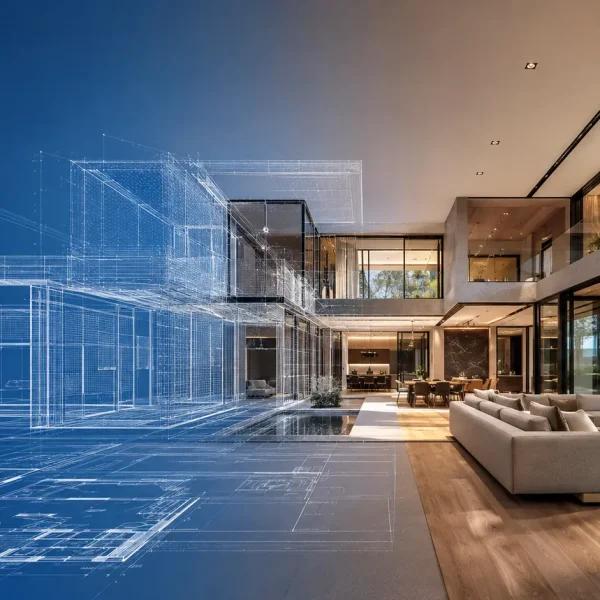
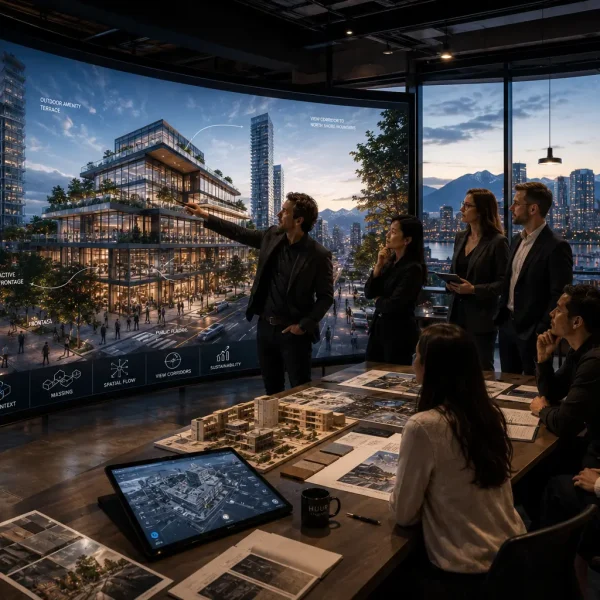
The future of architectural visualization is no longer a distant ambition — it is unfolding right now in the studios, sales centers, and development boardrooms of Vancouver, Toronto, and across North America. For decades, architectural visualization meant a carefully rendered static image: a polished representation of a space that did not yet exist, frozen in a single moment of light and perspective. That era is ending. And what is replacing it is transforming not just how buildings are shown — but how they are sold, experienced, and remembered.
Today’s buyers, investors, and developers demand more than images. They want to walk through a penthouse suite before a single foundation has been poured. They want to swap materials in real time, watch light shift across a lobby at different hours of the day, and share that experience with a partner on the other side of the country. Static renders cannot deliver this. The future of architectural visualization belongs to immersive, interactive, real-time experiences — built on game engine technology, powered by cinematic storytelling, and delivered through platforms that meet clients exactly where they are.
The competitive pressure driving this shift is real. North American real estate markets are demanding more sophisticated presale tools. Luxury developers in Vancouver are discovering that photorealistic interactive environments close deals faster, at higher price points, and with fewer post-sale revisions than traditional rendering packages ever could. The studios that understand this — and invest in next-generation architectural visualization capabilities — are the ones defining what this industry looks like in 2026 and beyond.
This article explores how the future of architectural visualization is being shaped by real-time technology, game engine innovation, immersive storytelling, and the studios leading this transformation.
How Architectural Visualization Has Traditionally Worked
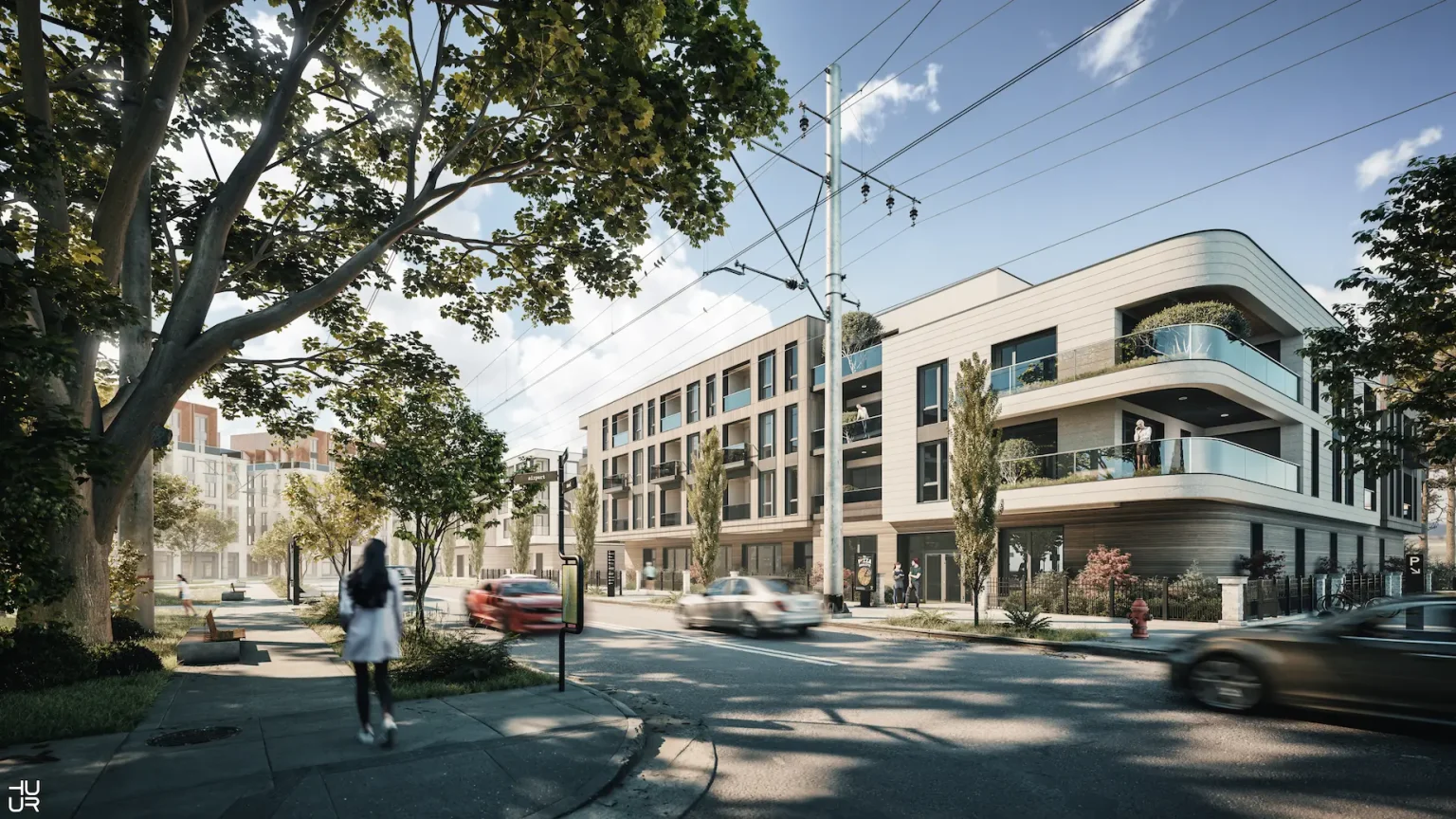
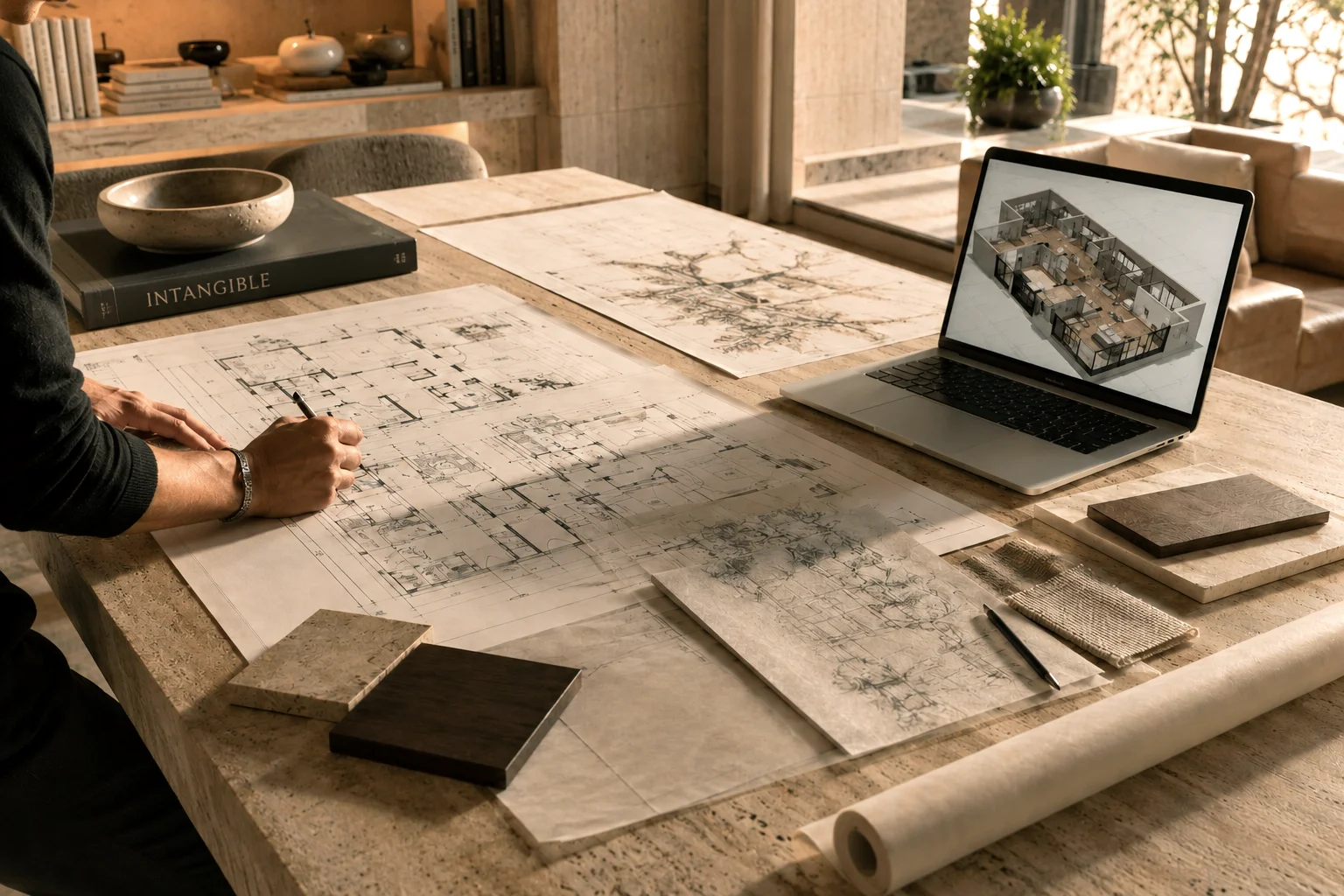
The future of architectural visualization is best understood against the backdrop of where this discipline began — and how far it has already traveled. For most of its history, architectural visualization was a linear, time-intensive process with no real-time component. An architect or developer handed off design files to a visualization studio. Artists built a 3D model, textured it, lit it, and rendered it — a computationally expensive process taking hours or days per image. The result was a fixed photograph of a space that existed only in software. This static approach defined the industry for decades and is precisely what the future of architectural visualization is leaving behind.
This workflow served its era adequately. Static architectural rendering gave developers a credible way to market projects before construction. Sales suites were lined with large-format printed renders. Websites featured carefully selected hero images. Brochures were built around them. The formula worked because buyers had no frame of reference for anything better. But the future of architectural visualization was already being shaped by technologies that would make this approach feel fundamentally limited — and the studios that recognized this earliest gained the most competitive ground.
The Strengths and Constraints of Traditional Rendering
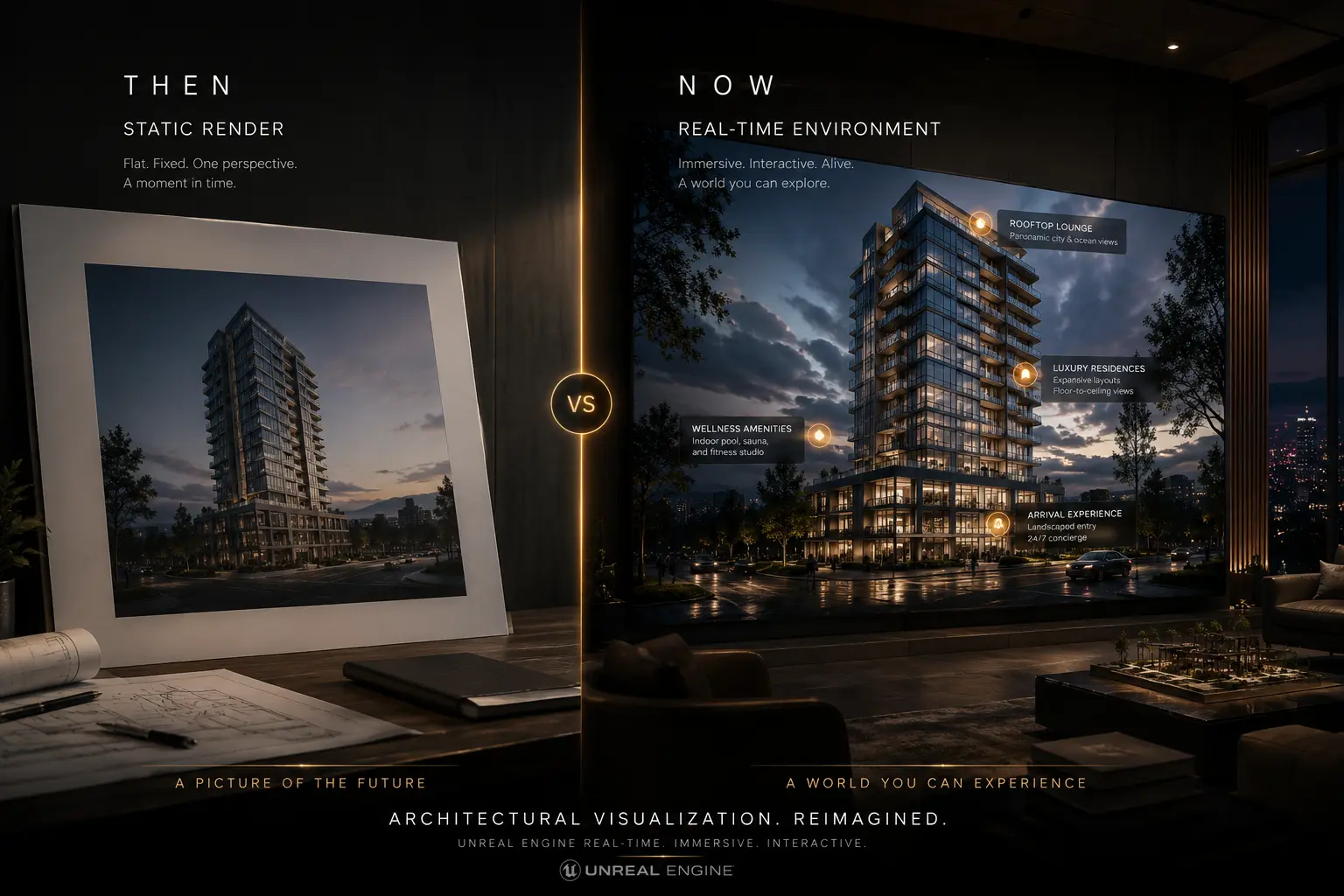
Static rendering remains a disciplined, exacting craft. At its best it produces images of extraordinary quality — photorealistic representations of light, material, and space that communicate design intent with precision and beauty. For print marketing, award submissions, planning applications, and early-stage concept communication, static renders continue to deliver real value. Understanding these strengths is essential context for understanding what the future of architectural visualization replaces and what it deliberately preserves from the rendering era.
The constraints, however, are structural. A static render answers one question: what does this space look like from this angle, at this time of day, with these materials? Change any variable and the render must be rebuilt from scratch. A client who wants to see the living room in white oak instead of walnut triggers a new production cycle. A developer who shifts the lobby orientation 15 degrees faces days of rework. The future of architectural visualization eliminates these constraints entirely — replacing fixed outputs with living, responsive real-time environments that absorb changes instantly.
For Vancouver developers managing presale campaigns across multiple unit types, floor plans, and finish packages, this constraint multiplies rapidly. A project with 12 unit types, 3 finish options each, across 4 key viewing angles generates 144 renders — each requiring individual production, revision, and approval cycles. The time and cost implications are significant, and the output remains a static collection that cannot respond to a client standing in a sales suite asking “what if?” The future of architectural visualization answers that question instantly — in the room, at the moment it is asked, without a single additional render.
How Client Expectations Have Evolved
Client expectations did not shift gradually — they shifted suddenly, driven by 2 forces operating simultaneously. The first was the gaming industry. Consumers navigating photorealistic game environments at 60 frames per second began expecting comparable visual quality from real estate experiences. The gap between what a modern video game delivered and what a real estate visualization offered became increasingly difficult to justify — and it accelerated demand for the future of architectural visualization faster than most studios anticipated.
The second force was the pandemic. When in-person sales suites closed across North American markets in 2020 and 2021, developers turned to digital tools to maintain presale momentum. Virtual tours, interactive floor plan explorers, and online configuration tools became baseline necessities almost overnight. Buyers in Vancouver, Calgary, and Toronto experienced their first digital-first property purchasing journeys — and many preferred them. By the time sales suites reopened, client expectations had permanently realigned with what the future of architectural visualization offers: richer, more interactive, more immersive than anything the static rendering era produced. The studios that adapted earliest are the ones defining the industry today.
Why Real-Time Technology Is Reshaping Visualization Workflows
“Rendering comes in several forms, each suited for different needs. One of the most common methods is offline rendering, which focuses on high-quality output. It uses complex algorithms to create photorealistic images, often seen in movies, animation, or high-end architectural visualizations. However, this process is time-consuming and typically requires powerful hardware. In contrast, real-time rendering is designed for speed. It allows designers and users to see updates immediately as they make changes to a model.(D5)”
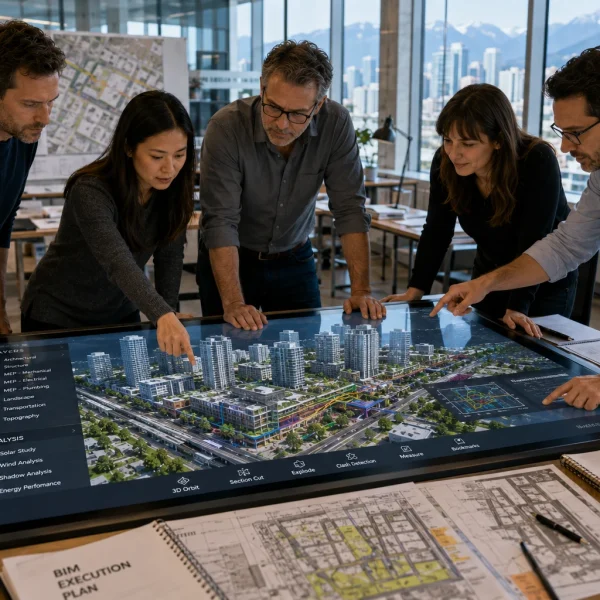
The future of architectural visualization is being built on real-time technology — and this represents the most significant workflow transformation the ArchViz industry has experienced since the transition from hand drafting to 3D modeling. Where traditional rendering separates the creative and output phases — build the model, then render the image — real-time visualization collapses them into a single continuous experience. The image is always live. The environment responds instantly to every change. This is not an incremental improvement on what came before. It is a structural reinvention of what architectural visualization is and what it can do — and it is the engine powering the future of architectural visualization across every market HUUR Studios serves.
The practical implications for studios and developers are profound. A real-time visualization environment is not a deliverable — it is a platform. Once built, it can be experienced from any angle, at any time of day, with any combination of materials and configurations the client wants to explore. A sales conversation that previously required a stack of printed renders and a lengthy revision cycle becomes a live, responsive demonstration that closes on the spot. This is the commercial promise of the future of architectural visualization — not just better images but a fundamentally more powerful sales instrument.
Speed, Flexibility, and the New Revision Economy
The economic argument for the future of architectural visualization is straightforward and compelling. Traditional rendering studios charge for revisions because every change triggers a new production cycle. Real-time environments absorb revisions because the environment itself is the deliverable — not the images extracted from it.
For a Vancouver luxury developer managing a presale campaign, this distinction is financially significant. A traditional rendering package for a mid-scale residential project might include 20 hero images, each subject to 2 or 3 revision rounds before approval. At studio rates, the revision economy alone adds 30 to 40% to the total visualization budget. The future of architectural visualization eliminates this cost structure entirely — because clients explore and adjust in real time during the presentation itself, without triggering a single additional production cycle.
HUUR Studios has observed this dynamic consistently across its North American client base. Developers who transition from static rendering packages to real-time visualization platforms report not just cost savings but faster sales cycles. When a buyer can configure their specific unit, choose their finish package, and walk through the result in a single session, the decision timeline compresses dramatically. The future of architectural visualization removes the doubt that static images cannot address — because the buyer has already experienced the space before making a commitment.
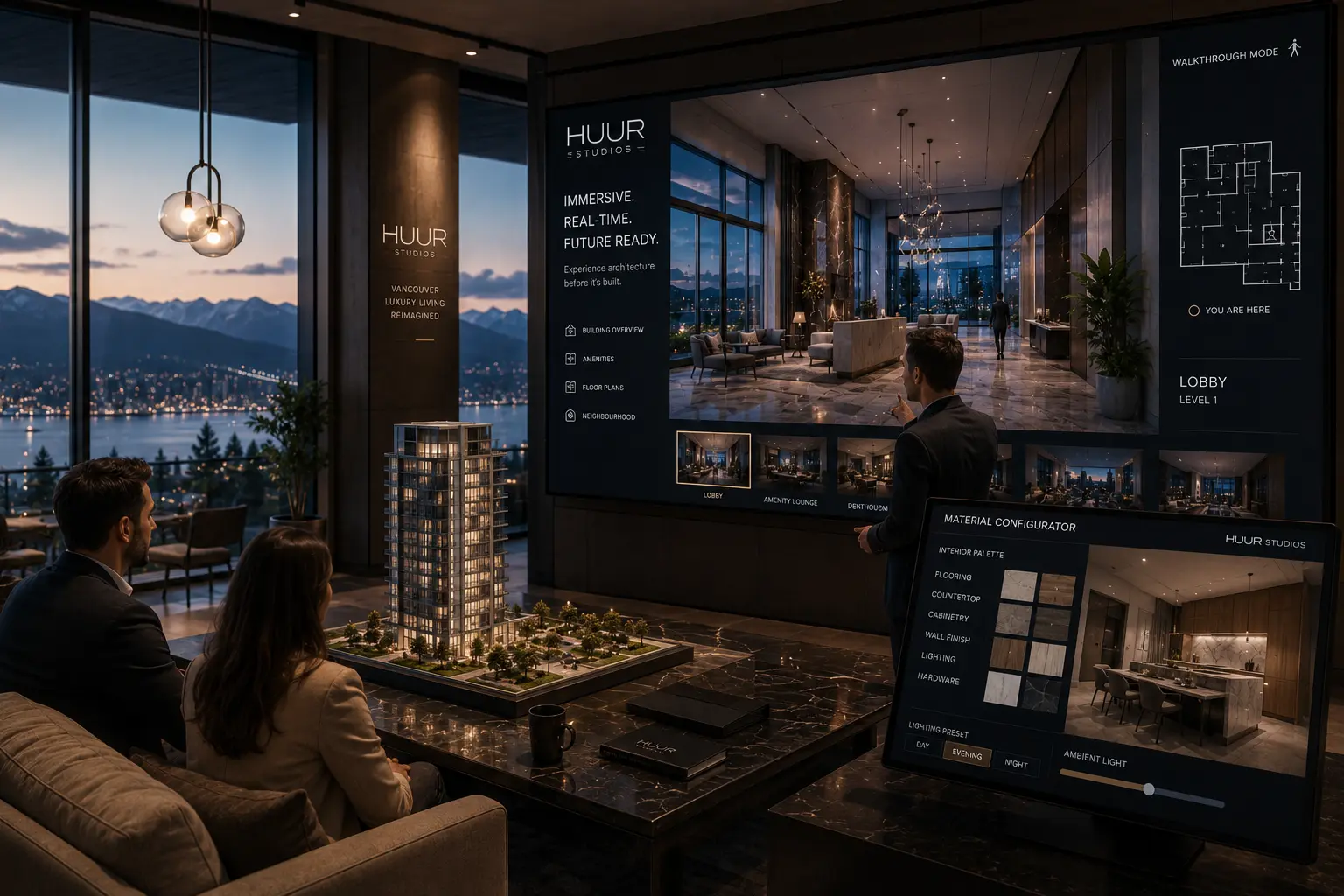
How Immersive Visualization Technology Changes Buyer Behavior
Immersive visualization technology does something static rendering fundamentally cannot: it creates emotional memory. Neuroscience research on spatial experience confirms that humans form stronger emotional connections to spaces they have physically or virtually inhabited than spaces they have only seen in photographs. A buyer who has walked through a virtual penthouse using the future of architectural visualization has a qualitatively different relationship with that unit than one who has viewed a render of it — and that difference is measurable in conversion rates.
Research from the Urban Land Institute found that real estate projects using interactive visualization tools in presale marketing achieved 18% faster sales velocity and 12% higher average sale prices compared to projects using static renders alone. For Vancouver developers operating in one of North America’s most competitive luxury markets, these numbers represent significant revenue and carrying cost advantages. The future of architectural visualization is being built on this insight: immersion creates conviction, and conviction closes sales at a pace and price point static rendering never reached.
The Impact of Game Engines on Architectural Visualization
Game engines have become the defining technology of the future of architectural visualization — platforms originally designed to power interactive video games that are now reshaping how architects, developers, and visualization studios build and deliver immersive environments. Unreal Engine and Unity are the 2 platforms most widely adopted globally, and their impact extends far beyond visual quality into workflow, interactivity, and commercial delivery.
The fundamental advantage game engines bring to the future of architectural visualization is their real-time rendering architecture. Traditional rendering software calculates every pixel of an image from scratch each time a frame is produced — a process taking minutes or hours per image. Game engines maintain a constantly updated model of a scene, rendering it at 60 or more frames per second using GPU acceleration, precomputed lighting, and sophisticated level-of-detail management. The result is a photorealistic environment that responds instantly to user interaction — the technical foundation of everything the future of architectural visualization promises.
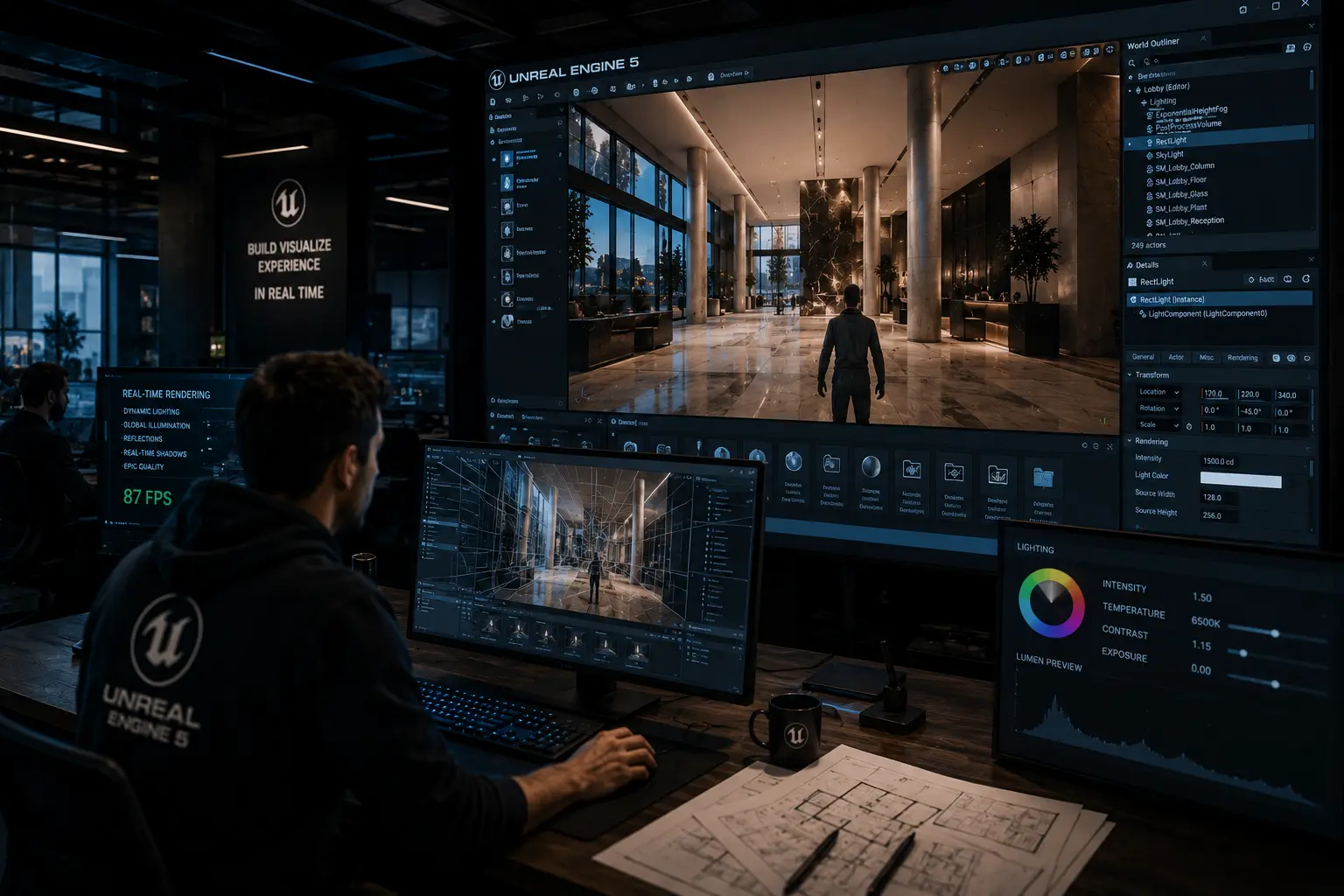
Unreal Engine and the Cinematic Standard
Unreal Engine has established itself as the dominant platform for cinematic architectural visualization — producing environments of such photorealistic quality that the line between visualization and photography has become genuinely difficult to identify. The engine’s Lumen global illumination system calculates realistic light behavior in real time — bounced light, subsurface scattering, and dynamic shadow casting — producing atmospheric quality that previously required hours of offline rendering. This capability sits at the heart of the future of architectural visualization as HUUR Studios delivers it.
For HUUR Studios, Unreal Engine is the foundation of every real-time project. The platform allows the team to create environments simultaneously technically precise — accurate to millimeter-level architectural detail — and cinematically evocative, with the lighting, atmosphere, and material quality of a high-end architectural photograph. Clients do not just see the space — they inhabit it. Vancouver’s architectural and development community has been among the earliest North American adopters of Unreal Engine for presale visualization — and HUUR Studios has been at the center of that shift, delivering the future of architectural visualization for residential, commercial, and mixed-use developments across British Columbia and beyond.
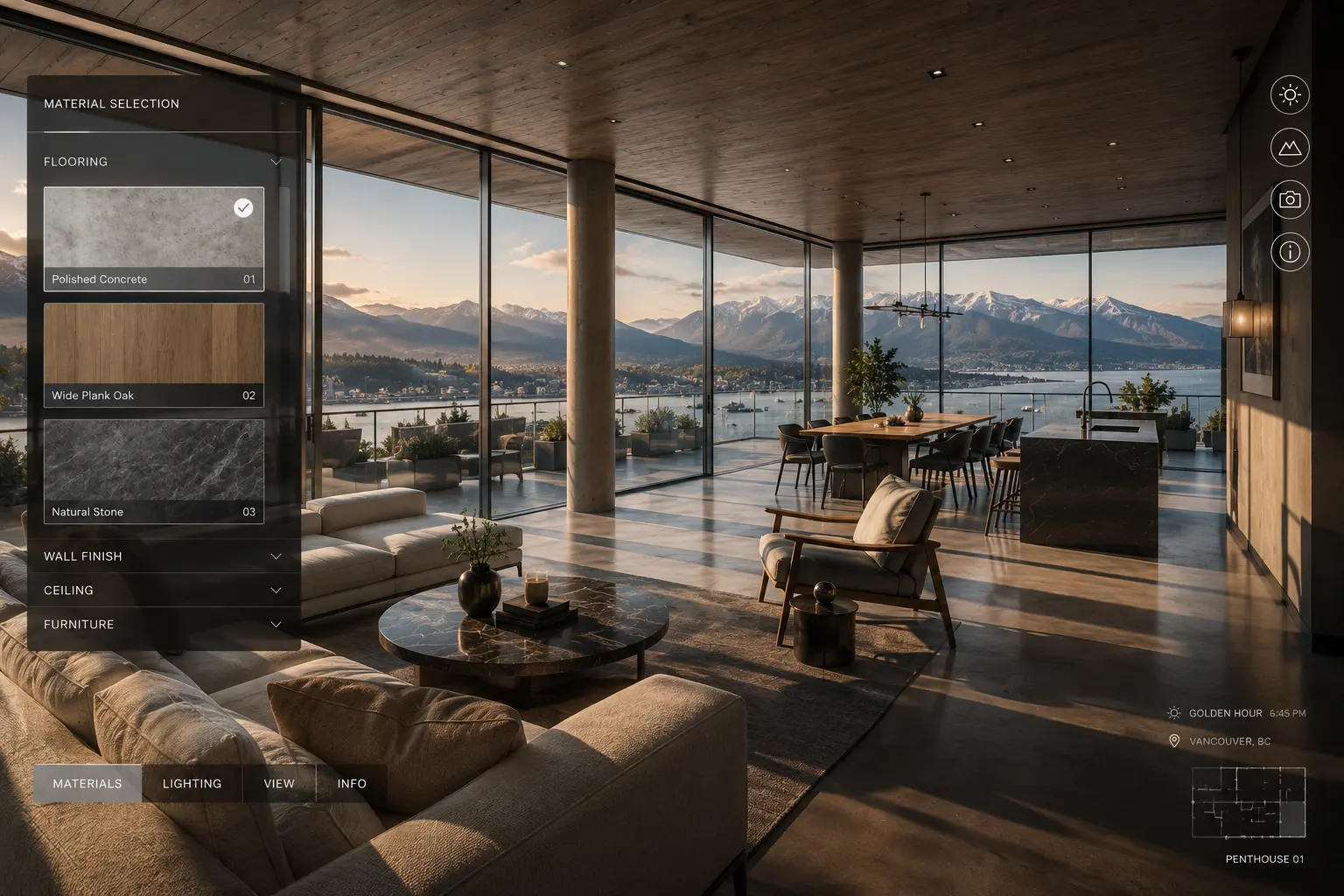
Beyond Visuals — Game Engines as Interactive Platforms
The transformative potential of game engines for the future of architectural visualization extends beyond visual quality into interactivity. A game engine environment is not just a beautiful image — it is a responsive system. Users navigate freely, trigger animations, swap materials, activate hotspots, adjust lighting conditions, and access embedded information — all within a single seamlessly rendered real-time environment.
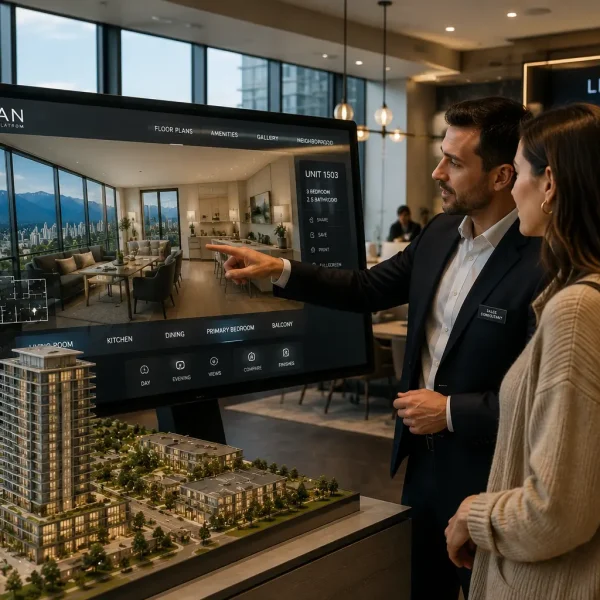
HUUR Studios leverages this interactivity to build interactive architectural experiences that function as complete presale platforms. A developer deploying a HUUR Studios real-time environment gains not just a visualization tool but a sales instrument — one that a non-technical sales team can operate confidently in a live client meeting, and that buyers can access independently through a web browser from anywhere in the world. This web accessibility is a critical advantage in North American markets where international buyers represent a significant share of luxury real estate transactions — and it is a defining characteristic of the future of architectural visualization that HUUR Studios delivers across every project it produces.
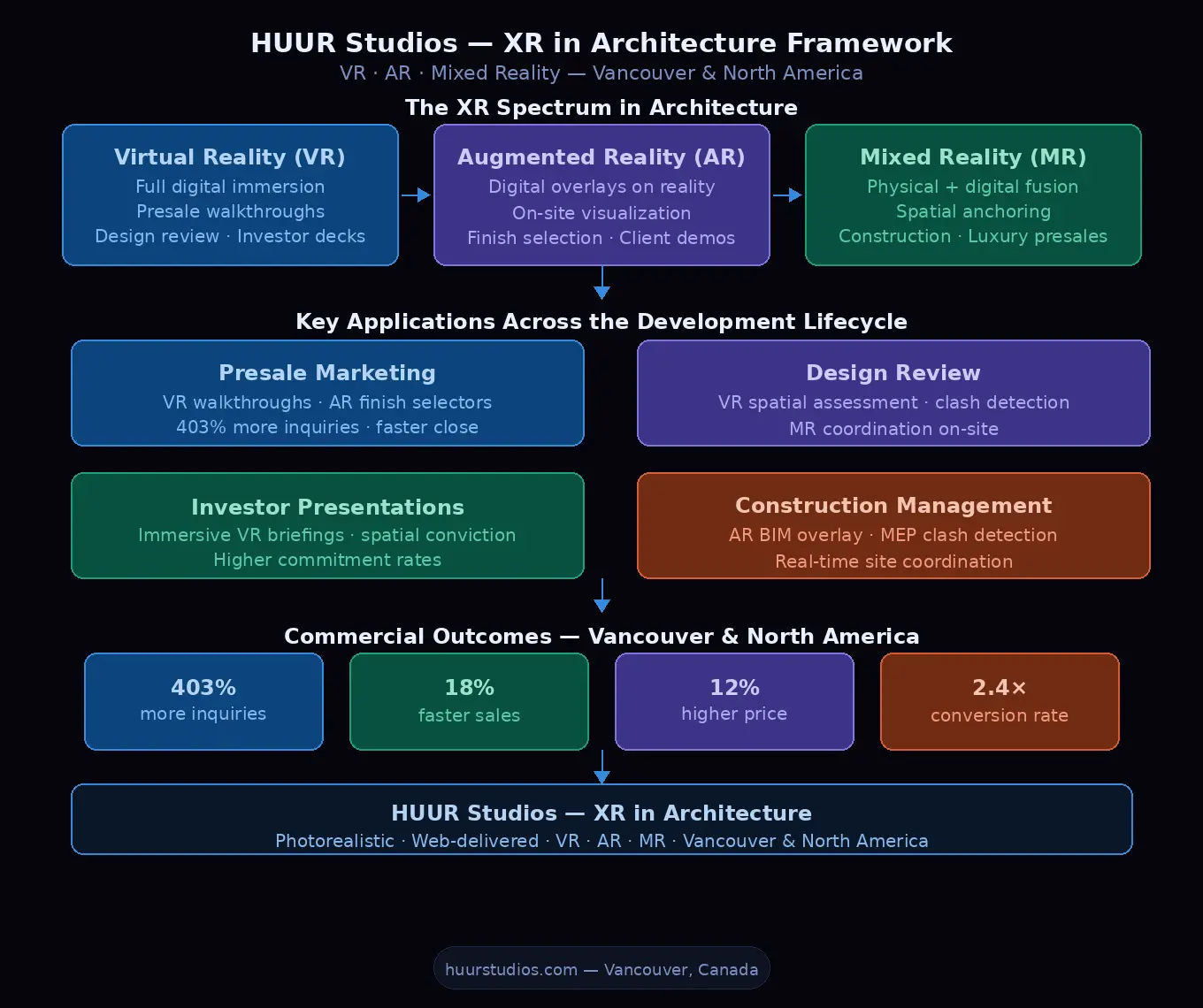
FAQ — The Future of Architectural Visualization
1. What is the future of architectural visualization? The future of architectural visualization is real-time, immersive, and interactive. Game engine platforms like Unreal Engine enable studios to create photorealistic environments buyers can navigate, configure, and experience before construction. Combined with cinematic storytelling and web-based delivery, next-generation ArchViz is transforming how properties are marketed and sold across North America.
2. Will real-time visualization replace traditional rendering methods? Not entirely — but it is redefining when static rendering is appropriate. For print marketing, planning submissions, and early-stage concepts, static renders remain valuable. For presale marketing, buyer engagement, and interactive presentations, real-time architectural visualization delivers measurably superior commercial outcomes. Most leading studios now offer hybrid workflows combining both methods.
3. How are game engines changing architectural visualization? Game engines like Unreal Engine bring real-time rendering, photorealistic lighting, and interactive capability to architectural visualization. They allow studios to build environments buyers can navigate freely, with instant material swapping, configurable options, and cinematic quality — all delivered through a standard web browser without specialized hardware.
4. What defines next-generation architectural visualization? Next-generation architectural visualization combines real-time rendering, interactive configurators, cinematic storytelling, and web-based accessibility. It goes beyond showing spaces to creating experiences — immersive, emotionally resonant environments that build buyer conviction and accelerate sales. Studios like HUUR Studios in Vancouver are leading this transformation across North American markets.
At HUUR Studios, we combine cinematic storytelling, Unreal Engine technology, and immersive real-time environments to help developers, architects, and real estate brands present projects with clarity, emotion, and impact.
From interactive presale experiences to next-generation architectural visualization platforms, we build digital environments designed to engage buyers, accelerate decision-making, and elevate modern real estate marketing.
Connect with our team to discover how immersive real-time visualization can transform your next project.
Conclusion
The future of architectural visualization is already here — visible in the presale suites of Vancouver’s most ambitious developments, in the web platforms of North American luxury brands, and in the game-engine-powered environments that HUUR Studios builds for developers who understand that the quality of the visualization experience is inseparable from the quality of the project it represents.
Static rendering gave the industry beautiful images. Real-time technology, cinematic storytelling, and interactive architectural experiences are giving it something more powerful: the ability to create genuine emotional connection between buyers and spaces that do not yet exist. The studios, developers, and brands that embrace this shift — investing in immersive visualization technology, next-generation architectural visualization capabilities, and digital architecture storytelling — will define what the industry looks like for the next decade.
If your project deserves to be experienced rather than simply seen, the future of architectural visualization is what HUUR Studios builds — one immersive, interactive, cinematic environment at a time.