

Introduction:
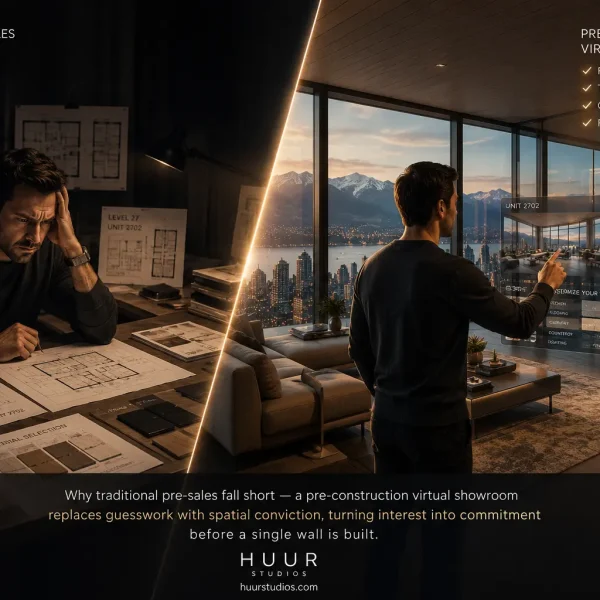
Interactive real estate experiences are redefining the standard of engagement that buyers expect before committing to a property — and the listings that still rely on a curated set of static images to carry that responsibility are increasingly losing qualified buyer attention to competing developments that give buyers genuine spatial agency. This shift has accelerated significantly across Vancouver’s luxury presale market, where buyers have been conditioned by every other digital product they use to expect exploration, configuration, and self-directed discovery rather than passive observation of a predetermined sequence of photographs.
The practical consequence of this shift is visible in the engagement metrics that developers track across their presale campaigns. Listings that offer buyers genuine immersive property presentation — the ability to walk through a space, adjust lighting conditions, swap finish configurations, and form a spatial understanding that approximates what a physical site visit produces — consistently hold buyer attention longer, generate stronger inquiry rates, and convert online browsing into qualified showings at measurably higher rates than listings that offer only a gallery of static renders, however beautifully produced those renders may be.
What Are Interactive Real Estate Experiences?
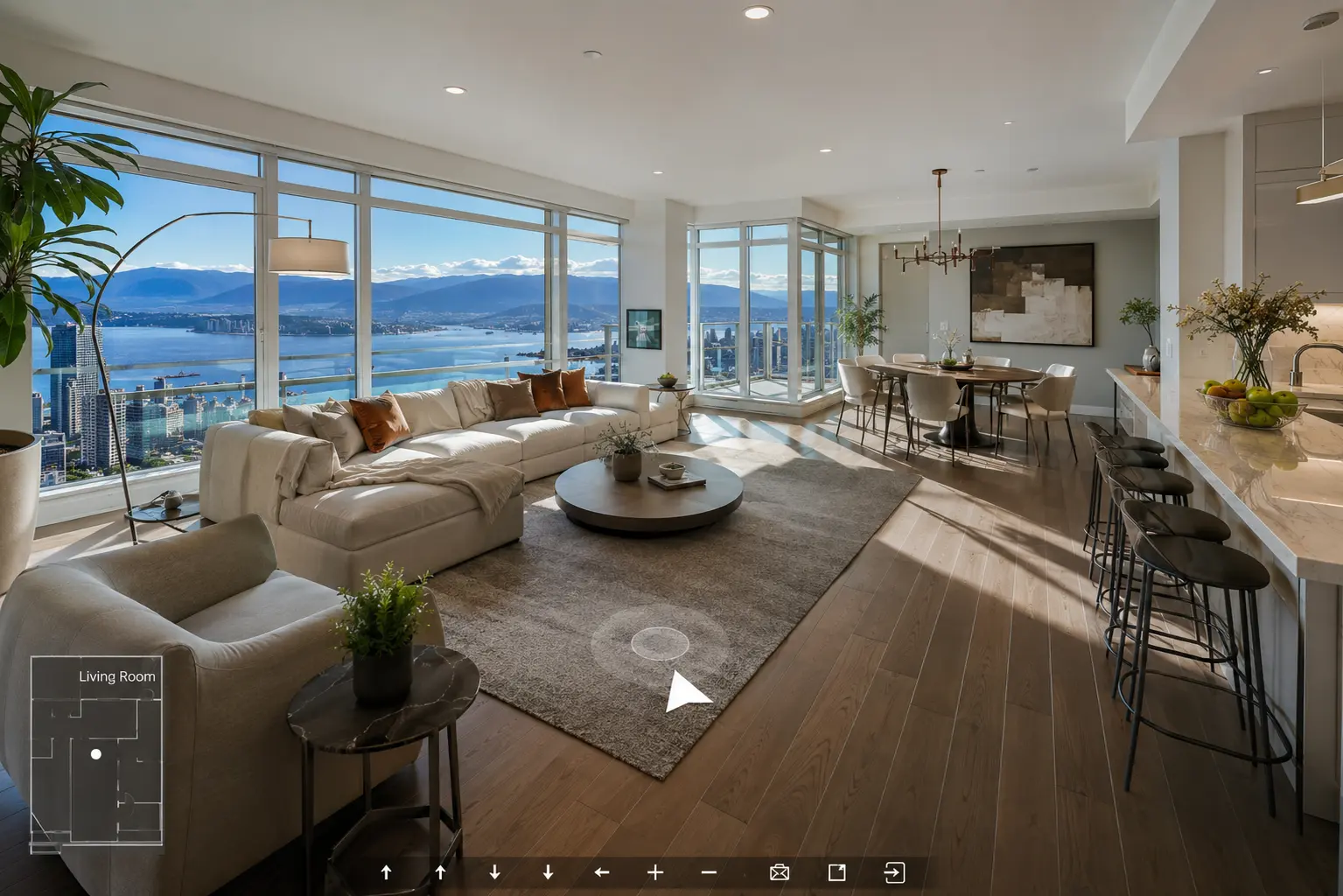
Interactive real estate experiences refer to digital property environments that give buyers genuine navigational agency — the ability to move through a property on their own terms, examine the rooms and features that matter most to their individual evaluation, adjust parameters including lighting and material finishes, and form a spatial understanding of a property that static images, floor plans, and conventional virtual tours simply cannot generate. The defining characteristic is buyer control: rather than observing a presentation crafted by the developer’s marketing team, the buyer conducts their own self-directed investigation of the space according to their own priorities and questions.
At the foundation of the most sophisticated interactive real estate experiences is real-time rendering technology — most commonly Unreal Engine — that generates the property environment at interactive frame rates, calculating lighting, material behaviour, reflections, and spatial perspective continuously as the buyer navigates. This is what distinguishes genuine interactive environments from conventional panoramic virtual tours, which allow viewers to look around from predetermined fixed positions but cannot allow free navigation or genuine spatial exploration. Real-time rendering produces a living environment that responds to the buyer’s movements rather than a series of pre-rendered images arranged into a click-through sequence.
Interactive Property Visualization vs Conventional Virtual Tours
The distinction between interactive property visualization and the simpler virtual tour formats that became standard real estate marketing practice over the past decade is technically and commercially significant. A conventional 360-degree virtual tour — unlike interactive real estate experiences — stitches together a series of panoramic photographs captured at fixed positions within a property, allowing viewers to click between those positions and look around from each one. The positions, the lighting, and the visual information available are entirely predetermined — the viewer can only see exactly what the photographer decided to capture, from exactly the positions the photographer decided to stand.
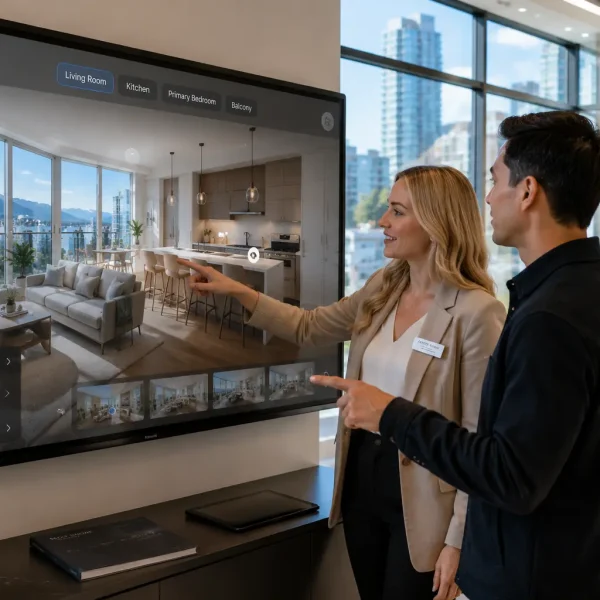
Genuine interactive real estate experiences replace this constrained format with actual spatial geometry — a three-dimensional model of the property where every wall, doorway, window, and surface exists as real digital geometry that the buyer can approach from any angle, examine from any distance, and view in any lighting condition. The buyer of an interactive real estate experience chooses their own path through the space rather than following a predetermined sequence. They can stand at a kitchen island and look toward the dining room. They can approach a window and check the exact view. They can move through multiple rooms in any order, retracing their steps and lingering wherever their curiosity or evaluation priorities lead them.
The Virtual Real Estate Sales Tool Standard
The most commercially mature implementations of interactive real estate experiences stand apart from basic virtual tours precisely because interactive real estate experiences function as complete virtual real estate sales tools that elevate interactive real estate experiences beyond passive presentation formats — incorporating finish configurability, time-of-day lighting adjustment, unit comparison tools, and in some implementations, lead capture and sales team scheduling integration. HUUR Studios builds every interactive environment with this sales tool function in mind, recognizing that an interactive experience that merely shows a space without allowing buyers to explore variations in finish configurations is significantly less effective at building purchase conviction than one that responds to the specific configuration questions each individual buyer brings to their evaluation.
For Vancouver developers managing presale campaigns with multiple unit types and multiple finish packages, the virtual real estate sales tool model delivers a production economy that static render campaigns cannot match. A single configurable interactive environment can represent every unit type and finish combination in one platform, accessible to every buyer at any hour from any device — eliminating the production overhead of maintaining separate render sets for every configuration while simultaneously offering buyers a richer and more individually responsive exploration experience.
Why Static Renderings Can Create Buyer Uncertainty
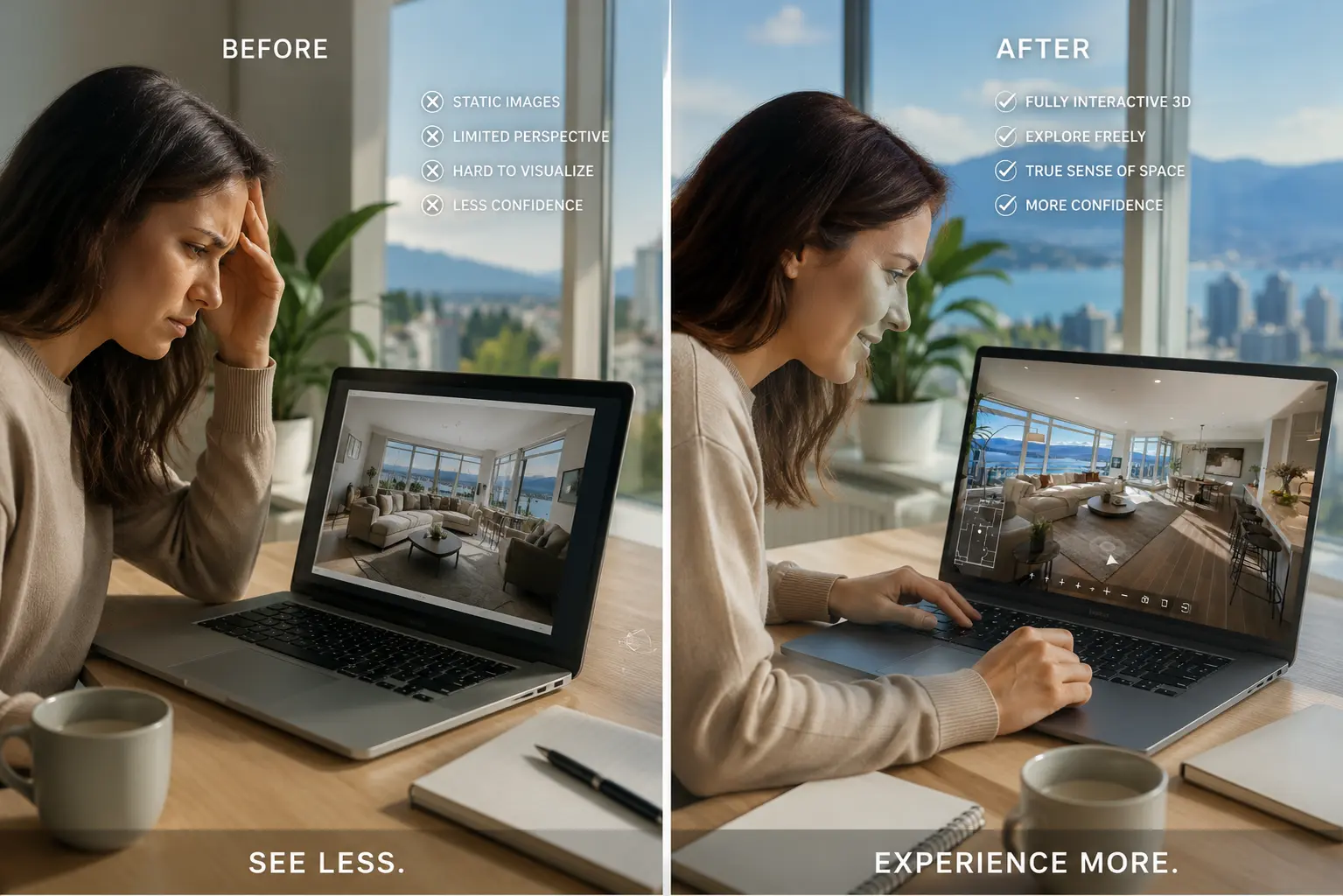
Static renderings have served the property marketing industry well enough to become its default visual standard — and for resale properties where buyers can visit in person and resolve spatial questions through direct experience, a well-produced set of photographs and renders can still carry significant marketing weight. But for presale developments where buyers are being asked to commit substantial capital to a space that does not yet physically exist, static renders carry a structural limitation that no amount of production skill can fully overcome: they answer only the questions their predetermined angles and lighting conditions happen to address, and leave every other buyer question unanswered and unresolved.
This unanswered question problem is precisely where interactive real estate experiences deliver — and it is precisely where interactive real estate experiences deliver their most commercially significant value for presale developers. A buyer wondering how afternoon light falls across a specific living room wall cannot answer that question from a hero render shot at golden hour from a carefully selected angle. A buyer concerned about the proportional relationship between the kitchen and the dining area cannot resolve that concern from a wide-angle render that makes every space look generous. The questions that static renders leave unanswered are precisely the questions that generate buyer hesitation — and hesitation, in a competitive presale market, frequently translates directly into lost qualified interest.
The Imagination Gap and Its Commercial Consequences
When static renders fail to answer a buyer’s specific spatial or material questions, the buyer is left to imagine the answer — and imagination introduces uncertainty. This uncertainty dynamic is particularly pronounced for international buyers evaluating Vancouver developments without the ability to visit in person during the evaluation period. A buyer in Hong Kong or Toronto who cannot resolve their spatial questions from the available static marketing materials must either proceed with unresolved uncertainty, request information that adds friction to the sales process, or redirect their attention toward a competing development whose digital presentation better resolves their questions.
Interactive real estate experiences close this imagination gap by giving buyers the tools to answer their own spatial and material questions through direct digital exploration, rather than asking them to resolve those questions through imagination or through an extended back-and-forth with the sales team. The commercial consequence is measurable: buyers who have resolved their key evaluation questions through direct exploration arrive at subsequent sales conversations with significantly stronger purchase confidence and shorter decision cycles than buyers who are still working through unresolved spatial uncertainty when they reach the conversation stage.
Why Virtual Home Tours Alone Are Not Enough
Virtual home tours — the panoramic, photography-based tour formats that became widely adopted across the industry — addressed part of the static render problem by allowing buyers to look around within a space rather than viewing only predetermined compositions. For many property types, particularly finished resale properties, virtual home tours represent a meaningful improvement over static photography. But they do not generate buyer confidence in real estate at the level that presale developments in competitive markets require, because the fundamental constraint remains: the buyer is still limited to positions the photographer stood in, looking at what the photographer’s lens captured, in the lighting conditions that existed at the moment the image was taken.
Well-built interactive real estate experiences address the limitations of virtual home tours by providing spatial geometry rather than photographic imagery as the foundation of the buyer’s exploration — meaning the buyer’s navigation is not constrained by where a photographer stood, what lighting was available at the time of capture, or which angles were selected during the editing process. Every point in the space is equally accessible. Every viewing angle is possible. Every lighting condition within the range programmed into the real-time environment is available for the buyer to explore at their own initiative.
How Interactive Property Exploration Builds Buyer Confidence
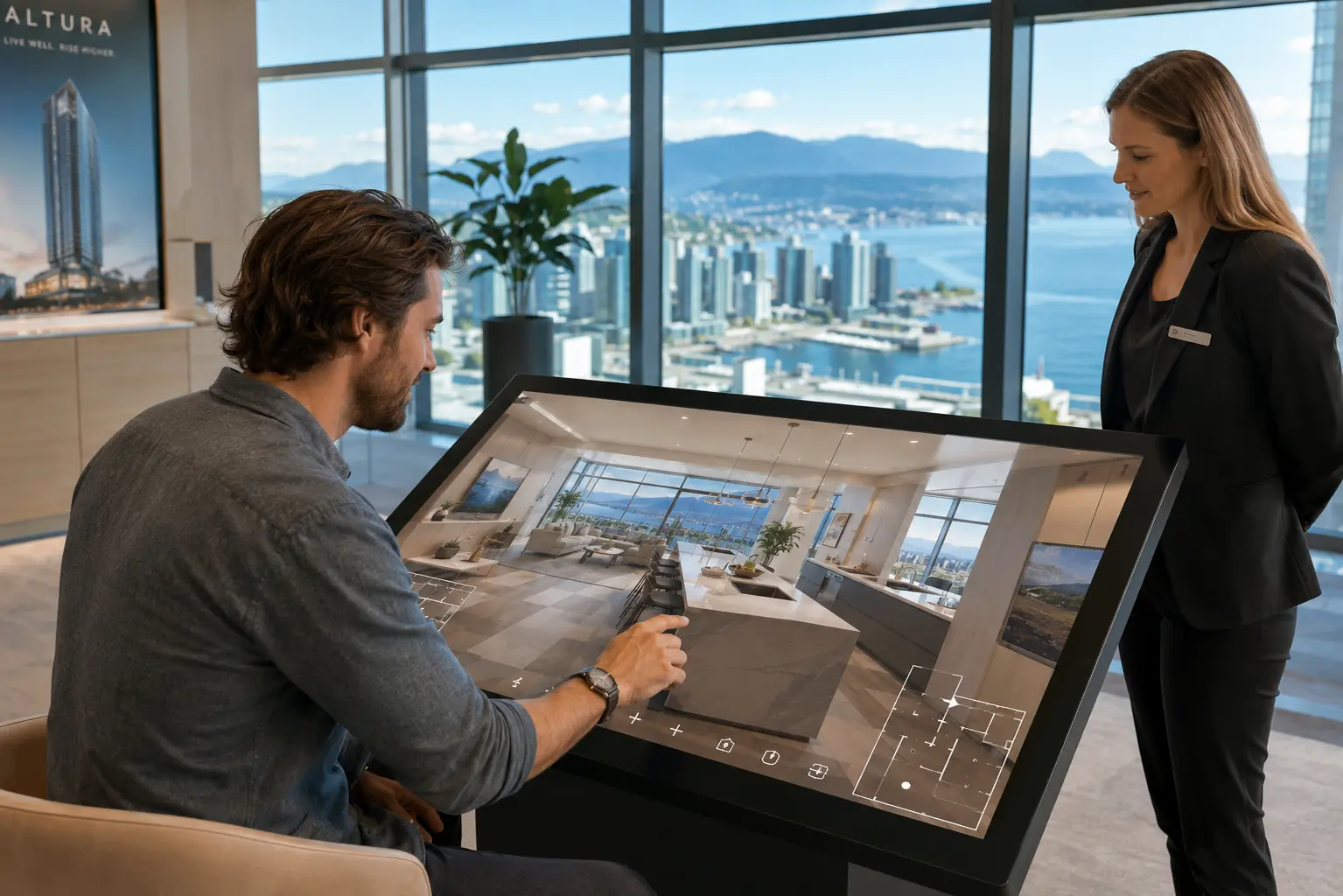
Interactive real estate experiences build buyer confidence in real estate by transforming the buyer from a passive recipient of curated marketing information into an active investigator of the property on their own terms. This transformation matters psychologically as well as informationally — a buyer who has answered their own questions through direct exploration has reached those answers through their own agency rather than accepting answers provided by a developer whose primary interest is the most favourable possible representation of the property. Self-discovered answers carry a qualitatively different kind of conviction than accepted answers, and that difference in conviction quality translates directly into the quality of buyer engagement that subsequent sales conversations reflect.
The confidence-building effect of interactive real estate experiences compounds across the buyer’s decision journey in ways that deliver measurable commercial value throughout a presale campaign. A buyer who has thoroughly explored a unit through an immersive property presentation arrives at any subsequent in-person interaction or sales conversation already spatially familiar with the space — with their primary evaluation questions resolved, their finish preferences informed by having seen real configurations in the actual space, and their purchase readiness significantly advanced beyond the stage that static render campaigns typically achieve before the first sales conversation begins.
Explore More From HUUR
3D Real Estate Walkthrough Software: Stop Losing Buyers With Outdated Listings
Self-Directed Exploration and Decision Readiness
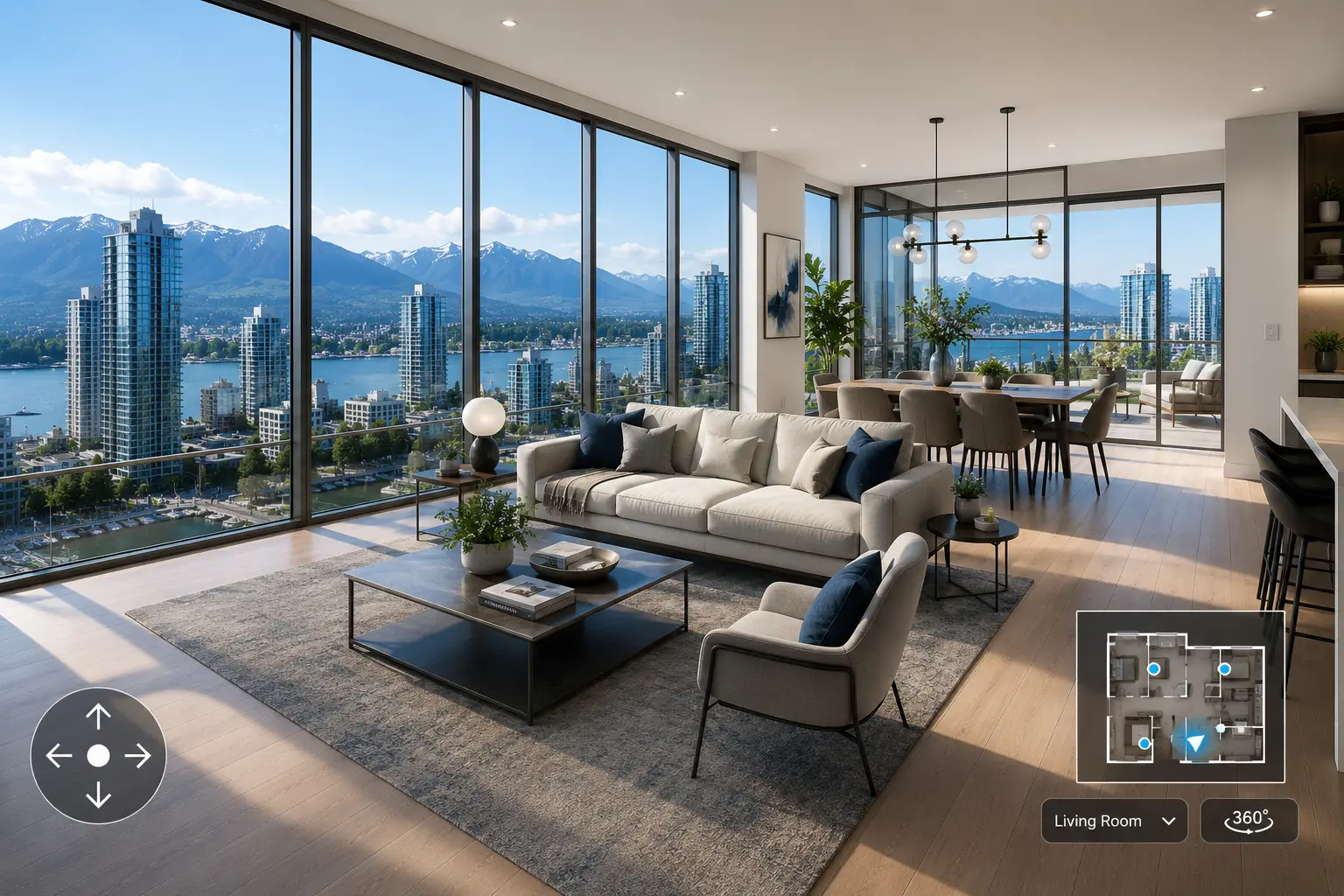
The decision-readiness advantage that interactive real estate experiences create through interactive property visualization for presale sales teams is one of the most practically significant commercial outcomes of investment in this technology. Sales representatives working with buyers who have engaged meaningfully with an interactive property environment before reaching the conversation stage report consistently that those buyers ask more specific, more informed questions, require fewer showings to reach decision readiness, and proceed through the contract process with less hesitation and fewer requests for additional information than buyers who arrived at the first conversation having only viewed static renders.
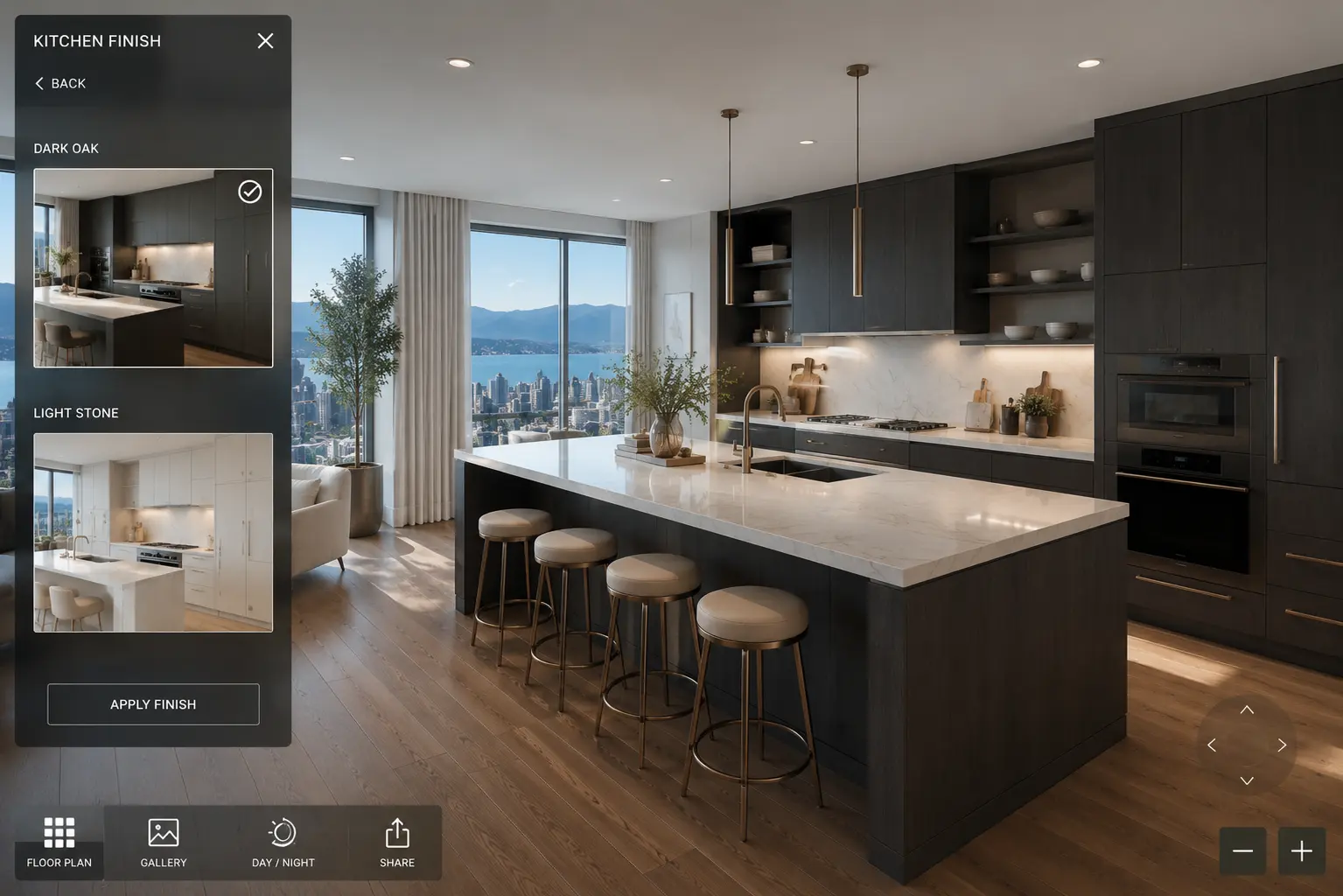
This decision-readiness effect is the direct consequence of interactive real estate experiences resolving the evaluation questions that static renders leave open. A buyer who has already confirmed through direct exploration that afternoon light reaches the master bedroom, that the kitchen island creates a natural social zone between cooking and dining, and that the dark oak finish package transforms the feel of the living space more effectively than the light stone alternative has completed a significant portion of the evaluation process before the sales conversation begins. The conversation can focus on commitment rather than discovery.
Buyer Confidence in Real Estate and the International Buyer Context
Buyer confidence in real estate has always been higher among buyers who have physically visited a property relative to those making decisions from a distance — but well-built interactive real estate experiences narrow this gap substantially for the international buyer segment that represents a significant portion of Vancouver’s luxury presale market. An international buyer who has navigated an HUUR Studios interactive real estate experience for 30 to 45 minutes has formed a level of spatial familiarity with a property that approaches what a physical visit would generate, without the logistical requirements and time zone constraints that make in-person visits impractical during the early evaluation stage.
For Vancouver developments targeting international buyer communities across Asia, Europe, and across North American markets outside British Columbia, the ability to generate genuine buyer confidence in real estate from a remote digital interaction is not a secondary consideration — it is a core commercial requirement of the presale campaign. HUUR Studios designs every interactive real estate experience with international accessibility as a foundational specification — because interactive real estate experiences must serve as a foundational specification, ensuring that the experience is web-deliverable, device-agnostic, and performant across the connectivity conditions that international buyers typically encounter when evaluating properties from abroad.
The Role of Real-Time Rendering in Property Presentation
Real-time rendering is the technical foundation that makes interactive real estate experiences interactive real estate experiences genuinely interactive rather than simply visual — the capability that generates the spatial environment continuously as the buyer navigates, calculating lighting, material behaviour, and perspective at interactive frame rates rather than displaying pre-calculated images from a fixed library. Without real-time rendering capability, a digital property environment cannot respond to buyer navigation in real time — it can only display whatever predetermined views were rendered in advance, which reduces the experience back to a more sophisticated form of fixed image gallery rather than the genuine spatial exploration that interactive real estate experiences deliver.
HUUR Studios builds every interactive property visualization environment on Unreal Engine specifically because this platform provides the most mature and most commercially validated real-time rendering capability available for architectural visualization applications. The engine’s Lumen global illumination system calculates light bouncing and indirect illumination in real time, producing the naturalistic, nuanced lighting quality that distinguishes photorealistic environments from obviously computer-generated ones. Its Nanite geometry system allows extraordinarily detailed architectural models to render at interactive performance levels without the polygon optimization compromises that earlier real-time rendering technology required from every asset.
Time-of-Day Lighting and Finish Configurability
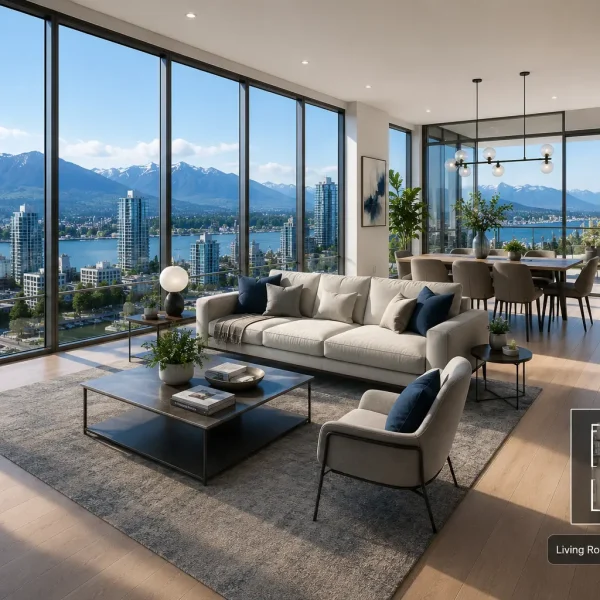
Two specific real-time rendering capabilities deliver particularly significant commercial value within the interactive property presentation context: time-of-day lighting adjustment and finish configurability. Time-of-day adjustment allows buyers to understand how natural light moves through a space across the day — checking morning light in the master bedroom, afternoon light in the living area, and evening atmosphere in the kitchen — resolving one of the most common buyer questions that static renders captured at a single predetermined moment of day cannot address.
Finish configurability allows buyers to swap flooring materials, cabinetry styles, countertop finishes, and complete finish packages within the interactive real estate experience and see the results rendered photorealistically in the actual space in real time. This capability eliminates the buyer’s need to imagine how a different finish option would feel in the actual space — replacing imagination with direct visual confirmation. For Vancouver presale developments offering multiple finish packages across multiple unit types, this configurability means a single interactive environment represents every available combination within one platform, eliminating the multiplicative static render production burden that equivalent coverage through fixed imagery would require.
Web Delivery and Cross-Platform Accessibility
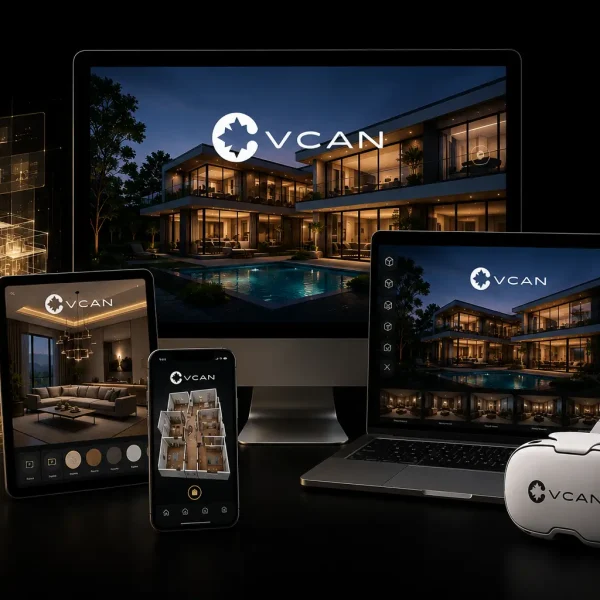
HUUR Studios deploys every interactive real estate experience for web-based delivery, ensuring buyers can access fully interactive, photorealistic property environments through a standard browser on any device — desktop computers, tablets, and mobile phones — without downloading specialized software or owning particular hardware. According to research published by the National Association of Realtors, buyers who engage with immersive and interactive digital property content consistently demonstrate measurably higher engagement duration and inquiry conversion rates than those interacting with static content alone — reinforcing the commercial case for web-accessible interactive environments that remove every possible barrier between serious buyers and the spatial exploration that builds their purchase conviction.National Association of Realtors
This web-based delivery approach for interactive real estate experiences is particularly significant for Vancouver developers targeting international buyer segments. A buyer evaluating a development from Singapore, London, or New York can access the full interactive property experience at any hour without scheduling requirements, technology prerequisites, or geography constraints — the development’s interactive real estate experience becomes its permanent global sales presence, equally accessible to a buyer walking through it at noon in Vancouver or midnight in Hong Kong.
Why Developers Are Investing in Interactive Real Estate Experiences
The investment case for interactive real estate experiences has strengthened considerably, making interactive real estate experiences one of the most commercially justified marketing investments — and each year of rising buyer expectations makes interactive real estate experiences more essential considerably over the past 3 years as both the technology’s accessibility and the market’s expectations have evolved in the same direction.
Vancouver’s presale market reflects this shift with particular clarity given the city’s combination of technically sophisticated buyer demographics, intense development competition, and significant international buyer participation — each of which independently increases the commercial pressure on developers to meet the interactive engagement standard that sophisticated modern buyers expect. The developments that have adopted interactive real estate experiences report stronger engagement metrics, faster presale velocity, and improved international buyer conversion compared to their static marketing baselines.
The Vancouver and North American Market Context
Vancouver’s real estate market sits at an intersection of factors that make the interactive real estate experience standard particularly high relative to other North American presale markets. The city’s high average unit prices mean that buyers are committing to among the most significant financial decisions of their lives — and the cognitive dissonance between the magnitude of that commitment and the information quality available through static renders creates buyer friction that interactive environments are uniquely positioned to resolve. A buyer asked to commit $1.5 million to a space they cannot physically visit has a legitimate need for spatial understanding that only genuine interactive real estate experiences can genuinely provide.
Across North America’s most active luxury presale markets — Vancouver, Toronto, Miami, Los Angeles, and New York — the interactive property presentation standard has moved from differentiation to expectation at the premium development tier. Developments competing at these price points that cannot offer interactive real estate experiences and still rely on static renders are increasingly perceived as under-resourced relative to competing projects that offer genuine buyer engagement tools — a perception that affects buyer impressions of project quality and developer credibility before any physical engagement with the development has occurred.
The Production Efficiency Argument
START YOUR PROJECT WITH HUUR
Contact our team or explain and submit your project .
Beyond buyer engagement benefits, interactive real estate experiences deliver a production efficiency advantage for developers managing complex presale campaigns across multiple unit types and finish packages. A Vancouver development offering interactive real estate experiences with 15 unit types and 4 finish packages each, marketed through static renders, faces a production matrix of 60 individual render sets — each requiring separate revision cycles, approval processes, and artwork preparation for every marketing channel where they appear. A single interactive environment represents every combination within one configurable platform, eliminating multiplicative production burden while delivering a qualitatively richer buyer experience than the static alternative provides.
This production economy compounds as design evolves through the development approval and presale process. Design changes that require producing new static renders — revised floor plan dimensions, updated material specifications, amended exterior details — are incorporated into an interactive environment without the full reproduction cost that static campaigns incur with every significant design revision. HUUR Studios builds updateability into every interactive real estate experience it delivers, ensuring that each interactive real estate experience remains current, ensuring that clients with interactive real estate experiences can refine their designs through the natural development process without their marketing materials falling out of alignment with the current design intent.
FAQ — Interactive Real Estate Experiences
What are interactive real estate experiences?
Interactive real estate experiences are digital property environments that give buyers genuine navigational freedom — moving through spaces, adjusting lighting, swapping finish configurations, and forming spatial understanding on their own terms. Built on real-time rendering engines like Unreal Engine, they replace predetermined static images with self-directed property exploration.
How do interactive property experiences improve buyer confidence?
Interactive property experiences improve buyer confidence in real estate by allowing buyers to resolve their own spatial and material evaluation questions through direct exploration rather than relying on imagination or developer-curated presentations. Buyers who answer their own questions reach decision readiness faster and with stronger purchase conviction.
Are interactive real estate experiences better than static renderings?
For presale properties where buyers cannot visit in person, interactive real estate experiences significantly outperform static renderings — closing the imagination gap that static images leave open, generating stronger buyer engagement metrics, and building the purchase confidence that converts qualified browsing into signed offers.
What technologies are used to create interactive property presentations?
Immersive property presentations are built on real-time rendering platforms, primarily Unreal Engine, combined with 3D architectural models built from design documentation. Lumen provides real-time global illumination, Nanite enables detailed geometry, and web-delivery frameworks make the interactive property visualization accessible through standard browsers on any device.
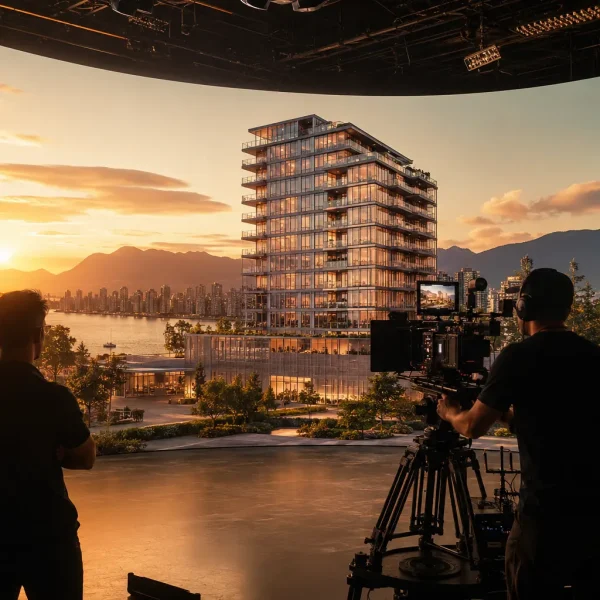
The technology behind the world’s most ambitious productions is no longer limited to film sets. Your architecture can be built, directed, and experienced in the same real-time world.
At HUUR Studios, we use Unreal Engine to bring architectural vision and cinematic production into a single creative environment—where lighting can evolve instantly, cameras can explore without limitation, and ideas can be seen at final quality while creative decisions are still being made.
Whether you’re launching a new development, building a cinematic real estate campaign, or searching for a more ambitious way to communicate your brand, we create real-time production experiences designed around the story your project deserves to tell.
Your project doesn’t need another conventional visualization pipeline. It needs a world built for it.
Explain your project to our team and let’s explore what virtual production with Unreal Engine can make possible.
Conclusion
Interactive real estate experiences have moved from premium marketing differentiation to commercial necessity for developers competing for qualified buyer attention in Vancouver and across North America’s most active presale markets. The difference between a listing that invites buyers into genuine interactive real estate experiences and one that asks them to form purchase conviction from a curated set of static images is no longer a matter of marketing sophistication — it is a measurable factor in buyer engagement duration, decision confidence, and presale conversion velocity that compounds with every quarter that buyer expectations continue rising toward the interactive digital standard they encounter across every other context of their lives.
HUUR Studios builds interactive real estate experiences that give buyers authentic spatial agency and genuine exploratory freedom and genuine exploratory freedom — whether they are evaluating a finished resale property from across the city or a presale unit that exists only as architectural documentation from across the world. The combination of photorealistic real-time rendering quality, unrestricted navigation freedom, finish configurability, and web-based global accessibility creates the buyer confidence that drives purchase decisions in competitive presale markets across British Columbia and throughout North America.
If your next development deserves to be explored with the full spatial conviction that only genuine interactive real estate experiences can create, that is exactly what HUUR Studios delivers.